
The first time most people hear about adverse possession, they think it sounds completely ridiculous.
I know I did.
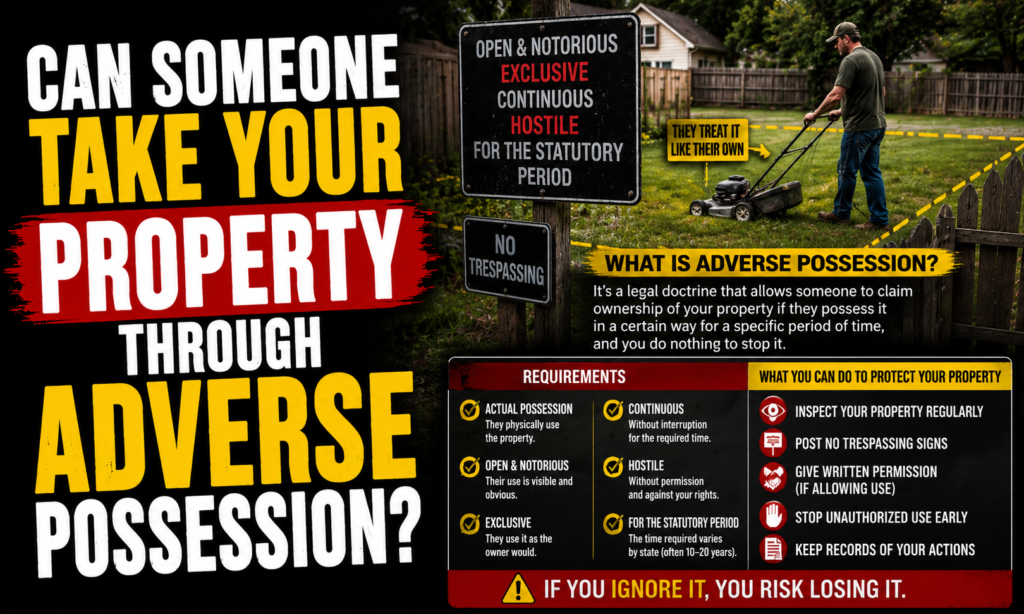
The idea that someone could use land for years and potentially end up claiming ownership sounds like something out of a movie rather than real life.
Yet adverse possession is a real legal concept that has existed for a very long time.
That does not mean someone can simply walk onto your property tomorrow and suddenly own it.
In reality, adverse possession claims are usually far more complicated than the stories people hear online.
Still, understanding the concept is important because many property disputes begin with misunderstandings involving boundaries, fences, driveways, and long-term use of land. Questions about unauthorized use can also overlap with the rules discussed in Can You Remove Someone From Your Property?.
Quick Answer

Adverse possession is a legal concept that may allow a person to seek ownership rights to property after meeting specific legal requirements over a long period of time. The exact requirements vary significantly by state, and successful claims are often much more complicated than people realize. Boundary disagreements that may lead to ownership claims are also discussed in Can a Neighbor Claim Part of Your Property?.
Why Most Adverse Possession Disputes Start Small
One thing I’ve noticed is that these situations rarely begin with someone trying to take property.
Instead, they often start with everyday situations such as:
- A fence built in the wrong location
- A driveway crossing a boundary
- Landscaping extending onto neighboring land
- Long-term use of a portion of property
- Confusion about property lines
Years pass.
People move.
Memories fade.
Eventually someone discovers that a boundary may not be where everyone assumed it was.
That is when disputes often begin.


Property Lines Matter More Than Many People Realize
Almost every adverse possession discussion eventually comes back to one thing:
Where is the actual property line?
Many homeowners are surprised to discover that what they believed was the boundary for years may not match official records.
If you have not already verified your property boundaries, I strongly recommend reading:

How Do You Find Your Property Lines?

Many property owners choose to clearly identify property corners and boundary locations after obtaining accurate survey information.
Fences Frequently Create Disputes
I’ve seen countless situations where homeowners assume a fence automatically represents the legal property line.
Sometimes it does.
Sometimes it doesn’t.
A fence that has existed for years may create assumptions that are not supported by official records.
That is one reason fence disputes often become closely connected to adverse possession discussions.
You may also find helpful information in:
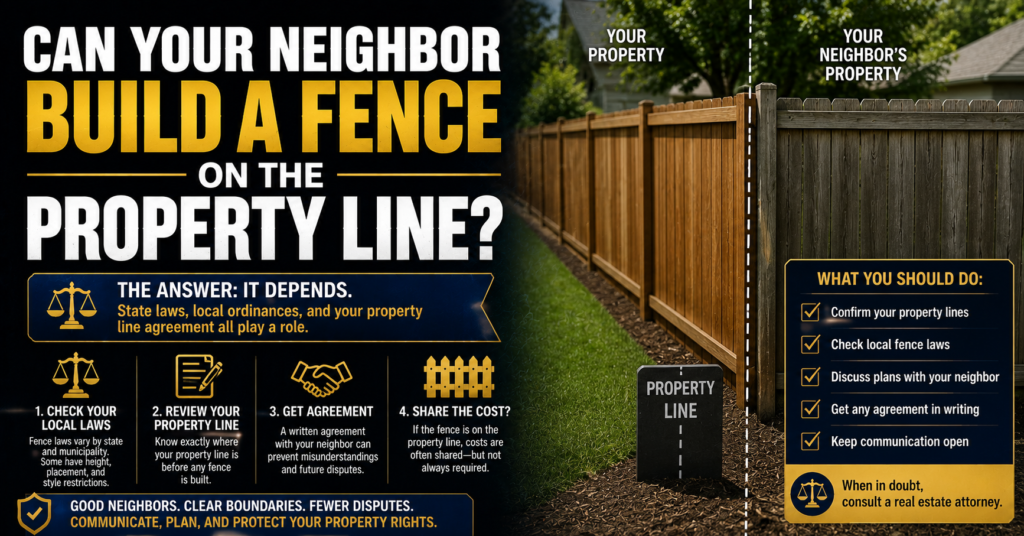
Can Your Neighbor Build a Fence on the Property Line?
Driveways Can Create Similar Problems
Driveways are another common source of confusion.
A neighbor may have used part of a driveway for years.
A property owner may assume permission was implied.
Someone else may believe rights were created through long-term use.
Because of that, driveway disputes frequently overlap with property-rights questions.
You may also find useful information in:
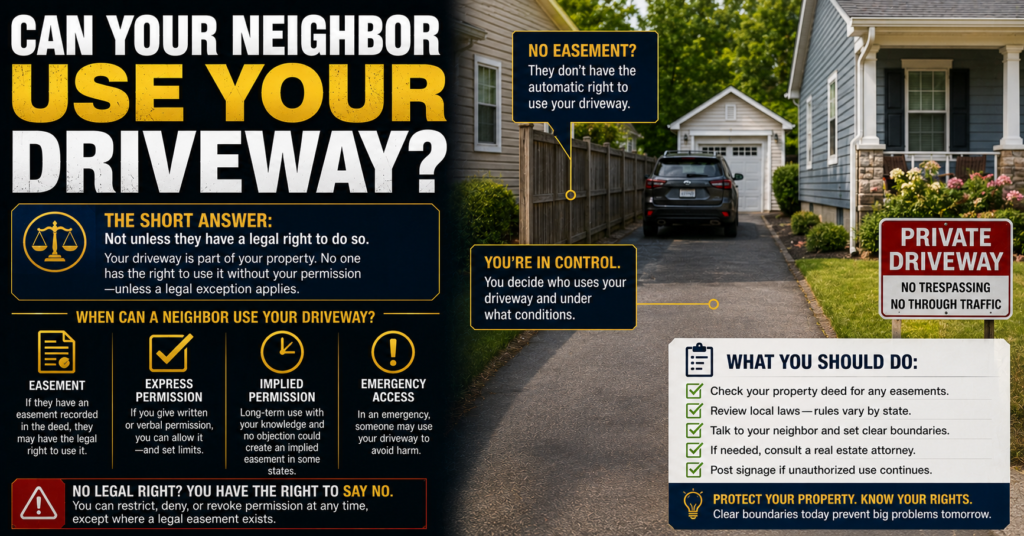
Can Your Neighbor Use Your Driveway?
Documentation Can Prevent Major Problems Later
One thing I’ve learned is that good records often prevent small issues from becoming large disputes.
Helpful records may include:
- Surveys
- Deeds
- Property maps
- Boundary markers
- Photographs
- Historical records
The more documentation available, the easier it often becomes to understand what actually happened over time.
Long-Term Use Does Not Automatically Create Ownership
This is probably the biggest misconception surrounding adverse possession.
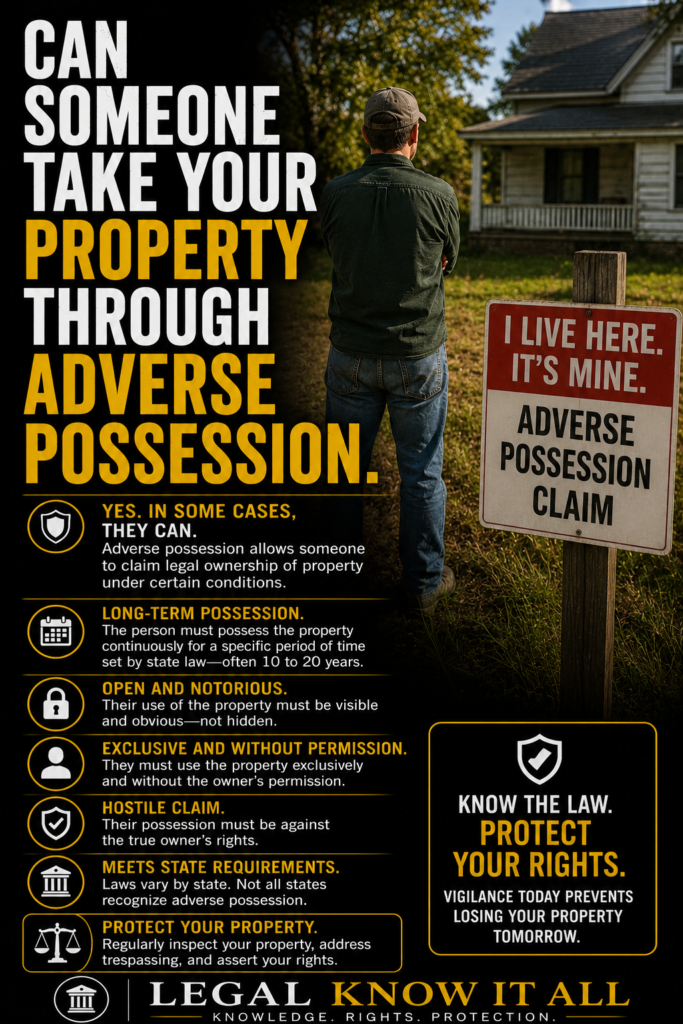
Many people believe that simply using property for a long time automatically creates ownership rights.
That is not how these situations typically work.
Adverse possession claims often involve specific legal requirements that vary from state to state and can be difficult to satisfy.
That is why every situation must be evaluated based on its own facts.
Understanding Your Property Is One of the Best Defenses
In my experience, most property-rights disputes become easier to manage when homeowners understand:
- Where boundaries exist
- What easements affect the property
- What records exist
- How the property has been used over time
The more information available, the less likely misunderstandings are to turn into major disputes.


What If a Neighbor Claims Part of Your Property?
This is usually how adverse possession becomes personal.
A homeowner discovers a fence, driveway, shed, garden, or other improvement may not actually sit where everyone thought it did.
Suddenly, questions start appearing.
Who owns the land?
How long has it been used that way?
Did anyone ever object?
I’ve found that many of these situations involve honest misunderstandings rather than intentional wrongdoing.
The challenge is that once a dispute begins, years of assumptions can become difficult to untangle.
Easements and Adverse Possession Are Not the Same Thing
One thing that creates confusion is the fact that easements and adverse possession often involve similar property areas.
However, they are very different concepts.
An easement generally involves a right to use property for a specific purpose.
Adverse possession involves potential ownership claims.
Because both situations may involve long-term use of land, property owners sometimes confuse the two.
For additional information, see:
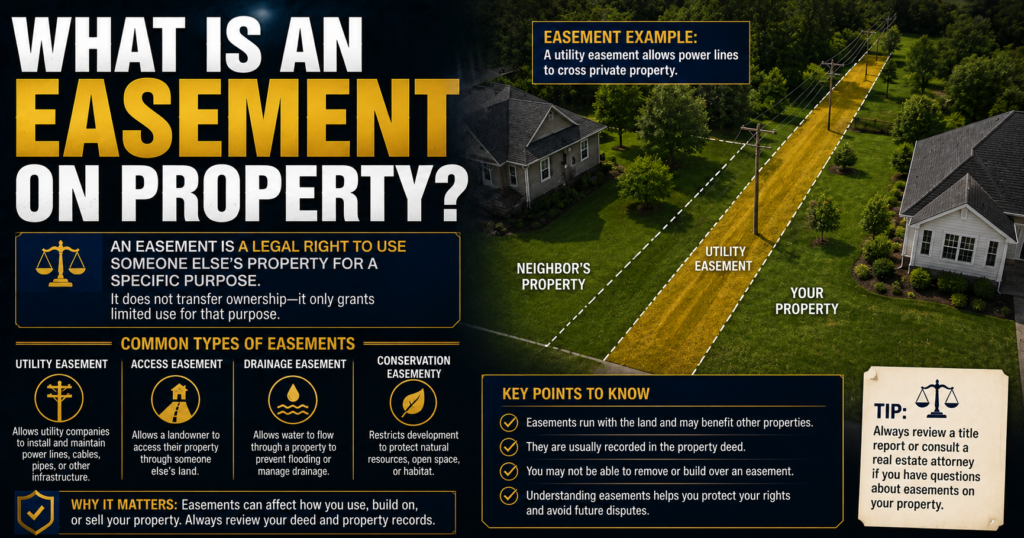
What Is an Easement on Property?
Understanding the difference is often important when evaluating property disputes.
Can Someone Take Abandoned Property?
Another common misconception involves abandoned property.
Many people believe that if land appears abandoned, anyone can eventually claim ownership.
In reality, adverse possession laws are often far more complex than that.
Simply finding unused property does not automatically create ownership rights.
The specific facts and legal requirements matter.
Why Surveys Are So Important
If there is one thing I would encourage property owners to take seriously, it is accurate boundary information.
A professional survey can often answer questions that years of assumptions cannot.
Surveys may help identify:
- Property boundaries
- Encroachments
- Fence locations
- Improvements
- Access issues
Many property disputes become easier to understand once reliable boundary information is available.
Historical Records Can Be Extremely Valuable
Property disputes often involve events that occurred years or even decades earlier.
That is why historical records can become important.
Examples may include:
- Old surveys
- Deeds
- Property maps
- Photographs
- Tax records
- Correspondence

Many property owners choose to scan important property records for long-term digital storage so documents remain accessible even years later.

Others prefer to protect original records in a fireproof document storage box for additional security.
Property Owners Should Monitor Boundary Areas
One thing I’ve noticed is that disputes often grow when property owners stop paying attention to areas near property lines.
Regularly observing boundary areas can help identify:
- New structures
- Fence changes
- Access issues
- Encroachments
- Unusual activity
Many homeowners choose to monitor entrances, driveways, and property boundaries with outdoor security cameraswhen disputes arise.

Owners of larger parcels may also monitor remote areas with trail cameras to help document activity occurring far from the home.
Frequently Asked Questions
Can someone really take property through adverse possession?
Adverse possession is a real legal concept, but successful claims typically require specific legal requirements that vary by state.
Does using property for a long time automatically create ownership?
No. Long-term use alone does not automatically create ownership rights.
What is the difference between an easement and adverse possession?
An easement generally involves a right to use property, while adverse possession involves potential ownership claims.
Can a fence create an adverse possession dispute?
Fence locations are frequently involved in property boundary disputes and adverse possession discussions.
How can I protect my property rights?
Many property owners monitor boundary areas, maintain records, verify property lines, and address concerns before they become larger disputes.
Should I get a survey?
Surveys often provide valuable information when property boundaries are uncertain or disputed.
Why are old property records important?
Historical documents may help establish how property has been used and understood over time.
Can adverse possession laws vary by state?
Yes. The legal requirements for adverse possession vary significantly depending on the jurisdiction.
Important Information
This article is provided for educational and informational purposes only and should not be considered legal advice. Adverse possession laws, easement rights, boundary disputes, and property ownership issues vary by state and individual circumstances. Consult a qualified attorney, surveyor, or real estate professional regarding your specific situation.
For more information about our content standards, visit our Editorial Policy and Fact-Checking Policy pages.
Additional information about this website can be found on our About Us, Contact Us, FAQ, Disclaimer, and Terms and Conditions pages.
About the Author
Sarah Reynolds is a legal research contributor for Legal Know It All who focuses on property rights, real estate issues, neighbor disputes, and practical legal topics affecting homeowners. She researches common legal questions involving land ownership, property boundaries, easements, and real estate disputes while helping readers understand complex legal concepts in clear, everyday language.