
Few property disputes create more frustration than discovering a neighbor may have built something on land you believe belongs to you.
Maybe it is a fence.
Maybe it is a shed.
Maybe it is part of a driveway, retaining wall, garage, or deck.
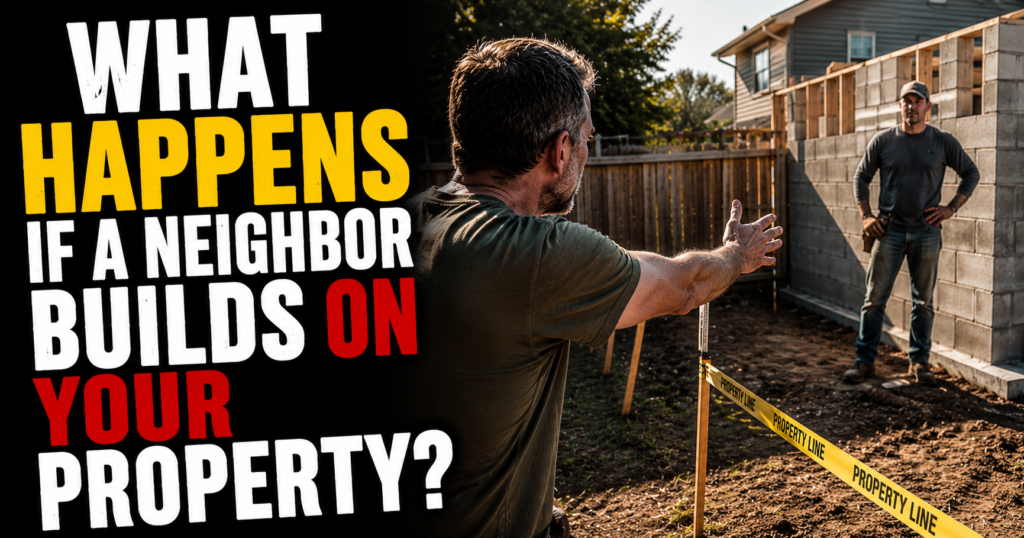
Sometimes the issue is discovered immediately.
Other times, homeowners live next to a structure for years before realizing there may be a problem.
I’ve found that one of the biggest challenges is that people often become emotionally invested before they know all the facts.
Before anyone starts arguing, it is usually important to answer one question:
Is the structure actually on your property?
Quick Answer
When a neighbor builds on property that belongs to someone else, the situation may involve boundary disputes, surveys, easements, encroachments, property rights, and other legal issues. The specific options available often depend on the facts involved and applicable state laws.
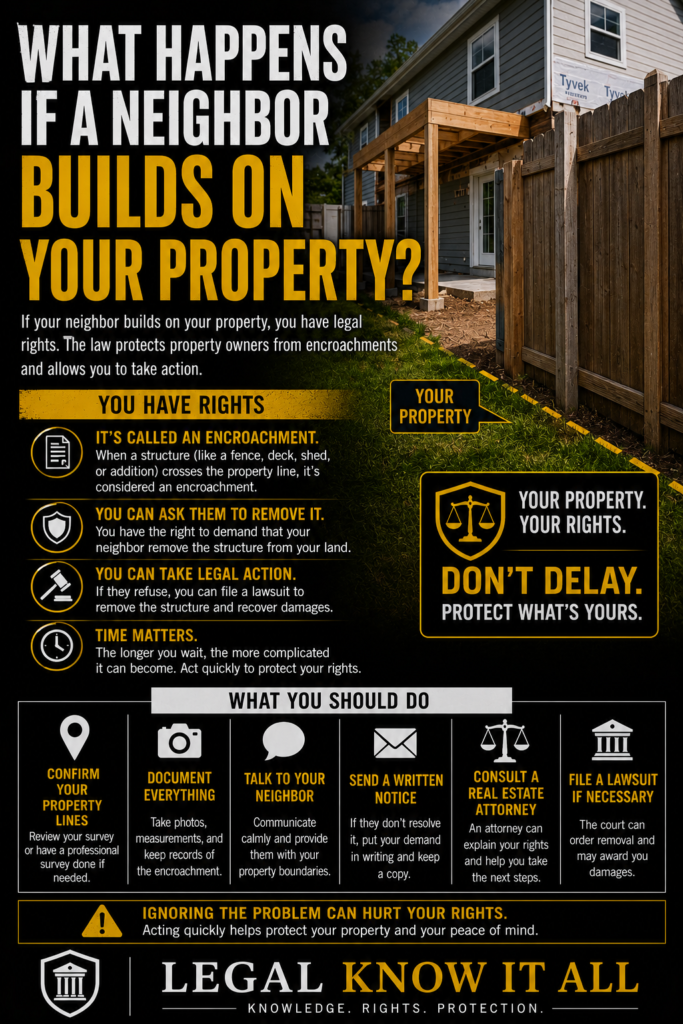
The First Step Is Verifying The Property Line
I’ve seen homeowners spend months arguing about a boundary that was never officially confirmed.
That is why I always believe the first step is understanding where the legal property line actually exists.
A surprising number of disputes happen because:
- Old assumptions were wrong
- Previous owners misunderstood boundaries
- Fences were installed incorrectly
- Property corners were never verified
Before making accusations, it is usually wise to start with accurate information.
If you have not already done so, read:
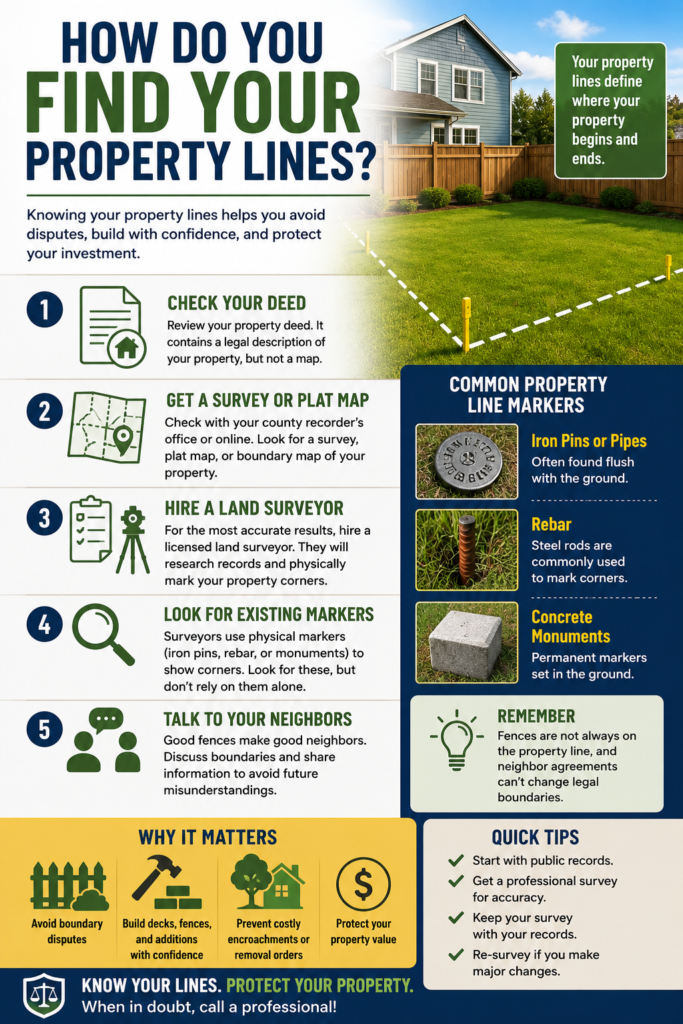
How Do You Find Your Property Lines?
Common Structures Involved In Property Disputes
The most common encroachment disputes I see involve:
- Fences
- Sheds
- Garages
- Decks
- Retaining walls
- Landscaping features
- Driveways
Some encroachments are obvious.
Others may only involve a few inches.
Even small encroachments can create larger disputes if they are ignored for years.
Fences Cause More Disputes Than Almost Anything Else
Many homeowners assume a fence automatically represents the legal property line.
Unfortunately, that is not always true.
A fence may have been:
- Installed decades ago
- Built by a previous owner
- Positioned without a survey
- Moved over time
That is one reason fence-related disputes are so common.
For additional information, see:
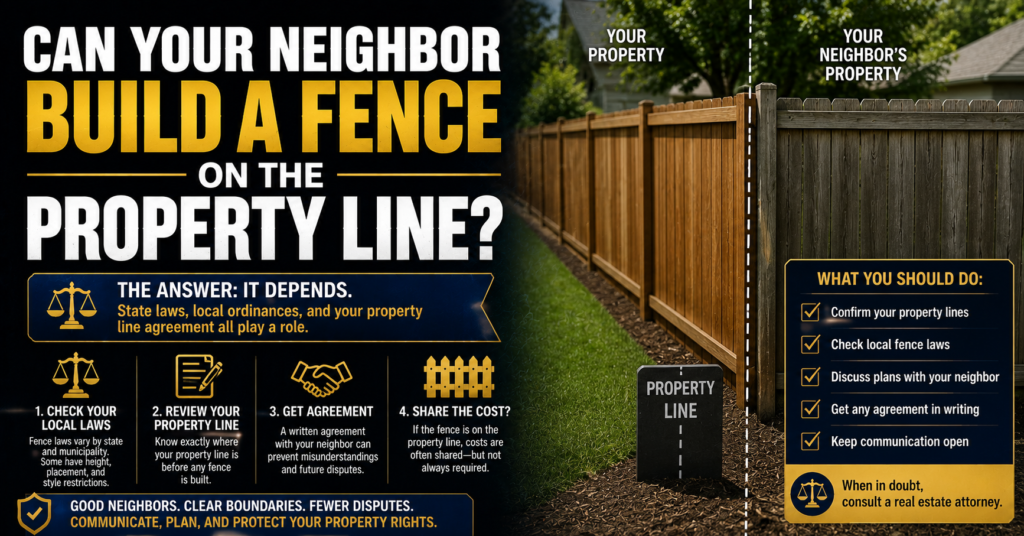
Can Your Neighbor Build a Fence on the Property Line?
Driveways And Access Areas Can Create Similar Problems
Driveways often create confusion because they are used so frequently.
People may assume that long-term use automatically creates ownership rights.
In reality, ownership, easements, and access rights can involve different issues.
You may also find helpful information in:
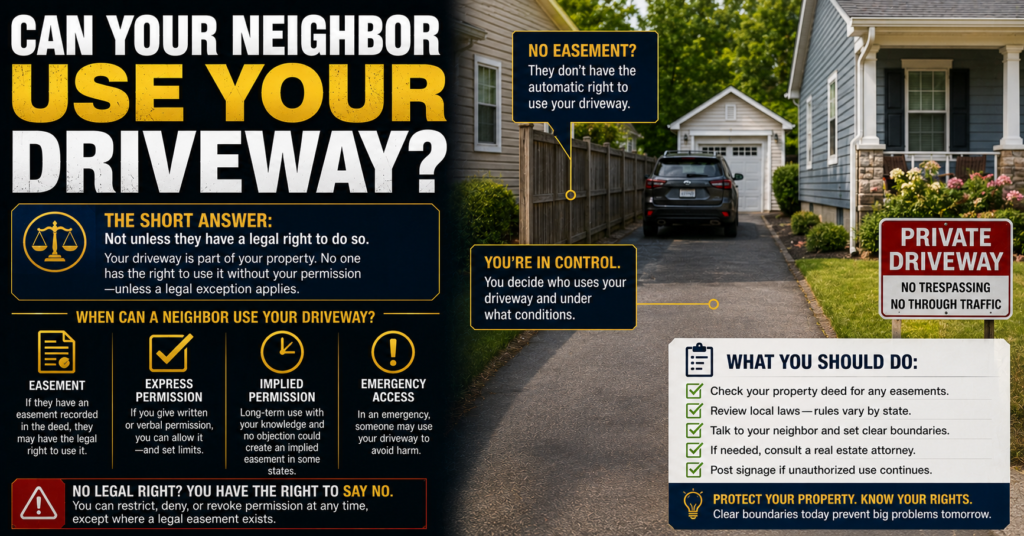
Can Your Neighbor Use Your Driveway?
Easements Can Change The Entire Discussion
One thing I’ve learned is that not every structure crossing a boundary creates the same legal questions.
In some situations, easements may affect how property is used.
That is why easements often become part of these conversations.
For more information, see:
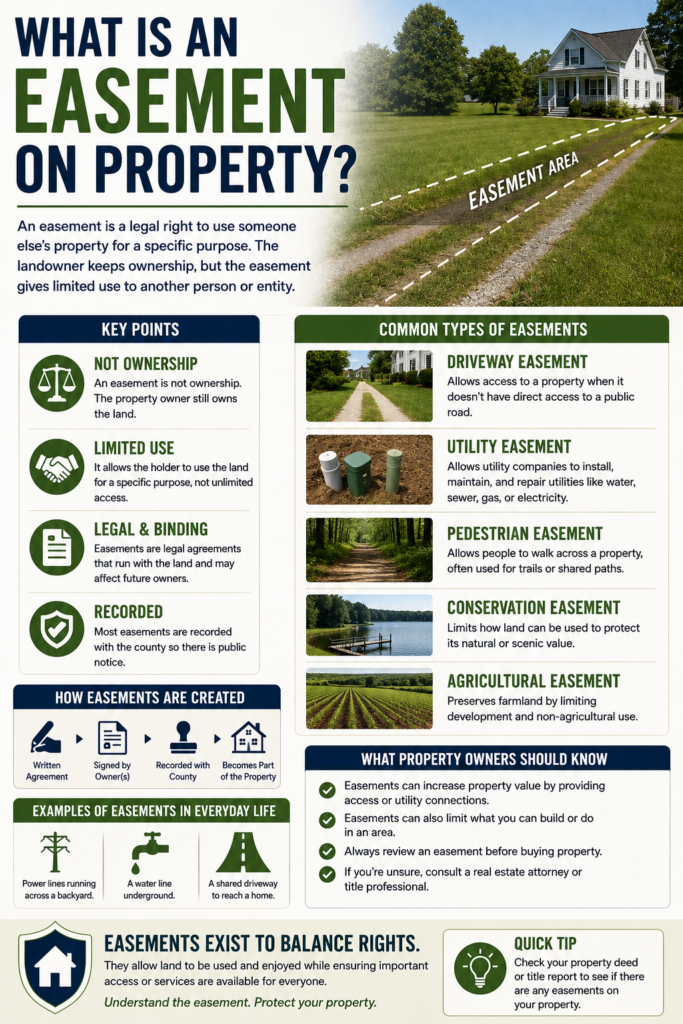
What Is an Easement on Property?
Understanding easements early can prevent misunderstandings later.
Documentation Can Make A Huge Difference
Whenever a property dispute arises, documentation becomes incredibly important.
Helpful records often include:
- Surveys
- Deeds
- Photographs
- Property maps
- Correspondence
- Historical records
I’ve found that disputes become much easier to evaluate when homeowners have accurate records available.

Many property owners choose to scan important surveys and property documents for digital storage so information remains easy to access years later.

Others choose to protect original records in a fireproof document storage box to help preserve valuable paperwork.
Encroachment Issues Often Grow Worse Over Time
One of the biggest mistakes property owners make is assuming a problem will simply resolve itself.
The reality is that unanswered questions often become more difficult as:
- Years pass
- Ownership changes
- Memories fade
- Records disappear
That is one reason understanding the facts early is often one of the smartest things a homeowner can do.


Could This Turn Into an Adverse Possession Issue?
One of the first concerns many homeowners have is whether allowing a structure to remain on their property could eventually create larger ownership questions.
I’ve noticed that people often hear stories online about someone “losing” part of their property after years of inaction.
While adverse possession is a real legal concept, the reality is usually much more complicated than the stories make it sound.
Every state has its own requirements, and successful claims are often far more difficult than people realize.
If you’d like a deeper look at the topic, see:
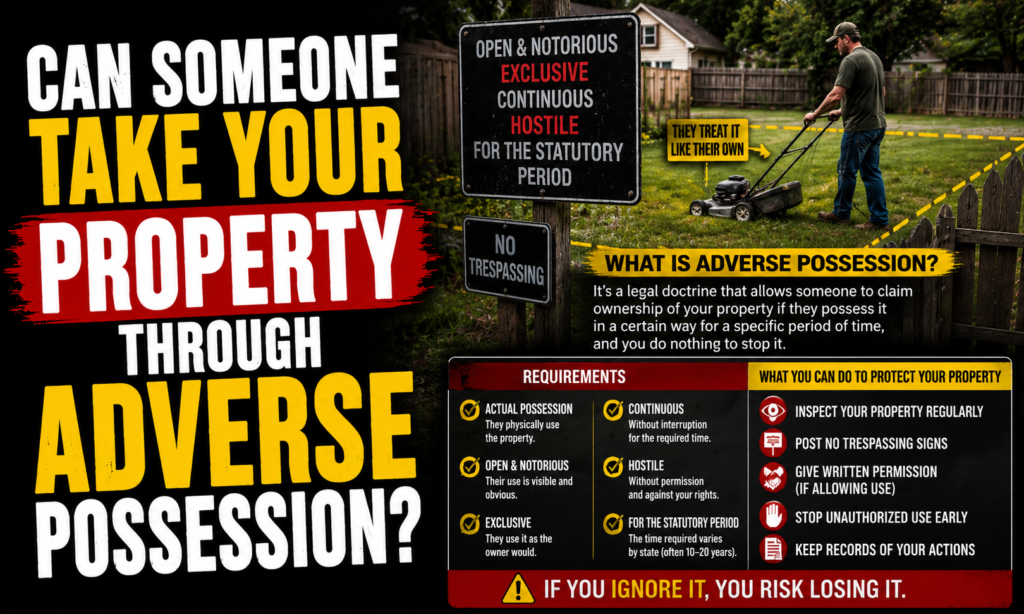
Can Someone Take Your Property Through Adverse Possession?
What If Your Neighbor Claims the Land Is Theirs?
This is where many disputes become emotional.
A homeowner may believe the property line is in one location.
The neighbor may believe it is somewhere else entirely.
I’ve found that both sides often have reasons for believing they are correct.
Common explanations include:
- An old fence location
- Statements from previous owners
- Long-term use of the area
- Outdated information
- Misunderstood surveys
The challenge is that beliefs and assumptions do not always match official property records.
For additional information, see:
Can a Neighbor Claim Part of Your Property?
Why Professional Surveys Often Become Critical
At some point, many encroachment disputes come back to the same issue:
What do the records actually show?
A professional survey may help answer questions involving:
- Property corners
- Boundary lines
- Encroachments
- Easements
- Improvements
I’ve seen situations where years of arguing could have been avoided if accurate survey information had been reviewed from the beginning.
Photographs Can Be Extremely Valuable
Property disputes often involve events that happened years earlier.
That is why photographs can become some of the most useful evidence available.
Helpful images may include:
- Boundary areas
- Structures
- Fence locations
- Property corners
- Landscaping features
Even older photos sometimes provide valuable clues about how a property has changed over time.
Cameras Can Help Document Ongoing Changes
When disputes continue, many homeowners choose to create a record of what is happening.

Some choose to monitor driveways, property boundaries, and entrances with outdoor security cameras to document activity near disputed areas.

Owners of larger lots, acreage, and rural property may also monitor remote boundary areas with trail cameras where regular observation is difficult.
Documentation can help establish timelines and identify changes as they occur.
Why Communication Sometimes Prevents Bigger Problems
One thing I’ve learned from property disputes is that misunderstandings can become much more expensive than conversations.
Not every encroachment involves bad intentions.
Sometimes a neighbor genuinely believes a structure was placed correctly.
Sometimes both property owners are relying on incorrect assumptions.
Clear communication does not solve every dispute, but it can sometimes prevent small issues from becoming major conflicts.
Property Disputes Rarely Stay About One Thing
A homeowner may initially believe the issue is simply a shed or a fence.
Over time, the discussion may expand into questions involving:
- Property boundaries
- Easements
- Access rights
- Ownership claims
- Historical use
- Adverse possession
That is one reason these disputes can become surprisingly complex.
The more information available, the easier it often becomes to understand what is actually happening.
Frequently Asked Questions
What is an encroachment?
An encroachment generally involves a structure, improvement, or use of land that crosses a property boundary.
What if my neighbor built a fence on my property?
Fence disputes are among the most common property-rights issues homeowners face and often require accurate boundary information.
Can a shed create a property dispute?
Yes. Sheds, garages, decks, retaining walls, and other structures are frequently involved in boundary disputes.
Should I get a survey if I think a structure crosses my property line?
Many homeowners obtain surveys when ownership boundaries or structure locations are uncertain.
Can long-term use create ownership issues?
Questions involving long-term use sometimes overlap with adverse possession or other property-rights concepts depending on the circumstances.
Can security cameras help?
Many homeowners use cameras to document activity, changes, and access near disputed areas.
Why should I keep property records?
Surveys, deeds, maps, photographs, and other records often become valuable when disputes arise.
Do property disputes vary by state?
Yes. Property laws, ownership issues, easements, and adverse possession requirements can vary significantly depending on location.
Important Information
This article is provided for educational and informational purposes only and should not be considered legal advice. Property disputes, easements, encroachments, adverse possession claims, and ownership issues vary by state and individual circumstances. Consult a qualified attorney, surveyor, or real estate professional regarding your specific situation.
For more information about our content standards, visit our Editorial Policy and Fact-Checking Policy pages.
Additional information about this website can be found on our About Us, Contact Us, FAQ, Disclaimer, and Terms and Conditions pages.
About the Author
Sarah Reynolds is a legal research contributor for Legal Know It All who focuses on property rights, neighbor disputes, real estate issues, and practical legal topics affecting homeowners. She researches common legal questions involving boundary disputes, easements, ownership claims, and land-use conflicts while helping readers understand complex legal concepts in straightforward language.