
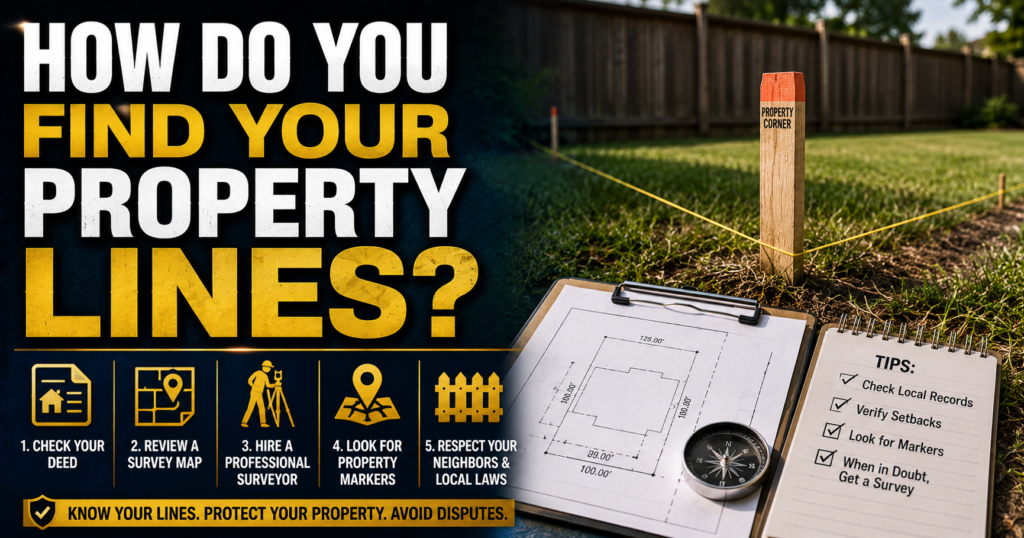
Property line disputes are among the most common issues homeowners face.
Many people assume they know exactly where their property begins and ends until they decide to:
- Build a fence
- Plant trees
- Install a shed
- Construct a driveway
- Add landscaping
That is often when questions about property boundaries suddenly become very important.
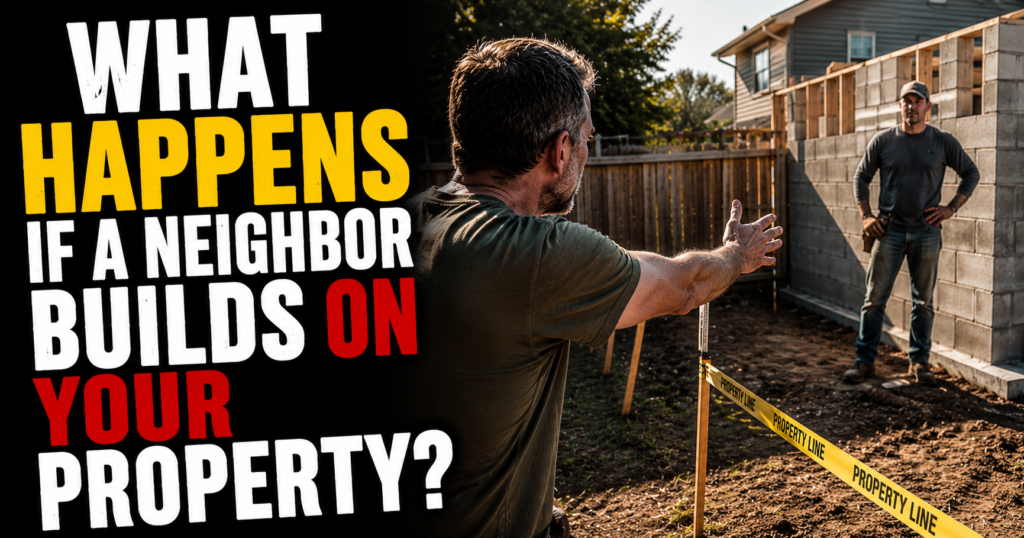
Knowing where your property lines are located can help prevent costly mistakes and reduce the risk of disputes with neighbors. Accurate boundary information becomes especially important when a structure may cross onto adjoining land, as explained in What Happens If a Neighbor Builds on Your Property?.
Quick Answer
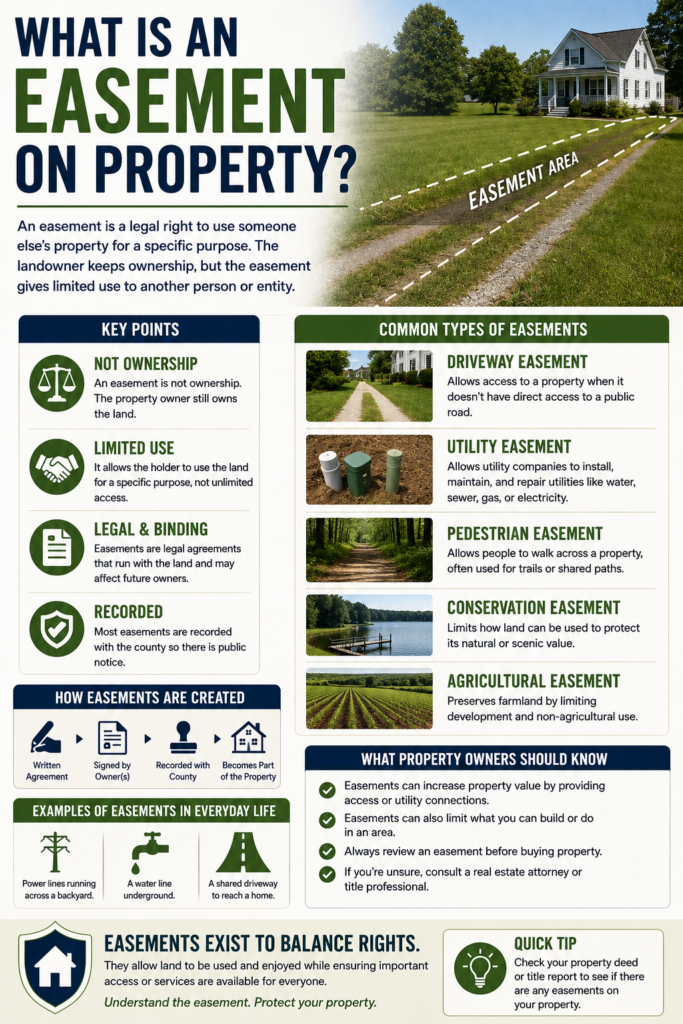
Property lines are commonly identified using property surveys, legal descriptions, boundary markers, county records, and professional surveying services. The best method depends on the property, available records, and the level of accuracy required. When boundary research involves access or use rights, What Is an Easement on Property? explains how easements can affect a property.
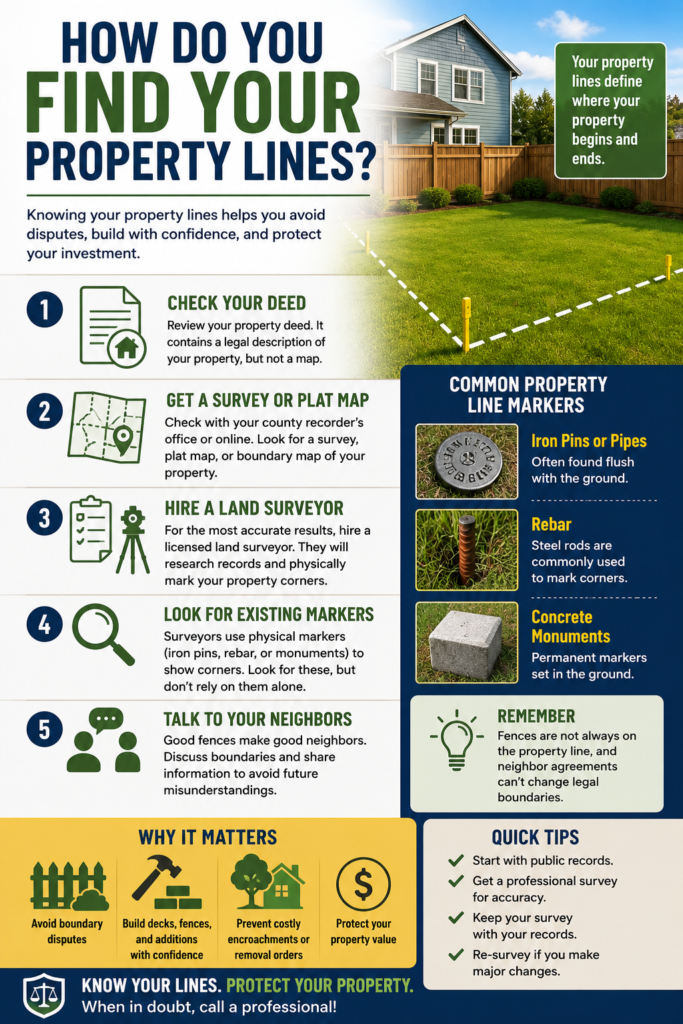
Why Property Lines Matter
Property boundaries affect many important decisions.
Examples include:
- Fence placement
- Building projects
- Landscaping
- Tree planting
- Easements
- Neighbor disputes
- Property sales
Mistaken assumptions about property boundaries can sometimes lead to expensive disagreements.


Start With Your Property Survey
One of the first places many homeowners look is their property survey.
A survey often identifies:
- Property corners
- Boundary dimensions
- Easements
- Structures
- Improvements
Many property owners received a survey during the home-buying process and may already have a copy in their records.
Check Your Closing Documents
Property surveys are often included with:
- Closing paperwork
- Title documents
- Mortgage records
- Property records
Reviewing these documents may help you locate existing boundary information without additional expense.
Look for Existing Property Markers
Some properties have physical boundary markers installed at corners or other key locations.
Examples may include:
- Survey pins
- Stakes
- Iron rods
- Concrete markers
These markers may have been installed during previous surveys.
However, locating markers can sometimes be difficult because they may become buried, covered by vegetation, or hidden over time.
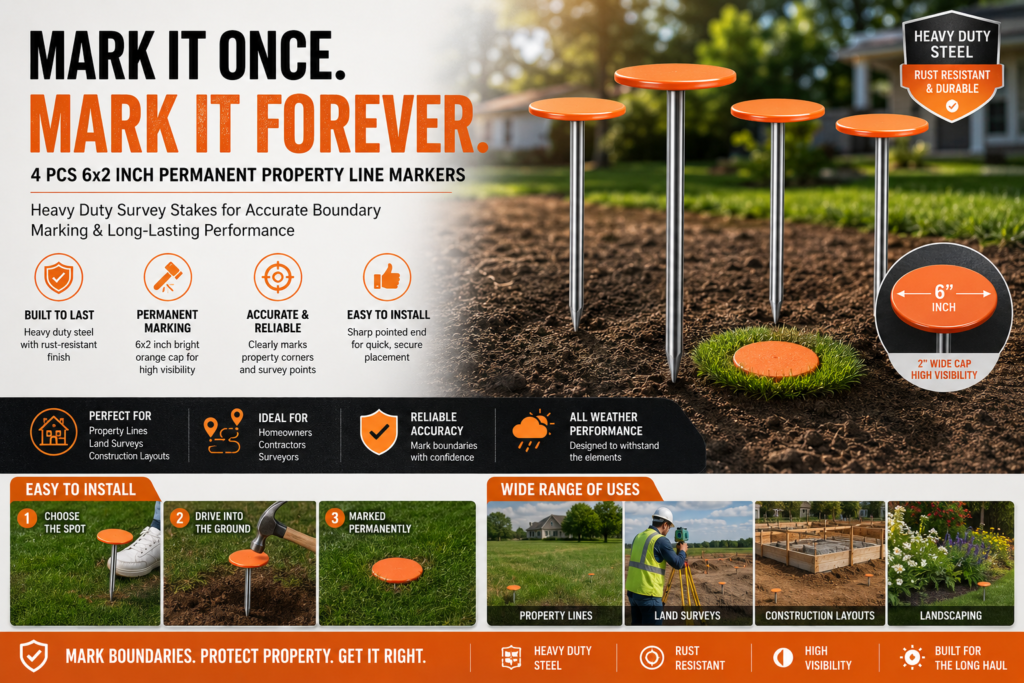
Many property owners use Permanent Property Line Markers after confirming boundaries so corners remain easier to identify in the future.
County Records May Provide Helpful Information
Many counties maintain records regarding:
- Property descriptions
- Parcel maps
- Ownership boundaries
- Survey information
These records can provide useful starting points when researching property boundaries.
However, online maps should not automatically be treated as precise survey documents.
Why Fence Placement Creates So Many Problems
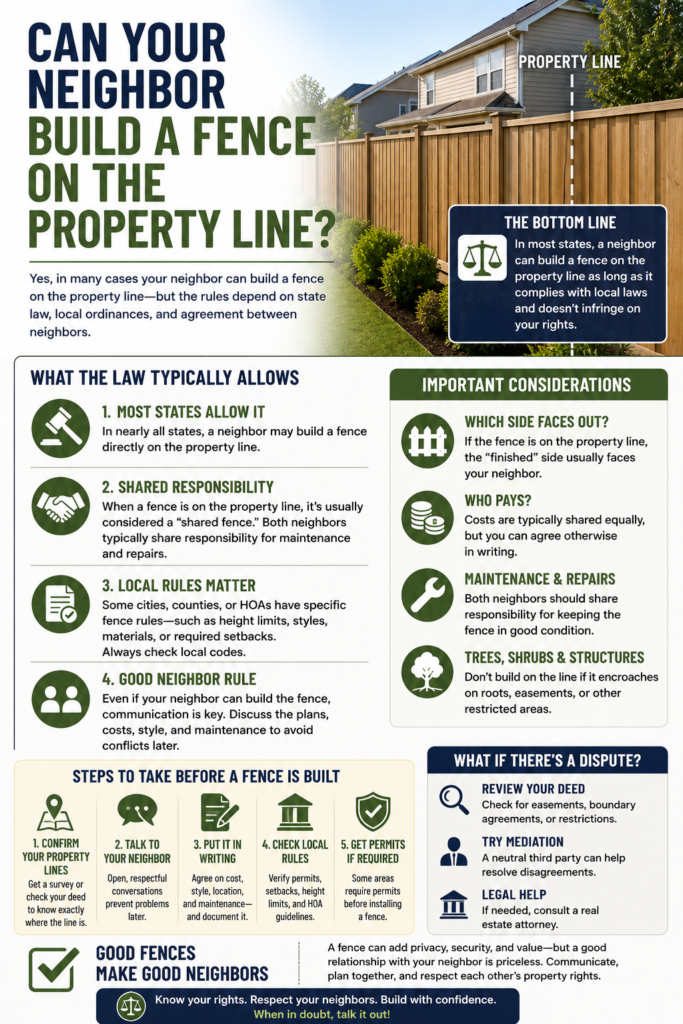
Fences are one of the most common reasons property line disputes occur. Fence-related boundary questions are also addressed in Can Your Neighbor Build a Fence on the Property Line?.
A fence built in the wrong location can create disagreements involving:
- Ownership
- Maintenance
- Access
- Encroachments
Before installing a fence, it is usually wise to verify boundary locations carefully.
Property Line Assumptions Can Be Wrong
Many homeowners rely on visual clues such as:
- Existing fences
- Tree lines
- Mowed areas
- Landscaping
While these features may suggest a boundary, they do not necessarily establish one.
In some cases, long-standing assumptions turn out to be incorrect.



When Accuracy Really Matters
Certain projects justify extra caution.
Examples include:
- Fence construction
- Home additions
- Garages
- Driveways
- Retaining walls
- Large landscaping projects
The more expensive the project, the more important it becomes to confirm property boundaries before work begins.
Good Boundary Information Prevents Future Problems
Property line questions are often much easier to resolve before construction begins than after improvements have already been completed.
Taking time to verify property boundaries can help homeowners avoid unnecessary disputes and protect their property rights.
When Should You Hire a Professional Surveyor?
Sometimes a property owner can gather enough information from existing records and visible markers.
Other situations require greater accuracy.
A professional survey may be especially helpful when:
- Building a fence
- Constructing a garage
- Installing a driveway
- Building an addition
- Resolving a boundary dispute
- Selling property
- Purchasing land
A licensed surveyor can identify boundaries using professional equipment, legal descriptions, and recorded property information.
For many property owners, a survey provides peace of mind before investing thousands of dollars into a project.
What If Your Neighbor Disagrees About the Property Line?
Boundary disagreements between neighbors are more common than many people realize.
Common disputes involve:
- Fences
- Trees
- Landscaping
- Driveways
- Sheds
- Mowing areas
The challenge is that both neighbors may genuinely believe they are correct.
Before making accusations or taking action, it is often wise to gather as much reliable information as possible regarding the boundary location.
Many property disputes can be avoided by verifying facts early.
What Is an Encroachment?
An encroachment occurs when a structure or improvement extends onto another person’s property.
Examples may include:
- Fences
- Garages
- Driveways
- Retaining walls
- Sheds
Encroachments can create legal and practical issues depending on the circumstances and applicable state laws.
Identifying property lines accurately is often the first step in determining whether an encroachment exists.
Can Trees Cause Property Line Disputes?
Absolutely.
Trees frequently become the source of disagreements between neighbors.
Common issues involve:
- Tree placement
- Branches extending across boundaries
- Falling limbs
- Root systems
- Property damage
Knowing where the property line is located often becomes important when addressing these situations.
What If Property Markers Cannot Be Found?
Property markers sometimes disappear over time.
Markers may become:
- Buried
- Covered by vegetation
- Damaged
- Removed during construction
When markers cannot be located, property owners often rely on surveys, legal descriptions, and professional assistance to verify boundaries.
Once boundaries are confirmed, many homeowners install Permanent Property Line Markers to make future identification easier.
Can Security Cameras Help With Property Disputes?
In some situations, yes.
Property owners occasionally deal with issues involving:
- Trespassing
- Boundary disagreements
- Property damage
- Unauthorized access
Video evidence can sometimes help document activity occurring near property boundaries.
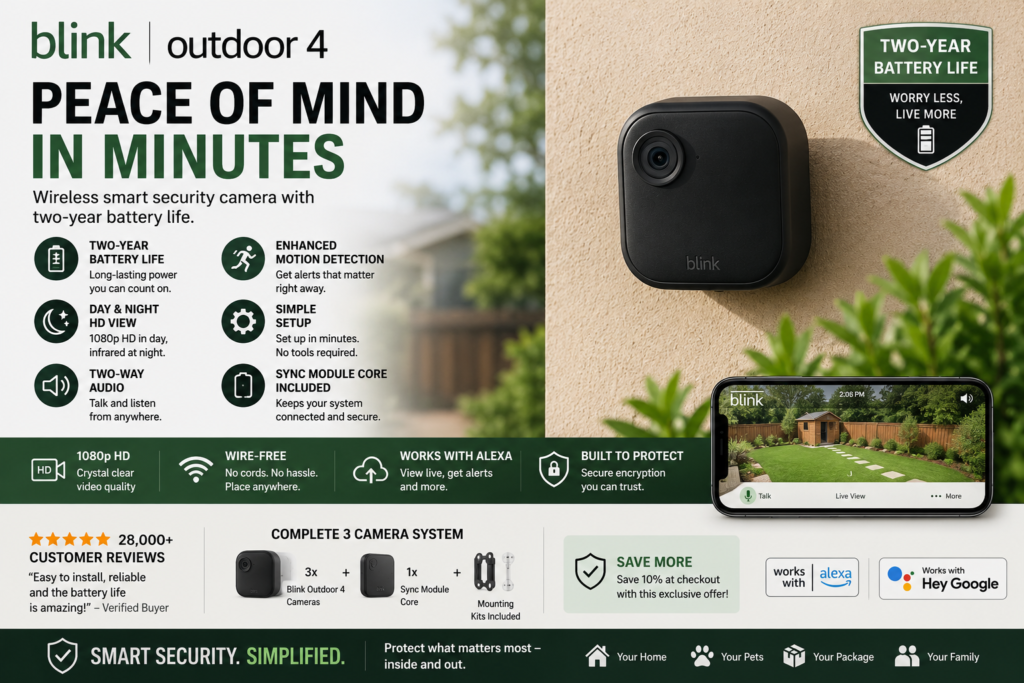
Many homeowners use the Blink Outdoor Security Camera System or a 4K Trail Camera to monitor areas where concerns exist.
The goal is not to create conflict but to document activity if questions arise later.
Exterior Lighting Can Help Protect Property
Property owners often install lighting around:
- Driveways
- Fences
- Property entrances
- Outbuildings
- Side yards
Good lighting can improve visibility and discourage unwanted activity.
Many homeowners use Solar Motion Security Lights because they can provide illumination without requiring electrical wiring.
Property Disputes Are Easier to Prevent Than Fix
One of the biggest mistakes property owners make is waiting until a dispute develops before researching their boundaries.
Once fences are built or structures are installed, resolving disagreements often becomes more difficult and expensive.
Verifying boundaries early can help prevent many common problems.
Frequently Asked Questions
How can I find my property lines for free?
Many property owners start with closing documents, county property records, parcel maps, and existing surveys. These resources may provide useful information, although they may not always offer survey-level accuracy.
Are online property maps accurate?
Online maps can be helpful starting points, but they should not automatically be treated as exact property boundary locations.
Do fences determine property lines?
Not necessarily. A fence may suggest where a boundary exists, but it does not automatically establish a legal property line.
What is the most accurate way to determine a property line?
A professional property survey is generally considered one of the most reliable ways to determine exact boundary locations.
Can neighbors disagree about property lines?
Yes. Boundary disputes are among the most common disagreements between neighboring property owners.
What are property markers?
Property markers are physical indicators used to identify boundary locations. Examples include survey pins, stakes, iron rods, and permanent markers.
Should I mark my property corners?
Many homeowners choose to mark confirmed property corners using visible boundary markers so they can be located more easily in the future.
What should I do before building a fence?
Verifying property boundaries before construction begins is often one of the smartest steps a homeowner can take.
Important Information
This article is provided for educational and informational purposes only and should not be considered legal advice. Property laws vary by state, county, municipality, and individual circumstances. Consult a qualified attorney, surveyor, or other professional regarding your specific situation.
For more information about our content standards, visit our Editorial Policy and Fact-Checking Policy pages.
About the Author
Sarah Reynolds is a legal research contributor for Legal Know It All who focuses on property rights, neighbor disputes, real estate issues, and consumer legal topics. She researches practical legal questions affecting homeowners and property owners and helps explain complex legal concepts in clear, everyday language.