
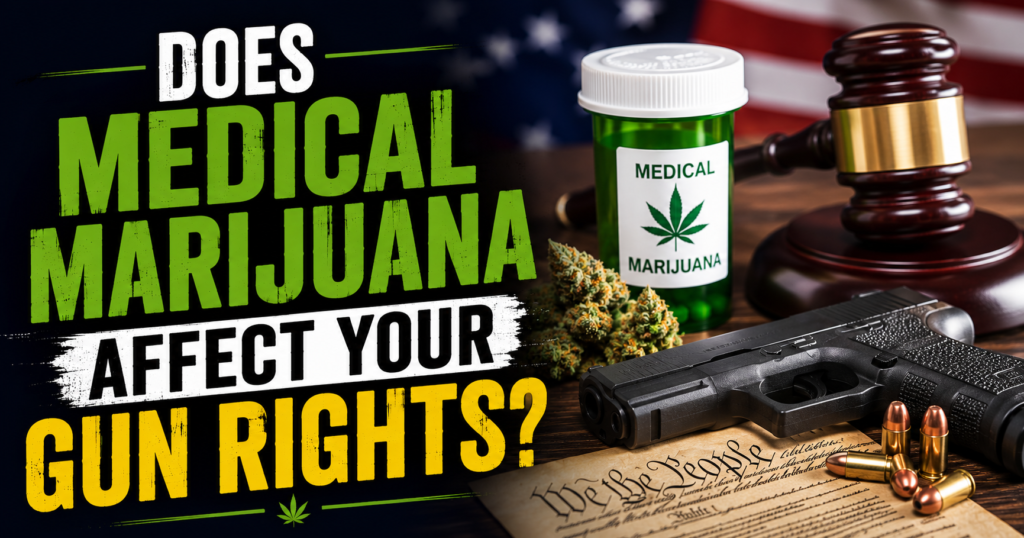
For years, one of the biggest legal questions facing medical marijuana patients had nothing to do with marijuana itself.
It involved firearms.
Millions of Americans live in states where medical marijuana is legal.
Many of them are hunters.
Many are veterans.
Many own firearms for self-defense, recreation, or sport shooting.
Yet those same individuals have spent years trying to navigate a legal landscape filled with uncertainty.
Can you have a medical marijuana card and own a gun?
Can marijuana use affect your Second Amendment rights?
Could a state-approved medical marijuana patient lose firearm rights under federal law?
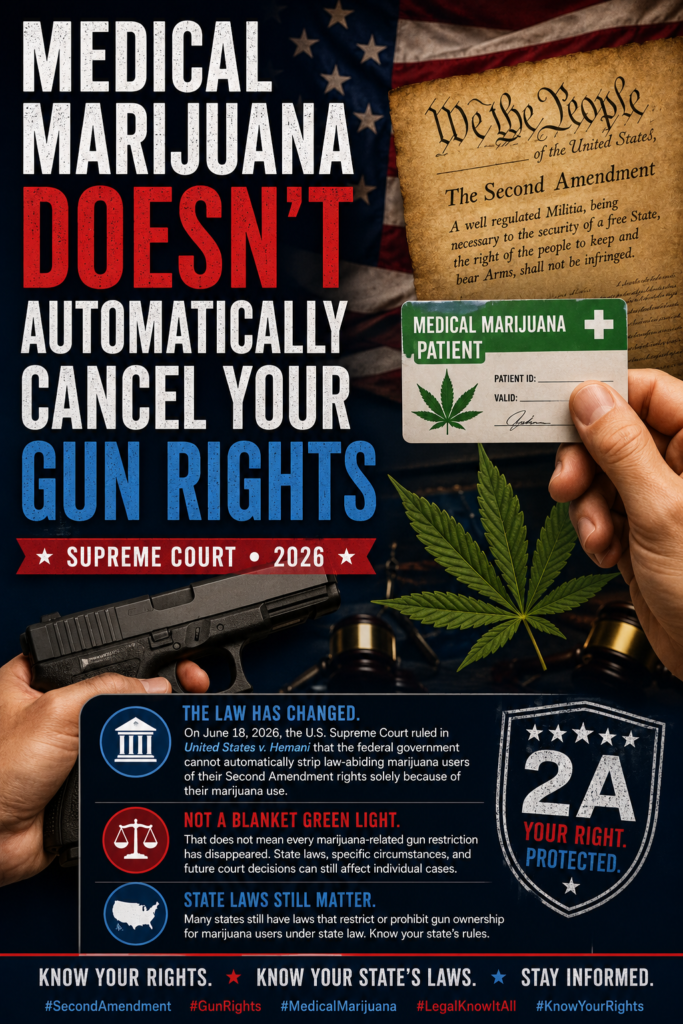
Those questions became even more important after the United States Supreme Court issued its unanimous decision in United States v. Hemani on June 18, 2026.
The Court ruled that the federal government could not automatically strip a person’s Second Amendment rights solely because that individual uses marijuana. The decision immediately became one of the most important marijuana-rights rulings in recent years.
Quick Answer
Medical marijuana use has historically created legal questions involving firearm ownership because state marijuana laws and federal firearm laws have not always aligned. The Supreme Court’s decision in United States v. Hemani significantly changed the conversation by rejecting the idea that marijuana users can automatically be treated as dangerous and stripped of constitutional rights solely because they use marijuana.
Why Medical Marijuana And Gun Rights Have Collided For Years
The problem has always been a conflict between state law and federal law.
Across much of the country, medical marijuana programs became legal and widely accepted.
Patients obtained physician recommendations and followed state regulations.
At the same time, marijuana remained a controlled substance under federal law.
That created years of confusion for lawful gun owners who also participated in state-approved medical marijuana programs.



The Hemani Decision Changed The Discussion
The Supreme Court’s decision did not suddenly make every marijuana-related firearm question disappear.
However, it did reject one of the government’s most important arguments.
The Court concluded that the government could not automatically deprive a marijuana user of Second Amendment rights without showing more than marijuana use alone.
That ruling immediately drew national attention because it challenged a long-standing assumption that marijuana use automatically justified firearm restrictions.
If you have not already read our full breakdown of the case, see:
Can Medical Marijuana Patients Own Guns?
Why Gun Owners Are Paying Attention
I’ve noticed that many gun owners are watching this issue closely because it touches two highly important topics:
- Constitutional rights
- Marijuana laws
Many people view both issues as questions involving personal freedom and individual rights.
That is one reason the Hemani ruling generated so much discussion among legal professionals, gun owners, and marijuana advocates.
Medical Marijuana Cards Continue To Raise Questions
One of the most common questions people ask is whether simply having a medical marijuana card affects firearm rights. The practical implications are discussed in Can Medical Marijuana Patients Own Guns?, which examines how medical marijuana use may affect firearm ownership under the Hemani ruling.
The answer is not always straightforward.
Questions involving:
- Medical marijuana cards
- State marijuana programs
- Firearm purchases
- Concealed carry permits
- Federal regulations
continue evolving as courts and lawmakers address these issues.
This Is Also A Constitutional Rights Story
Although marijuana receives most of the headlines, this case is fundamentally about constitutional rights.
The Supreme Court focused heavily on Second Amendment protections and whether the government had sufficient justification to remove those rights from marijuana users.
For readers interested in broader constitutional-rights topics, you may also find helpful information in our:
Constitutional Rights Category
and our articles:

Can You Refuse to Answer Police Questions?
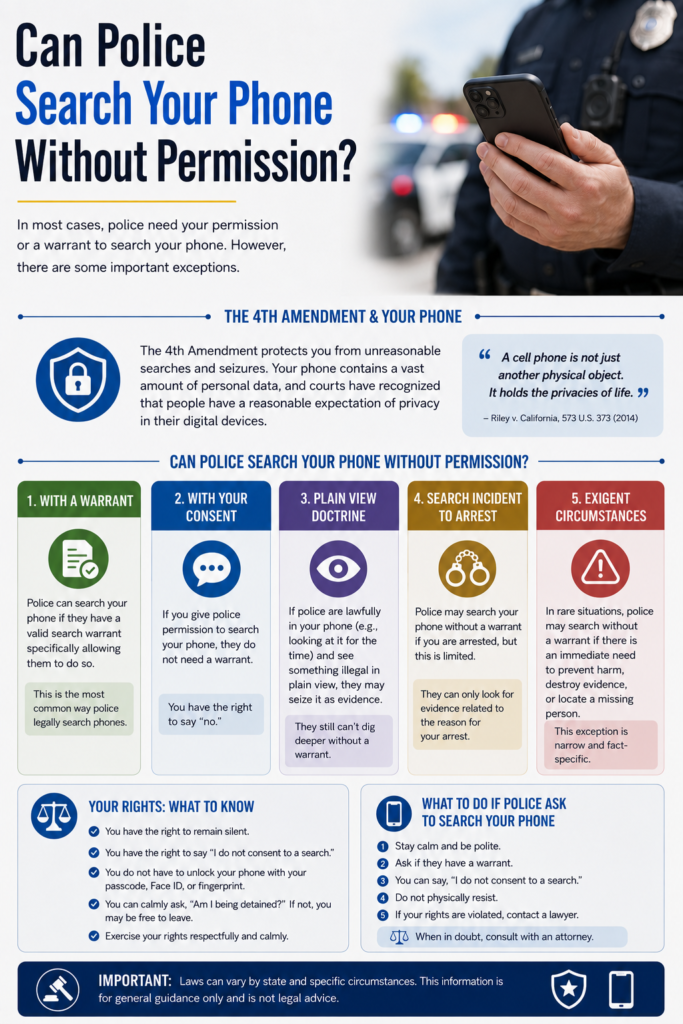
Can Police Search Your Phone Without Permission?
Marijuana Laws Are Changing Quickly
One thing I’ve learned is that marijuana law remains one of the fastest-changing areas of law in America.
Questions involving:
- Medical marijuana
- Recreational marijuana
- Firearm ownership
- Employment rights
- Federal regulations
continue evolving year after year.
That is why staying informed is often just as important as understanding the current rules.
The Supreme Court Opinion Is Worth Reading
Many articles summarize the Hemani decision.
Far fewer readers actually review the Court’s opinion.
If you would like to see the Court’s reasoning directly, you can:
Read the official Supreme Court opinion in United States v. Hemani
Primary sources are often the best way to understand what a court actually decided.
For years, one of the biggest legal questions facing medical marijuana patients had nothing to do with marijuana itself.
It involved firearms.
Millions of Americans live in states where medical marijuana is legal.
Many of them are hunters.
Many are veterans.
Many own firearms for self-defense, recreation, or sport shooting.
Yet those same individuals have spent years trying to navigate a legal landscape filled with uncertainty.
Can you have a medical marijuana card and own a gun?
Can marijuana use affect your Second Amendment rights?
Could a state-approved medical marijuana patient lose firearm rights under federal law?
Those questions became even more important after the United States Supreme Court issued its unanimous decision in United States v. Hemani on June 18, 2026.
The Court ruled that the federal government could not automatically strip a person’s Second Amendment rights solely because that individual uses marijuana. The decision immediately became one of the most important marijuana-rights rulings in recent years.


Quick Answer
Medical marijuana use has historically created legal questions involving firearm ownership because state marijuana laws and federal firearm laws have not always aligned. The Supreme Court’s decision in United States v. Hemani significantly changed the conversation by rejecting the idea that marijuana users can automatically be treated as dangerous and stripped of constitutional rights solely because they use marijuana.
Why Medical Marijuana And Gun Rights Have Collided For Years
The problem has always been a conflict between state law and federal law.
Across much of the country, medical marijuana programs became legal and widely accepted.
Patients obtained physician recommendations and followed state regulations.
At the same time, marijuana remained a controlled substance under federal law.
That created years of confusion for lawful gun owners who also participated in state-approved medical marijuana programs.
The Hemani Decision Changed The Discussion
The Supreme Court’s decision did not suddenly make every marijuana-related firearm question disappear.
However, it did reject one of the government’s most important arguments.
The Court concluded that the government could not automatically deprive a marijuana user of Second Amendment rights without showing more than marijuana use alone.
That ruling immediately drew national attention because it challenged a long-standing assumption that marijuana use automatically justified firearm restrictions.
If you have not already read our full breakdown of the case, see:
Can Medical Marijuana Patients Own Guns?
Why Gun Owners Are Paying Attention
I’ve noticed that many gun owners are watching this issue closely because it touches two highly important topics:
- Constitutional rights
- Marijuana laws
Many people view both issues as questions involving personal freedom and individual rights.
That is one reason the Hemani ruling generated so much discussion among legal professionals, gun owners, and marijuana advocates.
Medical Marijuana Cards Continue To Raise Questions
One of the most common questions people ask is whether simply having a medical marijuana card affects firearm rights.
The answer is not always straightforward.
Questions involving:
- Medical marijuana cards
- State marijuana programs
- Firearm purchases
- Concealed carry permits
- Federal regulations
continue evolving as courts and lawmakers address these issues.
This Is Also A Constitutional Rights Story
Although marijuana receives most of the headlines, this case is fundamentally about constitutional rights.
The Supreme Court focused heavily on Second Amendment protections and whether the government had sufficient justification to remove those rights from marijuana users.
For readers interested in broader constitutional-rights topics, you may also find helpful information in our:
Constitutional Rights Category
and our articles:
Can You Refuse to Answer Police Questions?
Can Police Search Your Phone Without Permission?
Marijuana Laws Are Changing Quickly
One thing I’ve learned is that marijuana law remains one of the fastest-changing areas of law in America.
Questions involving:
- Medical marijuana
- Recreational marijuana
- Firearm ownership
- Employment rights
- Federal regulations
continue evolving year after year.
That is why staying informed is often just as important as understanding the current rules.
The Supreme Court Opinion Is Worth Reading
Many articles summarize the Hemani decision.
Far fewer readers actually review the Court’s opinion.
If you would like to see the Court’s reasoning directly, you can:
Read the official Supreme Court opinion in United States v. Hemani
Primary sources are often the best way to understand what a court actually decided.