
One of the most common questions people ask during an insurance claim is:
“The adjuster already came out. Now what?”
It’s a fair question.
Many people assume that once the insurance adjuster inspects the damage, the hard part is over and a settlement check is right around the corner.
Sometimes that’s true.
Other times, the adjuster’s visit is only one step in a much larger process.
The reality is that an inspection does not automatically mean your claim is approved, denied, or ready for payment. If the inspection leads to a payment dispute, policyholders may still be able to Can You Negotiate an Insurance Settlement?.
Several important steps may still happen after the adjuster leaves.
Understanding those steps can help you avoid unnecessary stress and better understand what the insurance company is doing behind the scenes.
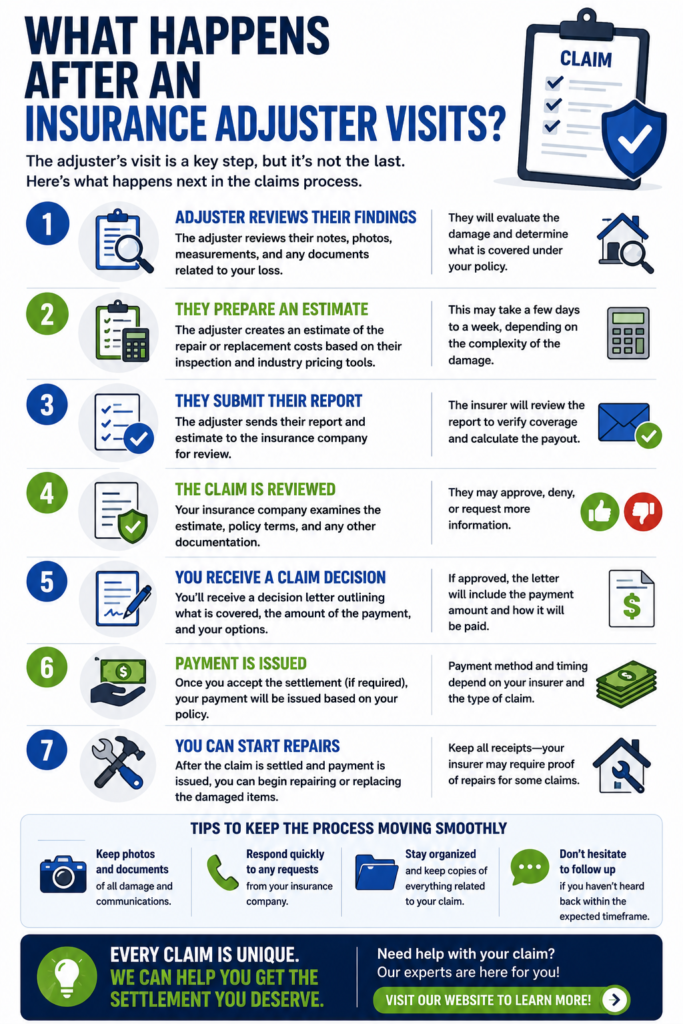
Quick Answer
After an insurance adjuster visits, they typically review the damage, prepare a report, gather additional evidence if needed, evaluate coverage, and submit information to the insurance company for further review. Depending on the claim, the insurer may approve the claim, request more information, negotiate repairs, make a settlement offer, or deny coverage. The timeline can range from a few days to several weeks or longer.
Why the Adjuster Visit Is Important
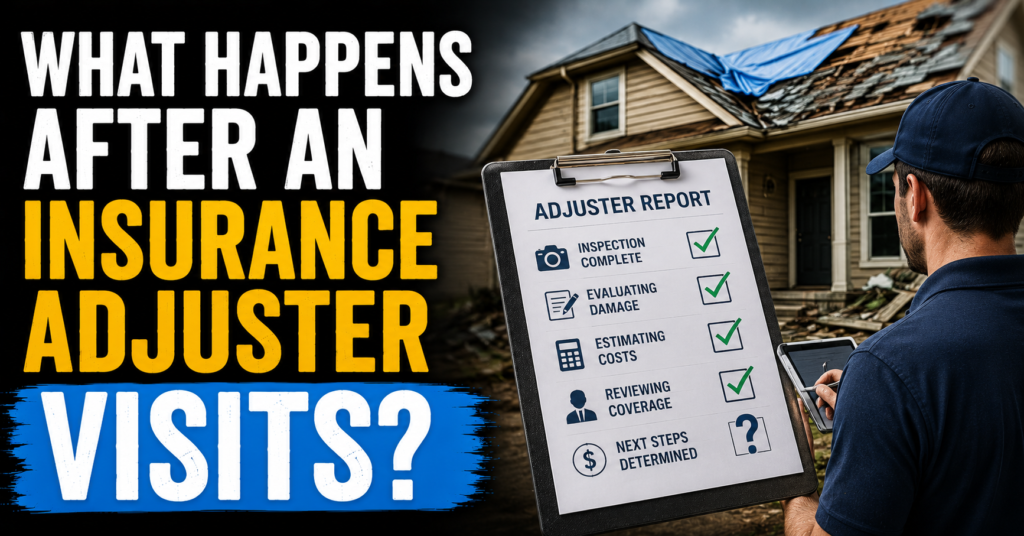
The adjuster’s inspection is often one of the most important parts of the claim process.
This visit allows the insurance company to gather information directly from the source.
Depending on the claim, the adjuster may inspect:
- Vehicle damage
- Roof damage
- Water damage
- Fire damage
- Storm damage
- Personal property losses
- Structural issues
The adjuster’s findings frequently play a major role in the final claim decision.
However, the inspection itself is usually not the final decision.
What Does the Insurance Adjuster Do During the Visit?
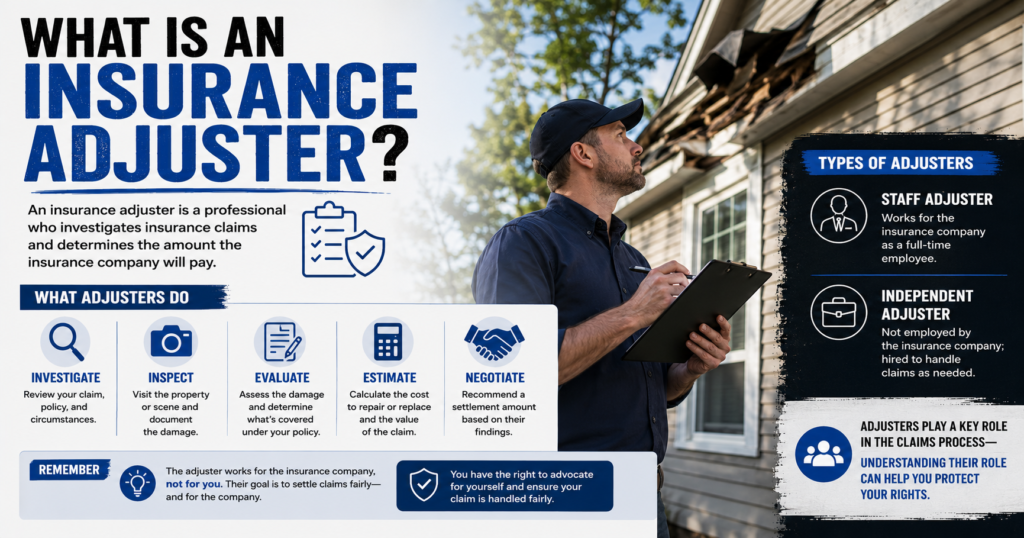
Many people are surprised to learn how much information adjusters collect during an inspection. Understanding What Is an Insurance Adjuster? What They Actually Do can clarify why the inspection may involve more than simply looking at the damage.
The adjuster may:
- Take photographs
- Measure damage
- Review repair estimates
- Ask questions
- Examine the cause of the loss
- Document observations
- Review supporting evidence
Their job is generally to gather facts rather than immediately approve or deny a claim.
This is one reason the adjuster often cannot tell you exactly how much money you’ll receive before the review process is complete.
The Adjuster Prepares a Report
After leaving the inspection site, one of the first tasks is usually preparing a report.
The report may include:
- Photographs
- Damage descriptions
- Inspection notes
- Repair estimates
- Recommendations
- Coverage observations
This report becomes an important part of the insurance company’s claim file.
In many cases, supervisors, claim managers, or other representatives may review the report before a final decision is made.

The Insurance Company Reviews the Findings
Once the adjuster’s report is submitted, the insurance company generally reviews the information.
This review often focuses on several questions:
What Caused the Damage?
The cause of the loss can affect coverage.
For example, storm damage may be treated differently than damage caused by poor maintenance.
Is the Damage Covered?
Not every loss is covered under every policy.
Insurance companies often compare the facts of the claim to the policy language.
How Much Will Repairs Cost?
Estimating repair costs is often a major part of the review process.
Additional estimates or contractor evaluations may be requested.
Why the Insurance Company May Request More Information
Many policyholders become concerned when additional documents are requested after the inspection.
In reality, this is often normal.
The insurer may request:
- More photographs
- Contractor estimates
- Receipts
- Proof of ownership
- Medical records
- Repair invoices
Receiving a request for more information does not automatically mean there is a problem with the claim.
It often means the insurer needs more information before making a decision.
What Happens After a Vehicle Damage Inspection?
Vehicle claims often follow a similar pattern.
After inspecting the vehicle, the adjuster may:
- Evaluate repair costs
- Review accident reports
- Compare damage to statements
- Review photographs and videos
- Determine fault issues
Accident-related claims frequently involve evidence gathering.
This is one reason documentation is so important.
Readers dealing with accident claims may also find useful information in our Traffic Laws category.
Why Video Evidence Can Help After an Accident
One of the most common reasons claims become delayed is disagreement about what happened.
If drivers provide conflicting accounts, additional investigation is often necessary.
Video footage can sometimes remove much of that uncertainty.

Many drivers use the VNV Front and Rear Dash Cam for Accident Evidence because it records both the front and rear of the vehicle and may help preserve important evidence if an accident occurs.
Clear evidence often helps insurers evaluate claims more efficiently.
What Happens After a Homeowners Insurance Inspection?
Homeowners claims often involve more moving parts than vehicle claims.
After inspecting a home, the insurance company may still need:
- Contractor estimates
- Engineering evaluations
- Roof inspections
- Structural reviews
- Additional photographs
Large property losses frequently require multiple reviews before a final decision is made.
Property owners may also find helpful information in our Property Rights category.
Does the Adjuster Make the Final Decision?
Not always.
This surprises many people.
While adjusters play an important role in the process, the final decision may involve additional review within the insurance company.
Depending on the claim, supervisors or claim managers may also participate in the decision-making process.
This is one reason an adjuster may finish an inspection without immediately telling you the outcome.
How Long After the Adjuster Visit Will You Hear Something?
This is one of the most common questions people ask.
Unfortunately, there is no universal answer.
Some policyholders hear back within days.
Others may wait several weeks.
The timeline often depends on:
- Claim complexity
- Amount of damage
- Documentation needs
- Coverage questions
- Company workload
If you’re wondering how long the overall process usually takes, our article How Long Does an Insurance Claim Take? What to Expect explains common timelines and delays in greater detail.
Why Claims Sometimes Get Delayed After the Inspection
One of the most frustrating situations for policyholders is when the inspection has already happened but nothing seems to be moving forward.
Many people assume the adjuster’s visit is the final step.
In reality, the insurance company may still be reviewing information behind the scenes.
Some common reasons for delays after an inspection include:
- Waiting for repair estimates
- Reviewing contractor reports
- Coverage questions
- Supervisor review
- Additional documentation requests
- High claim volume
- Disputed facts
A delay does not automatically mean your claim is in trouble.
However, understanding the reason for the delay can help reduce uncertainty.
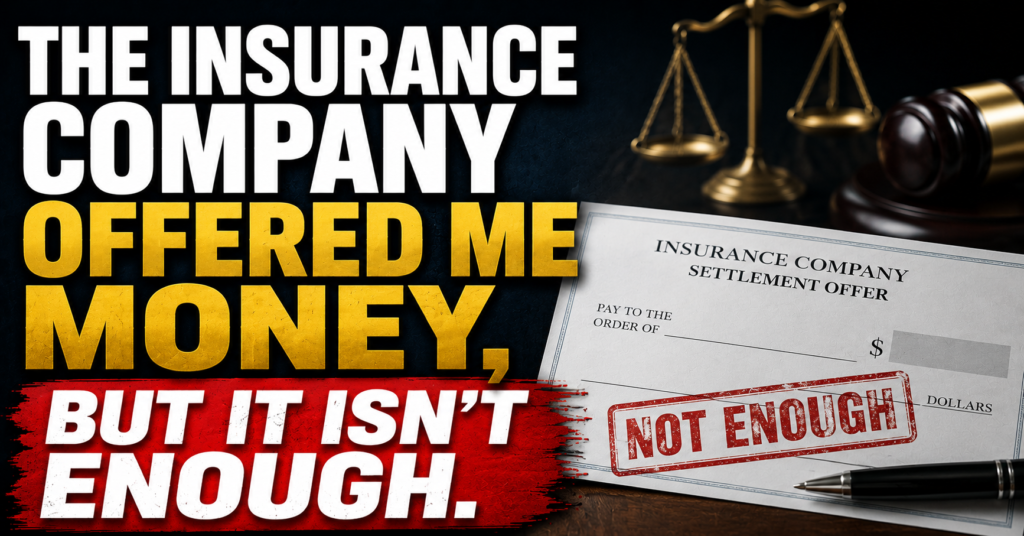
What If the Insurance Company Offers Less Than Expected?
Receiving a settlement offer can bring mixed emotions.
You may be relieved that the claim was approved.
You may also be disappointed if the amount seems lower than expected.
Settlement disagreements happen for many reasons.
The insurance company may:
- Estimate repairs differently
- Value damaged property differently
- Apply policy limitations
- Apply deductibles
- Disagree about the extent of damage
If you receive an offer that seems too low, carefully review the explanation provided by the insurer.
Additional estimates, documentation, or supporting evidence may sometimes help clarify disagreements.
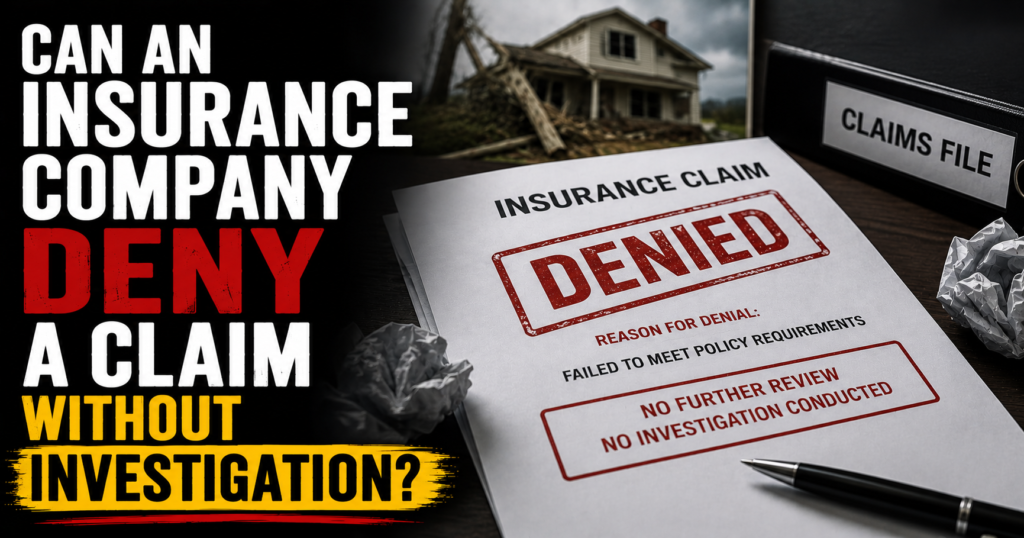
What Happens If the Claim Is Denied?
Not every inspection results in claim approval.
Sometimes the insurance company determines that coverage does not apply.
In other situations, the insurer may believe the evidence does not support the claim.
A denial can be frustrating, but it does not necessarily mean the matter is over.
Depending on the circumstances, policyholders may:
- Request clarification
- Provide additional information
- Submit new evidence
- Request reconsideration
- Explore other available options
Understanding the reason for the denial is usually the first step.
Can the Insurance Company Ask for Another Inspection?
Yes.
Many people are surprised when this happens.
In some situations, insurers request additional inspections because:
- New damage is discovered
- Experts need to review the loss
- Contractors identify additional issues
- Coverage questions remain unresolved
Additional inspections are often part of the investigation process and do not automatically indicate a problem with the claim.
What If the Insurance Company Stops Communicating?
Communication issues are one of the most common complaints policyholders have during the claims process.
If the adjuster or insurance company stops responding, consider:
- Following up politely
- Sending written requests
- Keeping records of communication
- Requesting a supervisor
Maintaining organized records is extremely important.
Keep copies of:
- Emails
- Letters
- Estimates
- Claim numbers
- Notes from phone calls
Consumers dealing with claim-related disputes may also find useful information in our Consumer Rights category.
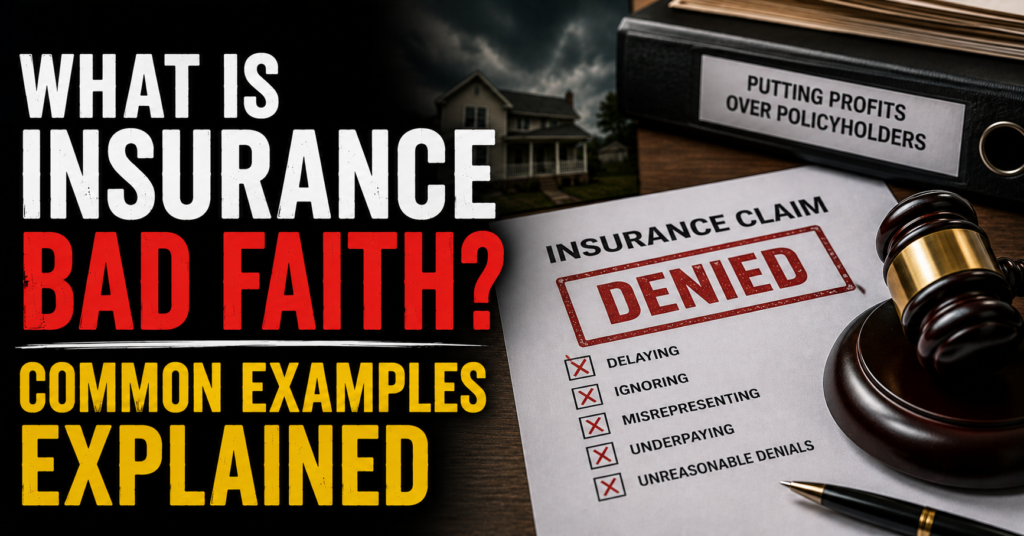
What Is Insurance Bad Faith?
At some point during a delayed or disputed claim, many people hear the term “insurance bad faith.”
In general, bad faith refers to situations where an insurer allegedly fails to properly handle a claim under applicable laws or policy obligations.
Examples sometimes associated with bad faith allegations include:
- Unreasonable delays
- Failure to investigate
- Ignoring important evidence
- Misrepresenting policy language
- Improper denials
Not every delay or denial qualifies as bad faith.
Insurance companies are allowed to investigate claims and ask questions.
The difference often comes down to whether the company is acting reasonably under the circumstances.
Because bad faith laws vary significantly by state, outcomes can differ depending on where you live.
Can You File a Complaint Against an Insurance Company?
In many states, yes.
Insurance companies are regulated by state agencies.
These agencies often accept complaints involving:
- Delayed claims
- Communication problems
- Settlement concerns
- Claim handling practices
While filing a complaint does not guarantee a specific outcome, it may help bring attention to a claim that appears stalled.
Readers interested in legal protections that vary by location may also want to browse our State Laws category.
Can You Sue an Insurance Company?
Sometimes.
Whether legal action is appropriate depends on many factors, including:
- State law
- Policy language
- The amount of money involved
- The reason for the dispute
- Available evidence
Some disagreements are resolved through negotiation.
Others may involve mediation, arbitration, or litigation.
Smaller disputes may sometimes qualify for procedures discussed in our Small Claims Court category.
What Should You Do After the Adjuster Leaves?
Many policyholders are unsure what they should be doing while waiting for the insurance company’s decision.
Generally, it helps to:
Save Every Document
Keep copies of all paperwork related to the claim.
Respond Quickly
If additional information is requested, provide it as soon as reasonably possible.
Monitor Communication
Watch for emails, letters, and phone calls from the insurance company.
Keep Expectations Realistic
Even after an inspection, additional review is often necessary before a final decision can be made.
Understanding What Happens Next Makes the Process Less Stressful
The period after an insurance adjuster visits can feel like a waiting game.
However, a great deal may still be happening behind the scenes.
Reports are being reviewed.
Coverage is being evaluated.
Repair estimates may be compared.
Additional information may be requested.
Understanding these steps can help you better navigate the process and recognize what is normal versus what may require additional attention.
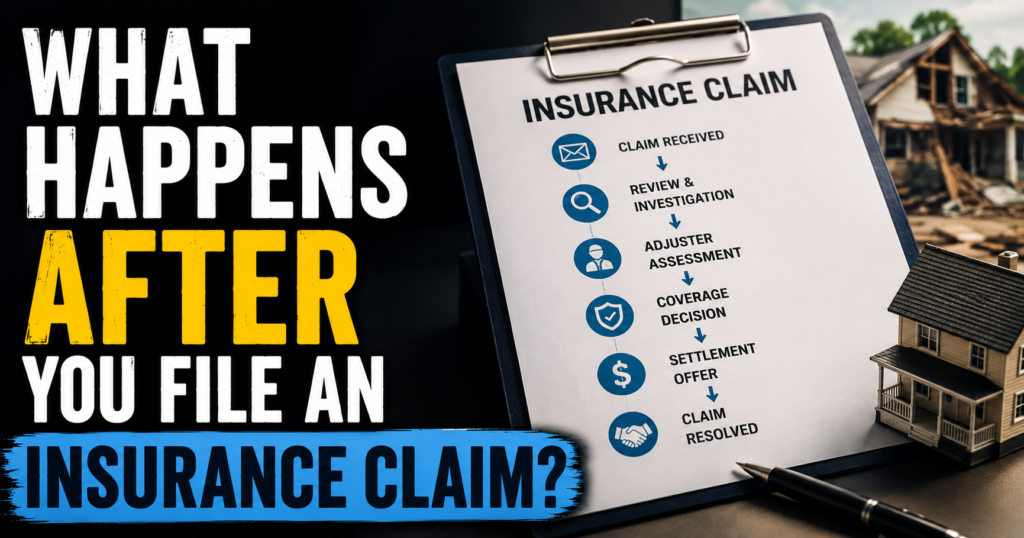
If you’re still early in the process, our article What Happens After You File an Insurance Claim? explains the stages that occur before the adjuster visit.

If you’re concerned about slow progress, our guide Why Do Insurance Companies Delay Claims? Common Reasonsexplains many of the factors that commonly cause delays.
Frequently Asked Questions
Does an insurance adjuster approve the claim on the spot?
Usually not. While some adjusters may provide preliminary information during an inspection, the final claim decision often requires additional review after the visit. The insurance company may still need to evaluate coverage, estimates, reports, and other documentation before reaching a decision.
How long after an adjuster visits will I receive a settlement offer?
The timeline varies significantly depending on the type of claim, the amount of damage involved, and whether additional information is needed. Some policyholders receive updates within a few days, while others may wait several weeks.
Can an insurance company deny a claim after the adjuster visits?
Yes. An inspection does not guarantee approval. The insurance company may still determine that coverage does not apply or that additional information is needed before a final decision can be made.
What if the adjuster missed some of the damage?
If you believe damage was overlooked, document the issue with photographs and supporting evidence. Additional inspections or reviews may sometimes be requested depending on the circumstances.
Should I get my own repair estimate?
Many homeowners and vehicle owners choose to obtain independent estimates. Additional estimates can sometimes provide useful information when evaluating repair costs and discussing settlement offers.
Can the insurance company send a second adjuster?
Yes. In some situations, insurers may request additional inspections, expert evaluations, engineering reports, or reviews by other adjusters.
Why hasn’t the insurance company called me after the inspection?
The company may still be reviewing the adjuster’s report, evaluating coverage, comparing estimates, or waiting for additional documentation. Following up politely can often help clarify the current status of the claim.
What documents should I keep after the inspection?
It is generally a good idea to keep copies of:
- Estimates
- Emails
- Letters
- Receipts
- Photographs
- Claim numbers
- Inspection reports
Maintaining organized records can be extremely helpful if questions arise later.
Does video evidence help after a vehicle accident?
In many situations it can. Video footage may provide additional information about how an accident occurred and help reduce disputes regarding fault. Many drivers choose the VNV Front and Rear Dash Cam for Accident Evidencebecause it records both the front and rear of the vehicle and may help preserve valuable evidence after a crash.
Where can I learn more about the insurance claims process?
You may find these related articles helpful:
- How Long Does an Insurance Claim Take? What to Expect
- What Happens After You File an Insurance Claim?
- Why Do Insurance Companies Delay Claims? Common Reasons
Important Information
This article is provided for educational and informational purposes only and should not be considered legal advice. Insurance laws vary by state, insurance policies differ, and individual circumstances can significantly affect claim outcomes. Information provided on Legal Know It All is intended to help readers better understand legal concepts and insurance claim procedures, not to provide legal representation or legal advice.
To learn more about how content is researched and reviewed, visit our Editorial Policy and Fact-Checking Policy pages.
You can also review our Disclaimer, About Us, Contact Us, and Terms and Conditions pages for additional information about this website.
About the Author
Sarah Reynolds is a legal research contributor for Legal Know It All who focuses on insurance claims, consumer rights, and everyday legal issues that affect American families. She researches claim procedures, policyholder rights, insurance regulations, and consumer-focused legal topics to help readers better understand complex subjects in plain English. Her goal is to make legal information easier to understand so readers can confidently navigate insurance claims and other legal processes.