
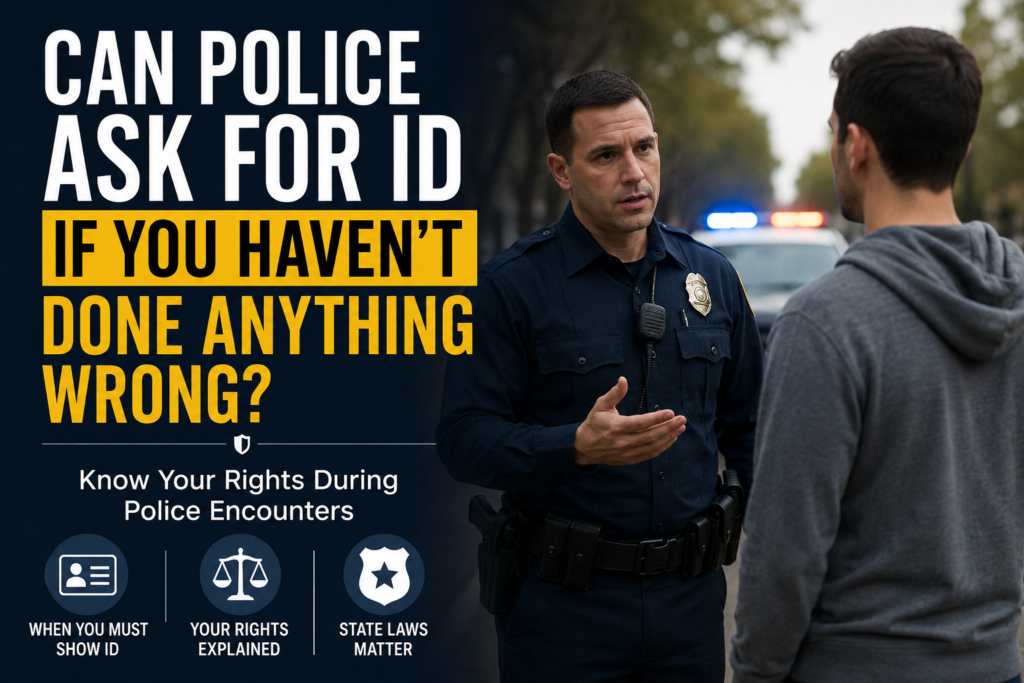
Many people assume police officers cannot ask for identification unless they’ve committed a crime. Others believe they must hand over their ID anytime an officer asks.
The reality is somewhere in the middle.
Police can often ask for identification even when you haven’t done anything wrong. Whether you’re legally required to provide it depends on the circumstances, the laws in your state, and why the officer is interacting with you in the first place. Those same circumstances-based questions can also matter when examining police searches of discarded trash.
Understanding these rules can help you avoid confusion and better protect your rights during a police encounter.
Can Police Ask For Identification?
In most situations, yes.
Police officers generally have the authority to approach people in public places and ask questions. That includes asking for your name, requesting identification, or simply starting a conversation.
Being asked for ID does not automatically mean you’re under arrest or suspected of a crime.

Many interactions between police and citizens are considered voluntary encounters. During these encounters, officers can ask questions, but you may not always be required to answer. The same distinction between a request and a legal requirement applies when officers ask to search a vehicle, as explained in consent during a traffic stop.
This is similar to how many people misunderstand search laws. For example, the rules surrounding Can Police Search Your Backpack or Purse? are often very different from what people assume.
Being Asked For ID Is Not The Same As Being Required To Show It
This is one of the most important distinctions people need to understand.
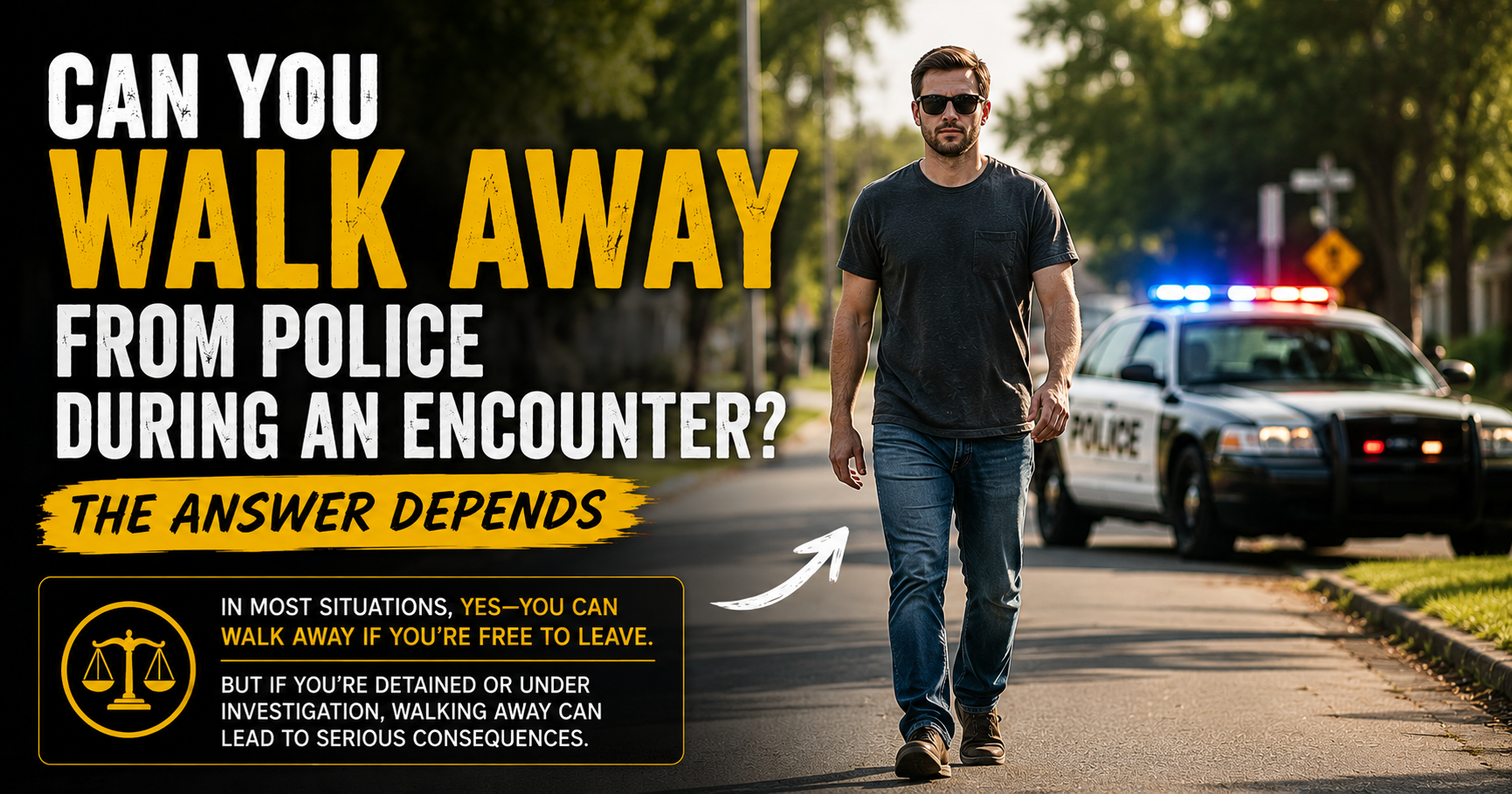
An officer can ask for identification in many situations. The fact that they ask does not automatically mean the law requires you to comply. The related question of whether you can walk away often depends on whether the encounter is voluntary or a detention.
The legal obligation depends on factors such as:
- Whether you’re driving
- Whether you’re being detained
- Whether reasonable suspicion exists
- Whether your state has a stop-and-identify law
That’s why there is no simple nationwide yes-or-no answer.

What Is A Consensual Encounter?
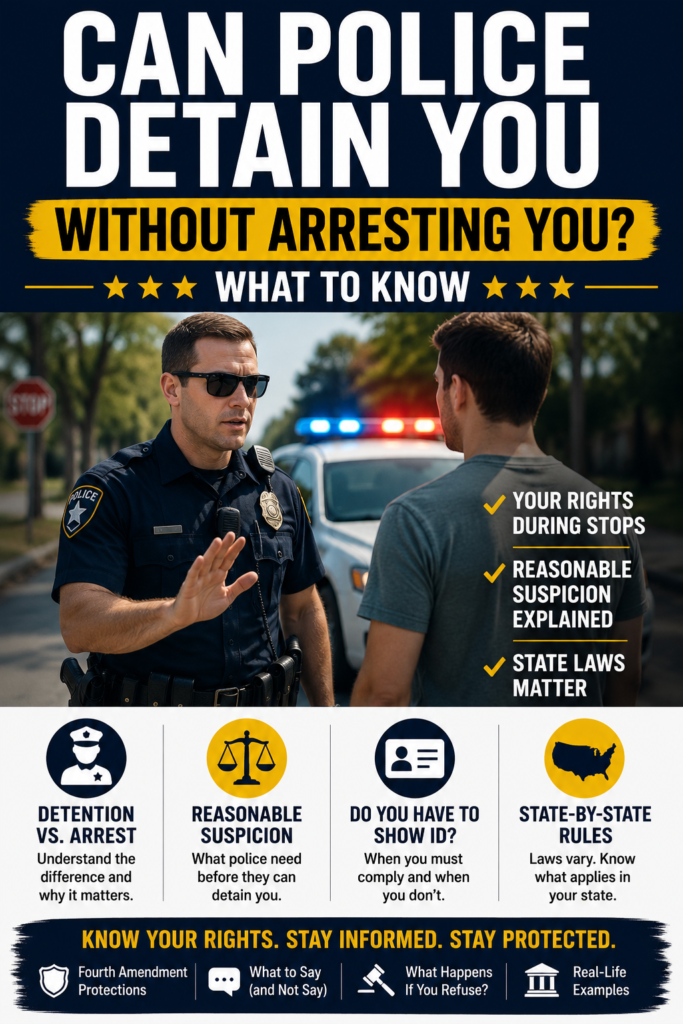
A consensual encounter occurs when an officer approaches you and begins a conversation without detaining you. The difference between a voluntary conversation and a detention is explained in Can Police Detain You Without Arresting You? What to Know.
Examples may include:
- Asking where you’re headed
- Requesting identification
- Asking if you’ve seen a particular person
- Seeking information about an incident
In many situations, you’re free to leave and not required to answer questions.
Many Americans are surprised to learn that officers can legally ask questions even when they have no evidence you’ve committed a crime.
What Are Stop-And-Identify Laws?
Some states have laws that require people to identify themselves during lawful investigative stops.
These laws are commonly known as stop-and-identify statutes.
Under these laws, police may require identification if they have reasonable suspicion that criminal activity is occurring.
Reasonable suspicion requires specific facts supporting the stop. It cannot be based solely on a hunch or guess.
The exact rules vary from state to state.

What Is Reasonable Suspicion?
Reasonable suspicion is a legal standard that allows police officers to briefly detain someone when specific facts suggest criminal activity may be occurring.
Examples could include:
- Matching the description of a suspect
- Being observed acting suspiciously
- Being present near the scene of a recently reported crime
This standard is lower than probable cause but still requires objective facts.
Understanding these standards becomes important whenever police begin asking questions. Many people are shocked to learn that Police Can Lie To You During An Investigation even though they must still follow constitutional limits during encounters.
Do You Have To Show ID During A Traffic Stop?
Traffic stops operate under different rules.
If you’re driving a vehicle, you’re generally required to provide a driver’s license when lawfully stopped by police.
Refusing to identify yourself while driving can result in citations, arrest, or additional legal consequences depending on state law.
This is one reason drivers have different obligations than pedestrians.
Traffic stops can also raise separate privacy concerns, especially when officers begin asking about phones, devices, or digital evidence. That’s why many readers also ask Can Police Search Your Phone Without Permission?.
What Happens If You Refuse To Show ID?
The answer depends on the situation.
If you’re driving, refusal can create immediate legal problems.
If you’re lawfully detained in a stop-and-identify state, refusal may also violate state law.
However, if you’re involved in a purely voluntary encounter where no legal obligation exists, refusing may not be a crime.
This is where many misunderstandings occur.
People often assume every police request automatically becomes a legal requirement. That simply isn’t always true.
Can Police Arrest You For Refusing To Identify Yourself?
Sometimes.
In certain situations, refusal can lead to arrest.
In others, it cannot.
Courts have repeatedly examined the balance between personal liberty and legitimate law enforcement interests.
Whether an arrest is lawful often depends on:
- State law
- The reason for the stop
- Whether reasonable suspicion existed
- Whether the encounter was voluntary
Because the facts matter so much, courts frequently evaluate these situations on a case-by-case basis.
Do You Have To Answer Police Questions?
Not necessarily.
Many people confuse identification requirements with questioning requirements.
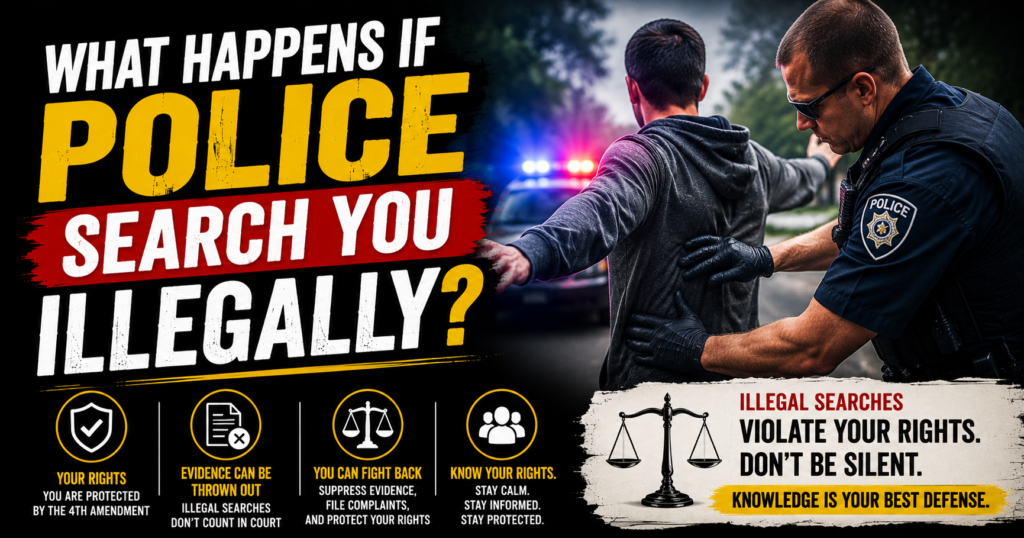
Even when police can lawfully ask for identification, you may still have constitutional rights regarding other questions. Those rights may become especially important when an encounter involves constitutional limits on police searches.
The Fifth Amendment often becomes important during criminal investigations.
If you’re unsure how these protections work, it’s worth understanding What Are Your Miranda Rights? and when they apply.
Common Myths About Police Asking For ID
Myth #1: Police Can Never Ask For ID Unless You’ve Broken The Law
False.
Police can often ask questions and request identification during voluntary encounters.
Myth #2: You Must Always Show ID
False.
The legal requirement depends on the circumstances.
Myth #3: Refusing Automatically Means You’re Guilty
False.
People decline requests for many lawful reasons.
Myth #4: Every Police Encounter Is Mandatory
False.
Many interactions remain entirely voluntary.
Why Knowing Your Rights Matters
Police encounters can be stressful, especially when people don’t understand what officers can and cannot legally require.
Knowing the difference between a request and a legal obligation can help you make informed decisions while remaining calm and respectful.
Modern investigations often involve far more than simple face-to-face interactions. Digital evidence now plays a major role in many cases, which is one reason articles like Can Police Use Your Social Media Posts Against You? have become increasingly important for Americans to understand.
The Bottom Line
So, can police ask for ID if you haven’t done anything wrong?
Yes.
In many situations, officers can legally ask for identification even when you are not suspected of a crime.
The more important question is whether you’re legally required to provide it.
That answer depends on the specific circumstances, your state’s laws, and whether the encounter is voluntary or part of a lawful detention.
Understanding these distinctions can help you better protect your rights the next time you interact with law enforcement.
Can Police Demand Identification From Passengers?
Passengers often assume they have the same obligations as drivers during a traffic stop.
That’s not always true.
Drivers are generally required to provide a valid driver’s license because they are operating the vehicle. Passengers may have different rights depending on state law and the circumstances of the stop.
In many situations, officers can ask passengers for identification. Whether passengers must comply often depends on whether police have a legal basis for requiring it.
This distinction becomes important because many traffic stops expand into larger investigations. Similar questions arise when discussing Can Police Search Your Hotel Room? and whether officers need additional legal justification before entering private spaces.
What If You’re Walking Down The Street?
Many Americans ask this question because they’re not worried about traffic stops.
They’re worried about being approached while walking through a neighborhood, park, shopping area, or public sidewalk.
Generally speaking, police officers can approach individuals in public and ask questions.
However, simply being present in a public place does not automatically mean you must identify yourself.
The legal analysis often depends on whether you’re free to leave or whether the officer has lawfully detained you.
Courts frequently look at the total circumstances surrounding the encounter when determining whether a person’s rights were violated.
How Can You Tell If You’re Being Detained?
This is one of the most important questions you can ask during a police encounter.
A common phrase attorneys recommend is:
“Officer, am I free to leave?”
The answer can provide valuable information about the nature of the encounter.
If the officer says yes, the interaction may remain voluntary.
If the officer says no, the situation may involve a detention, which could trigger different legal rules.

Understanding the difference between a voluntary conversation and a detention is often just as important as understanding search laws such as Can Police Search Your House Without a Warrant?.
Does The Constitution Protect You From Random ID Checks?
The Fourth Amendment protects Americans against unreasonable searches and seizures.
Courts have generally held that police cannot randomly detain people without legal justification.
That doesn’t mean officers cannot ask questions.
It means there are limits on when government officials can force compliance.
This distinction is at the heart of many constitutional disputes involving police encounters.
The balance between public safety and individual liberty has been debated in courts for decades.
What Happens In States With Stop-And-Identify Laws?
States with stop-and-identify laws generally allow officers to require identification during lawful investigative stops.
However, the officer must usually have a valid legal reason for the stop before the law applies.
Simply wanting to know who someone is may not always be enough.
The officer typically needs reasonable suspicion that criminal activity is occurring, has occurred, or is about to occur.
Even then, the exact requirements vary from state to state.
This is why two people in different states may receive very different answers to what appears to be the same question.
Can Refusing To Show ID Make Police More Suspicious?
Possibly.
While exercising a legal right does not automatically make someone guilty, refusing identification may sometimes cause officers to continue investigating a situation.
That does not mean the refusal itself creates probable cause.
However, it can influence how an encounter unfolds.
Many attorneys recommend remaining calm, respectful, and non-confrontational regardless of whether you choose to provide identification.
How you communicate often affects the overall interaction.
What If Police Threaten Arrest?
If an officer tells you that failure to identify yourself could result in arrest, arguing on the side of the road is rarely productive.
Courts are generally the proper place to challenge unlawful police actions.
Attempting to physically resist or escalate the situation can often create additional legal complications.
Questions involving arrests frequently overlap with other constitutional protections. That’s why many readers also want to know Can Police Ask For ID If You Haven’t Done Anything Wrong? and how those encounters may affect later investigations.
Why So Many Americans Get This Wrong
Movies, television shows, social media videos, and internet rumors have created widespread confusion about identification laws.
Some people believe police can demand identification from anyone at any time.
Others believe they never have to identify themselves under any circumstances.
Neither extreme is completely accurate.
The real answer usually depends on where you are, what you’re doing, why the officer stopped you, and the laws of your state.
That’s what makes this area of law so misunderstood.
Key Takeaways
Police officers can often ask for identification even when you haven’t done anything wrong.
Whether you must provide it depends on the circumstances.
Drivers generally face different obligations than pedestrians.
States have different stop-and-identify laws.
Reasonable suspicion often plays a major role in determining what officers can legally require.
Most importantly, understanding your rights before an encounter happens is far easier than trying to learn them during one.
Common Situations Where Police May Ask For ID
Many people imagine police asking for identification during a major criminal investigation.
In reality, identification requests often happen during everyday situations.
Officers may ask for ID during:
- Traffic stops.
- Responses to suspicious activity calls.
- Trespassing complaints.
- Disturbance investigations.
- Witness interviews.
- School or campus incidents.
- Public events with increased security.
- Welfare checks involving public safety concerns.
Being asked for identification does not automatically mean you’re in trouble. In many cases, officers are simply gathering information about a situation.
The important thing to remember is that the reason an officer asks for identification and whether you’re legally required to provide it are often two separate questions.
State Laws Can Change The Answer
One reason this topic creates so much confusion is that identification laws are not identical across the United States.
A person who is legally required to identify themselves during a stop in one state may have different rights in another.
That’s why online advice can sometimes be misleading.
A video filmed in Arizona, Nevada, Texas, or Florida may not accurately reflect the laws where you live.
Whenever possible, it’s important to understand the laws that apply in your own state rather than relying on generalized internet advice.
The Biggest Mistake People Make During Police Encounters
The biggest mistake is assuming they know the law when they actually don’t.
Some people immediately hand over identification because they think they have no choice.
Others refuse every request because they believe police can never require identification.
Both approaches can create problems.
The smartest approach is remaining calm, staying respectful, avoiding arguments, and understanding the legal difference between a request and a lawful order.
Knowing your rights before an encounter happens is often far more valuable than trying to learn them while standing on the side of the road.
About The Author
Michael Harrington
Michael Harrington writes about constitutional rights, police procedures, consumer protection laws, property disputes, insurance claims, and everyday legal issues affecting Americans. His goal is to explain complex legal topics in plain English so readers can better understand their rights and make informed decisions when legal questions arise.