
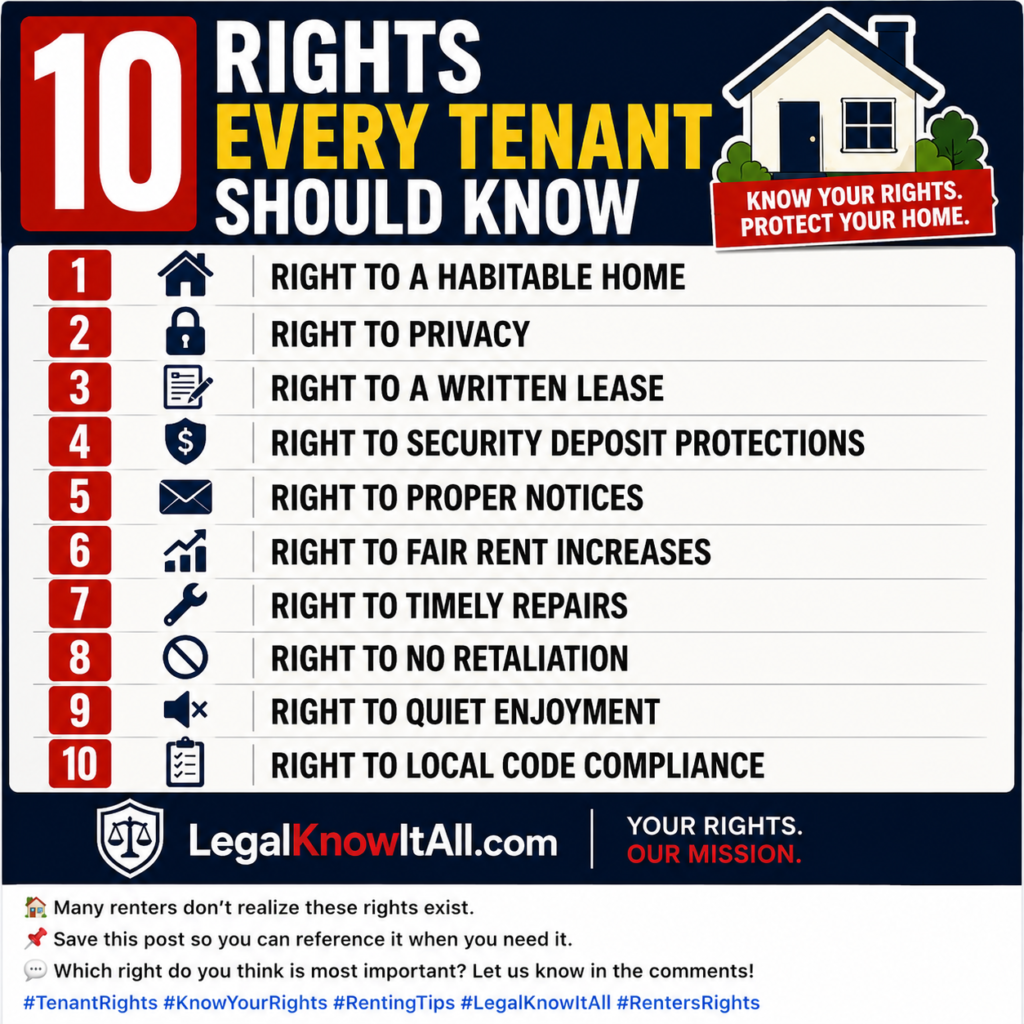
Renting a home, apartment, duplex, or condo comes with more legal protections than many people realize. While landlords have rights, tenants also have important legal protections that help ensure safe housing, fair treatment, and privacy.
Many renter disputes happen simply because tenants do not know what rights they have under the law.
While landlord-tenant laws vary by state, the following rights are commonly recognized throughout much of the United States.
If you’re dealing with a rental dispute, you may also find our Landlord-Tenant Laws section helpful for additional guidance on common rental issues.
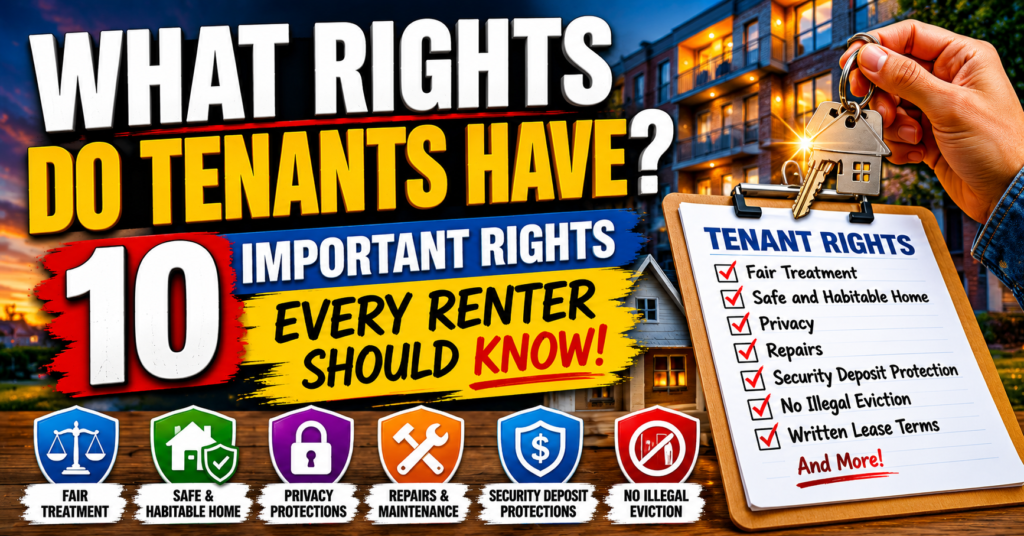
1. The Right to a Habitable Home
One of the most important rights tenants have is the right to live in a safe and habitable property.
Landlords are generally responsible for maintaining basic living conditions such as:
- Safe electrical systems
- Working plumbing
- Heating and cooling systems where required
- Structurally sound buildings
- Functional doors and windows
- Protection from serious health hazards
A rental property that lacks these basic necessities may violate housing laws.
Many disputes involving unsafe living conditions fall under both Property Rights and Real Estate Law, making it important to understand your legal options if repairs are ignored.
2. The Right to Privacy

Just because a landlord owns the property does not mean they can enter whenever they want. Questions about privacy and access also arise in discussions of police searches of property, although the legal standards may differ by situation.
Most states require landlords to provide reasonable notice before entering a rental unit except during emergencies.
Examples may include:
- Scheduled inspections
- Repairs
- Property showings
- Maintenance work
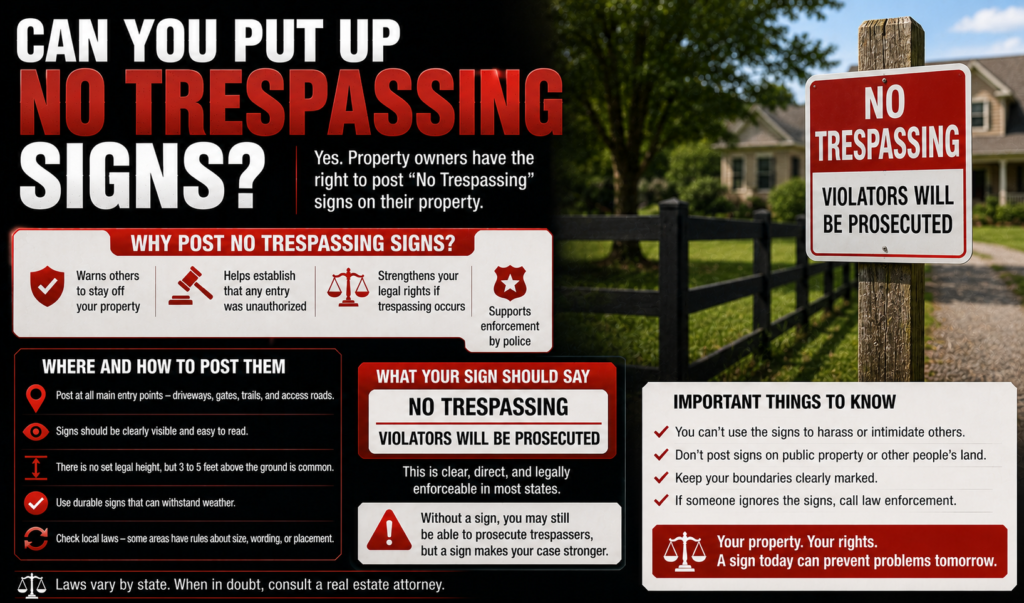
Unauthorized entries can create serious legal issues and may violate tenant privacy rights. For property owners dealing with unauthorized entry, posting No Trespassing signs may help clearly communicate that access is not permitted.
Many renters are surprised to learn that repeated unauthorized entry can sometimes become a significant landlord-tenant dispute.
3. The Right to a Written Lease
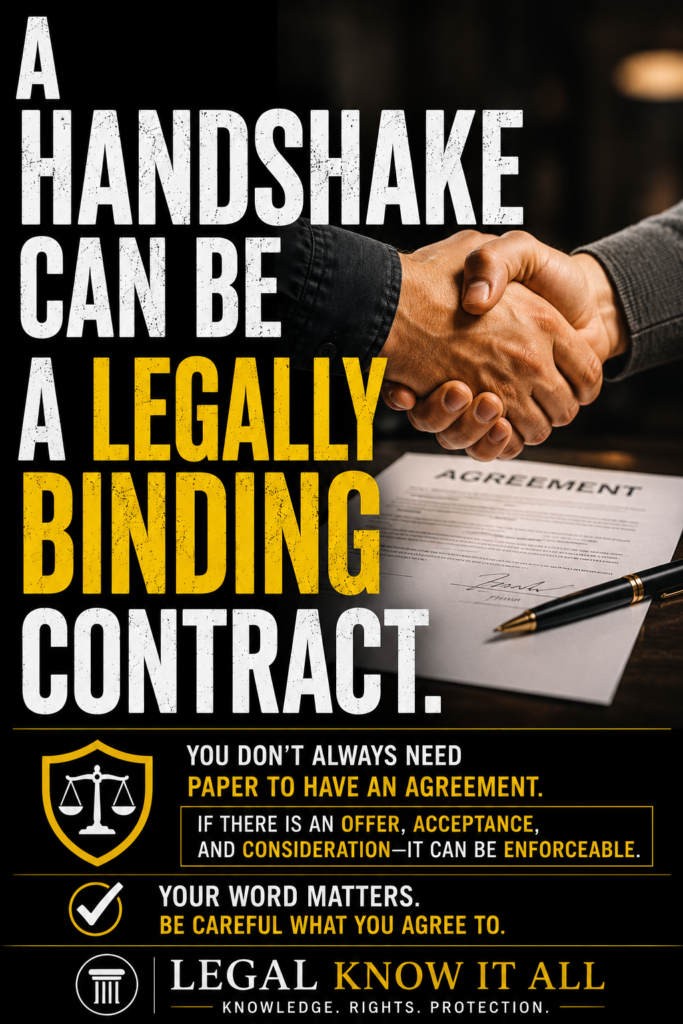
A written lease helps protect both landlords and tenants. When no written lease exists, understanding Can a Handshake Agreement Be Legally Binding? may help clarify what evidence matters in a rental dispute.
A lease typically outlines:
- Rent amounts
- Due dates
- Security deposit terms
- Maintenance responsibilities
- Pet policies
- Lease duration
Without a written agreement, misunderstandings can occur much more easily.
Keeping copies of lease agreements, amendments, notices, and correspondence is always a smart idea. Many renters choose to scan and store important documents digitally so they can access them when disputes arise.
4. The Right to Security Deposit Protections
Security deposit laws often limit how landlords can collect, hold, and return tenant deposits.
In many states, landlords must:
- Return deposits within a certain timeframe
- Provide itemized deductions
- Follow state-specific deposit rules
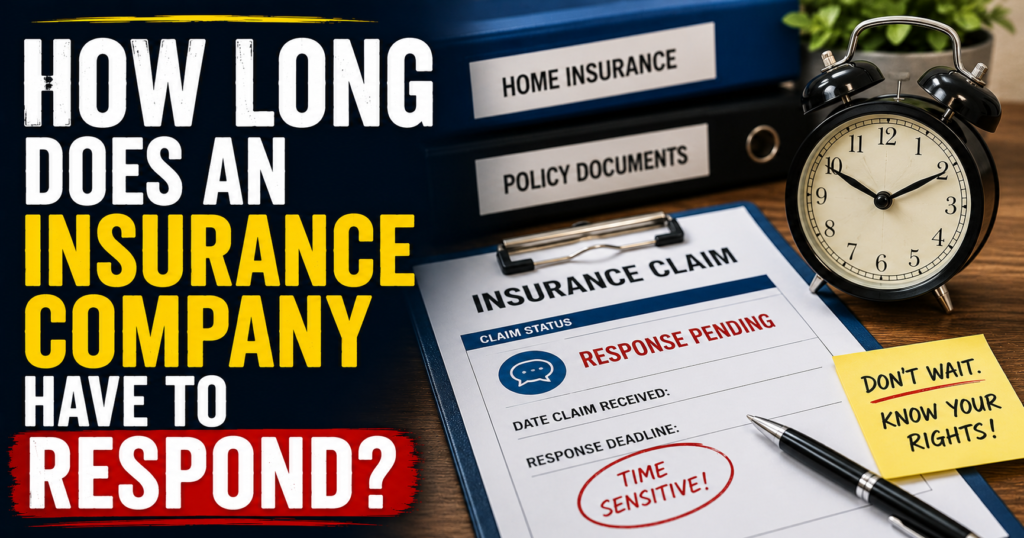
Improperly withholding a security deposit is one of the most common rental disputes in the country.
If negotiations fail, tenants may need to pursue recovery through Small Claims Court, which is often designed to handle disputes involving relatively small amounts of money.


5. The Right to Proper Notices
Landlords generally cannot make major changes without providing notice.
Depending on state law, notices may be required for:
- Rent increases
- Lease terminations
- Evictions
- Property entry
- Rule changes
Notice requirements vary significantly from state to state, which is why understanding your local laws is important.
Our State Laws section can help renters learn more about laws that apply where they live.
6. The Right to Fair Rent Increases
Many tenants assume landlords can raise rent whenever they want.
In reality, rent increases are often governed by lease agreements and local laws.
While some areas allow significant flexibility, others may have restrictions regarding:
- Notice requirements
- Timing
- Rent control regulations
- Anti-discrimination laws
Understanding these rules can help renters avoid confusion when lease renewal time arrives.
7. The Right to Timely Repairs
When something breaks, landlords generally have a responsibility to address legitimate repair issues within a reasonable timeframe.
Common repair requests include:
- Plumbing leaks
- Heating failures
- Electrical problems
- Appliance issues
- Roof leaks
- Pest infestations
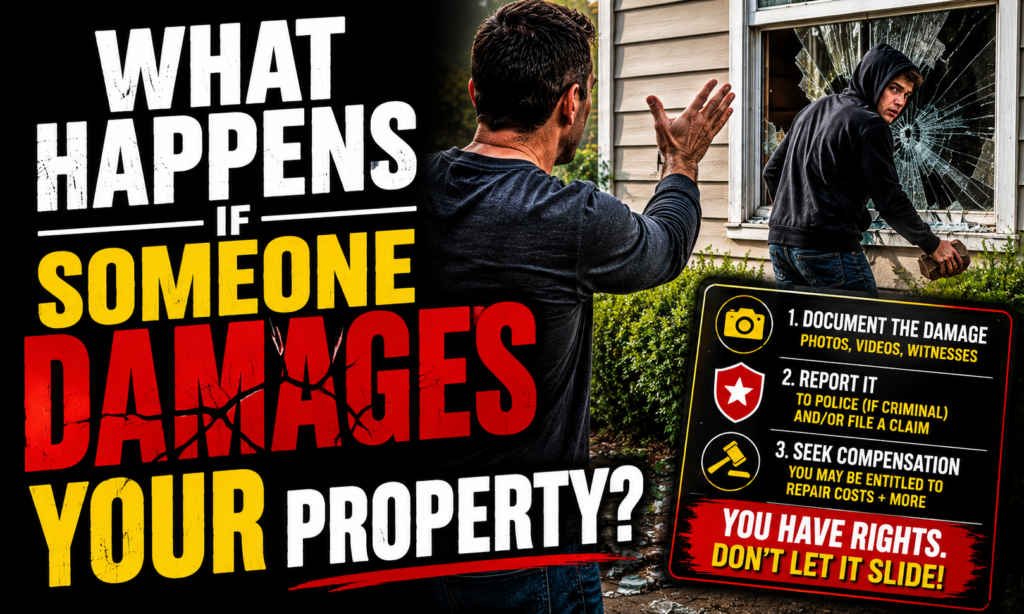
Failing to address serious repair issues can sometimes create legal liability for property owners. When damage has already occurred, what to do after property damage can help property owners understand practical next steps.
Water damage disputes are especially common, which is one reason many renters use water leak detectors to help identify leaks before they become major problems.
8. The Right to Protection From Retaliation
Landlords generally cannot legally retaliate against tenants for exercising their legal rights.
Examples may include:
- Reporting housing code violations
- Requesting repairs
- Filing complaints with government agencies
- Participating in tenant organizations
Retaliation laws exist to help ensure tenants can report legitimate concerns without fear of punishment.


9. The Right to Quiet Enjoyment
“Quiet enjoyment” is a legal concept many renters have never heard of.
It generally means tenants should be able to use and enjoy their rental property without unreasonable interference.
Examples may include:
- Excessive landlord intrusions
- Serious ongoing disturbances
- Repeated disruptions that affect normal living conditions
When quiet enjoyment is substantially disrupted, legal remedies may be available depending on the circumstances.
10. The Right to Local Code Compliance
Rental properties are generally required to comply with local building, health, and safety codes.
Code violations can involve:
- Electrical hazards
- Structural problems
- Fire safety issues
- Unsafe stairways
- Health hazards
- Occupancy violations
Tenants who discover serious violations may be able to report them to local housing authorities for investigation.
Understanding local code requirements is often one of the most overlooked aspects of tenant rights.
What Should You Do If Your Landlord Violates Your Rights?
If you believe your rights have been violated, documentation becomes extremely important.
Keep records of:
- Lease agreements
- Notices
- Emails
- Text messages
- Photographs
- Repair requests
- Inspection reports
Good documentation can make a significant difference if a dispute escalates.
Our Legal Forms section and Court Procedures section can help renters better understand the legal process if formal action becomes necessary.
When Should a Tenant Consider Legal Action?
Not every dispute requires a lawsuit.
However, legal action may be worth considering when:
- Significant money is involved
- Safety hazards are ignored
- Security deposits are improperly withheld
- Illegal evictions occur
- Serious property damage results from landlord negligence
- Repeated violations continue despite written requests
Many tenant disputes can be resolved through communication, but some situations require stronger legal remedies.
Learning your rights is often the first step toward protecting yourself as a renter. The more you understand about landlord responsibilities, lease agreements, and housing laws, the better prepared you’ll be if problems arise during your tenancy.