
Getting pulled over is stressful enough. Seeing a police officer ask to search your vehicle can make the situation even more intimidating.
Many people automatically assume they have no choice but to say yes.
I’ve noticed this is one of the biggest misconceptions people have about their legal rights during a traffic stop.
The truth is that police officers cannot always search your vehicle whenever they want. The Fourth Amendment provides protections against unreasonable searches and seizures, but there are also important exceptions that every driver should understand.
Knowing your rights before you’re sitting on the side of the road with flashing lights behind you can help you make better decisions if the situation ever happens to you.
Can Police Search Your Car Without Your Permission?
The short answer is: sometimes.

There are situations where police can legally search a vehicle without obtaining your consent. When a vehicle search may exceed constitutional limits, What Happens If Police Search You Illegally? explains the potential consequences.
There are also situations where they cannot.
The answer depends on the specific circumstances of the stop and why the officer wants to conduct the search.
Many drivers mistakenly believe officers need a warrant every time they want to search a vehicle.

In reality, vehicle searches are treated differently than searches of homes under the law. The privacy protections and exceptions involved in homes are examined in Can Police Search Your House Without a Warrant?.

What Does the Fourth Amendment Say?
The Fourth Amendment to the United States Constitution protects people from unreasonable searches and seizures.

In simple terms, government officials generally need legal justification before searching your property. Similar privacy questions arise when officers seek to search Can Police Search Your Backpack or Purse? Know Your Rights.
However, courts have recognized several exceptions when it comes to vehicles.
Because cars can easily be moved, courts have historically given law enforcement more flexibility in certain situations than they would have when searching a house.
Even so, that does not mean you lose all constitutional protections simply because you’re driving.

Can Police Search Your Car If You Give Consent?
Yes.
One of the most common ways vehicle searches occur is through consent.
An officer may ask questions such as:
- Do you mind if I take a look inside?
- Can I search your vehicle?
- You don’t have anything illegal in there, do you?
- Mind if I check your trunk?
Many people are surprised to learn that they generally have the right to refuse consent.
If you voluntarily allow the search, the officer typically does not need a warrant.
I’ve seen many people assume saying “no” automatically makes them look guilty. Legally speaking, exercising a constitutional right is not an admission of wrongdoing.
What Is Probable Cause?
Probable cause is one of the biggest exceptions to the warrant requirement.
If an officer develops probable cause that evidence of a crime is inside a vehicle, they may be able to search it without your permission.
Examples that may create probable cause include:
- The smell of illegal drugs.
- Visible drug paraphernalia.
- Open containers of alcohol.
- Contraband in plain view.
- Evidence connected to a crime.
Every situation is different, and courts often evaluate the specific facts involved.


What Is Plain View?
Police officers do not have to ignore evidence they can clearly see.
If illegal items are visible through a window or sitting openly inside the vehicle, that observation may justify additional investigation.
For example:
- Drugs on the passenger seat.
- Stolen property visible in the back seat.
- Open alcohol containers.
- Illegal weapons in plain view.
The key issue is whether the officer was lawfully present when the observation occurred.
Can Police Search Your Car After an Arrest?
In some situations, yes.
Vehicle searches connected to arrests can become complicated because different rules may apply depending on the circumstances.
Factors that may matter include:
- Why the arrest occurred.
- Whether the arrested person could access the vehicle.
- Whether evidence related to the alleged crime may be inside.
Because these cases are highly fact-specific, courts often analyze them individually.
What Happens During a Traffic Stop?
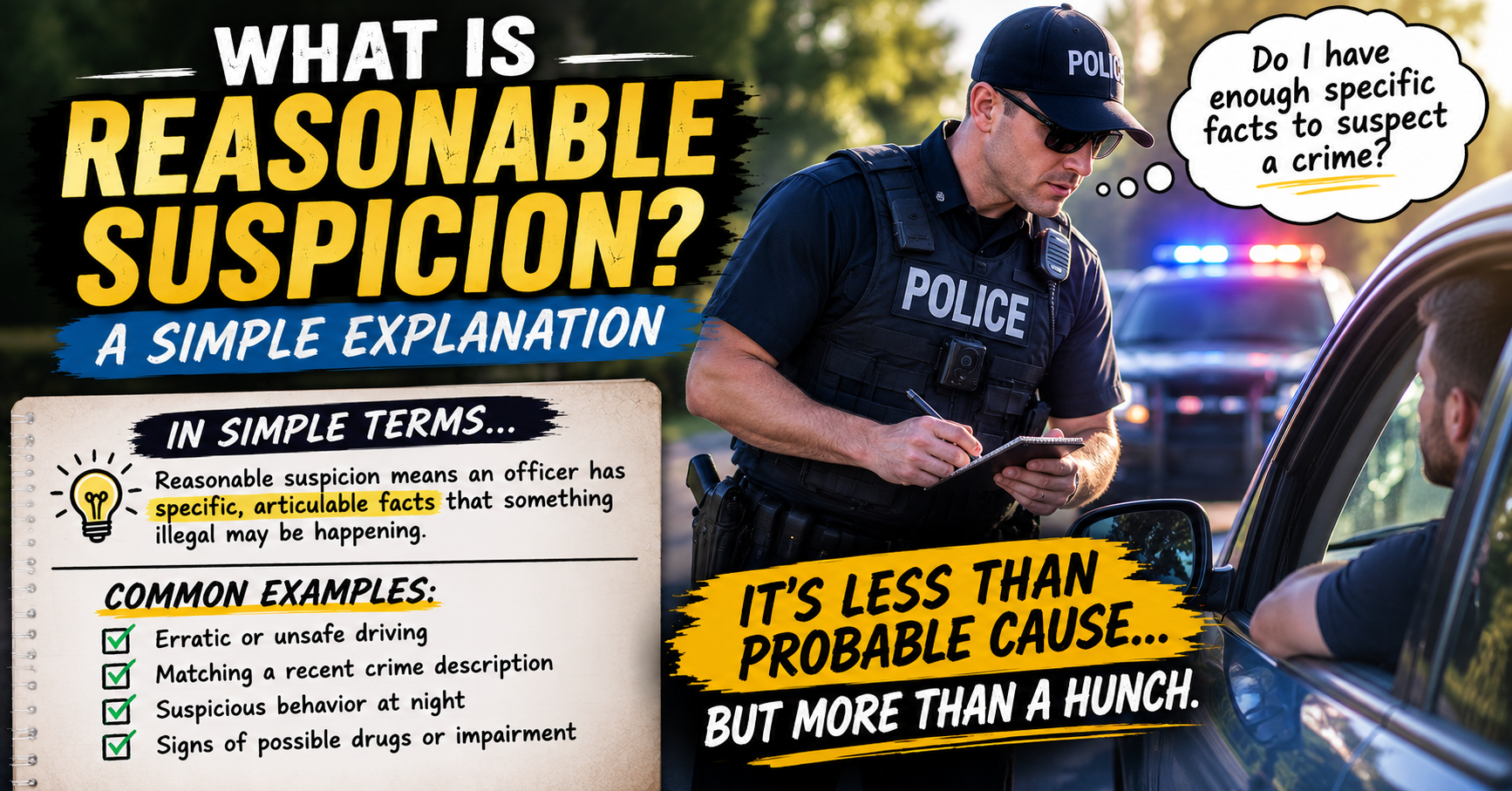
Most vehicle searches begin with a routine traffic stop.
Common reasons include:
- Speeding.
- Expired registration.
- Broken taillights.
- Failure to signal.
- Suspicious driving behavior.
If you are stopped, remain calm and polite.
Arguing rarely improves the situation.
You should also avoid making statements that could create unnecessary legal problems later.

Our article on Can Police Lie to You During an Investigation? explains some of the tactics law enforcement may legally use during questioning.
Do You Have to Answer Questions?
In many situations, drivers must provide basic identifying information.
However, broader questioning can become more complicated.
Many people don’t realize there is a difference between identifying yourself and voluntarily answering investigative questions.
If you are unsure about your rights in a particular situation, remaining calm and respectful is often the best approach.

What If Police Search Your Car Anyway?
Even if you refuse consent, an officer may still conduct a search if they believe legal grounds exist.
That does not automatically mean the search was lawful.
Whether a search was legal may later become an issue in court.
This is one reason documentation can be important.
Make note of:
- The time of the stop.
- The officer’s name.
- What was said.
- Whether consent was requested.
- Whether consent was refused.
- What areas were searched.
Good records can become valuable if questions arise later.
Can Dash Cameras Help During Traffic Stops?
Absolutely.
Dash cameras can provide an objective record of what occurred during a stop.
Video footage may help document:
- Officer interactions.
- Statements made during the stop.
- Search requests.
- Vehicle positioning.
- Traffic conditions.
This is one reason many drivers install dash cameras even if they’ve never been involved in an accident.
The same evidence that helps after a crash can also be valuable during other legal situations.

You can learn more by reading 10 Types of Proof That Can Strengthen Your Insurance Claim Case, which discusses how documentation and evidence often play a major role in legal disputes.
Common Myths About Vehicle Searches
If I Refuse Consent, Police Will Automatically Search Anyway
Not necessarily.
Refusing consent does not automatically give police the right to search.
They still generally need a valid legal basis.
If I Have Nothing to Hide, I Should Always Agree
Many legal professionals would disagree with this thinking.
Constitutional rights exist regardless of whether someone has done anything wrong.
Police Need a Warrant for Every Vehicle Search
This is one of the most common misconceptions.
Several exceptions may allow vehicle searches without a warrant.
What Should You Do If Police Ask to Search Your Vehicle?
Every situation is unique, but many legal experts recommend:
- Stay calm.
- Be respectful.
- Avoid arguing.
- Do not physically interfere.
- Clearly communicate your wishes.
- Remember your constitutional rights.
Being polite and exercising your rights are not mutually exclusive.
You can do both at the same time.
Understanding Your Rights During Traffic Stops
Traffic stops can be intimidating, especially if an officer asks to search your vehicle.
Understanding how consent, probable cause, and constitutional protections work can help you navigate the situation more confidently.
If you’re interested in learning more about your legal rights, visit our Traffic Laws section, Criminal Law category, and Legal Questions resource center for additional information.
About the Author
Michael Harrington
Michael Harrington is a legal researcher and writer who focuses on helping everyday Americans better understand their rights and responsibilities under the law. He regularly writes about criminal law, consumer rights, insurance claims, property disputes, and constitutional protections. His goal is to explain complicated legal topics in plain English so readers can make more informed decisions when legal issues arise.