
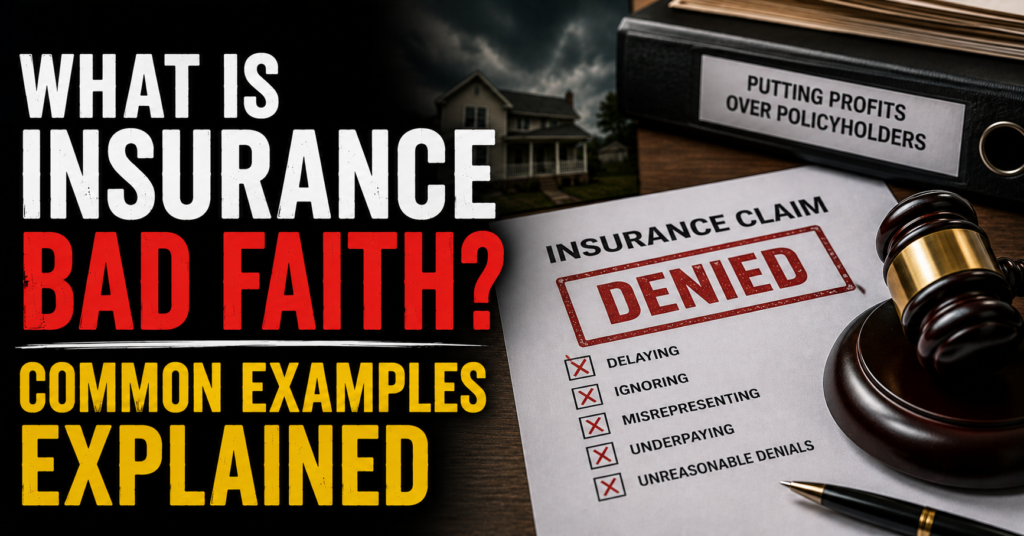
What Is Insurance Bad Faith?
Most insurance claims involve disagreements.
That alone does not mean the insurance company did anything wrong.
Insurance companies are allowed to investigate claims, review evidence, ask questions, and even deny claims when valid reasons exist.
However, there are situations where policyholders believe the insurance company went beyond a simple disagreement and failed to handle the claim fairly.
This is where the term insurance bad faith often enters the conversation.
Bad faith is one of the most misunderstood concepts in insurance law.
Many people assume every denied claim is bad faith.
Others assume bad faith only applies when a company outright refuses to pay.
The reality is much more complicated.
Quick Answer
Insurance bad faith generally refers to situations where an insurance company allegedly fails to handle a claim fairly, honestly, or in accordance with applicable laws and policy obligations. Examples may include unreasonable delays, failure to investigate, ignoring important evidence, misrepresenting policy terms, or improperly denying valid claims. The exact legal definition varies by state.
Why Insurance Companies Have a Duty to Handle Claims Fairly
When you purchase insurance, you’re entering into a contractual relationship with the insurance company.
In exchange for premiums, the insurer agrees to provide certain protections under the policy.
Part of that relationship generally includes handling claims in a reasonable manner.
Insurance companies are not expected to approve every claim.
They are expected to:
- Review claims fairly
- Investigate when appropriate
- Consider available evidence
- Communicate with policyholders
- Follow applicable laws and regulations
When policyholders believe those obligations were not met, allegations of bad faith sometimes arise.
Not Every Claim Denial Is Bad Faith
This is probably the most important thing to understand.
A denied claim does not automatically mean bad faith occurred.
For example, an insurance company may deny a claim because:
- Coverage does not apply
- A policy exclusion applies
- Required information is missing
- Evidence does not support the claim
- Policy limits have been reached
A denial based on legitimate policy terms is not automatically bad faith simply because the policyholder disagrees with the decision.
The key question is often whether the insurer handled the claim reasonably.
Common Examples of Insurance Bad Faith
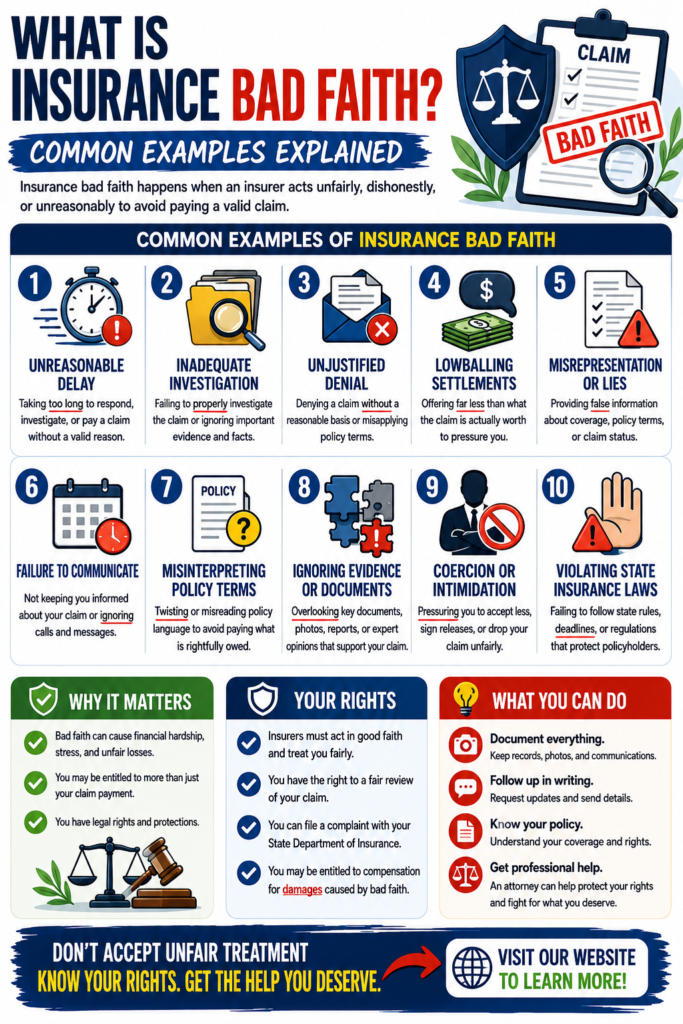
While laws vary from state to state, several situations are frequently mentioned in discussions about bad faith claim handling.
Unreasonable Claim Delays
One of the most common allegations involves excessive delays.
Insurance companies may need time to investigate claims.
However, delays that appear unnecessary or unexplained sometimes become a source of dispute.

If you’re dealing with a delayed claim, our article Why Do Insurance Companies Delay Claims? Common Reasonsexplains many legitimate reasons delays occur.
Failing to Investigate
Insurance companies are often expected to review available information before making decisions.
When policyholders believe little or no investigation occurred, questions about claim handling may arise.
This is one reason many people ask whether an insurer can deny a claim without reviewing the facts.
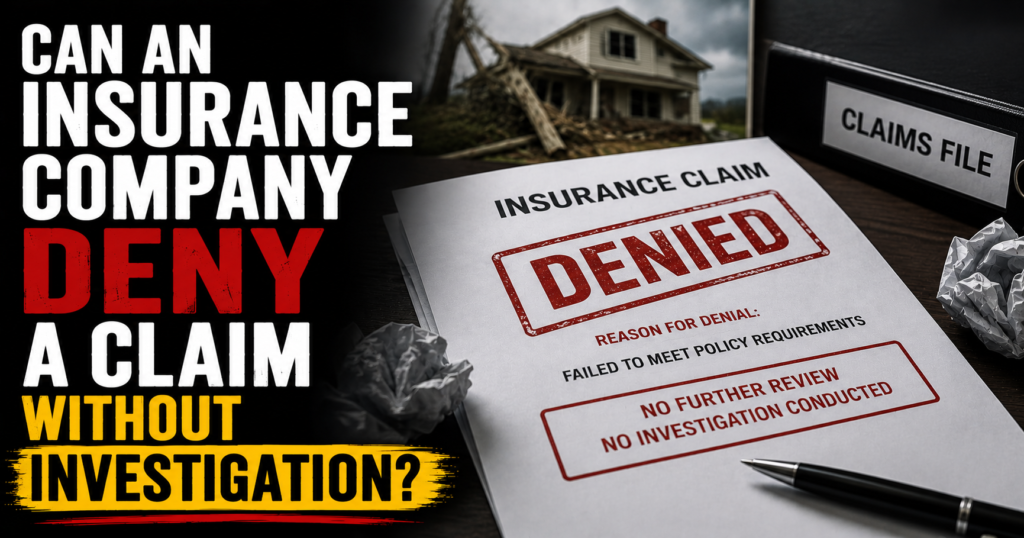
For more information, see Can an Insurance Company Deny a Claim Without Investigation?.
Ignoring Important Evidence
Evidence often plays a major role in claim decisions.
Examples include:
- Photographs
- Videos
- Police reports
- Medical records
- Repair estimates
- Witness statements
When policyholders believe critical evidence was overlooked or ignored, disputes sometimes follow.
Misrepresenting Policy Language
Insurance policies can be complicated.
Disagreements occasionally arise when policyholders believe coverage provisions have been incorrectly explained or interpreted.
Failure to Communicate
Communication problems are another common source of frustration.
Policyholders often expect reasonable updates regarding:
- Claim status
- Documentation requests
- Investigation progress
- Claim decisions
Extended periods without communication sometimes lead to disputes.
Why Bad Faith Laws Differ by State
One reason insurance bad faith can be confusing is that there is no single nationwide standard.
Insurance laws are primarily regulated by individual states.
As a result, states may differ regarding:
- Bad faith standards
- Available remedies
- Claim handling requirements
- Complaint procedures
- Litigation options
Readers interested in state-specific legal topics may also find useful information in our State Laws category.
What Happens Before Bad Faith Allegations Usually Arise?
Most bad faith disputes do not start with a lawsuit.
They often begin with a claim problem.
Examples include:
- A denied claim
- A delayed claim
- A low settlement offer
- Poor communication
- An incomplete investigation
As frustration grows, policyholders begin looking for answers about whether the insurer’s actions were reasonable.
Understanding the normal claims process can help provide context.
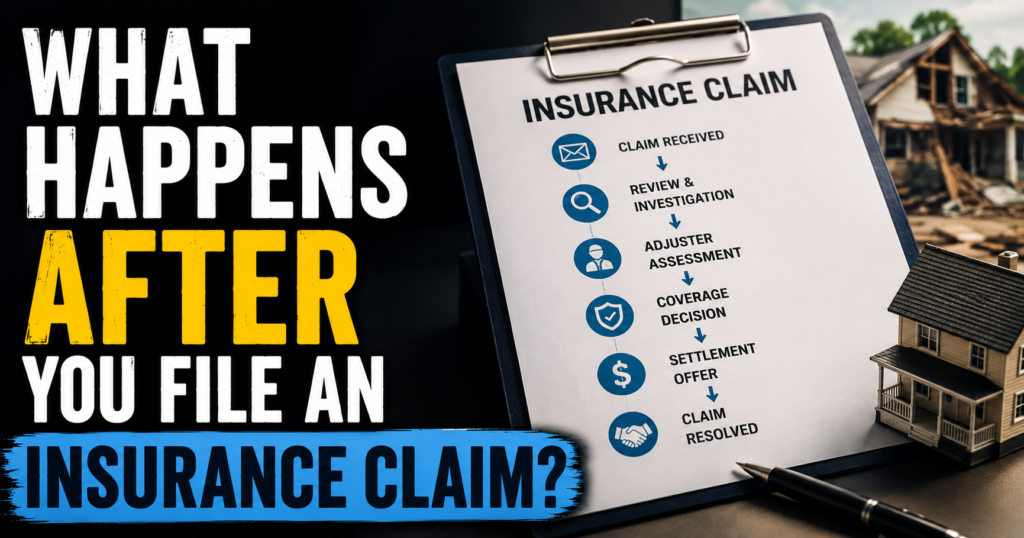
If you’re still early in the process, our article What Happens After You File an Insurance Claim? explains the stages most claims go through.
What Evidence Is Important in a Bad Faith Dispute?
Documentation can become extremely important.
Policyholders often benefit from keeping records such as:
- Emails
- Letters
- Claim numbers
- Estimates
- Inspection reports
- Photographs
- Notes from phone calls
Strong documentation helps establish a timeline and preserve important details regarding claim handling.
We’ll cover this topic more deeply in our upcoming article:
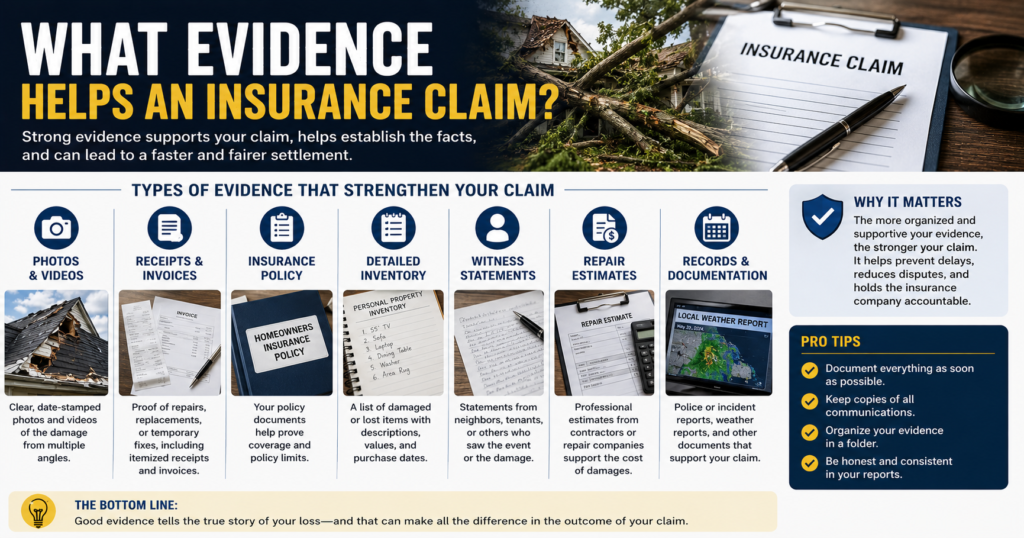
What Evidence Helps an Insurance Claim?
Vehicle Claims and Evidence Disputes
Auto insurance claims frequently involve disagreements about fault.
When evidence is limited, investigations often become more complicated.

Video footage may sometimes help clarify events. For future incidents, an outdoor camera system may help homeowners document activity around entrances, gates, and driveways with outdoor security cameras.

Many drivers choose the VNV Front and Rear Dash Cam for Accident Evidence because it records both the front and rear of the vehicle and may help preserve valuable evidence after an accident.
Clear evidence can often help reduce disputes and support claim investigations.
Bad Faith Versus a Normal Claim Dispute
One of the biggest mistakes people make is assuming every claim disagreement is bad faith.
Insurance claims are often complicated.
Reasonable people can disagree about:
- Repair costs
- Property values
- Medical expenses
- Coverage interpretations
- Liability issues
A disagreement alone does not automatically mean the insurance company acted improperly.
For example, if the insurer reviews evidence, investigates the claim, communicates with the policyholder, and reaches a conclusion based on the available information, that may simply be a normal claim dispute.
Bad faith allegations typically involve concerns about how the claim was handled rather than mere disagreement about the outcome.
What Should You Do If You Suspect Bad Faith?
If you believe an insurance company may not be handling your claim properly, staying organized is one of the most important things you can do.
Save All Communications
Keep copies of:
- Emails
- Letters
- Text messages
- Claim documents
- Settlement offers
Documentation often becomes valuable if questions arise later.
Keep a Timeline
Many policyholders find it helpful to create a simple timeline showing:
- When the claim was filed
- When inspections occurred
- When documents were submitted
- When responses were received
A timeline can make it easier to understand what has happened throughout the claim process.
Ask Questions
If something does not make sense, ask for clarification.
Questions may include:
- Why was the claim denied?
- What information is still needed?
- What policy language applies?
- What evidence was considered?
Clear answers can sometimes resolve misunderstandings before disputes become larger problems.
Can You File a Complaint Against an Insurance Company?
In many situations, yes.
Most states have insurance regulators responsible for overseeing insurance companies operating within the state.
These agencies often accept complaints involving:
- Claim delays
- Communication problems
- Settlement disputes
- Claim handling concerns
- Potential regulatory violations
Filing a complaint does not automatically mean the policyholder will win the dispute.
However, it may help bring additional attention to the matter.
We’ll discuss this topic in detail in our upcoming article:
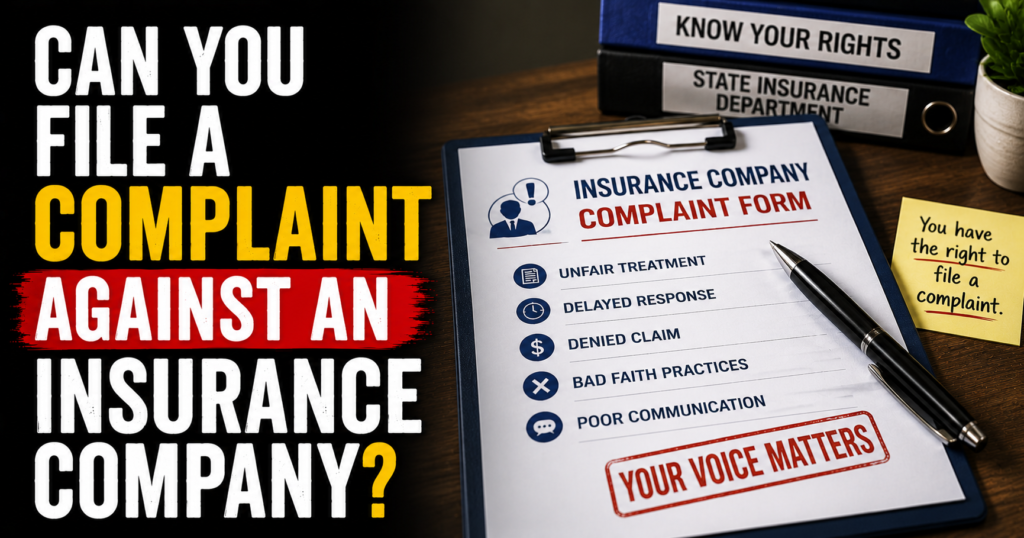
Can You File a Complaint Against an Insurance Company?
Can You Sue an Insurance Company for Bad Faith?
Sometimes.
Whether legal action is available depends on many factors, including:
- State law
- Policy language
- Available evidence
- The specific facts of the claim
Bad faith lawsuits can be complicated.
Not every denied or delayed claim results in litigation.
In many situations, disputes are resolved before a lawsuit becomes necessary.
We’ll explore this topic in more detail in our upcoming article:
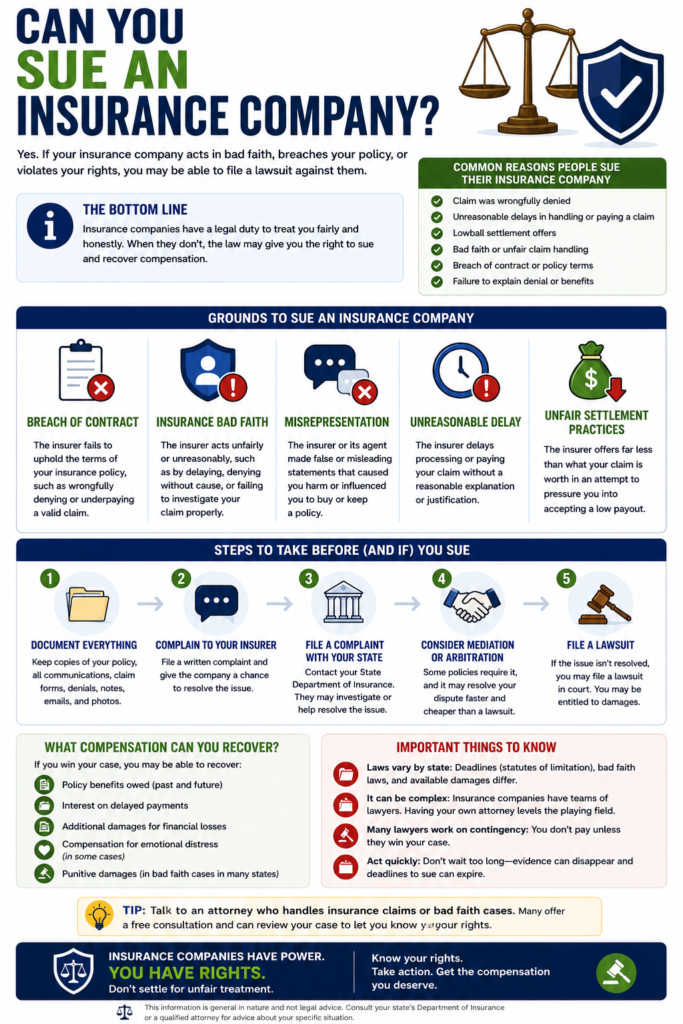
Can You Sue an Insurance Company?
How Long Do Bad Faith Disputes Take?
There is no universal timeline.
Some disputes are resolved relatively quickly after additional evidence is provided.
Others may continue for months or longer depending on:
- Claim complexity
- The amount of money involved
- Available evidence
- State laws
- Negotiation efforts
If you’re still waiting for updates regarding your claim, our article How Long Does an Insurance Company Have to Respond? explains common response timelines and communication expectations.
Why Good Evidence Matters
Evidence plays a major role in both claim investigations and claim disputes.
Helpful evidence may include:
- Photographs
- Videos
- Receipts
- Estimates
- Inspection reports
- Police reports
- Medical records
Strong evidence often helps reduce uncertainty and provides a clearer picture of what occurred.
This is especially true when facts are disputed.
For example, vehicle accidents frequently involve conflicting accounts from drivers.
Many drivers use the VNV Front and Rear Dash Cam for Accident Evidence because recorded footage may help preserve valuable information about what happened before, during, and after a collision.
Can an Insurance Company Make Mistakes?
Absolutely.
Insurance companies handle large numbers of claims.
Mistakes can happen.
Examples may include:
- Administrative errors
- Missing documents
- Miscommunications
- Incorrect information
- Processing issues
A mistake does not automatically mean bad faith occurred.
However, identifying and correcting errors quickly can sometimes help prevent larger disputes from developing.
State Laws Matter More Than Many People Realize
Insurance bad faith is heavily influenced by state law.
States may differ regarding:
- Legal standards
- Available remedies
- Claim handling requirements
- Complaint procedures
- Litigation rights
Because of these differences, two seemingly similar situations may be handled differently depending on where the claim occurs.
For additional educational information about legal topics that vary by location, visit our State Laws category.
Understanding Bad Faith Starts With Understanding the Claims Process
Many bad faith allegations begin because policyholders believe something about the claims process was handled improperly.
The more you understand how claims normally work, the easier it becomes to recognize potential problems.
You may also find these related articles helpful:
- How Long Does an Insurance Claim Take? What to Expect
- What Happens After You File an Insurance Claim?
- Why Do Insurance Companies Delay Claims? Common Reasons
- What Happens After an Insurance Adjuster Visits?
- How Long Does an Insurance Company Have to Respond?
- Can an Insurance Company Deny a Claim Without Investigation?
Understanding these related topics can provide valuable context when evaluating whether a claim dispute is simply a disagreement or potentially something more serious.
Frequently Asked Questions
What does insurance bad faith mean?
Insurance bad faith generally refers to situations where an insurance company allegedly fails to handle a claim fairly, honestly, or in accordance with applicable laws and policy obligations. The exact legal definition varies by state.
Is every denied insurance claim considered bad faith?
No. Insurance companies can deny claims for legitimate reasons, including policy exclusions, lack of coverage, missing documentation, or insufficient evidence. A denial alone does not automatically mean bad faith occurred.
Can an insurance company delay a claim and still act in good faith?
Yes. Some delays are normal and may result from investigations, inspections, medical record reviews, repair estimates, or high claim volumes. The key issue is often whether the insurer is acting reasonably and communicating appropriately.
What are common examples of insurance bad faith?
Examples sometimes associated with bad faith allegations include unreasonable claim delays, failure to investigate, ignoring important evidence, misrepresenting policy language, refusing to communicate, or improperly denying valid claims.
How do I prove an insurance company acted in bad faith?
The answer depends on state law and the facts of the case. Documentation often becomes extremely important. Policyholders frequently keep records of communications, claim documents, estimates, inspections, and correspondence.
Can I file a complaint against an insurance company for bad faith?
In many states, policyholders may file complaints with state insurance regulators regarding claim handling concerns, communication issues, delays, or other disputes involving insurance companies.
Can I sue an insurance company for bad faith?
Sometimes. Whether legal action is available depends on state law, policy language, available evidence, and the specific facts surrounding the dispute.
What is the difference between a claim dispute and bad faith?
A claim dispute generally involves disagreement regarding coverage, damages, liability, or claim value. Bad faith allegations typically focus on how the insurance company handled the claim rather than merely disagreeing about the outcome.
Does strong evidence help prevent claim disputes?
In many situations it can. Photographs, receipts, repair estimates, police reports, witness statements, and video footage may all help support a claim and reduce uncertainty during an investigation.
Where can I learn more about insurance claim problems?
You may find these related articles helpful:
- How Long Does an Insurance Claim Take? What to Expect
- What Happens After You File an Insurance Claim?
- Why Do Insurance Companies Delay Claims? Common Reasons
- What Happens After an Insurance Adjuster Visits?
- How Long Does an Insurance Company Have to Respond?
- Can an Insurance Company Deny a Claim Without Investigation?
Important Information
This article is provided for educational and informational purposes only and should not be considered legal advice. Insurance bad faith laws vary significantly by state, and the facts of each claim are unique. Information provided on Legal Know It All is intended to help readers better understand insurance claim procedures and legal concepts, not to provide legal representation or legal advice.
To learn more about how content is researched and reviewed, visit our Editorial Policy and Fact-Checking Policy pages.
Additional information about this website can be found on our About Us, Contact Us, FAQ, Disclaimer, and Terms and Conditions pages.
About the Author
Sarah Reynolds is a legal research contributor for Legal Know It All who focuses on insurance claims, consumer rights, and everyday legal issues affecting American families. She researches insurance regulations, policyholder rights, claim procedures, and consumer-focused legal topics to help readers better understand complicated subjects using plain English. Her goal is to provide trustworthy educational information that helps readers make informed decisions when dealing with insurance companies and claim disputes.