
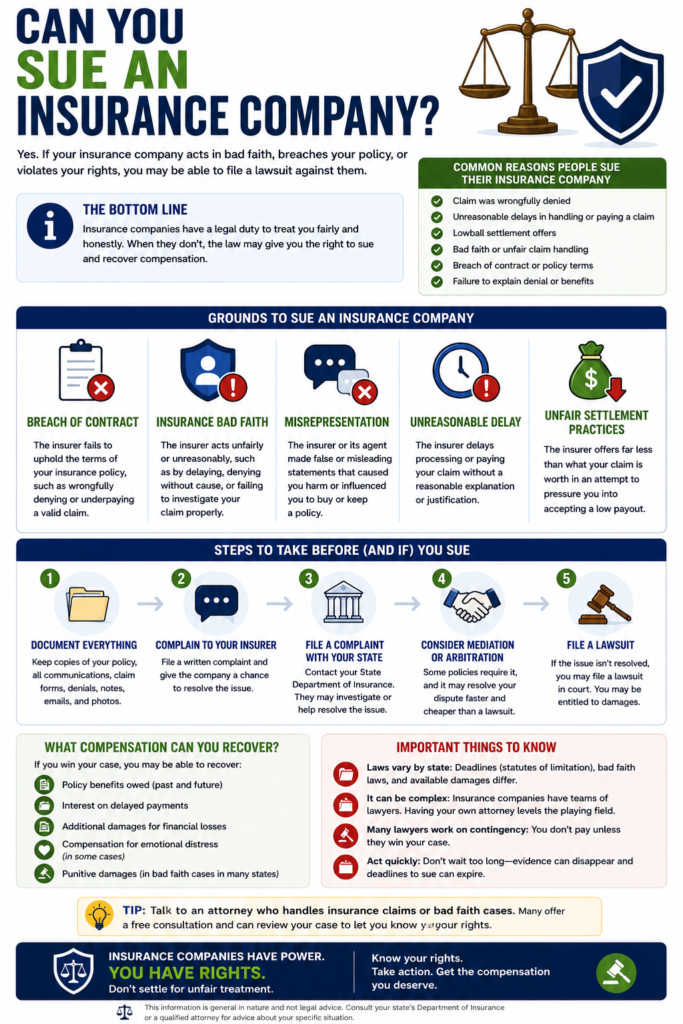
Can You Sue an Insurance Company?
Yes, in some situations you can sue an insurance company.
However, not every claim dispute automatically leads to a lawsuit.
Insurance companies deny claims every day.
They investigate claims, negotiate settlements, and sometimes disagree with see policyholders about coverage or claim value.
A disagreement alone does not necessarily mean a lawsuit is appropriate.
The key issue is often whether the insurance company acted properly under the circumstances and whether a legal basis exists for taking the dispute to court.
Understanding when lawsuits may be possible and what alternatives exist can help policyholders make more informed decisions.
Quick Answer
In some situations, policyholders may be able to sue an insurance company over claim denials, coverage disputes, settlement disagreements, contract issues, or alleged bad faith claim handling. Whether a lawsuit is appropriate depends on the facts of the case, policy language, state law, and the specific actions taken by the insurer.
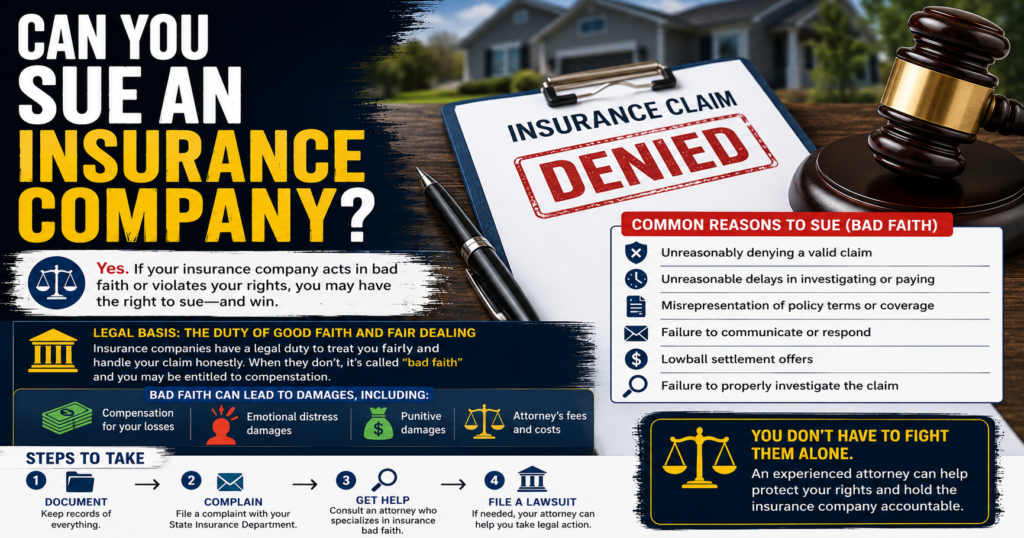
Why Do People Sue Insurance Companies?
Most insurance lawsuits begin because a policyholder believes something went wrong during the claims process.
Common examples include:
- Claim denials
- Settlement disputes
- Coverage disagreements
- Delayed claims
- Communication problems
- Alleged bad faith conduct
Not every dispute results in litigation.
Many are resolved through communication, negotiation, additional evidence, or internal review. An internal review may provide an opportunity to address the dispute before considering litigation, including through Can You Appeal an Insurance Claim Denial?.
A Denied Claim Does Not Automatically Mean You Have a Lawsuit
This is one of the most important concepts to understand.
Insurance companies are allowed to deny claims when valid reasons exist.
For example:
- Coverage may not apply
- Policy exclusions may apply
- Evidence may be insufficient
- Deadlines may have been missed
Simply disagreeing with the denial does not automatically create grounds for a lawsuit.
Understanding the reason for the denial is usually the first step. A practical starting point is understanding What Happens If an Insurance Claim Is Denied? and the options that may follow.
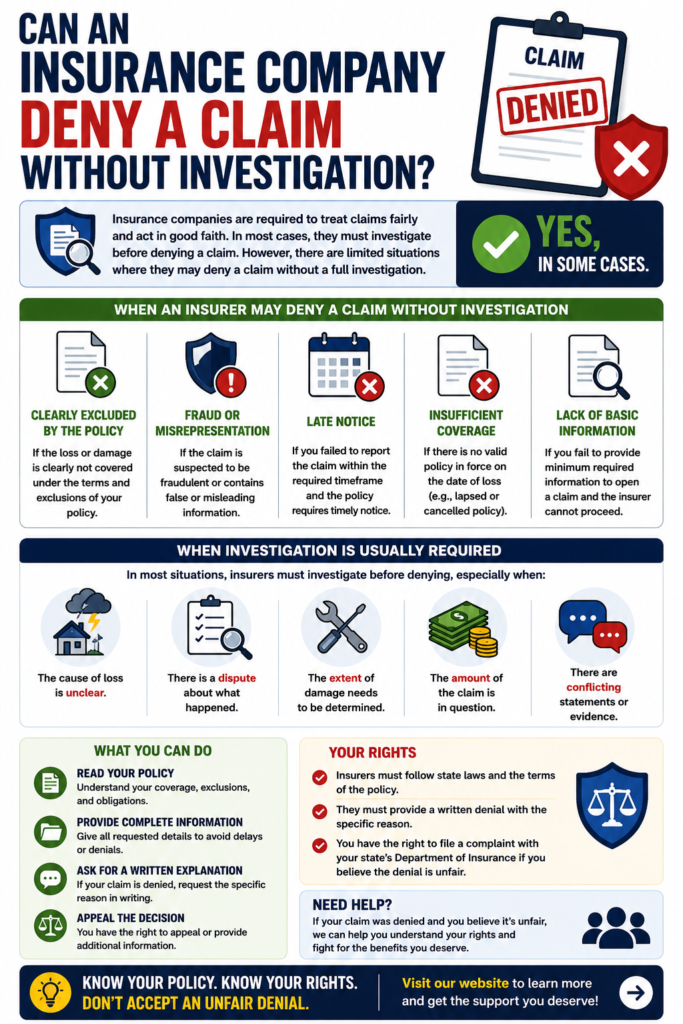
If you’re dealing with a denial, you may also want to read Can an Insurance Company Deny a Claim Without Investigation?.
What Types of Insurance Disputes Lead to Lawsuits?
Several types of disputes appear frequently in insurance litigation.
Coverage Disputes
The parties disagree about whether the policy covers a particular loss.
Claim Denials
The insurer denies payment and the policyholder believes the decision was incorrect.
Settlement Disputes
The insurer offers payment, but the policyholder believes the amount is inadequate.
Bad Faith Allegations
The policyholder believes the insurer failed to handle the claim appropriately.
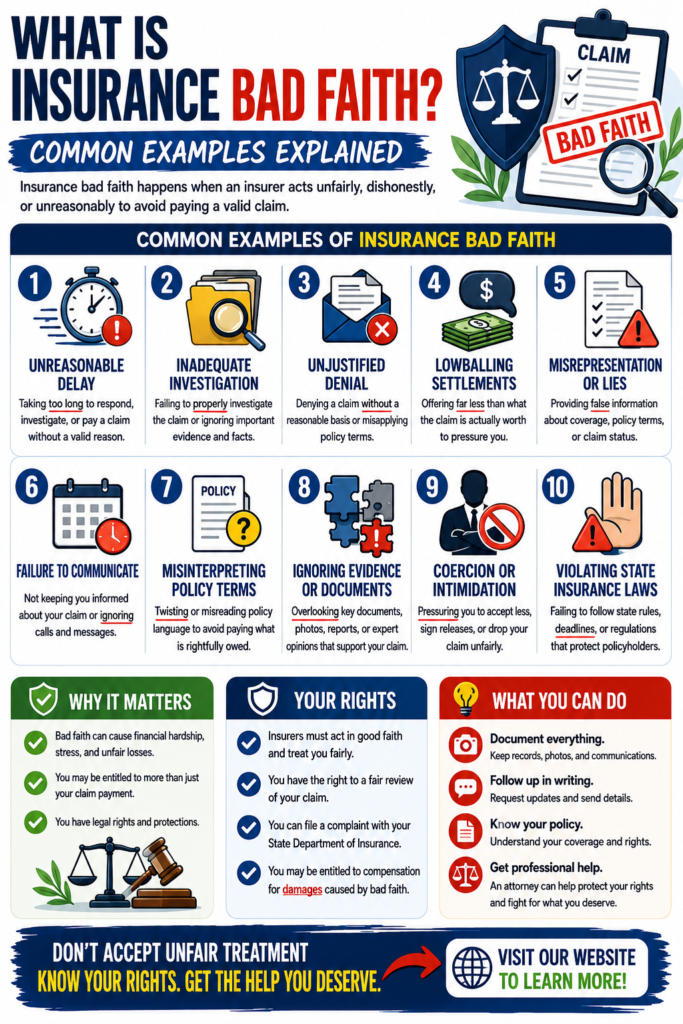
If you’re unfamiliar with bad faith claims, see What Is Insurance Bad Faith? Common Examples Explained.
Should You File a Complaint Before Filing a Lawsuit?
Sometimes.
Many policyholders first pursue options such as:
- Internal appeals
- Additional documentation
- Supervisor review
- Regulatory complaints
For some disputes, these steps may resolve the issue without litigation.

Our guide Can You File a Complaint Against an Insurance Company? explains how the complaint process works.
Why Documentation Matters
Strong documentation can be valuable in virtually every insurance dispute.

Helpful records often include: A secure place to keep these records is a fireproof document safe.
- Claim correspondence
- Estimates
- Inspection reports
- Photographs
- Videos
- Denial letters
- Policy documents

Many policyholders choose to create digital copies of important records using a Canon imageFORMULA Portable Document Scanner so claim documents, correspondence, and evidence remain organized and accessible if disputes arise.
State Laws Play a Major Role
Insurance lawsuits are heavily influenced by state law.
States may differ regarding:
- Contract claims
- Bad faith standards
- Filing deadlines
- Available remedies
- Insurance regulations
This is one reason legal outcomes can vary significantly from one state to another.
Readers interested in legal topics that vary by location can also explore our State Laws category.



Are There Alternatives to Suing an Insurance Company?
Many insurance disputes are resolved without ever reaching a courtroom.
In fact, lawsuits are often one of the last options people consider.
Depending on the situation, policyholders may be able to resolve disputes through:
- Additional documentation
- Internal appeals
- Supervisor reviews
- Complaint procedures
- Settlement negotiations
- Mediation
- Arbitration
The best approach depends on the specific facts of the dispute.
Can Small Claims Court Be an Option?
Sometimes.
Many states allow certain disputes involving smaller amounts of money to be handled through small claims court.
Small claims court is generally designed to be simpler and less expensive than traditional litigation.
However, eligibility requirements vary by state and often depend on:
- The amount of money involved
- The type of claim
- State court rules
Readers interested in this topic may also find useful information in our Small Claims Court category.
What Evidence Helps an Insurance Lawsuit?
Evidence often plays a major role in any insurance dispute.
Helpful evidence may include:
- Policy documents
- Emails
- Letters
- Inspection reports
- Repair estimates
- Medical records
- Photographs
- Videos
- Witness statements
Strong documentation often helps establish what happened and when it happened.
This is one reason many policyholders keep organized claim files throughout the process.
We’ll explore this topic more deeply in an upcoming article discussing what evidence helps an insurance claim.
How Long Do Insurance Lawsuits Take?
There is no universal timeline.
Some disputes are resolved relatively quickly.
Others may continue for months or even years.
Factors that can affect timelines include:
- Claim complexity
- Amount of money involved
- Available evidence
- Court schedules
- State laws
- Settlement negotiations
Because every situation is unique, it is difficult to predict how long a particular dispute may take.
Can You Sue an Insurance Company for Delaying a Claim?
Sometimes.
However, delays alone do not automatically create grounds for a lawsuit.
Insurance companies often need time to:
- Investigate claims
- Review evidence
- Inspect damage
- Evaluate coverage
The important question is usually whether the delay was reasonable under the circumstances.

If you’re dealing with a slow-moving claim, our article Why Do Insurance Companies Delay Claims? Common Reasons explains many of the most common causes of delays.
Can You Sue an Insurance Company for Denying a Claim?
Sometimes.
The answer often depends on why the claim was denied.
Insurance companies are generally allowed to deny claims when valid reasons exist.
However, disputes may arise when policyholders believe:
- Evidence was ignored
- Coverage was misinterpreted
- The investigation was inadequate
- Important facts were overlooked
Understanding the reason for the denial is often the first step toward determining whether further action may be appropriate.
Why Organization Matters During a Dispute
One of the most valuable things a policyholder can do is stay organized.
Helpful records may include:
- Claim numbers
- Emails
- Letters
- Estimates
- Receipts
- Inspection reports
- Denial letters
Many policyholders choose to create digital copies using a Canon imageFORMULA Portable Document Scanner so important records can be stored, searched, and accessed quickly if disputes arise.
When Should You Speak With an Attorney?
Legal advice is highly situation-specific.
Many factors can affect whether consulting an attorney makes sense, including:
- The amount of money involved
- The type of dispute
- State law
- Available evidence
- The complexity of the claim
Every situation is different.
For that reason, readers should avoid assuming that information from another person’s case automatically applies to their own circumstances.
Lawsuits Are Usually One Part of a Larger Process
Most insurance disputes do not begin in court.
They often start with:
- A delayed claim
- A denied claim
- A settlement disagreement
- A communication problem
Understanding the claims process can make it easier to evaluate what options may be available.
You may also find these related articles helpful:
- How Long Does an Insurance Claim Take? What to Expect
- What Happens After You File an Insurance Claim?
- What Happens After an Insurance Adjuster Visits?
- How Long Does an Insurance Company Have to Respond?
- Can an Insurance Company Deny a Claim Without Investigation?
- What Is Insurance Bad Faith? Common Examples Explained
- Can You File a Complaint Against an Insurance Company?
Understanding these related topics can help policyholders make more informed decisions when claim disputes occur.
Frequently Asked Questions
Can you sue an insurance company for denying a claim?
Sometimes. Whether a lawsuit is appropriate depends on the reason for the denial, the policy language, the available evidence, and the laws of the state involved. A denied claim alone does not automatically mean a lawsuit is justified.
Can you sue an insurance company for taking too long?
In some situations, policyholders may have concerns about excessive delays. However, insurance companies are generally allowed reasonable time to investigate claims and review evidence. The facts of the situation often determine whether a delay becomes a legal issue.
Do you have to file a complaint before suing an insurance company?
Not necessarily. Some disputes are resolved through complaints, negotiations, or internal appeals before litigation becomes necessary. Requirements and procedures can vary depending on the circumstances and state law.
Can you sue an insurance company without an attorney?
Some disputes may be handled without an attorney, particularly in situations involving smaller amounts of money or certain small claims court procedures. However, every situation is different, and legal requirements vary by state.
What evidence helps support an insurance lawsuit?
Helpful evidence may include policy documents, claim correspondence, photographs, videos, repair estimates, inspection reports, medical records, receipts, and other records related to the dispute.
Can you sue for insurance bad faith?
In some situations, state law may allow legal action involving alleged bad faith claim handling. The availability of these claims and the standards that apply vary significantly from state to state.
What if the insurance company offered a settlement that seems too low?
Settlement disputes are one of the most common insurance disagreements. Before considering litigation, some policyholders pursue additional estimates, negotiations, appeals, or complaint procedures.
How long do you have to sue an insurance company?
The deadline can vary depending on state law, policy language, and the type of dispute involved. Missing important deadlines can affect legal rights, which is one reason timing matters in insurance disputes.
Can an insurance company be sued for ignoring evidence?
The facts of the situation matter. If a policyholder believes important evidence was not properly considered, they may wish to gather documentation and better understand the reason for the claim decision before determining what options are available.
Where can I learn more about insurance disputes?
You may find these related articles helpful:
- How Long Does an Insurance Claim Take? What to Expect
- What Happens After You File an Insurance Claim?
- Why Do Insurance Companies Delay Claims? Common Reasons
- What Happens After an Insurance Adjuster Visits?
- How Long Does an Insurance Company Have to Respond?
- Can an Insurance Company Deny a Claim Without Investigation?
- What Is Insurance Bad Faith? Common Examples Explained
- Can You File a Complaint Against an Insurance Company?
Important Information
This article is provided for educational and informational purposes only and should not be considered legal advice. Insurance laws vary by state, insurance policies differ, and individual circumstances can significantly affect legal rights and claim outcomes. Information provided on Legal Know It All is intended to help readers better understand insurance disputes and legal concepts, not to provide legal representation or legal advice.
To learn more about how content is researched and reviewed, visit our Editorial Policy and Fact-Checking Policy pages.
Additional information about this website can be found on our About Us, Contact Us, FAQ, Disclaimer, and Terms and Conditions pages.
About the Author
Sarah Reynolds is a legal research contributor for Legal Know It All who focuses on insurance claims, consumer rights, and everyday legal issues affecting American families. She researches insurance regulations, policyholder rights, claim procedures, and consumer-focused legal topics to help readers better understand complicated subjects using plain English. Her goal is to provide trustworthy educational information that helps readers make informed decisions when dealing with insurance companies and claim disputes.