
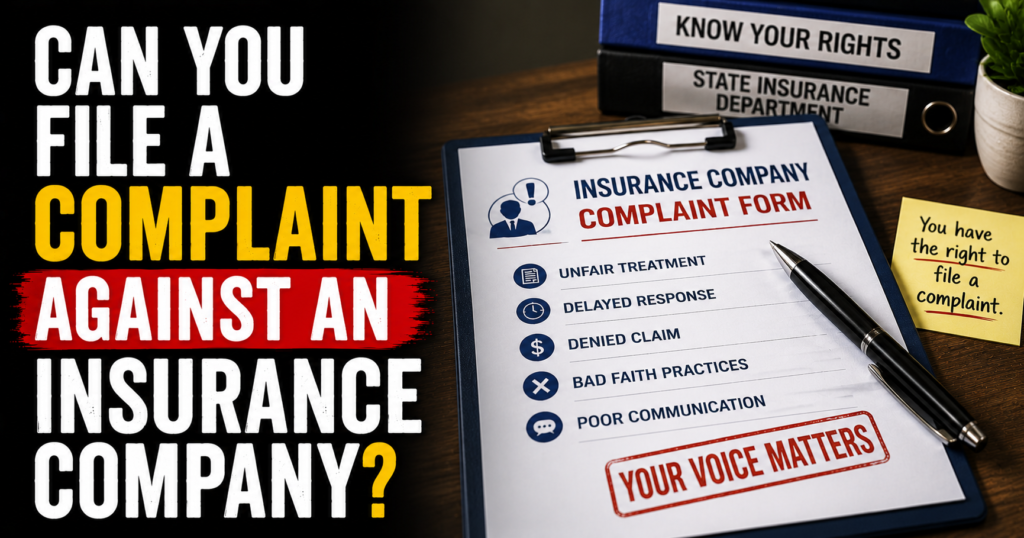
Can You Really File a Complaint Against an Insurance Company?
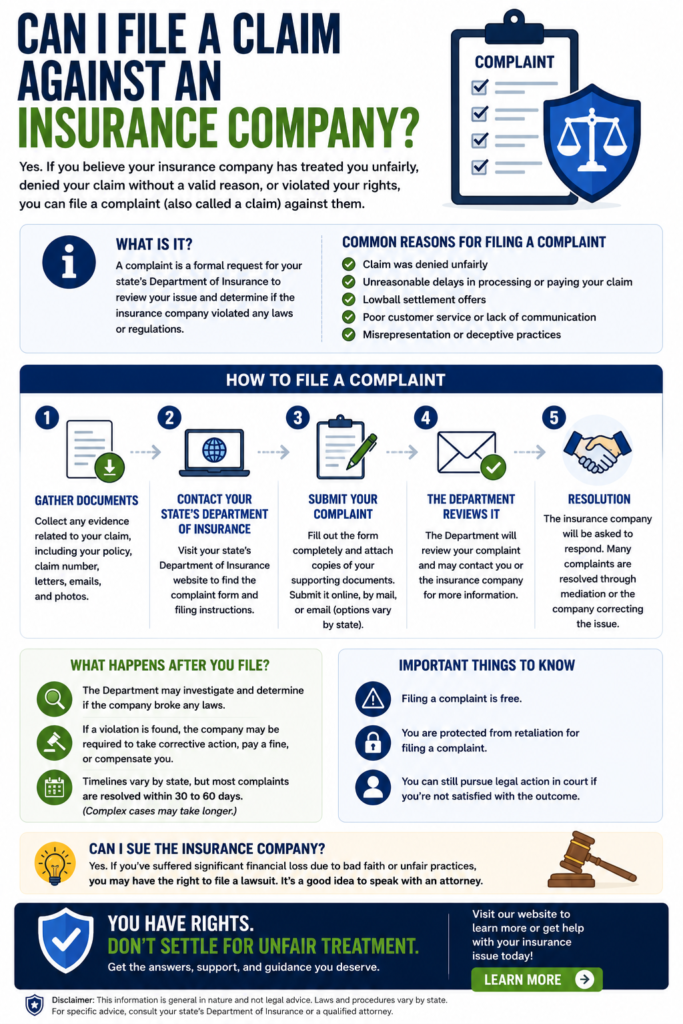
Yes, in many situations you can file a complaint against an insurance company.
Most states have government agencies responsible for regulating insurance companies and investigating consumer concerns.
These agencies often accept complaints involving:
- Claim delays
- Communication problems
- Settlement disputes
- Claim denials
- Billing issues
- Policy disputes
- Potential regulatory violations
However, filing a complaint is not the same as filing a lawsuit.
A complaint typically asks a regulator to review the situation and determine whether the insurance company followed applicable laws and regulations.

Understanding when complaints may help and what they can realistically accomplish is important before deciding whether to file one. Before choosing a complaint strategy, policyholders may also need to consider whether they can pursue Can You Reopen a Closed Insurance Claim?.
Quick Answer
In most states, consumers can file complaints against insurance companies through their state’s insurance department or insurance regulator. Complaints may involve delayed claims, communication problems, billing disputes, claim denials, or other concerns. While filing a complaint does not guarantee a particular outcome, regulators may review the situation and request information from the insurance company.
Who Regulates Insurance Companies?
Many people assume insurance companies are regulated by the federal government.
In reality, insurance is primarily regulated at the state level.
Every state has an agency responsible for overseeing insurance companies operating within that state.
Depending on the state, the agency may be called:
- Department of Insurance
- Insurance Division
- Insurance Commission
- Insurance Department
- Insurance Regulator
These agencies often oversee:
- Licensing
- Consumer complaints
- Regulatory compliance
- Insurance practices
- Market conduct investigations
Because insurance regulation is largely state-based, complaint procedures may vary depending on where you live.
Readers interested in legal topics that vary by location may also find useful information in our State Laws category.
Common Reasons People File Insurance Complaints
People file complaints for many different reasons.
Some of the most common include:
The Insurance Company Will Not Respond
One of the most frequent complaints involves lack of communication.
Policyholders may feel frustrated when:
- Calls go unanswered
- Emails are ignored
- Updates are not provided
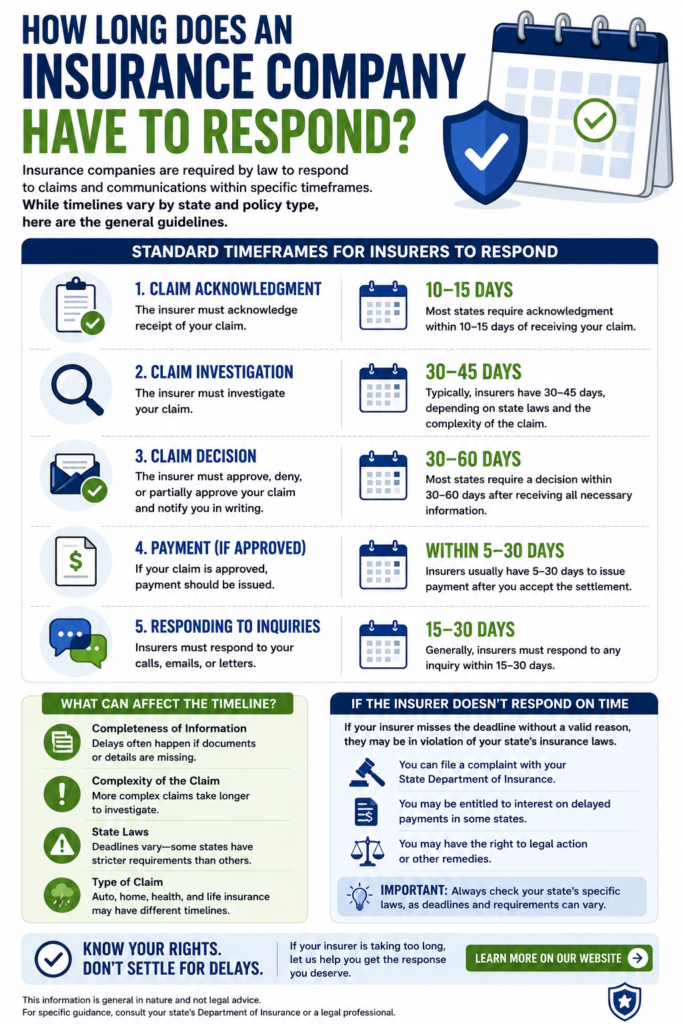
If communication has become a problem, our article How Long Does an Insurance Company Have to Respond?explains why response timelines sometimes vary.
The Claim Is Taking Too Long
Delays are another major reason complaints are filed.
Not every delay is improper.
Some claims legitimately require additional investigation.
However, unexplained delays often cause concern.

For more information, see Why Do Insurance Companies Delay Claims? Common Reasons.
The Claim Was Denied
Many complaints arise after claim denials.
Policyholders may question:
- Whether the investigation was adequate
- Whether evidence was reviewed
- Whether policy language was applied correctly
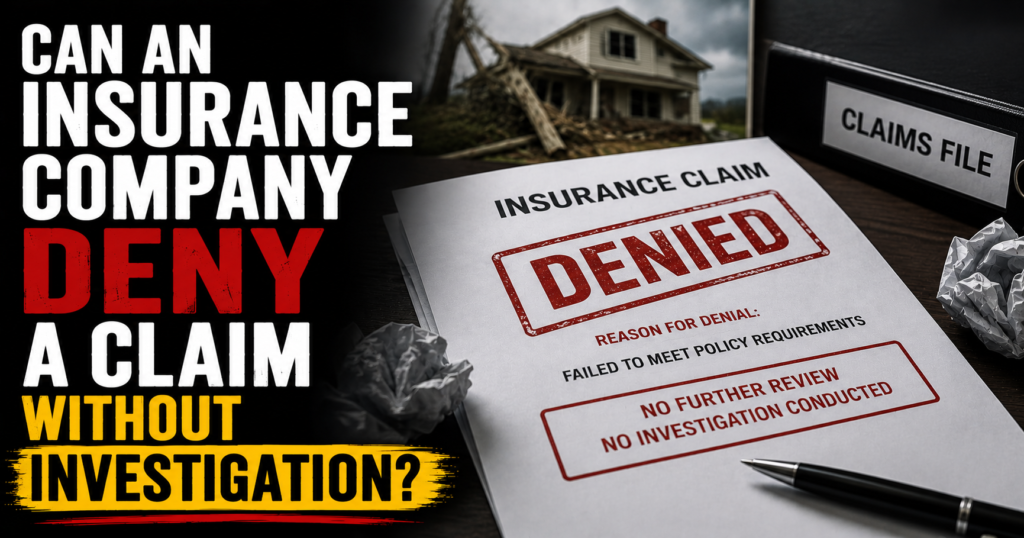
If you’re dealing with a denied claim, you may also want to read Can an Insurance Company Deny a Claim Without Investigation?.
Settlement Disputes
Sometimes the insurance company offers payment, but the policyholder believes the amount is too low.
These disagreements often involve:
- Repair costs
- Property values
- Medical expenses
- Coverage interpretations


Can a Complaint Help Resolve a Claim?
Sometimes.
Many people assume filing a complaint automatically forces the insurance company to pay.
That’s not how the process usually works.
Regulators generally do not act as personal attorneys for consumers.
Instead, they often review whether:
- Applicable laws were followed
- Required procedures were followed
- Proper communication occurred
- Regulatory obligations were met
In some situations, the complaint process helps clarify misunderstandings or encourages additional review.
In others, the regulator may determine that the insurance company acted appropriately.
What Information Should You Gather Before Filing?
Preparation can make the process much easier.
Before filing a complaint, many people gather:
- Claim numbers
- Policy numbers
- Emails
- Letters
- Estimates
- Denial letters
- Payment records
- Notes from phone calls
The more organized your records are, the easier it often becomes to explain the situation.

Many policyholders choose to digitize important records using tools such as the Canon imageFORMULA Portable Document Scanner (https://amzn.to/3QyJn1J), which can make it easier to organize claim correspondence, denial letters, estimates, and supporting documents.
Why Documentation Matters
Documentation often becomes one of the most important parts of any complaint.
Helpful records may include:
- Dates of communication
- Names of representatives
- Copies of correspondence
- Inspection reports
- Settlement offers
- Claim decisions
Strong documentation helps create a clear timeline of events and can reduce confusion about what occurred during the claims process.
We’ll discuss evidence and documentation in greater detail in an upcoming article covering what evidence helps support an insurance claim.
What Happens After You File a Complaint?
Many people expect immediate action after submitting a complaint.
In reality, the process usually takes time.
While procedures vary by state, many insurance regulators follow a process similar to this:
The Complaint Is Reviewed
The agency typically reviews the information you submitted to determine whether additional information is needed.
The Insurance Company Is Contacted
In many situations, the regulator sends the complaint to the insurance company and requests a response.
Information Is Evaluated
The regulator may review:
- Policy language
- Claim correspondence
- Denial letters
- Communication records
- Documentation submitted by both sides
A Response Is Provided
After reviewing the matter, the agency may explain its findings or provide information about the next steps.
The exact process varies by state and by the nature of the complaint.



Can a Complaint Force an Insurance Company to Pay?
Usually not.
This is one of the biggest misconceptions about insurance complaints.
Many insurance regulators do not have the authority to simply order an insurance company to pay every disputed claim.
Instead, regulators often focus on whether:
- Laws were followed
- Regulations were followed
- Proper claim procedures were used
- Required communications occurred
A complaint may help bring attention to a problem, but it is not typically a shortcut to an automatic settlement.
When Complaints Are Most Helpful
Complaints are often most useful when the concern involves:
Communication Problems
If an insurance company has stopped responding, a complaint may encourage additional communication.
Unexplained Delays
Complaints may help clarify why a claim appears stalled.
Regulatory Concerns
If a policyholder believes the insurer failed to follow applicable rules, a complaint may trigger additional review.
Claim Handling Issues
Complaints sometimes help identify misunderstandings or procedural concerns that need attention.
What Complaints Usually Cannot Do
Consumers sometimes expect a complaint to function like a lawsuit.
They are different processes.
In many situations, a complaint cannot:
- Act as legal representation
- Replace a lawsuit
- Guarantee payment
- Force a settlement amount
- Override policy language
Understanding these limitations helps set realistic expectations.
Should You Contact the Insurance Company Before Filing a Complaint?
In many situations, yes.
Some issues can be resolved by:
- Requesting clarification
- Speaking with a supervisor
- Escalating concerns internally
- Providing missing documentation
If reasonable attempts to resolve the issue have failed, a complaint may become a logical next step.
Complaints and Insurance Bad Faith
Many people begin researching complaints after becoming concerned about insurance bad faith.
Examples that sometimes lead to bad faith allegations include:
- Unreasonable delays
- Failure to investigate
- Ignoring important evidence
- Misrepresenting policy language
- Improper denials
However, not every complaint involves bad faith.
Some complaints arise from simple misunderstandings or communication problems.
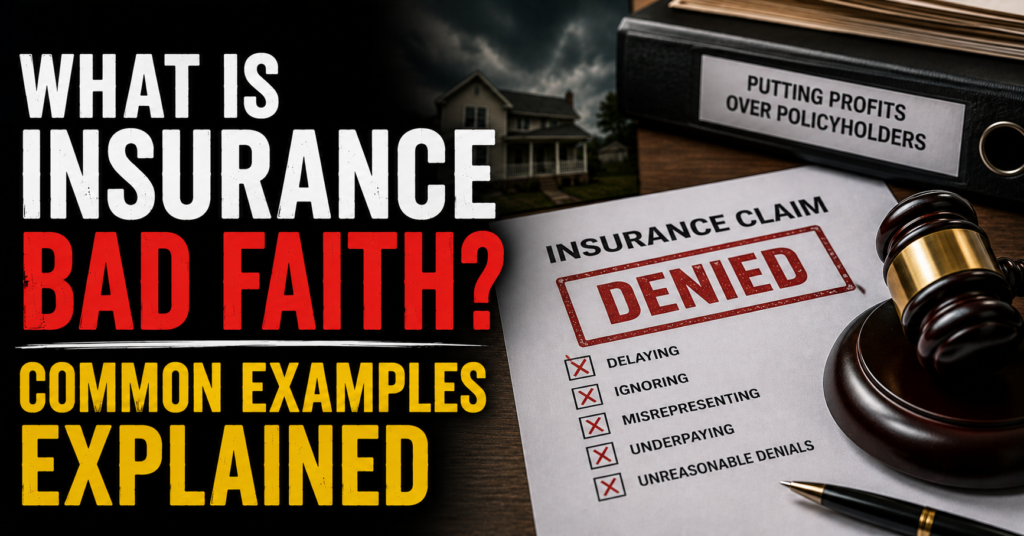
If you’re unfamiliar with the topic, our article What Is Insurance Bad Faith? Common Examples Explained provides additional background.
Should You File a Complaint or a Lawsuit?
This depends heavily on the circumstances.
A complaint and a lawsuit are very different tools.
A complaint generally involves a regulator reviewing the insurer’s conduct.
A lawsuit involves legal proceedings in court.
The appropriate option depends on:
- State law
- The facts of the dispute
- The amount of money involved
- Available evidence
- The nature of the alleged wrongdoing

We’ll explore this topic further in our upcoming article discussing whether you can sue an insurance company. See our full guide on can I sue an insurance company?
Why Organized Records Matter
One of the best things a policyholder can do is maintain organized records throughout the claim process.
Helpful records include:
- Emails
- Letters
- Estimates
- Receipts
- Claim numbers
- Inspection reports
- Notes from phone calls
Having complete records often makes it easier to explain a situation to regulators, attorneys, adjusters, or insurance representatives.
Many policyholders choose to scan important documents using the Canon imageFORMULA Portable Document Scanner (https://amzn.to/3QyJn1J) so they can quickly access claim files, correspondence, and supporting records when needed.
What If the Complaint Does Not Resolve the Problem?
Sometimes complaints help resolve concerns.
Sometimes they do not.
If a dispute remains unresolved, policyholders may consider other options depending on the circumstances.
Those options might include:
- Additional negotiations
- Internal appeals
- Mediation
- Arbitration
- Legal action
The appropriate path depends on the facts of the situation and the laws of the state involved.
State Laws Matter
Like many insurance-related topics, complaint procedures vary from state to state.
States may differ regarding:
- Complaint processes
- Investigation procedures
- Regulatory authority
- Consumer protections
- Insurance regulations
Because of these differences, readers should avoid assuming that procedures in one state automatically apply everywhere else.
For additional information on legal topics that vary throughout the country, visit our State Laws category.
Filing a Complaint Is Sometimes an Important Step
Many policyholders never need to file a complaint.
Others find that doing so helps bring attention to communication problems, delays, or claim handling concerns.
While complaints are not guaranteed to change the outcome of a dispute, they can provide an additional avenue for consumers who believe something has gone wrong during the claims process.
You may also find these related articles helpful:
- How Long Does an Insurance Claim Take? What to Expect
- What Happens After You File an Insurance Claim?
- Why Do Insurance Companies Delay Claims? Common Reasons
- How Long Does an Insurance Company Have to Respond?
- Can an Insurance Company Deny a Claim Without Investigation?
- What Is Insurance Bad Faith? Common Examples Explained
Frequently Asked Questions
Can I file a complaint against an insurance company in any state?
Most states have a department, division, or commission responsible for regulating insurance companies. While procedures vary, consumers can often submit complaints regarding claim handling, communication problems, billing disputes, and other insurance-related concerns.
Is filing a complaint free?
In many states, yes. Insurance regulators generally allow consumers to submit complaints without paying a filing fee. However, procedures and requirements can vary depending on the state.
Can a complaint force an insurance company to pay my claim?
Usually not. Insurance regulators often review whether laws and procedures were followed, but they generally do not act as personal attorneys for policyholders or automatically order claim payments.
How long does it take for an insurance complaint to be reviewed?
The timeline varies depending on the state, the complexity of the issue, and the amount of information involved. Some complaints may be reviewed relatively quickly, while others take longer.
Should I contact the insurance company before filing a complaint?
In many situations, yes. Some disputes can be resolved by requesting clarification, speaking with a supervisor, or providing additional information before involving a regulator.
What documents should I include with an insurance complaint?
Helpful documents may include:
- Claim numbers
- Policy information
- Emails
- Letters
- Estimates
- Denial letters
- Payment records
- Notes from phone calls
Providing organized documentation often helps explain the situation more clearly.
Can I file a complaint if my claim was denied?
Yes. Many complaints involve claim denials. However, filing a complaint does not automatically mean the denial will be reversed.
What if the insurance company is not returning my calls?
Communication issues are one of the most common reasons consumers file complaints. Keeping records of attempted communications can be helpful if the matter later needs to be reviewed.
Is filing a complaint the same as filing a lawsuit?
No. A complaint generally involves a regulator reviewing the situation. A lawsuit involves legal proceedings in court and follows a completely different process.
Where can I learn more about insurance claim disputes?
You may find these related articles helpful:
- How Long Does an Insurance Claim Take? What to Expect
- What Happens After You File an Insurance Claim?
- Why Do Insurance Companies Delay Claims? Common Reasons
- What Happens After an Insurance Adjuster Visits?
- How Long Does an Insurance Company Have to Respond?
- Can an Insurance Company Deny a Claim Without Investigation?
- What Is Insurance Bad Faith? Common Examples Explained
Important Information
This article is provided for educational and informational purposes only and should not be considered legal advice. Insurance complaint procedures vary by state, and individual circumstances can significantly affect available options and outcomes. Information provided on Legal Know It All is intended to help readers better understand insurance claim procedures and consumer rights, not to provide legal representation or legal advice.
To learn more about how content is researched and reviewed, visit our Editorial Policy and Fact-Checking Policy pages.
Additional information about this website can be found on our About Us, Contact Us, FAQ, Disclaimer, and Terms and Conditions pages.
About the Author
Sarah Reynolds is a legal research contributor for Legal Know It All who focuses on insurance claims, consumer rights, and everyday legal issues affecting American families. She researches insurance regulations, policyholder rights, claim procedures, and consumer-focused legal topics to help readers better understand complicated subjects using plain English. Her goal is to provide trustworthy educational information that helps readers make informed decisions when dealing with insurance companies and claim disputes.