

Millions of Americans rent storage units every year.
Some use them while moving.
Others use them to store family heirlooms, business equipment, vehicles, furniture, or personal belongings.
Many people eventually start treating a storage unit as an extension of their home.
That is exactly why an important question often comes up:
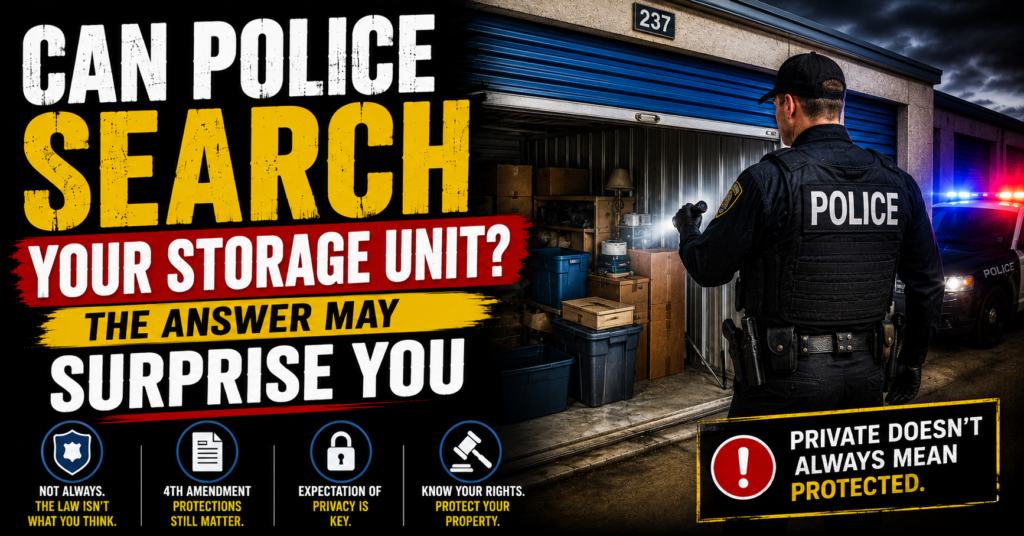
Can police search your storage unit?
I’ve found that many people assume storage units receive the same protections as a private residence.
Others assume that because the unit is rented from a company, it receives little or no privacy protection.
As with many constitutional-rights questions, the answer is usually more complicated.
Quick Answer
Whether police may search a storage unit often depends on factors such as privacy expectations, warrants, consent, specific circumstances, constitutional protections, and applicable laws. Questions involving storage-unit searches are often highly fact-dependent.
Why Storage Units Create Confusion

Storage units sit somewhere between private property and commercial property. That distinction connects closely with the broader question of when police may enter private property, addressed in Can Police Enter Private Property Without Permission?.
People rent them.
Store personal belongings inside them.
Lock them.
Visit them when needed.
Yet the property itself is owned and operated by a storage company.
That combination creates questions many people never face with their own homes.
Storage Units Often Contain Highly Personal Items
One thing I’ve noticed is that people frequently underestimate how much private information may be stored inside a unit.
Examples include:
- Family photographs
- Financial records
- Personal documents
- Collectibles
- Firearms
- Electronics
- Business equipment
Because storage units often contain highly personal belongings, privacy concerns naturally arise.
Many People View Storage Units As Private Spaces
I’ve found that renters often think of a storage unit as their own private space.
After all, the renter typically:
- Pays for the unit
- Controls access
- Uses a lock
- Stores personal property
That expectation of privacy is one reason storage-unit searches continue generating constitutional-rights questions.


Storage Units Are Different From Homes
One common misconception is that a storage unit is treated exactly like a house.
Another misconception is that storage units have no privacy protections at all.
The reality often falls somewhere between those two assumptions.
That is why storage-unit searches frequently become more complicated than people expect.
Storage Unit Searches Often Connect To Property Rights
Questions involving storage units frequently overlap with property-rights issues.
For example, readers may also find helpful information in:
Can Police Search Your House Without a Warrant?
While homes and storage units are not identical, both often raise questions involving privacy expectations and personal property.
Storage Units Can Become Part Of Larger Investigations
One thing I’ve learned is that storage-unit searches rarely occur in isolation.
They often arise during broader investigations involving:
- Property crimes
- Financial crimes
- Drug investigations
- Fraud allegations
- Business disputes
Because of that, storage-unit searches are frequently discussed alongside other search-and-seizure topics.
Storage Facilities And Law Enforcement Are Not The Same
People often combine these issues into a single question.
In reality, storage companies and law enforcement usually raise very different legal considerations.
Questions involving:
- Facility management
- Unit access
- Rental agreements
- Company policies
are often different from questions involving police searches.
That distinction is important because many misunderstandings begin when people treat them as identical situations.
Storage Unit Searches Often Lead To Other Constitutional Questions
People researching storage-unit searches frequently continue researching related topics.
You may also find helpful information in:

Can Police Search Your Car Without Permission?

Can Police Search Your Hotel Room? Know Your Rights

Can Police Search Your Backpack or Purse? Know Your Rights
What Happens If Police Search You Illegally?
These topics all involve broader questions about privacy, searches, and constitutional protections.
The Facts Usually Matter Most
One of the biggest misconceptions involving storage-unit searches is the belief that one simple rule applies to every situation.
In reality, search-related questions often depend on:
- The circumstances
- The people involved
- Privacy expectations
- Applicable laws
- Specific facts
That is one reason courts frequently focus heavily on the details surrounding a particular situation.
What Happens If A Storage Unit Is Abandoned?
One thing that surprises many renters is that storage-unit questions often change when a unit is abandoned.
For example, situations involving:
- Missed payments
- Vacated units
- Expired rentals
- Abandoned property
may create very different legal questions than an actively rented unit.
I’ve found that many people assume privacy expectations remain exactly the same forever, regardless of what happens to the rental agreement.
That assumption often leads to confusion.
Unpaid Units Frequently Raise Additional Questions
Storage facilities deal with unpaid units every year.
As a result, many renters wonder:
- What happens if payments stop?
- Can the facility access the unit?
- Can the contents be sold?
- Do privacy expectations change?
These issues often involve facility policies, rental agreements, state laws, and other factors that can make the situation far more complicated than people expect.
Storage Unit Auctions Are Common
Many Americans have seen television shows about storage auctions.
Because of that, people often assume they understand how storage-unit access works.
In reality, auctions frequently raise their own set of legal and practical questions.
When a storage facility prepares a unit for auction, circumstances surrounding access, ownership, and stored property may differ significantly from an actively rented unit.
That is one reason storage-unit disputes can become highly fact-specific.
Facility Access And Police Searches Are Different Issues
One mistake people often make is treating facility access and police searches as the same question.
They are usually not.
A storage company may have concerns involving:
- Property management
- Maintenance
- Safety issues
- Rental agreements
- Business operations
Law-enforcement searches often involve very different legal considerations.
Keeping those issues separate can help prevent misunderstandings.
Many Storage Units Contain Valuable Information
People often think about the physical value of items stored inside a unit.
However, the informational value can be just as important.
A storage unit may contain:
- Tax records
- Business records
- Personal documents
- Family records
- Financial information
- Electronic devices
Because of that, storage-unit privacy concerns often go beyond the physical property itself.
Common Misconceptions About Storage Unit Searches
One misconception is that storage units receive exactly the same treatment as private homes.
Another misconception is that storage units have no privacy protections because they are located on commercial property.
The reality is often far more nuanced.
That is one reason storage-unit searches continue appearing in legal discussions and court cases.
Storage Unit Searches Often Connect To Other Search Questions
People researching storage-unit searches frequently continue exploring related constitutional-rights topics.
For example:
Can Police Search Your House Without a Warrant?
Can Police Search Your Hotel Room? Know Your Rights
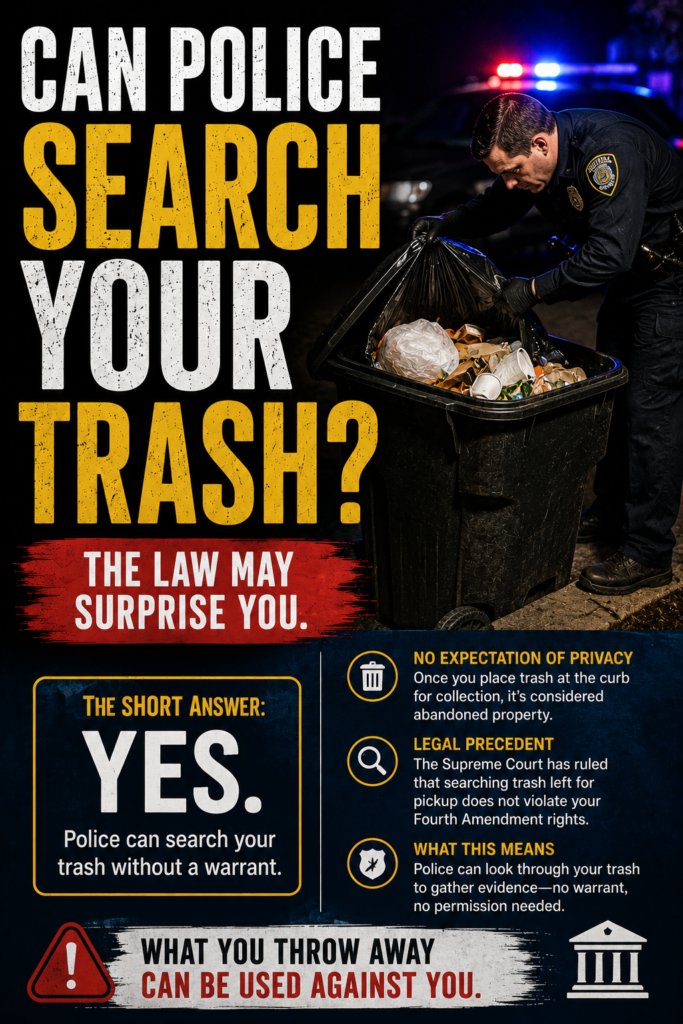
Can Police Search Your Trash? The Law May Surprise You

What Happens If Police Search You Illegally?
Together, these articles help explain many of the privacy and search-related questions Americans ask most frequently.
Frequently Asked Questions
Can police search your storage unit?
The answer often depends on factors such as privacy expectations, consent, warrants, constitutional protections, applicable laws, and the specific facts involved.
Are storage units considered private?
Many renters view storage units as private spaces because they control access and store personal belongings inside them.
Does owning the property matter?
Storage facilities are typically owned by companies while the units themselves are rented by customers, which can create unique legal questions.
What happens if a storage unit is abandoned?
Abandoned units frequently raise different issues than actively rented units.
Do unpaid units create different legal concerns?
Missed payments and rental-agreement issues can sometimes affect how storage-unit disputes develop.
Are storage-unit auctions common?
Yes. Storage facilities regularly conduct auctions involving certain units under specific circumstances.
Why are storage-unit searches complicated?
Questions involving privacy expectations, ownership, rental agreements, and constitutional protections can all become important.
Where can I learn more about constitutional rights?
You can browse additional topics in our:
Constitutional Rights Category
Important Information
This article is provided for educational and informational purposes only and should not be considered legal advice. Constitutional protections, search-and-seizure laws, property-rights issues, criminal procedure rules, and privacy laws vary depending on the facts involved and applicable laws. Consult a qualified attorney regarding your specific situation.
For more information about our content standards, visit our Editorial Policy and Fact-Checking Policy pages.
Additional information about this website can be found on our About Us, Contact Us, FAQ, Disclaimer, and Terms and Conditions pages.
About the Author
Michael Carter is a legal research contributor for Legal Know It All who focuses on constitutional rights, criminal law, police procedures, privacy issues, property rights, and individual liberties. He researches common legal questions involving searches, investigations, and constitutional protections while helping readers understand complex legal topics in clear, practical language.