
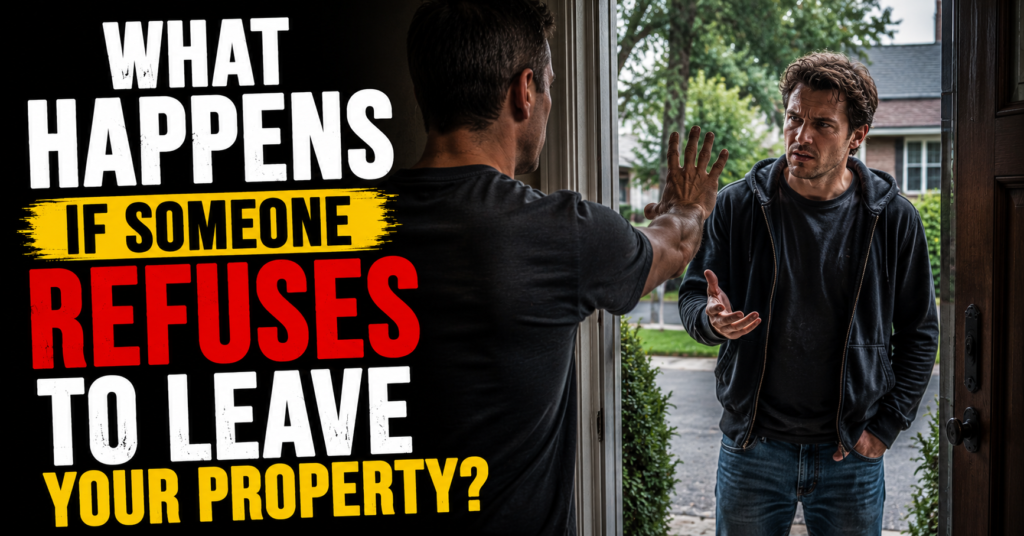
Most property owners never expect to face a situation where someone simply refuses to leave.
Unfortunately, it happens more often than many people realize.
The person may be:
- A stranger
- A neighbor
- A former guest
- A former tenant
- An acquaintance
- Someone involved in a dispute
What starts as a simple disagreement can quickly become stressful when the person refuses to leave the property.
Many homeowners immediately wonder what rights they have and what steps they can take.
The answer depends on the circumstances, the relationship between the parties, and the laws that apply where the property is located.
Quick Answer
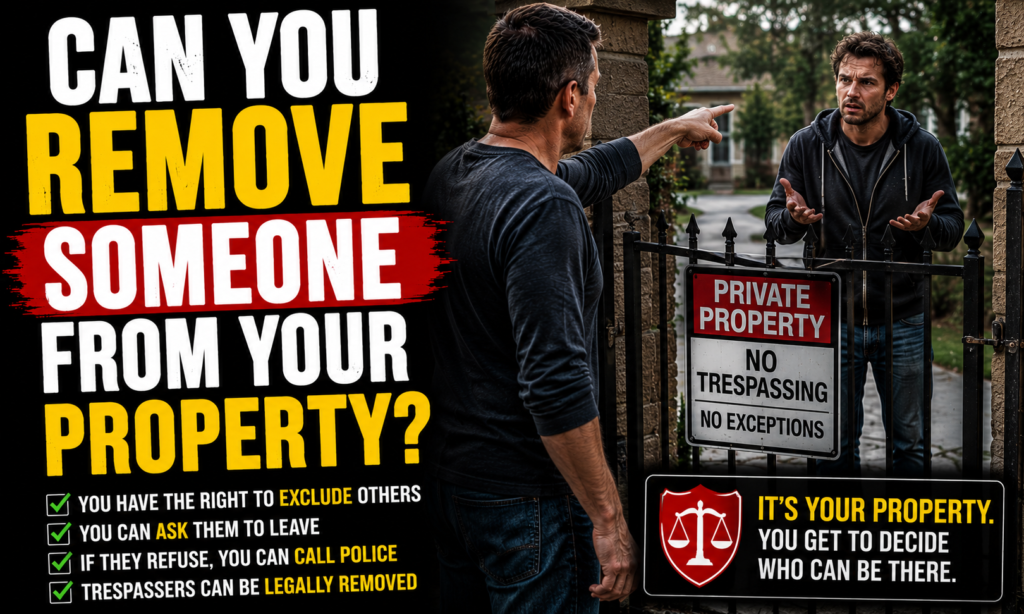
In many situations, a property owner may ask an unwanted person to leave private property. If the individual refuses, the situation can potentially become a trespassing issue depending on the circumstances and applicable laws. The specific options available vary by state and situation. The practical steps involved are discussed in Can You Remove Someone From Your Property?.
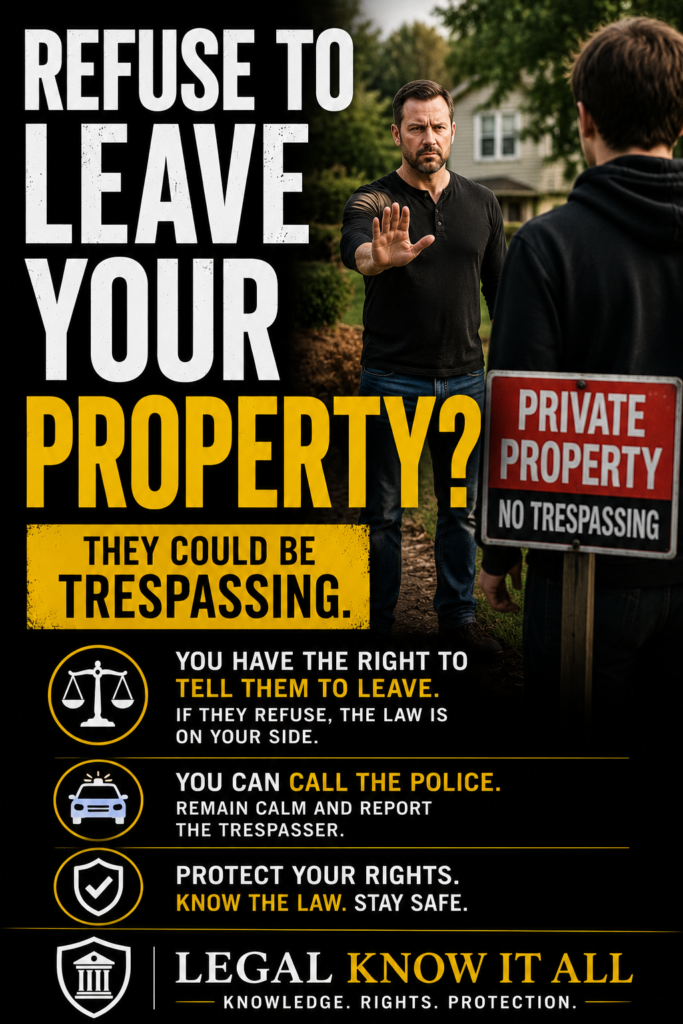
Why These Situations Can Be Complicated
Many people assume that refusing to leave private property automatically creates a simple legal issue.
In reality, the facts matter.
Questions often include:
- Who owns the property?
- Why is the person there?
- Were they invited?
- Have they lived there?
- Is there an easement involved?
- Are there access rights involved?
The answers can significantly affect the situation.

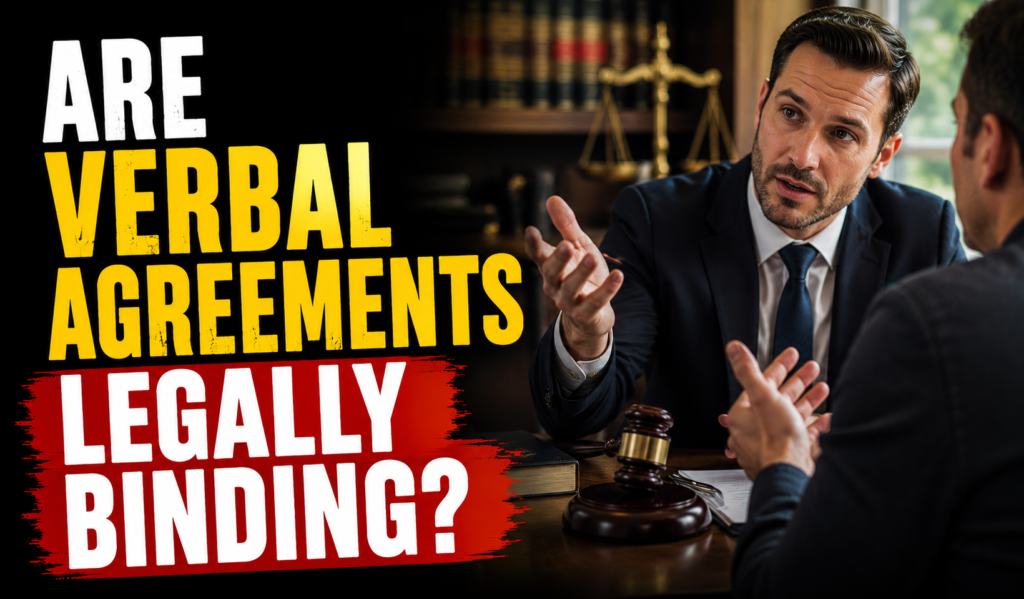
Not Every Visitor Starts Out As a Trespasser
One important fact is that many people initially enter property lawfully.
Examples may include:
- Friends
- Family members
- Guests
- Service providers
- Neighbors
The issue arises when permission changes or the person remains longer than allowed.
This is one reason these situations are not always as straightforward as they first appear.
Property Owners Often Encounter This Situation After Disputes
Refusal-to-leave situations commonly arise after:
- Neighbor disagreements
- Property line disputes
- Relationship conflicts
- Family disagreements
- Access disputes
Many of these situations are connected to larger property issues.
You may also find useful information in:
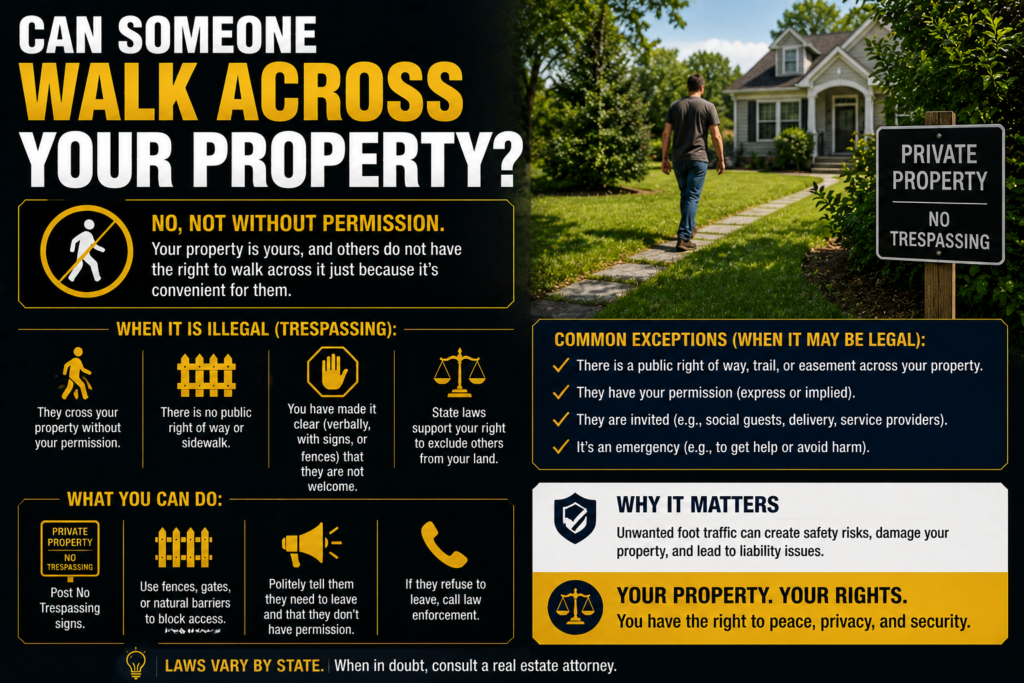
Can Someone Walk Across Your Property?
and
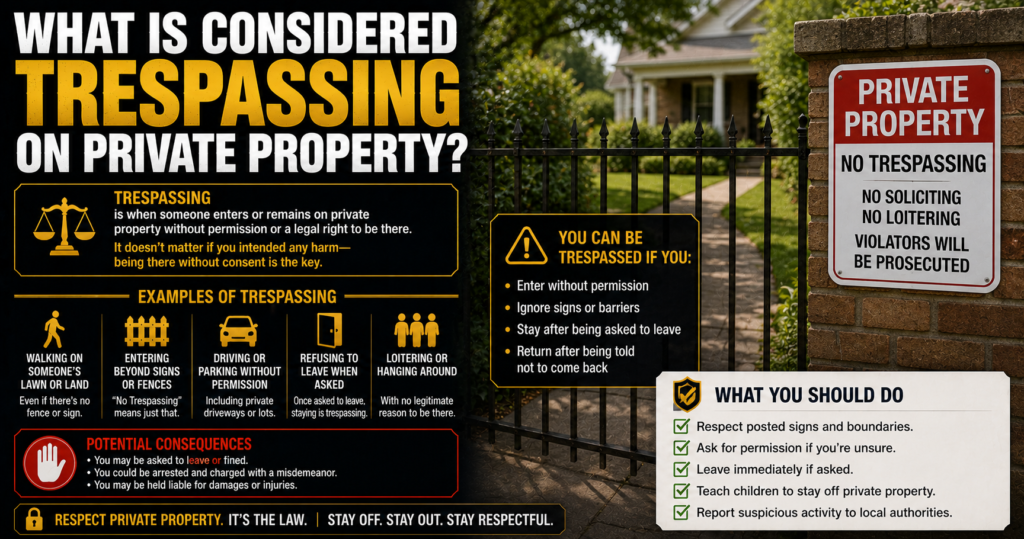
What Is Considered Trespassing on Private Property?
Property Boundaries Matter
Sometimes the dispute begins because the parties disagree about where the property line actually exists.
A person may believe they are standing on property they have a right to use.
The owner may disagree.
Before making assumptions, it is often wise to verify boundary locations.
If you have not already confirmed your property boundaries, see:

How Do You Find Your Property Lines?
Many property owners choose to clearly identify verified property corners and boundaries using visible markers after a survey has been completed.
Easements Can Create Confusion
Not every person entering property is automatically trespassing.
Some individuals may have access rights through:
- Utility easements
- Access easements
- Shared driveways
- Right-of-way agreements
This is one reason it is important to understand whether easements affect the property.
For additional information, see:
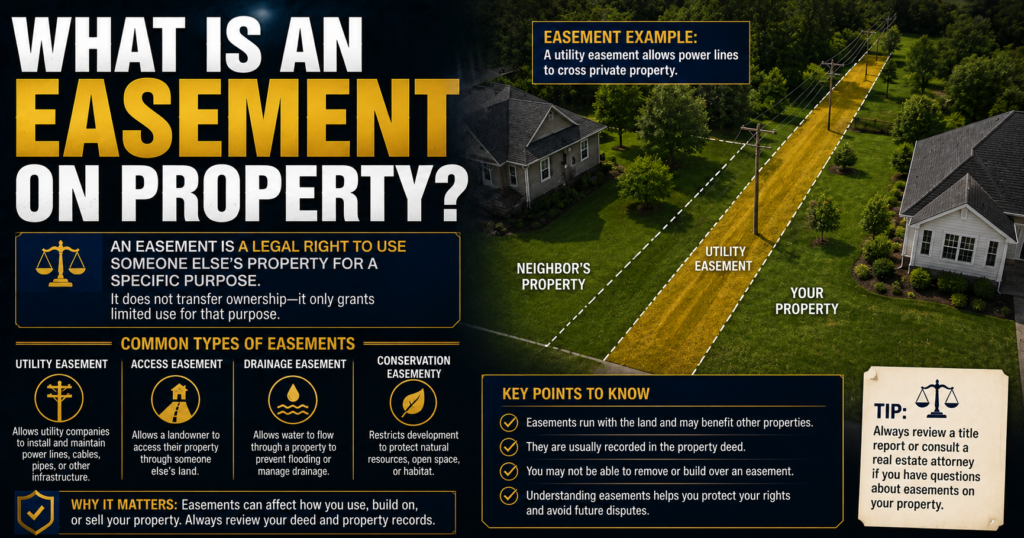
What Is an Easement on Property?
Why Documentation Becomes Important
When disputes escalate, documentation often becomes extremely valuable.
Property owners frequently document:
- Dates
- Times
- Conversations
- Photographs
- Video footage
The goal is preserving accurate information rather than relying solely on memory.
Many homeowners choose to monitor driveways, entrances, and gates with outdoor security cameras when repeated disputes occur.
Security Cameras Can Help Establish Facts
Disagreements often involve conflicting stories.
Video footage may help document:
- Entry onto property
- Vehicle activity
- Repeated visits
- Property damage
- Access disputes
Many property owners use security cameras around common entry points because they provide an objective record of activity.


Large Properties Can Present Additional Challenges
Owners of acreage, farms, hunting property, and wooded land often cannot observe every area of the property.
Many landowners choose to monitor remote access points and trails with trail cameras to better understand who is entering the property and when.
Understanding the Situation Comes First
When someone refuses to leave property, emotions often run high.
However, understanding:
- Property boundaries
- Easement rights
- Access rights
- The relationship between the parties
is often one of the most important first steps in determining how the situation should be handled.
What Happens If a Neighbor Refuses to Leave Your Property?
Neighbor disputes are among the most common situations where this issue arises.
Examples may include:
- Boundary disputes
- Fence disagreements
- Driveway conflicts
- Easement disagreements
- Property access issues
Sometimes both parties genuinely believe they are right.
That is one reason property owners often benefit from understanding property boundaries and any easement rights that may exist before assuming someone is unlawfully on the property.
You may also find helpful information in:
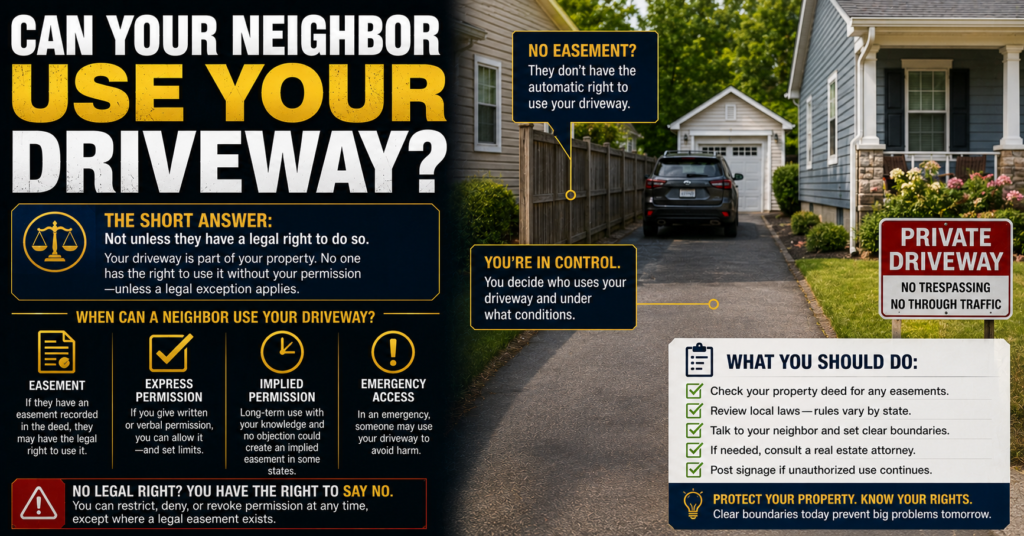
Can Your Neighbor Use Your Driveway?
and
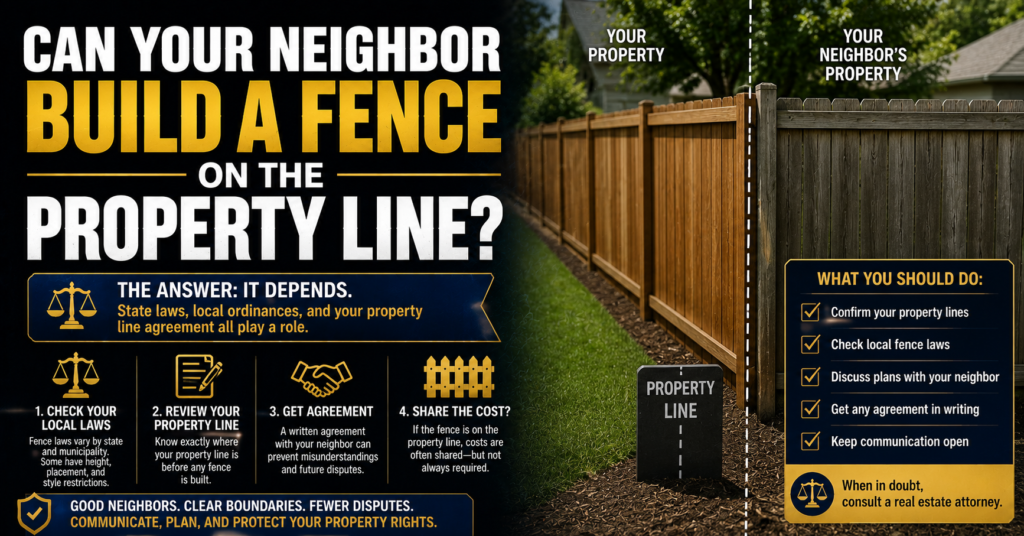
Can Your Neighbor Build a Fence on the Property Line?
What If a Former Guest Refuses to Leave?
Situations involving former guests can be especially stressful.
A friend, family member, or acquaintance may have initially been welcome on the property.
However, circumstances can change.
The legal issues involved often depend on factors such as:
- How long the person has been there
- Whether they lived on the property
- Whether any agreements existed
- Applicable state laws
Because these situations can become complicated, property owners often benefit from understanding the specific legal relationship involved.
What About Former Tenants?
Former tenant situations are often different from ordinary trespassing situations.
Landlord-tenant laws may apply, and the rules can vary significantly from state to state.
Property owners should be cautious about assuming that a former tenant can be treated exactly the same as a stranger entering the property.
The facts and applicable laws matter.
Can No Trespassing Signs Help?
Many property owners use signs to clearly communicate that access is not authorized.
Visible signs may help:
- Establish notice
- Discourage unwanted visitors
- Reduce misunderstandings
- Support documentation efforts
Many property owners choose to post highly visible No Trespassing and surveillance notices near entrances and access points to make expectations clear before problems occur.
For additional information, see:
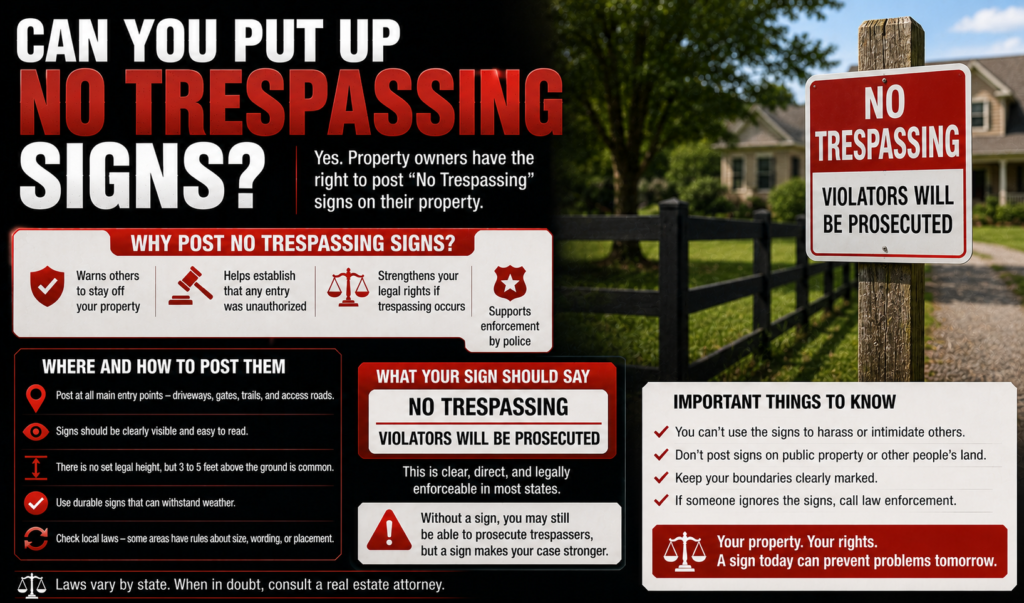
Can You Put Up No Trespassing Signs?
Why Surveillance Signs Can Be Useful
Many property owners combine No Trespassing signs with surveillance notices.
The goal is often to make visitors aware that activity may be documented.
Visible surveillance notices may discourage some individuals from entering private property without permission.
Security Lighting Can Improve Visibility
Property owners frequently install lighting around:
- Gates
- Driveways
- Fence lines
- Barns
- Outbuildings
Many homeowners choose to improve visibility around property entrances with motion-activated security lightingbecause better visibility may discourage unwanted activity and improve recorded footage.
Security Cameras Can Help Document Repeated Problems
When disputes continue, documentation often becomes increasingly important.
Many property owners choose to monitor entrances and access points with outdoor security cameras to help document:
- Repeated visits
- Vehicle activity
- Property damage
- Access disputes
Objective evidence is often more useful than relying on memory alone.
Rural Properties Often Benefit From Trail Cameras
Owners of farms, hunting land, acreage, and wooded property frequently face challenges monitoring remote areas.
Many landowners choose to monitor trails and remote property entrances with trail cameras to help document activity occurring away from the home.
Frequently Asked Questions
What happens if someone refuses to leave private property?
Depending on the circumstances, refusing to leave private property may create legal issues involving trespassing, access rights, or other property-related concerns.
Can I ask someone to leave my property?
Property owners often have the ability to tell unwanted visitors to leave private property. The specific legal implications vary depending on the situation.
Is refusing to leave private property trespassing?
It can be, depending on the circumstances and applicable laws.
What if the person claims they have a right to be there?
Questions involving easements, property boundaries, access rights, and other legal issues may affect the situation.
Can security cameras help?
Many property owners use cameras to document activity occurring around entrances, driveways, and other access points.
Should I post No Trespassing signs?
Many property owners choose to post signs to clearly communicate that the property is private and access is not authorized.
What if the dispute involves a neighbor?
Neighbor disputes often involve additional issues such as property lines, easements, driveways, and access rights.
Why is documentation important?
Photographs, video footage, records, and other documentation may help establish what occurred if disputes arise later.
Important Information
This article is provided for educational and informational purposes only and should not be considered legal advice. Property rights, trespassing laws, landlord-tenant laws, and access rights vary by state and individual circumstances. Consult a qualified attorney regarding your specific legal situation.
For more information about our content standards, visit our Editorial Policy and Fact-Checking Policy pages.
Additional information about this website can be found on our About Us, Contact Us, FAQ, Disclaimer, and Terms and Conditions pages.
About the Author
Sarah Reynolds is a legal research contributor for Legal Know It All who focuses on property rights, neighbor disputes, real estate issues, and practical legal topics affecting homeowners and landowners. She researches common legal questions involving private property and helps explain complex legal concepts using clear, easy-to-understand language.