
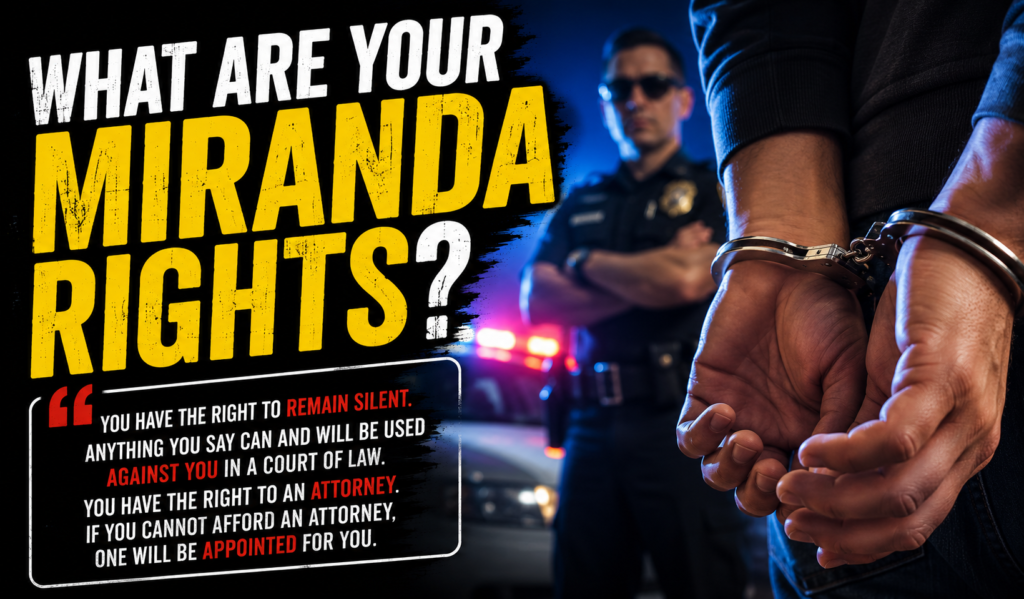
Most Americans have heard the phrase at some point.
“You have the right to remain silent…”
It appears in movies.
It appears on television.
It appears in crime shows almost daily.
The strange thing is that many people recognize the words without actually understanding what Miranda Rights are or when they apply.
I’ve found that a lot of people believe police must read Miranda Rights every time they speak to someone.
Others believe that if officers fail to read the warning, an entire case automatically gets thrown out.
The reality is usually much more complicated.
Understanding what Miranda Rights are and when they become important can help people better understand their constitutional protections.
Quick Answer
Miranda Rights are legal warnings associated with police questioning and constitutional protections. Whether Miranda Rights apply depends on factors such as custody, questioning, and the specific circumstances involved.
Why Are They Called Miranda Rights?
The name comes from a landmark court case involving a man named Ernesto Miranda.
The case eventually reached the Supreme Court and became one of the most widely recognized constitutional-law decisions in American history.
As a result, the warning that many people recognize today became commonly known as “Miranda Rights” or the “Miranda Warning.”



The Rights Most People Recognize
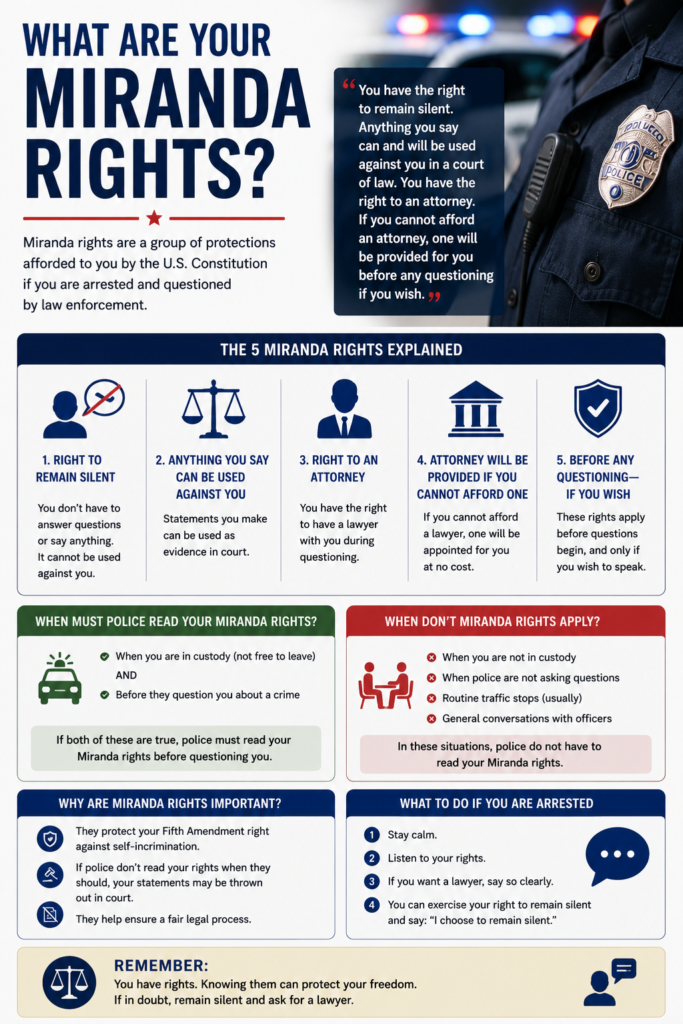
While wording can vary, the warning often includes concepts such as:
- The right to remain silent
- The possibility that statements may be used as evidence
- The right to an attorney
- The right to have an attorney present during questioning
Many Americans know these concepts from television long before they ever learn where they originated.
Why Miranda Rights Matter
One thing I’ve noticed is that many people assume Miranda Rights exist simply because police investigations require them.
The broader purpose involves constitutional protections and the rights of individuals during certain interactions with law enforcement.
That is one reason Miranda discussions often overlap with larger constitutional-rights issues.
You can find additional related topics in our:
Constitutional Rights Category
Police Conversations Are Not Always The Same
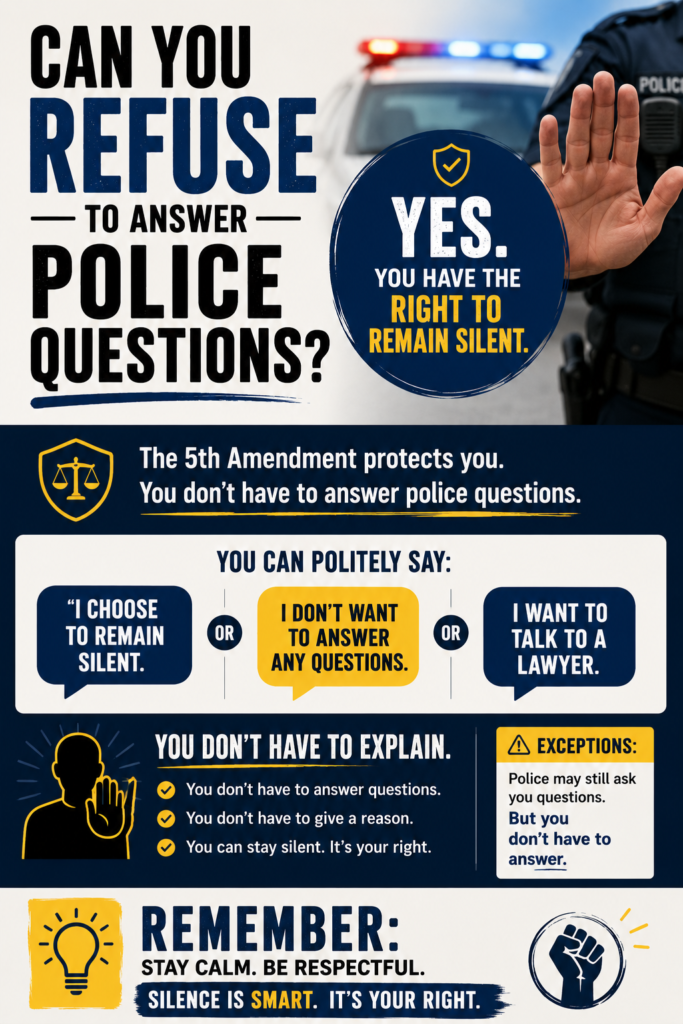
One reason Miranda Rights create confusion is that not every conversation with police is treated the same way. The practical question of whether someone may remain silent is examined in Can You Refuse to Answer Police Questions?.
People may encounter officers during:
- Traffic stops
- Investigations
- Witness interviews
- Emergency situations
- Casual conversations
The circumstances surrounding the interaction often matter.
That is why broad assumptions about Miranda Rights can sometimes be misleading.
The Right To Remain Silent Is Often The Most Discussed
If there is one Miranda concept most Americans recognize, it is the right to remain silent.
I’ve found that this is often the part people remember best because it appears so frequently in television and movies.
The idea itself has become deeply embedded in American culture.
Miranda Rights And Police Investigations Often Overlap
People interested in Miranda Rights are often interested in other constitutional-rights topics as well.
You may also find helpful information in:
Can Police Lie to You During an Investigation?
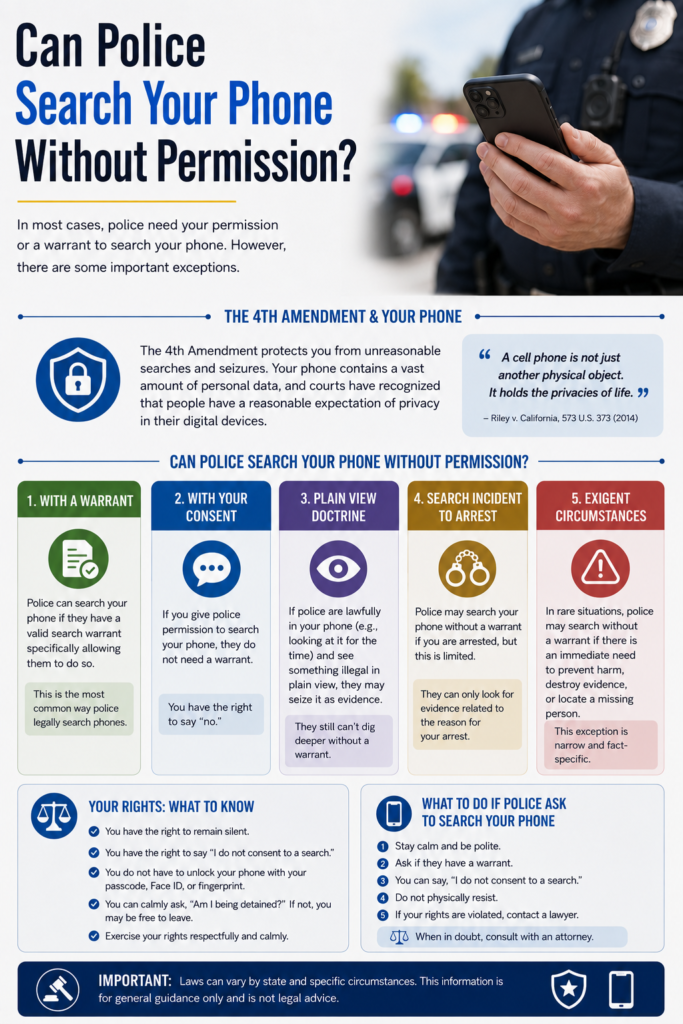
Can Police Search Your Phone Without Permission?

Can Police Search Your Car Without Permission?
These topics often appear together because they all involve questions about investigations, police authority, and individual rights.
Television Has Created A Lot Of Misconceptions
One thing I’ve learned is that television has probably educated and confused people about Miranda Rights at the same time.
Crime shows often simplify situations for entertainment purposes.
Real-life legal situations are usually much more fact-specific.
That is one reason many people are surprised when real-world situations do not unfold exactly like television dramas.
Understanding The Basics Is Valuable
Even if someone never encounters a criminal investigation, understanding Miranda Rights can help them better understand how constitutional protections work.
The more people understand their rights, the easier it becomes to recognize when legal issues may arise.
When Do Miranda Rights Actually Apply?
This is where many misconceptions begin.
I’ve talked to plenty of people who believe police must read Miranda Rights every time they ask a question.
In reality, situations involving Miranda Rights are often more specific than that.
Questions frequently arise regarding:
- Custody
- Police questioning
- Investigations
- Interviews
- Detentions
That is one reason the facts surrounding an interaction often matter just as much as the questions being asked.
What Does “In Custody” Mean?
One phrase that appears frequently in Miranda discussions is “in custody.”
Many people automatically assume this means handcuffs.
Others assume it means being formally arrested.
In reality, custody-related questions often involve the specific circumstances of the interaction.
Because every situation is different, custody can become one of the most heavily discussed issues in Miranda-related cases.
Not Every Police Conversation Triggers Miranda Rights
One thing that surprises many Americans is that not every interaction with law enforcement is treated the same way.
Examples may include:
- Witness interviews
- Casual conversations
- Traffic-related encounters
- Investigative contacts
- Emergency situations
That is one reason broad assumptions about Miranda Rights often lead to confusion.
The details matter.
The Right To Remain Silent Gets Most Of The Attention
When people hear “Miranda Rights,” they usually think of one thing:
The right to remain silent.
I’ve found that this concept resonates with people because it is simple and easy to remember.
However, Miranda discussions often involve several constitutional principles working together rather than a single right standing alone.
What Happens If Miranda Rights Are Not Read?
This is probably one of the biggest misconceptions surrounding Miranda Rights.
Many people believe that if Miranda Rights are not read immediately, an entire criminal case automatically disappears.
That idea has been repeated so often in movies and television that many Americans accept it as fact.
Real legal situations are often far more complicated than television makes them appear.
The specific circumstances surrounding questioning, custody, evidence, and constitutional protections can all become important.
Why Television Gets This Wrong So Often
I’ve noticed that crime shows usually present Miranda Rights as a dramatic moment.
An officer makes an arrest.
The warning is read.
The scene ends.
Real-world legal situations are rarely that simple.
Actual investigations often involve far more detail and fact-specific analysis than what appears in a one-hour television episode.
Miranda Rights Are Part Of A Bigger Constitutional Picture
One thing I always remind people is that Miranda Rights are only one piece of a much larger constitutional-rights discussion.
People interested in Miranda Rights often also have questions about:
- Searches
- Warrants
- Police questioning
- Investigations
- Privacy rights
For additional reading, you may also find helpful information in:
Can Police Enter Private Property Without Permission?
Can Police Search Your Phone Without Permission?
Can Police Search Your Car Without Permission?
Can Police Lie to You During an Investigation?
Together, these topics help explain many of the constitutional protections Americans hear about most often.
Frequently Asked Questions
What are Miranda Rights?
Miranda Rights are legal warnings associated with certain police questioning situations and constitutional protections.
Why are they called Miranda Rights?
The term comes from a landmark Supreme Court case involving Ernesto Miranda.
Do police always have to read Miranda Rights?
Whether Miranda Rights apply can depend on the specific circumstances of the interaction.
What is the right to remain silent?
The right to remain silent is one of the most widely recognized concepts associated with Miranda Rights.
Does being arrested automatically trigger Miranda Rights?
Miranda-related questions often depend on several factors, including the circumstances surrounding questioning and custody.
What happens if Miranda Rights are not read?
Many people assume this automatically ends a criminal case, but real legal situations are often more complicated than television portrays.
Why do Miranda Rights matter?
They are closely connected to constitutional protections involving police questioning and individual rights.
Where can I learn more about constitutional rights?
You can browse additional related topics in our:
Constitutional Rights Category
Important Information
This article is provided for educational and informational purposes only and should not be considered legal advice. Constitutional protections, criminal procedure rules, police questioning standards, and Miranda-related legal issues vary depending on the facts and applicable laws. Consult a qualified attorney regarding your specific situation.
For more information about our content standards, visit our Editorial Policy and Fact-Checking Policy pages.
Additional information about this website can be found on our About Us, Contact Us, FAQ, Disclaimer, and Terms and Conditions pages.
About the Author
Michael Carter is a legal research contributor for Legal Know It All who focuses on constitutional rights, criminal law, police procedures, and individual liberties. He researches common legal questions involving investigations, searches, questioning, and constitutional protections while helping readers understand complex legal concepts in clear, practical language.