
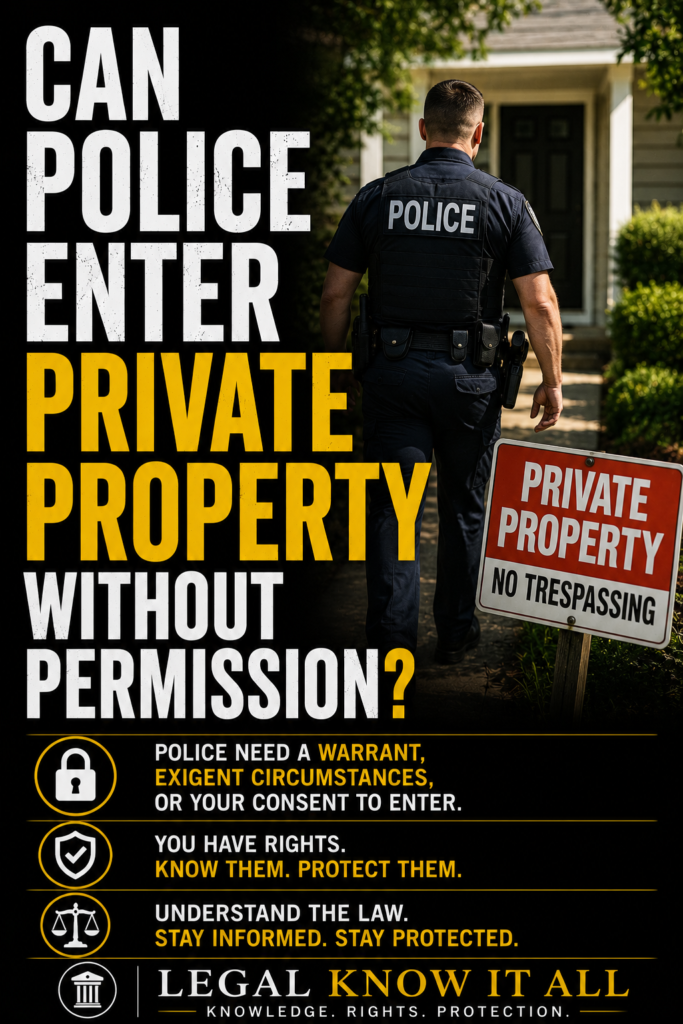
I’ve noticed that many homeowners assume one of two things.
They either believe police can enter private property whenever they want, or they believe police can never step onto private property without the owner’s permission.
In reality, the answer is usually somewhere in the middle.
Private property rights are important, but there are also situations where law enforcement officers may be allowed to enter property without first obtaining permission.
Because of that, understanding the difference between ordinary visitors and law enforcement access can be important for property owners.
Quick Answer
Police may sometimes enter private property without permission depending on the circumstances. Factors such as warrants, emergencies, public safety concerns, and other legal exceptions may affect whether entry is permitted. The exact rules depend on the facts of the situation and applicable law.
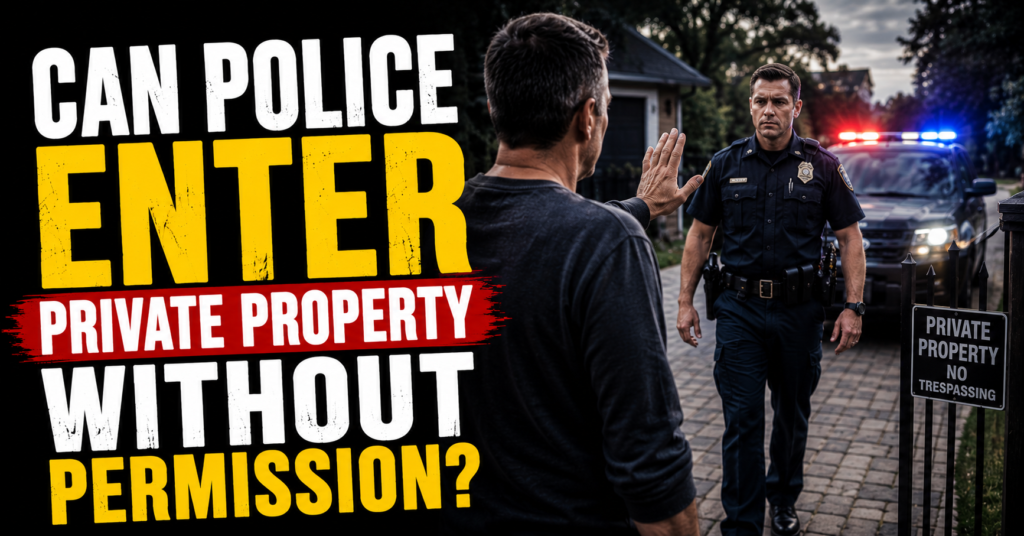
Why This Question Creates So Much Confusion
Most people think about property rights in simple terms.
I own the property.
Someone wants to come onto the property.
I either allow it or I don’t.
Law enforcement situations can be more complicated because constitutional protections and legal exceptions may come into play.
That is why two situations that appear similar at first glance may be treated very differently under the law.
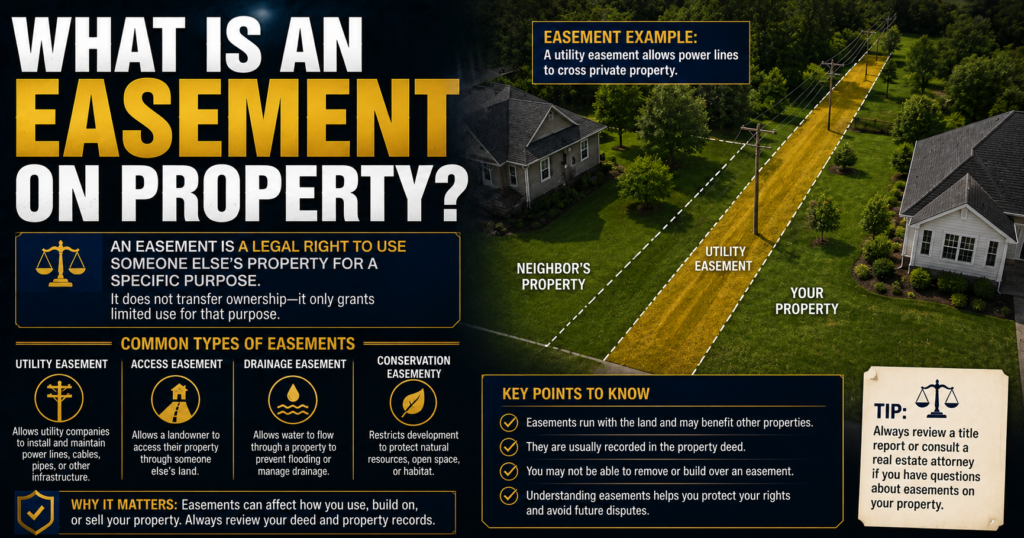
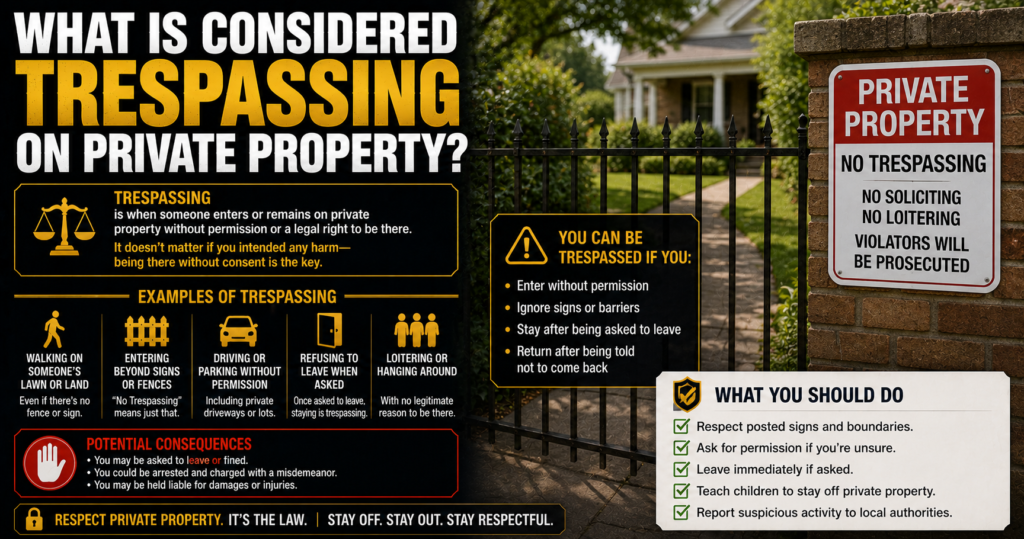

Property Ownership Still Matters
Owning property does not mean you lose your rights when police arrive.
Property ownership remains important.
Questions often involve:
- Houses
- Yards
- Driveways
- Garages
- Barns
- Outbuildings
- Acreage
The location involved can sometimes affect how a situation is analyzed.
The Difference Between Entry and Search

One thing many people overlook is that entering property and searching property are not always the same thing. That distinction is especially important when considering Can Police Search Your Storage Unit? The Answer May Surprise You, where access and a later search may raise separate issues.
A police officer standing on a driveway may raise different legal questions than a police officer searching inside a home.
That distinction often becomes important.
You may also find useful information in:

Can Police Search Your Car Without Permission?
Emergencies Can Change the Situation
Many people are surprised to learn that emergencies can affect what actions officers may take.
Examples may include:
- Medical emergencies
- Active threats
- Fires
- Ongoing crimes
- Immediate safety concerns
Situations involving urgent public safety concerns are often analyzed differently than ordinary investigations.
What About Driveways and Front Walkways?
Property owners are often most concerned about areas such as:
- Front yards
- Walkways
- Driveways
- Front doors
These are also areas where visitors commonly approach a home.
The legal issues surrounding these areas can be different from those involving the interior of a home or more private portions of property.
Rural Property Creates Additional Questions
Owners of farms, acreage, hunting land, and wooded property often wonder whether officers can simply enter large areas of land.
The answer can depend on the specific facts involved and the area of the property being discussed.
Large properties sometimes create different practical and legal questions than small residential lots.
Why Documentation Can Be Helpful

Whenever questions arise regarding activity on private property, documentation can be valuable. For records that support a property-related timeline, scan important property records for long-term digital storage can help preserve paper documentation digitally.

Many property owners choose to document entrances and driveways with outdoor security cameras so activity can be reviewed later if questions arise. An outdoor system such as monitor entrances, driveways, and gates with outdoor security cameras may help document activity around common access points.
Video footage often provides a much clearer picture than memory alone.



Property Rights and Constitutional Rights Often Overlap
This is one reason the topic can be confusing.
The issue is not only about property ownership.
It can also involve constitutional protections, law enforcement authority, privacy interests, and public safety concerns.
Understanding how those interests interact is often the key to understanding the answer.
What About Search Warrants?
When most people think about police entering private property, they immediately think about warrants.
A warrant is one of the most commonly discussed legal tools associated with searches and law enforcement investigations.
However, many homeowners are surprised to learn that not every police interaction involving private property begins with a warrant.
That is one reason understanding the specific circumstances of a situation is often important.
Questions involving warrants can become highly fact-specific and may depend on:
- The location involved
- The purpose of the entry
- The information available to law enforcement
- Applicable constitutional protections
Does Giving Permission Change Things?
One thing I think many people overlook is that consent can sometimes play a major role.
If a property owner voluntarily allows officers onto the property, the situation may be very different from one where permission was never granted.
This is one reason people often hear discussions about:
- Consent
- Voluntary cooperation
- Permission to enter
- Permission to search
The specific facts matter.
Why Front Doors, Walkways, and Driveways Create Questions
Most homeowners expect visitors to approach a front door.
That expectation often creates legal questions involving:
- Front walkways
- Driveways
- Front porches
- Entry paths
These areas are often treated differently than locations that are more private or less accessible to the public.
Because of that, the location where police are standing can sometimes become important.
What Is Curtilage?
One term that frequently appears in discussions involving private property is “curtilage.”
Generally speaking, curtilage refers to the area immediately surrounding a home that is closely connected to the home’s private use.
Examples may include:
- Certain yards
- Enclosed areas
- Areas near the residence
Curtilage questions often arise when courts evaluate privacy interests involving residential property.
Large Acreage Can Raise Different Questions
Many landowners assume that every part of a large property is treated exactly the same.
In reality, legal analysis involving:
- Farms
- Acreage
- Hunting land
- Timber property
- Rural land
can become more complicated depending on the area involved.
This is one reason rural property owners often have questions that differ from those involving a small residential lot.
Documentation Can Be Valuable
Whenever questions arise regarding activity on private property, documentation can be useful.
Many homeowners choose to document entrances and access points with outdoor security cameras so activity can be reviewed later if needed.
Video footage often provides a clearer picture of events than memory alone.
Property owners dealing with larger parcels sometimes choose to monitor remote gates and trails with trail cameras where traditional cameras may not be practical.
Why Homeowners Often Combine Cameras and Signs
Many property owners use a combination of:
- Boundary markers
- Security cameras
- Surveillance notices
- Motion lighting
to make property boundaries and monitoring efforts more visible.
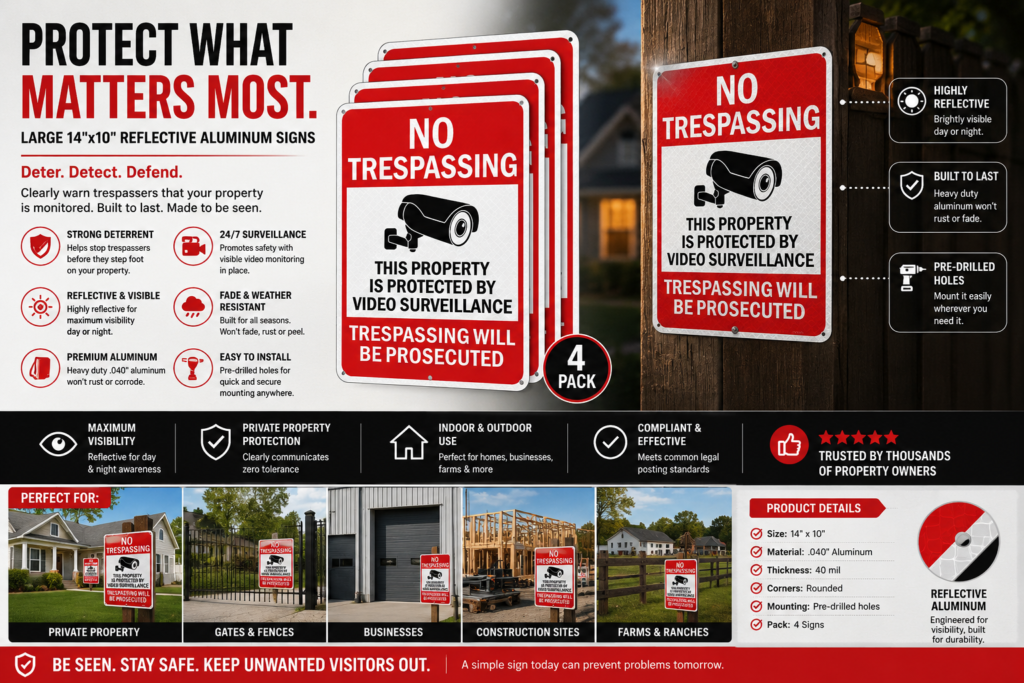
Many homeowners choose to place visible surveillance warning signs near entrances and gates because clear notice often discourages unwanted activity before problems begin.
Frequently Asked Questions
Can police ever enter private property without permission?
Depending on the circumstances, there are situations where law enforcement may be permitted to enter private property without first obtaining permission.
Does owning property automatically prevent police entry?
Property ownership remains important, but ownership alone does not answer every legal question involving police access to property.
Is entering property the same as searching property?
Not necessarily. Entry and search issues can involve different legal questions depending on the facts.
Does a warrant always have to exist?
Not every situation involving law enforcement and private property is handled the same way. The circumstances often matter.
What if police come onto my driveway?
Driveways, walkways, and front-door approaches often create different legal questions than more private areas of a property.
Can security cameras help document activity?
Many homeowners use cameras to document activity occurring around entrances, driveways, gates, and other access points.
What if I own a large rural property?
Large acreage, farms, and hunting land can create unique questions involving access and privacy expectations.
Where can I learn more about police search issues?
You may also find useful information in:
Can Police Search Your Car Without Permission?
and

Can Police Lie to You During an Investigation?
Important Information
This article is provided for educational and informational purposes only and should not be considered legal advice. Constitutional protections, search and seizure laws, and law enforcement authority vary depending on the facts, court decisions, and applicable laws. Consult a qualified attorney regarding your specific situation.
For more information about our content standards, visit our Editorial Policy and Fact-Checking Policy pages.
Additional information about this website can be found on our About Us, Contact Us, FAQ, Disclaimer, and Terms and Conditions pages.
About the Author
Sarah Reynolds is a legal research contributor for Legal Know It All who focuses on constitutional rights, property rights, law enforcement issues, and practical legal topics affecting everyday Americans. She researches legal questions involving privacy, searches, investigations, and individual rights and explains complex legal concepts in straightforward language readers can easily understand.