
Receiving a claim denial can be frustrating.
Receiving a claim denial when it feels like nobody even looked at the facts can be even more frustrating.
Many policyholders end up asking:
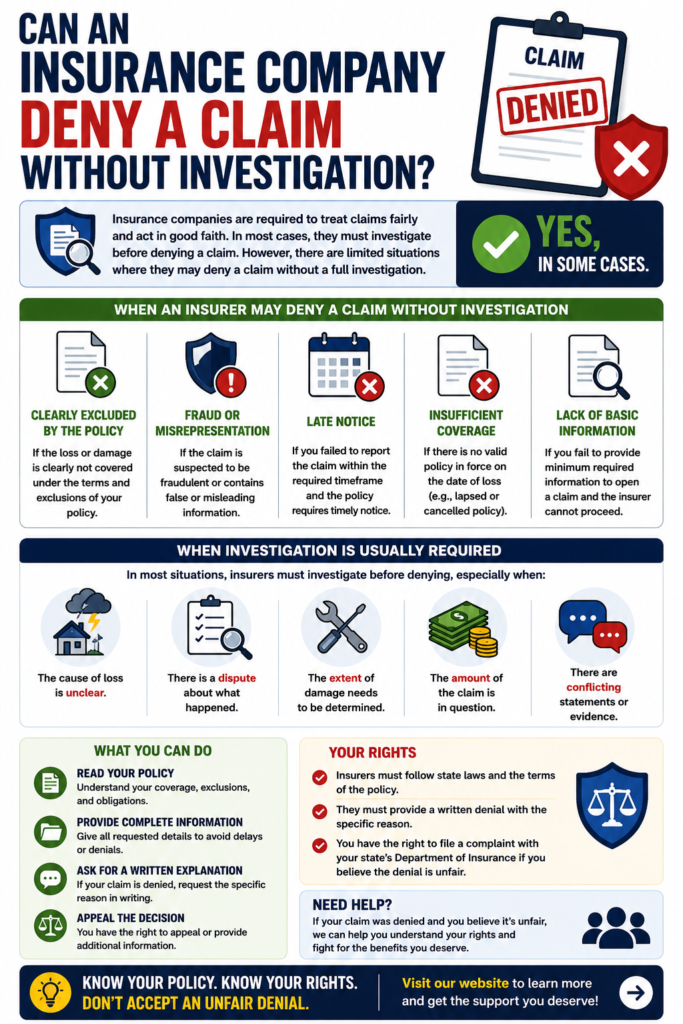
Can an insurance company deny a claim without investigation?
In most situations, insurance companies are expected to conduct a reasonable investigation before making decisions about claims. A failure to investigate fairly may raise questions discussed in What Is Insurance Bad Faith? Common Examples Explained.
However, what qualifies as a “reasonable investigation” can vary depending on the facts of the claim, the policy language, and the laws in your state.
The answer is not always as simple as yes or no.
Understanding how claim investigations work can help you determine whether a denial appears reasonable or whether additional questions may need to be asked. If the investigation overlooked relevant facts and the claim was closed, Can You Reopen a Closed Insurance Claim? may explain what options could exist.
Quick Answer
In many situations, insurance companies are expected to conduct a reasonable investigation before denying a claim. However, the type and scope of the investigation may vary depending on the circumstances. If a claim clearly falls outside policy coverage, a lengthy investigation may not be necessary. When facts are disputed or evidence must be reviewed, insurers are generally expected to evaluate the available information before making a decision. When the review appears incomplete, policyholders may want to consider Can You Appeal an Insurance Claim Denial?.
What Counts as an Insurance Investigation?
Many people imagine an investigation as a lengthy process involving inspections, interviews, and extensive paperwork.
Sometimes that’s true.
Sometimes the investigation is much simpler.
An insurance investigation may involve:
- Reviewing the policy
- Examining photographs
- Reviewing repair estimates
- Inspecting damage
- Speaking with witnesses
- Reviewing police reports
- Evaluating medical records
- Reviewing claim documentation
The type of investigation often depends on the type of claim.
A minor vehicle accident may require much less investigation than a major house fire.
Not Every Claim Requires the Same Level of Investigation
This is an important point.
Insurance companies do not necessarily have to perform the exact same investigative steps for every claim.
For example:
Imagine someone files a claim for flood damage under a policy that clearly excludes flood losses.
The insurance company may be able to review the policy and facts and quickly determine that coverage does not apply.
In that situation, a lengthy investigation may not be necessary.
Now compare that to a disputed vehicle accident where multiple drivers disagree about fault.
That type of claim often requires significantly more review before a decision can reasonably be made.
Why Insurance Companies Investigate Claims
Insurance companies investigate claims for several reasons.
They may need to determine:
- What happened
- When it happened
- Whether coverage applies
- How much damage occurred
- Whether someone else is responsible
- Whether additional evidence exists
Without enough information, the company may be unable to make an informed decision.
This is one reason investigations are such an important part of the claims process.
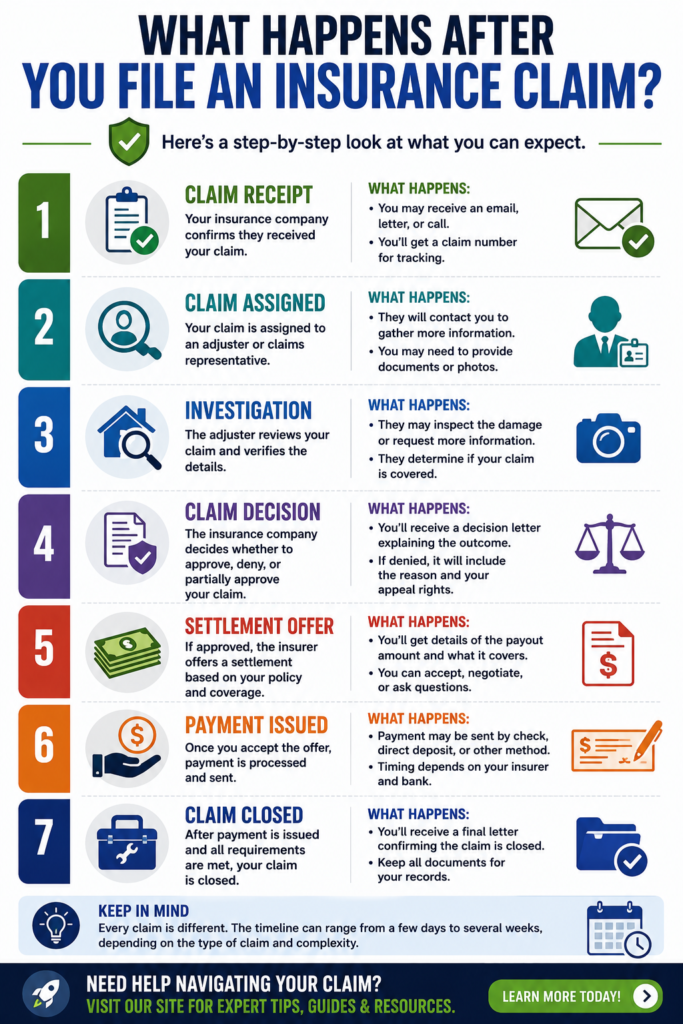
If you’re unfamiliar with the overall claims process, our article What Happens After You File an Insurance Claim?explains the typical stages most claims go through.
Signs an Insurance Company May Be Investigating
Sometimes policyholders assume no investigation occurred when one actually did.
Common investigation activities include:
- Requesting documents
- Reviewing photos
- Scheduling inspections
- Contacting witnesses
- Reviewing reports
- Examining policy language
Many of these activities occur behind the scenes.
As a result, it may appear that little is happening even when the claim file is actively being reviewed.
What If an Insurance Adjuster Never Visited?
Many people believe an adjuster must always inspect the damage before a claim can be denied.
That is not necessarily true.
Some claims are evaluated using:
- Photographs
- Videos
- Estimates
- Documentation submitted electronically
In other situations, inspections may be necessary.
The need for an inspection often depends on the type of loss and the information already available.
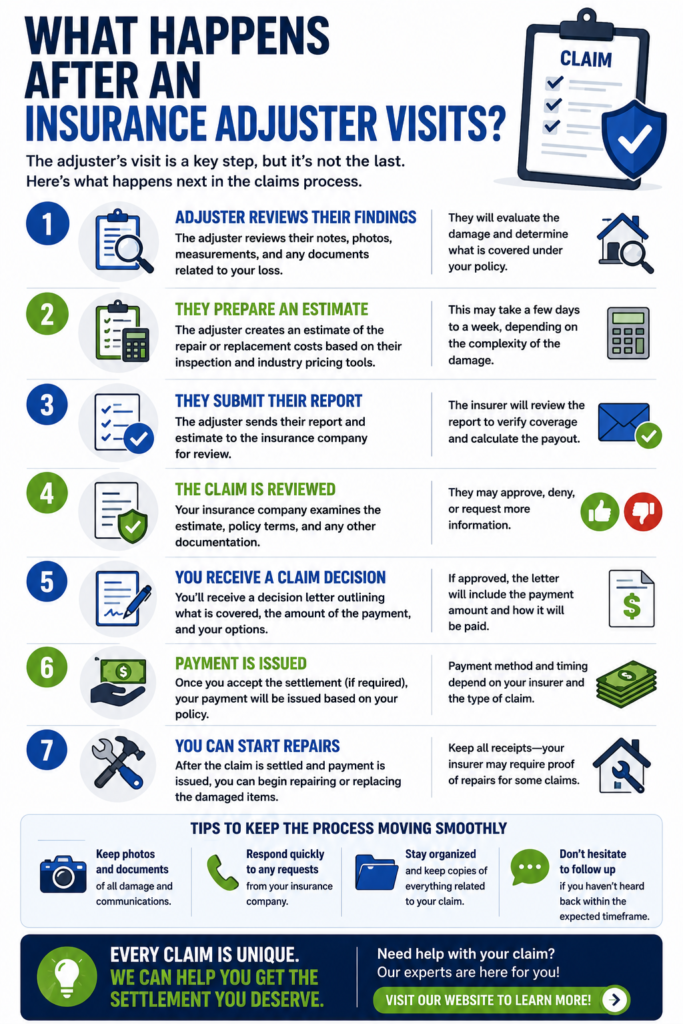
If an adjuster has already inspected your loss, our article What Happens After an Insurance Adjuster Visits? explains what usually happens next.
What If the Insurance Company Never Asked Questions?
This is where concerns often begin.
If the insurer:
- Never requested information
- Never reviewed evidence
- Never inspected damage
- Never explained the decision
policyholders may understandably question whether the claim received adequate review.
The specific facts matter.
A denial issued after meaningful review is different from a denial issued without evaluating important information.
Why Claim Denials Happen
Not every denial is the result of wrongdoing.
Insurance claims may be denied because:
- Coverage does not apply
- Policy exclusions apply
- Required information is missing
- Evidence does not support the claim
- Deadlines were missed
- Policy limits have been reached
Understanding the stated reason for the denial is usually the first step toward determining whether further action may be appropriate.


What If the Investigation Seems Unreasonable?
Not every disagreement means the insurance company failed to investigate properly.
However, there are situations where policyholders begin questioning whether the review was thorough enough.
For example, concerns sometimes arise when:
- Important evidence appears to have been ignored
- Witnesses were never contacted
- Relevant documents were never reviewed
- The denial explanation is unclear
- The insurer appears to have reached a conclusion without reviewing key facts
Every claim is different.
The specific facts, evidence, and policy language often determine whether an investigation appears reasonable.
What Evidence Can Help Support a Claim?
Strong evidence is often one of the most important parts of a successful insurance claim.
Helpful evidence may include:
- Photographs
- Videos
- Receipts
- Repair estimates
- Police reports
- Medical records
- Witness statements
- Contractor evaluations
The more documentation available, the easier it often becomes for an insurer to evaluate what happened.
We’ll cover this topic in much greater detail in our upcoming article:
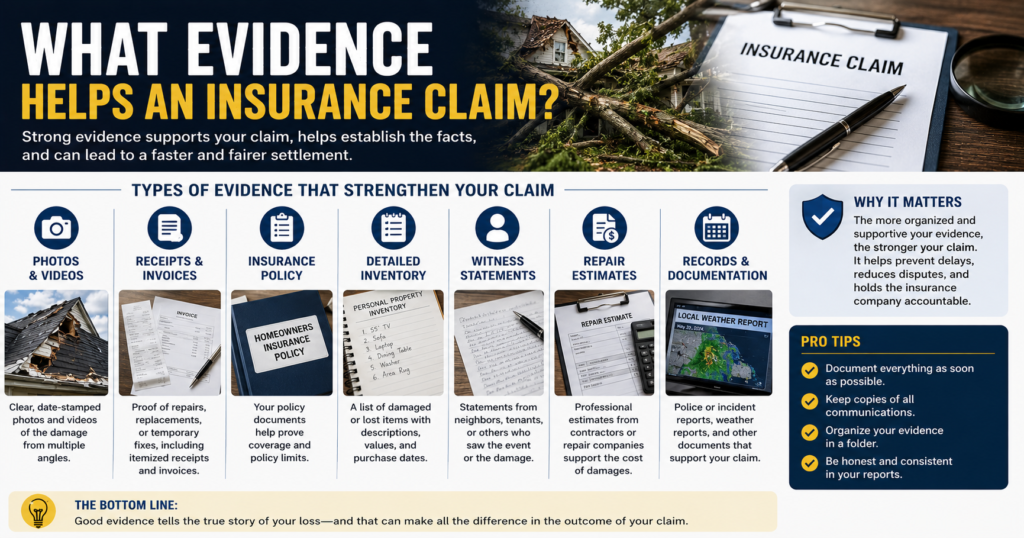
What Evidence Helps an Insurance Claim?
Why Video Evidence Can Be Important
Vehicle accidents are a good example of how evidence can affect a claim.
When drivers disagree about what happened, insurance companies often have to sort through conflicting statements.
Video footage may sometimes help clarify events.

Many drivers use the VNV Front and Rear Dash Cam for Accident Evidence because it records both the front and rear of the vehicle and may help preserve valuable evidence following an accident.
While no piece of evidence guarantees a particular outcome, clear documentation can often help reduce disputes.
What Is Insurance Bad Faith?
When people believe a claim was denied without a proper investigation, they often begin researching insurance bad faith.
In general, insurance bad faith refers to situations where an insurer allegedly fails to handle a claim appropriately under applicable laws or policy obligations.
Examples that may lead to bad faith allegations include:
- Failing to investigate
- Unreasonable delays
- Ignoring important evidence
- Misrepresenting policy language
- Improper claim denials
Not every denied claim qualifies as bad faith.
Insurance companies are generally allowed to deny claims when valid reasons exist.
The issue often comes down to whether the insurer acted reasonably under the circumstances.
We’ll explore this topic in greater detail in our upcoming article:
Can You Appeal a Denied Insurance Claim?
In many situations, yes.
A denial does not automatically mean the matter is over.
Depending on the circumstances, policyholders may be able to:
- Submit additional evidence
- Provide missing documentation
- Request reconsideration
- Clarify misunderstandings
- Challenge factual errors
Many successful claim disputes begin with simply understanding why the claim was denied.
Can You File a Complaint Against an Insurance Company?
Many states have agencies that regulate insurance companies.
These agencies often accept complaints involving:
- Claim denials
- Communication problems
- Claim delays
- Settlement disputes
- Claim handling concerns
Filing a complaint does not guarantee a particular outcome.
However, it may help bring additional attention to a dispute that appears unresolved.
We’ll discuss this process in more detail in our upcoming article:
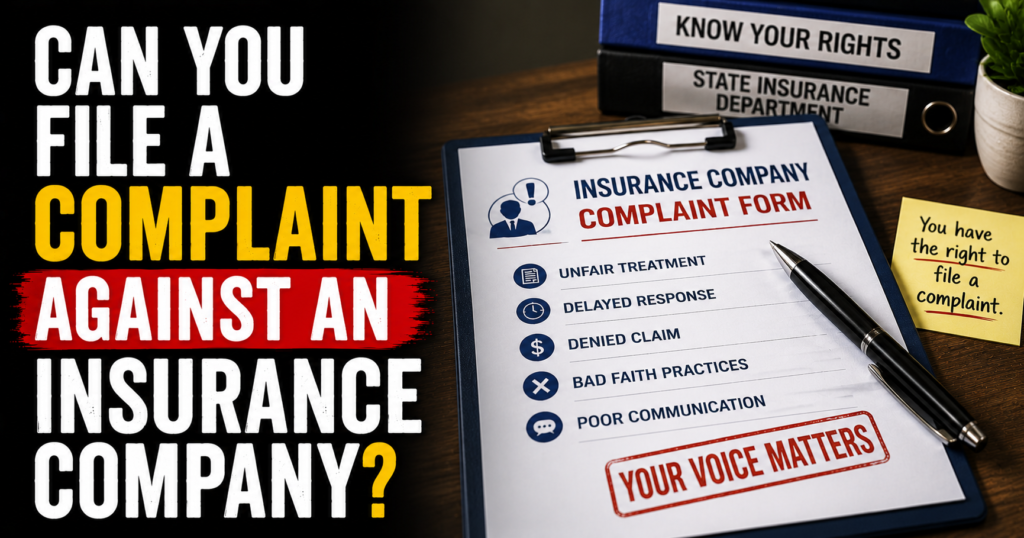
Can You File a Complaint Against an Insurance Company?
Can You Sue an Insurance Company for Denying a Claim?
Sometimes.
Whether legal action is appropriate depends on several factors, including:
- State law
- Policy language
- Available evidence
- The reason for the denial
- The amount of money involved
Some disputes are resolved through negotiation.
Others may involve mediation, arbitration, or litigation.
In some situations involving smaller amounts of money, policyholders may also want to review our Small Claims Court category.
We’ll cover this topic in greater depth in our upcoming article:
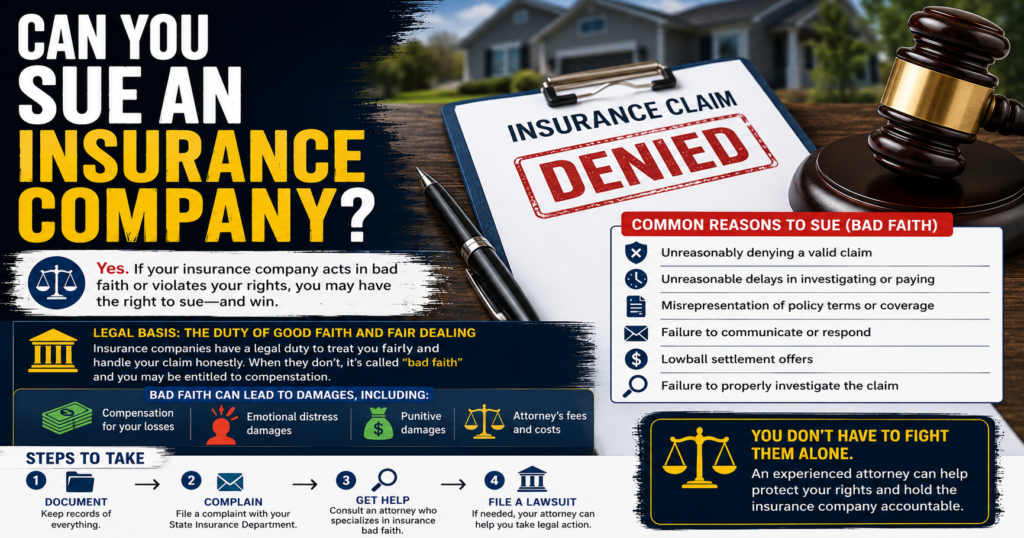
Can You Sue an Insurance Company?
State Laws Play a Major Role
One of the most important things to understand is that insurance laws vary from state to state.
States may have different rules regarding:
- Claim investigations
- Claim handling requirements
- Communication standards
- Complaint procedures
- Bad faith claims
Because of these differences, a claim denial that may be handled one way in one state could be handled differently somewhere else.
Readers interested in state-specific legal topics can visit our State Laws category.
What Should You Do After a Claim Denial?
If your claim has been denied, consider taking several practical steps.
Read the Denial Letter Carefully
The reason for the denial is one of the most important pieces of information you have.
Review Your Policy
Understanding the policy language can help clarify whether the denial appears consistent with the coverage provided.
Gather Additional Evidence
New documentation may sometimes strengthen your position.
Keep Records
Save all correspondence related to the claim.
Ask Questions
If the explanation is unclear, request clarification from the insurance company.
Understanding the Reason Behind the Denial Matters
Many policyholders focus on the denial itself.
Just as important is understanding why the denial occurred.
Some denials result from policy exclusions.
Others involve missing information or disputes regarding the facts.
The more you understand the stated reason for the denial, the easier it becomes to determine what options may be available moving forward.
If you’re still early in the claims process, you may also find these articles helpful:
- How Long Does an Insurance Claim Take? What to Expect
- What Happens After You File an Insurance Claim?
- Why Do Insurance Companies Delay Claims? Common Reasons
- What Happens After an Insurance Adjuster Visits?
- How Long Does an Insurance Company Have to Respond?
Frequently Asked Questions
Can an insurance company deny a claim without looking at the evidence?
In many situations, insurance companies are expected to conduct a reasonable review of available information before making a claim decision. The amount of investigation required depends on the facts of the claim, the policy language, and applicable state laws.
Does an insurance adjuster have to inspect the damage before a claim can be denied?
Not always. Some claims may be evaluated using photographs, videos, repair estimates, policy documents, and other evidence. Whether an inspection is necessary often depends on the nature of the claim and the information already available.
What should I do if I think my claim was denied unfairly?
Start by reviewing the denial letter carefully and identifying the reason provided by the insurance company. You may also want to gather additional evidence, review your policy, request clarification, or explore available appeal options.
Can an insurance company deny a claim because of missing documents?
Yes. If important information is unavailable, the insurer may be unable to fully evaluate the claim. Providing requested documents promptly can sometimes help avoid unnecessary disputes.
How do I know whether the insurance company actually investigated my claim?
Evidence of an investigation may include document requests, inspections, interviews, photographs, witness reviews, medical record reviews, or other efforts to gather information. Many investigation activities occur behind the scenes and are not always visible to policyholders.
What is the difference between a denied claim and a delayed claim?
A delayed claim remains under review while the insurance company continues investigating or gathering information. A denied claim is one where the insurer has reached a decision that coverage does not apply or that the claim should not be paid for the stated reasons.
Can I submit additional evidence after a denial?
In many situations, yes. Additional photographs, receipts, reports, estimates, or other documentation may sometimes help clarify issues that contributed to the denial.
Can I file a complaint if I believe the insurance company handled my claim improperly?
Many states allow policyholders to file complaints with insurance regulators regarding claim handling concerns, communication problems, delays, or other disputes involving insurance companies.
Can I sue an insurance company after a claim denial?
Sometimes. Whether legal action is appropriate depends on the facts of the case, the policy language, the evidence available, and the laws of the state involved.
Where can I learn more about insurance claim disputes?
You may find these related articles helpful:
- How Long Does an Insurance Claim Take? What to Expect
- What Happens After You File an Insurance Claim?
- Why Do Insurance Companies Delay Claims? Common Reasons
- What Happens After an Insurance Adjuster Visits?
- How Long Does an Insurance Company Have to Respond?
Important Information
This article is provided for educational and informational purposes only and should not be considered legal advice. Insurance laws vary by state, insurance policies differ, and individual circumstances can significantly affect claim outcomes. Information provided on Legal Know It All is intended to help readers better understand insurance claim procedures and legal concepts, not to provide legal representation or legal advice.
To learn more about how content is researched and reviewed, visit our Editorial Policy and Fact-Checking Policy pages.
Additional information about this website can be found on our About Us, Contact Us, FAQ, Disclaimer, and Terms and Conditions pages.
About the Author
Sarah Reynolds is a legal research contributor for Legal Know It All who focuses on insurance claims, consumer rights, and everyday legal issues affecting American families. She researches insurance regulations, policyholder rights, claim procedures, and consumer-focused legal topics to help readers better understand complicated subjects using plain English. Her goal is to provide trustworthy educational information that helps readers make informed decisions when dealing with insurance companies and claim disputes.