
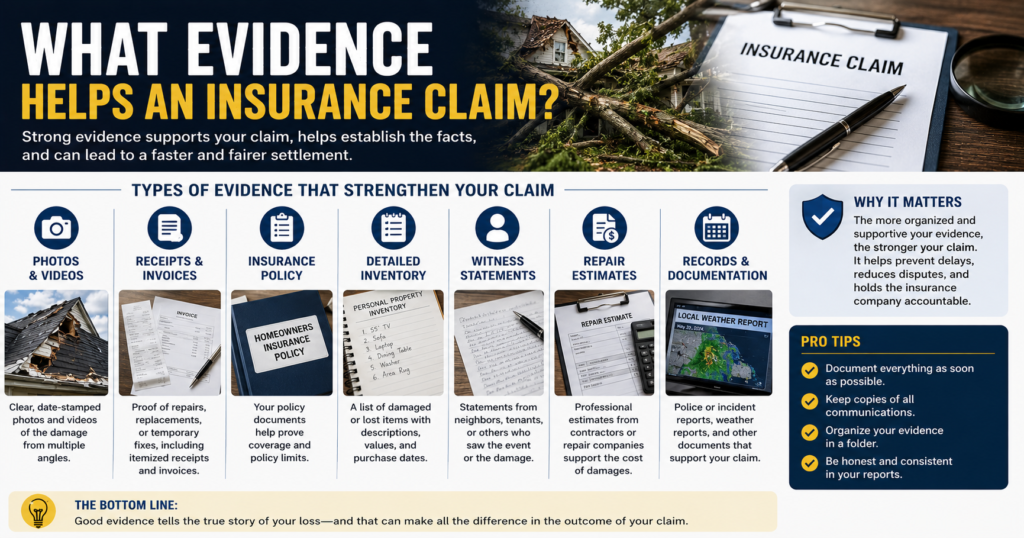
What Evidence Helps an Insurance Claim?
Strong evidence can make a significant difference during an insurance claim. Different forms of documentation are examined in 10 Types of Proof That Can Strengthen Your Insurance Claim Case.
Whether you’re dealing with vehicle damage, property damage, theft, water damage, or another covered loss, the insurance company will typically evaluate available evidence before making decisions.
Many claim disputes happen because evidence is missing, incomplete, or unclear.
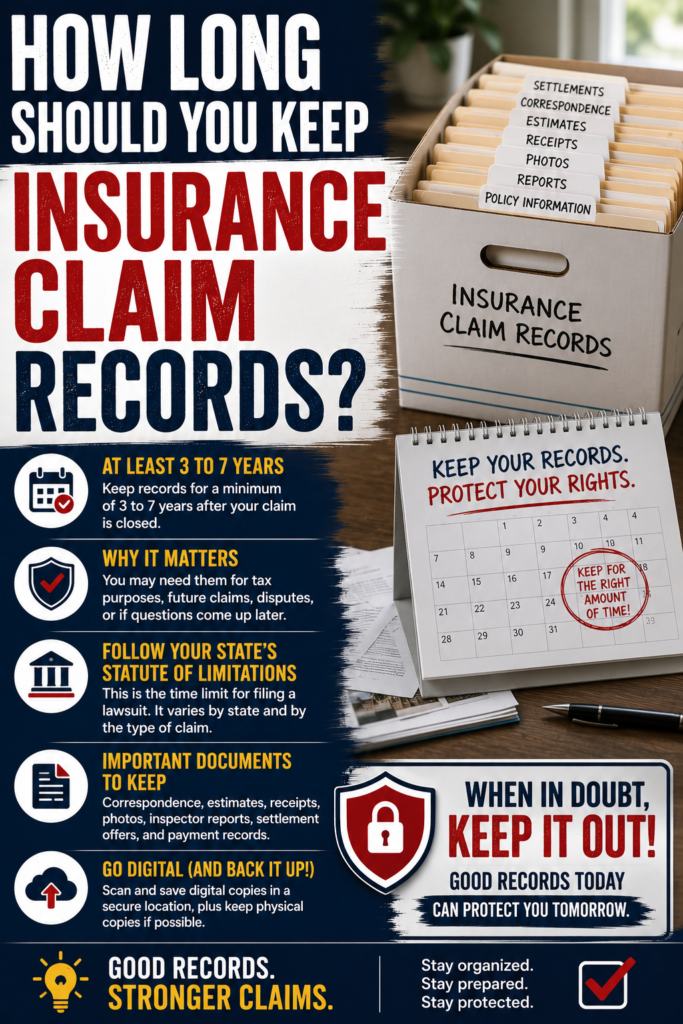
The stronger your documentation, the easier it often becomes to establish what happened, when it happened, and the extent of the damage. Preserving that documentation after the claim can be just as important, as explained in How Long Should You Keep Insurance Claim Records?.
Understanding what types of evidence are most useful can help policyholders avoid common problems during the claims process.
Quick Answer
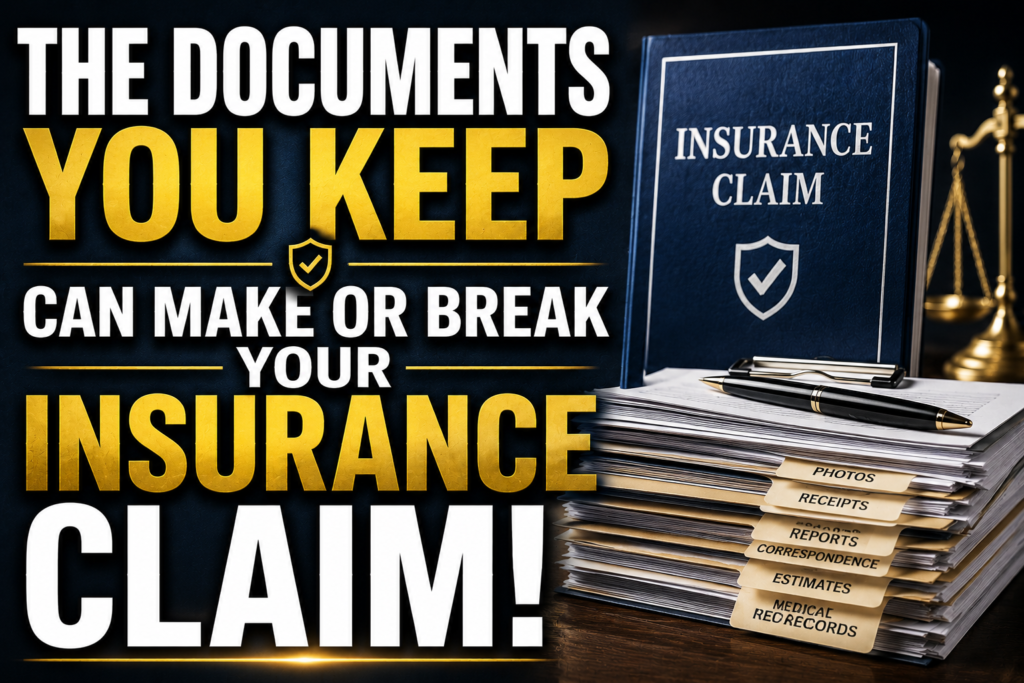
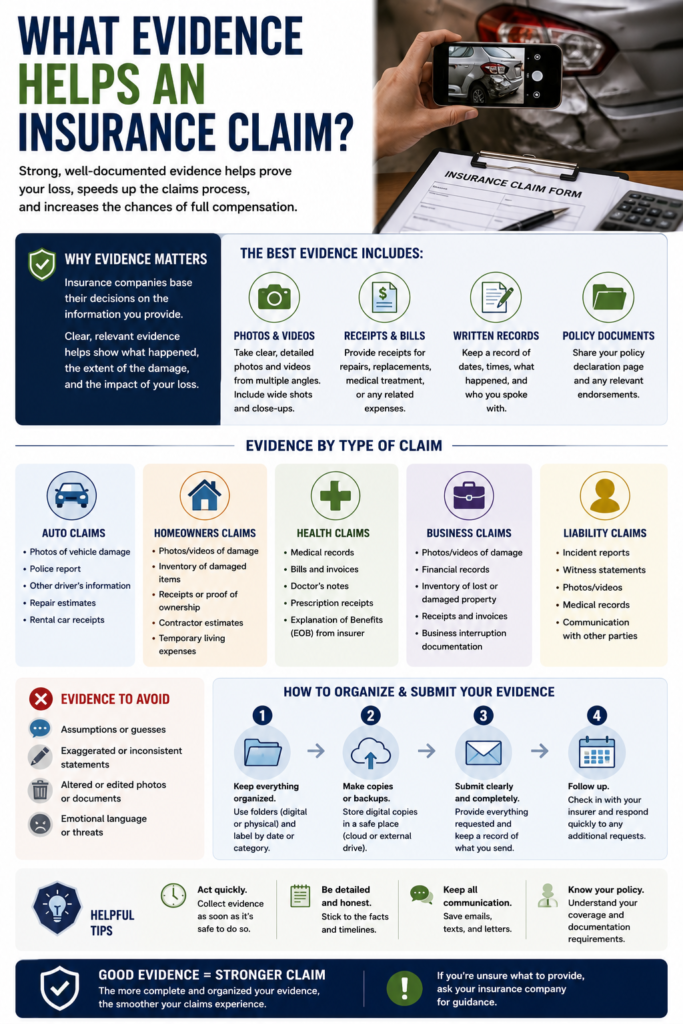
The most helpful evidence for an insurance claim often includes photographs, videos, receipts, repair estimates, inspection reports, witness statements, police reports, medical records, and documentation showing ownership or value. The specific evidence needed depends on the type of claim involved. Organizing these materials is easier when you know which What Documents Should You Keep for an Insurance Claim? may matter throughout the claims process.
Why Evidence Matters in Insurance Claims
Insurance companies generally make decisions based on available information.
The more reliable information available, the easier it usually becomes to evaluate:
- What happened
- When it happened
- Who was involved
- How much damage occurred
- Whether coverage applies
When evidence is weak or conflicting, disputes often become more likely. If a dispute ultimately leads to a denial, What Happens If an Insurance Claim Is Denied? outlines possible next steps.
This is one reason documentation is one of the most important parts of the claims process.
Photographs Are Often Among the Best Evidence
Photos are useful because they create a visual record of the damage.
Depending on the situation, helpful photographs may include:
- Vehicle damage
- Property damage
- Storm damage
- Water damage
- Theft-related losses
- Personal property damage
Whenever possible, photographs should be taken as soon as it is safe to do so.
Additional photographs during repairs may also be helpful.

Video Evidence Can Be Extremely Valuable
Video footage often provides context that photographs cannot.
Vehicle accidents are a common example.
When drivers disagree about what happened, video footage may help clarify events.

Many drivers choose a VNV Front and Rear Dash Cam because it records both the front and rear of the vehicle and may help preserve important evidence before, during, and after an accident.
Video footage can also be useful in situations involving:
- Property damage
- Vandalism
- Theft
- Trespassing
- Storm damage
Receipts Help Establish Value
Receipts often help prove ownership and value.
Examples include:
- Electronics
- Appliances
- Furniture
- Jewelry
- Tools
- Personal property
Without documentation, disputes regarding value sometimes become more difficult to resolve.
Keeping receipts for significant purchases can be helpful long before a claim ever occurs.
Repair Estimates Often Play a Major Role
Repair estimates frequently become important evidence after a loss.
Depending on the situation, estimates may come from:
- Contractors
- Mechanics
- Restoration companies
- Repair specialists
Estimates help insurers understand the scope and cost of repairs being claimed.
Inspection Reports Can Strengthen a Claim
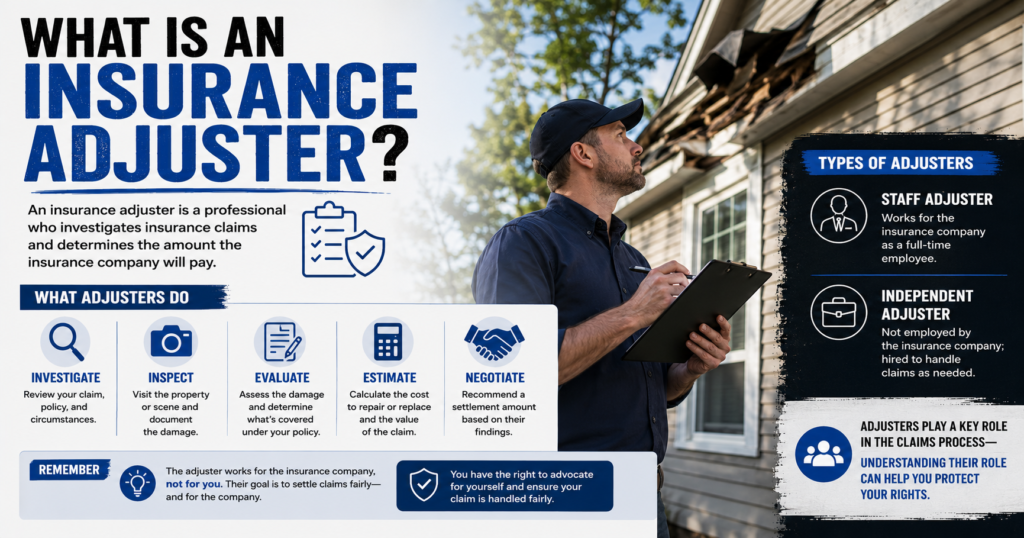
Inspection reports are often created by:
- Insurance adjusters
- Contractors
- Engineers
- Inspectors
These reports may document damage, identify causes, and provide professional observations that become important during claim evaluations.

Witness Statements Can Help Resolve Disputes
Witnesses sometimes provide valuable information.
This is especially true when:
- Facts are disputed
- Multiple parties are involved
- Conflicting accounts exist
Witness statements can help establish timelines and provide additional context regarding what occurred.
Police Reports May Be Important
Certain claims may involve police reports.
Examples include:
- Vehicle accidents
- Theft
- Vandalism
- Property crimes
While police reports are not always the final word regarding what happened, they often provide useful documentation that insurers review during investigations.
Medical Records May Support Injury Claims
When injuries are involved, medical documentation often becomes critical.
Examples include:
- Emergency room records
- Physician notes
- Diagnostic imaging
- Treatment records
- Medical bills
These records help document injuries and treatment related to the claim.
Keeping Documents Organized Helps
One of the most common mistakes people make is allowing important documents to become scattered.
Helpful records often include:
- Claim correspondence
- Estimates
- Receipts
- Reports
- Photographs
- Policy documents
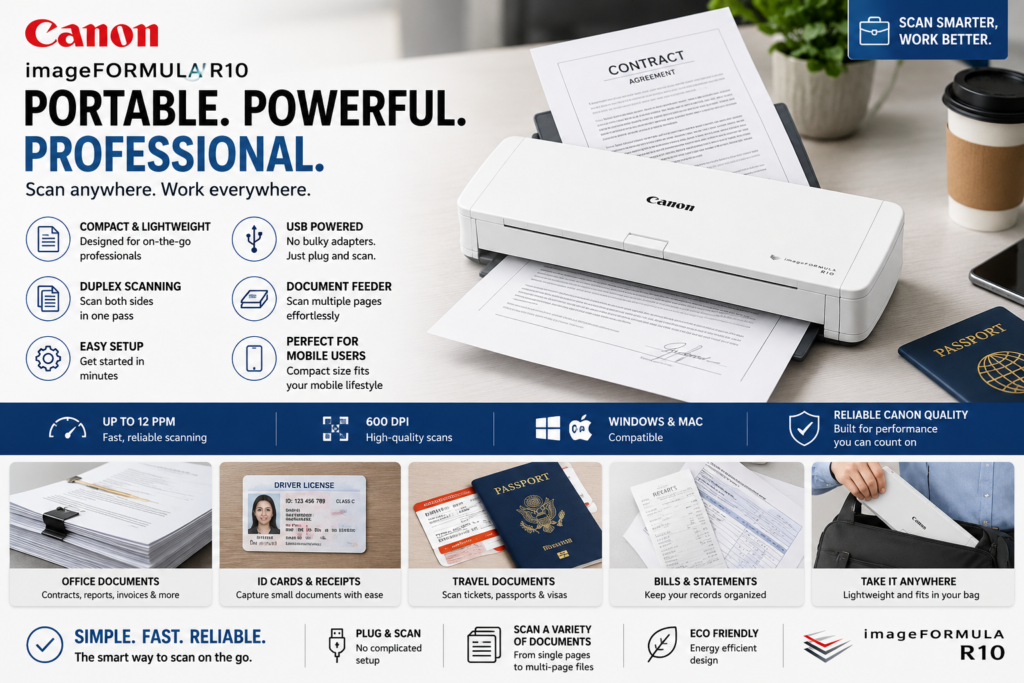
Many policyholders choose to digitize claim records using a Canon imageFORMULA Portable Document Scanner so documents remain organized and easy to access throughout the claims process.
Security Camera Footage Can Strengthen Certain Claims
Security cameras have become one of the most valuable sources of evidence for many homeowners.
Video footage may help document:
- Theft
- Vandalism
- Trespassing
- Property damage
- Suspicious activity
- Vehicle damage
Unlike witness memories, video footage can often provide a direct record of events.
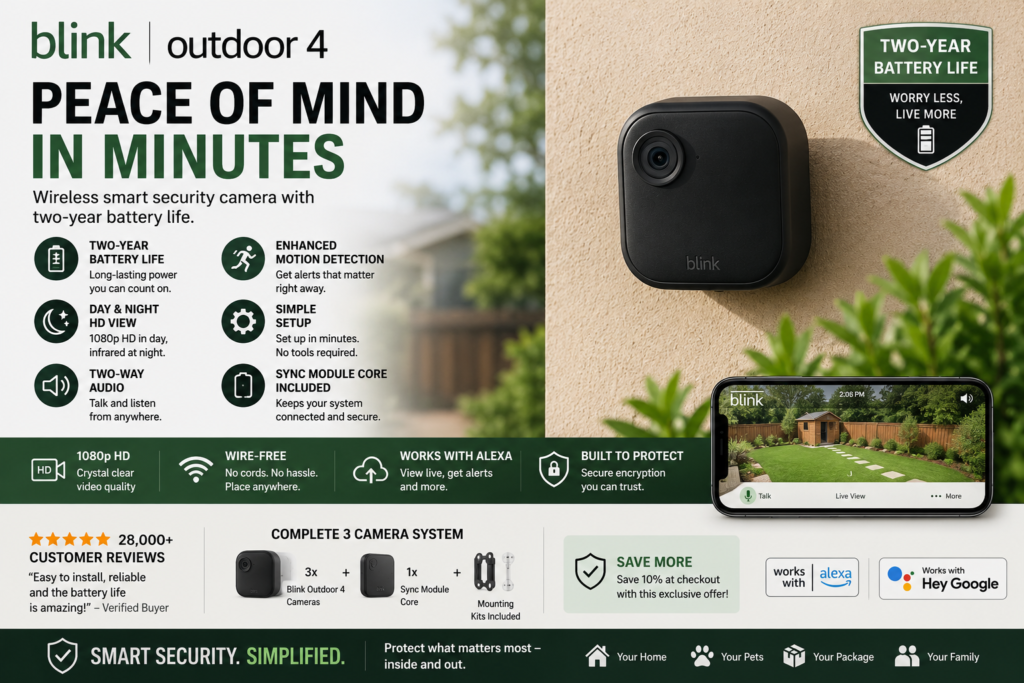
Many homeowners use systems such as the Blink Outdoor Security Camera System to monitor their property and preserve evidence when incidents occur.
Doorbell Cameras Can Help Document Activity
Doorbell cameras have become increasingly common.
Depending on placement and visibility, footage may help document:
- Package theft
- Property damage
- Visitor activity
- Trespassing incidents
- Delivery disputes
Many homeowners choose products such as the Google Nest Doorbell because it can provide recorded video that may later become useful evidence if questions arise.
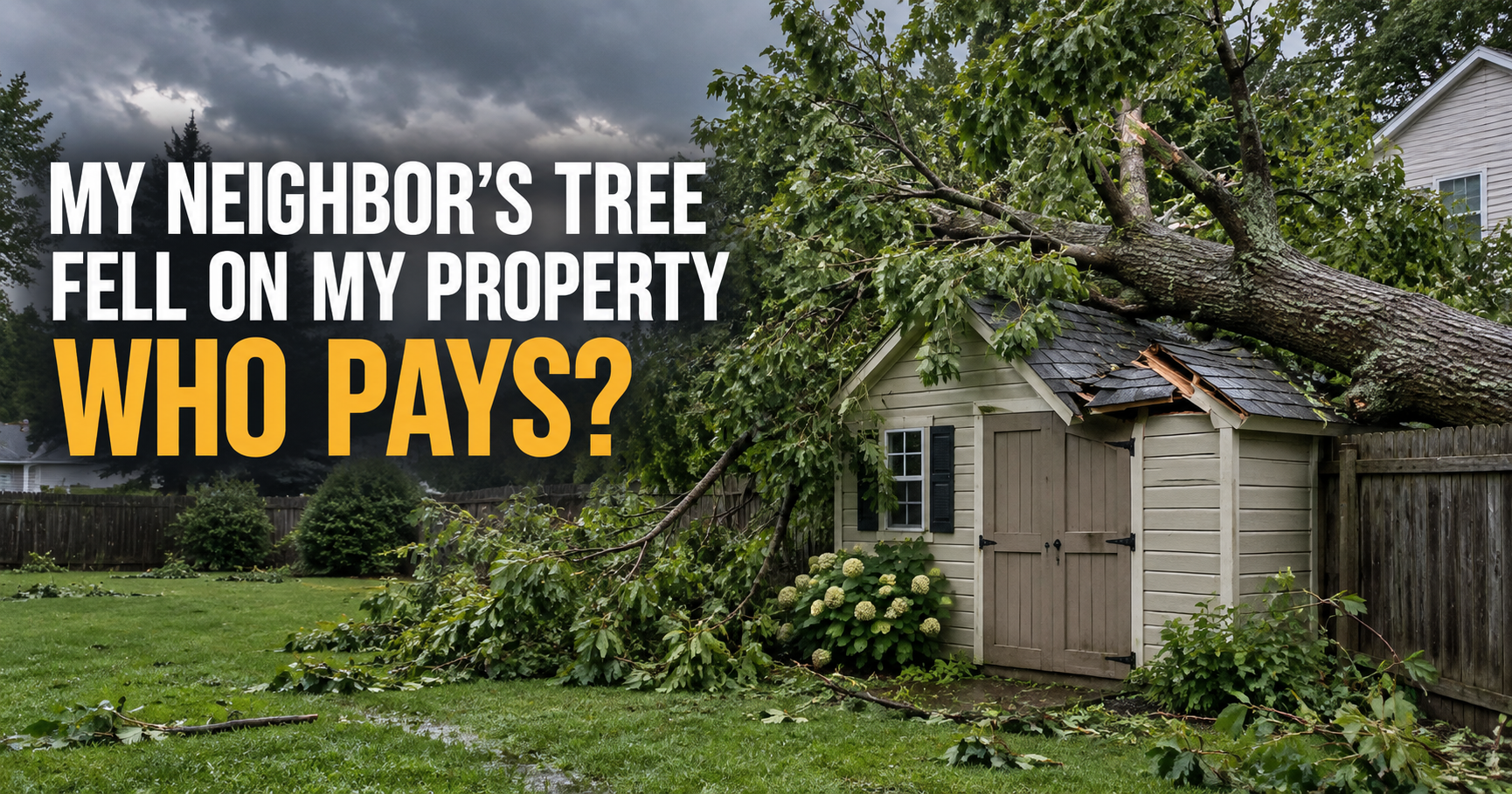
Property Damage Claims Often Require Extensive Documentation
Property-related claims frequently involve more documentation than people expect.
Helpful evidence may include:
- Photos before the loss
- Photos after the loss
- Repair estimates
- Contractor reports
- Inspection records
- Maintenance records
The goal is often to create a clear picture of both the damage and the condition of the property before the event occurred.
Readers dealing with property-related issues may also find useful information in our Property Rights category.
Water Damage Claims Can Be Especially Challenging
Water damage claims often create disputes because determining the source of the damage may be difficult.
Helpful evidence may include:
- Photos
- Videos
- Plumber reports
- Contractor evaluations
- Repair estimates
- Maintenance records
Early detection can sometimes reduce damage and preserve evidence.
Many homeowners use Water Leak Detectors to help identify leaks before they cause significant property damage.
Save Evidence As Soon As Possible
One mistake people sometimes make is waiting too long to gather evidence.
Evidence can disappear.
Memories fade.
Conditions change.
Photographs and videos taken shortly after an event often provide valuable documentation that may not be available later.
Whenever it is safe to do so, documenting the situation promptly is usually a good idea.
Keep Original Copies Whenever Possible
When preserving evidence, original records are often valuable.
Examples include:
- Original photographs
- Original videos
- Original receipts
- Original reports
- Original correspondence
Maintaining complete records can help avoid confusion later.
Why a Claim Timeline Can Help
Creating a simple timeline is often overlooked.
A timeline may include:
- Date of loss
- Date claim was reported
- Inspection dates
- Communication dates
- Estimate dates
- Claim decisions
This type of record can make it easier to understand what happened during the claim process.
It may also become useful if disputes arise later.
Store Important Claim Documents Safely
Insurance claims often generate large amounts of paperwork.
Examples include:
- Policies
- Estimates
- Receipts
- Reports
- Letters
- Settlement documents
Keeping these records organized and protected can make future reference much easier.
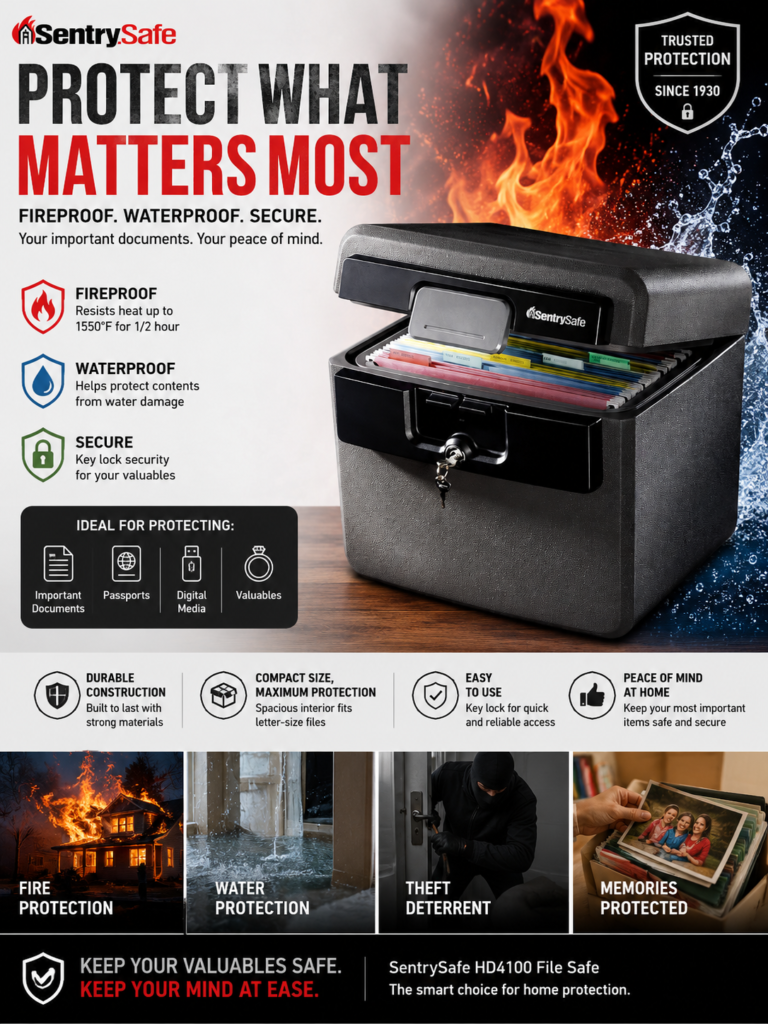
Many people choose a SentrySafe Fireproof Waterproof Document Safe to protect important records from fire, water damage, and other unexpected events.
Others prefer an ENGPOW Fireproof Document Storage Box for organizing claim files, legal documents, and financial records.
Digital Copies Add Another Layer of Protection
Physical copies are important, but digital copies can also be valuable.
Scanning documents creates backups that are easier to search and retrieve.
Many policyholders use a Canon imageFORMULA Portable Document Scanner to create digital records of estimates, correspondence, receipts, and other claim-related documents.
Having both physical and digital copies often provides the best protection against lost paperwork.
Good Evidence Can Reduce Claim Disputes
Many insurance disputes arise because the facts are unclear.
Strong evidence often helps answer important questions such as:
- What happened?
- When did it happen?
- How much damage occurred?
- What was damaged?
- How much will repairs cost?
The clearer the evidence, the easier it often becomes for insurers to evaluate claims and make informed decisions.
Evidence Is Often the Foundation of a Successful Claim
Whether you’re filing a homeowners claim, auto claim, theft claim, or property damage claim, evidence frequently becomes the foundation of the entire process.
The strongest claims are often supported by:
- Photographs
- Videos
- Reports
- Estimates
- Receipts
- Witness statements
- Organized records
You may also find these related articles helpful:
- How Long Does an Insurance Claim Take? What to Expect
- What Happens After You File an Insurance Claim?
- What Happens After an Insurance Adjuster Visits?
- How Long Does an Insurance Company Have to Respond?
- Can an Insurance Company Deny a Claim Without Investigation?
- What Is Insurance Bad Faith? Common Examples Explained
- Can You File a Complaint Against an Insurance Company?
- Can You Sue an Insurance Company?
Frequently Asked Questions
What is the most important evidence for an insurance claim?
The answer depends on the type of claim. However, photographs, videos, receipts, repair estimates, inspection reports, and written documentation are often among the most valuable forms of evidence.
Do photographs really help insurance claims?
Yes. Photographs can provide a visual record of damage and conditions at the time of the loss. Clear photos taken soon after an incident are often extremely helpful during claim evaluations.
Is video evidence better than photographs?
Not necessarily. Both can be useful. Videos may provide additional context and show how an event unfolded, while photographs can capture specific details. Many successful claims include both.
Should I keep receipts for expensive purchases?
Keeping receipts can be helpful because they may help establish ownership and value. This can be especially important when filing theft, fire, water damage, or personal property claims.
Can security camera footage help an insurance claim?
In many situations, yes. Security cameras and doorbell cameras may provide valuable evidence involving theft, vandalism, trespassing, vehicle damage, and other incidents.
How long should I keep insurance claim records?
The appropriate retention period may depend on the type of claim, state laws, and individual circumstances. Many people choose to keep important claim documents for several years after the claim is resolved.
What if I don’t have enough evidence?
A lack of evidence does not automatically mean a claim will be denied. However, providing additional documentation whenever possible may help strengthen your claim and reduce disputes.
Should I save emails and letters from the insurance company?
Yes. Correspondence often becomes an important part of the claim file. Saving emails, letters, estimates, reports, and notes from phone calls can help create a clear record of what occurred.
Can witness statements help an insurance claim?
Witness statements may be valuable when facts are disputed or when additional information is needed to understand what happened.
What is the best way to organize insurance claim documents?
Many people keep both physical and digital copies of important records. Organizing documents by date and storing them in a secure location can make future reference much easier.
Important Information
This article is provided for educational and informational purposes only and should not be considered legal advice. Evidence requirements vary depending on the type of claim, insurance policy, state law, and individual circumstances. Information provided on Legal Know It All is intended to help readers better understand insurance claims and legal concepts, not to provide legal representation or legal advice.
To learn more about how content is researched and reviewed, visit our Editorial Policy and Fact-Checking Policy pages.
Additional information about this website can be found on our About Us, Contact Us, FAQ, Disclaimer, and Terms and Conditions pages.
About the Author
Sarah Reynolds is a legal research contributor for Legal Know It All who focuses on insurance claims, consumer rights, and everyday legal issues affecting American families. She researches insurance regulations, policyholder rights, claim procedures, and consumer-focused legal topics to help readers better understand complicated subjects using plain English. Her goal is to provide trustworthy educational information that helps readers make informed decisions when dealing with insurance companies and claim disputes.