
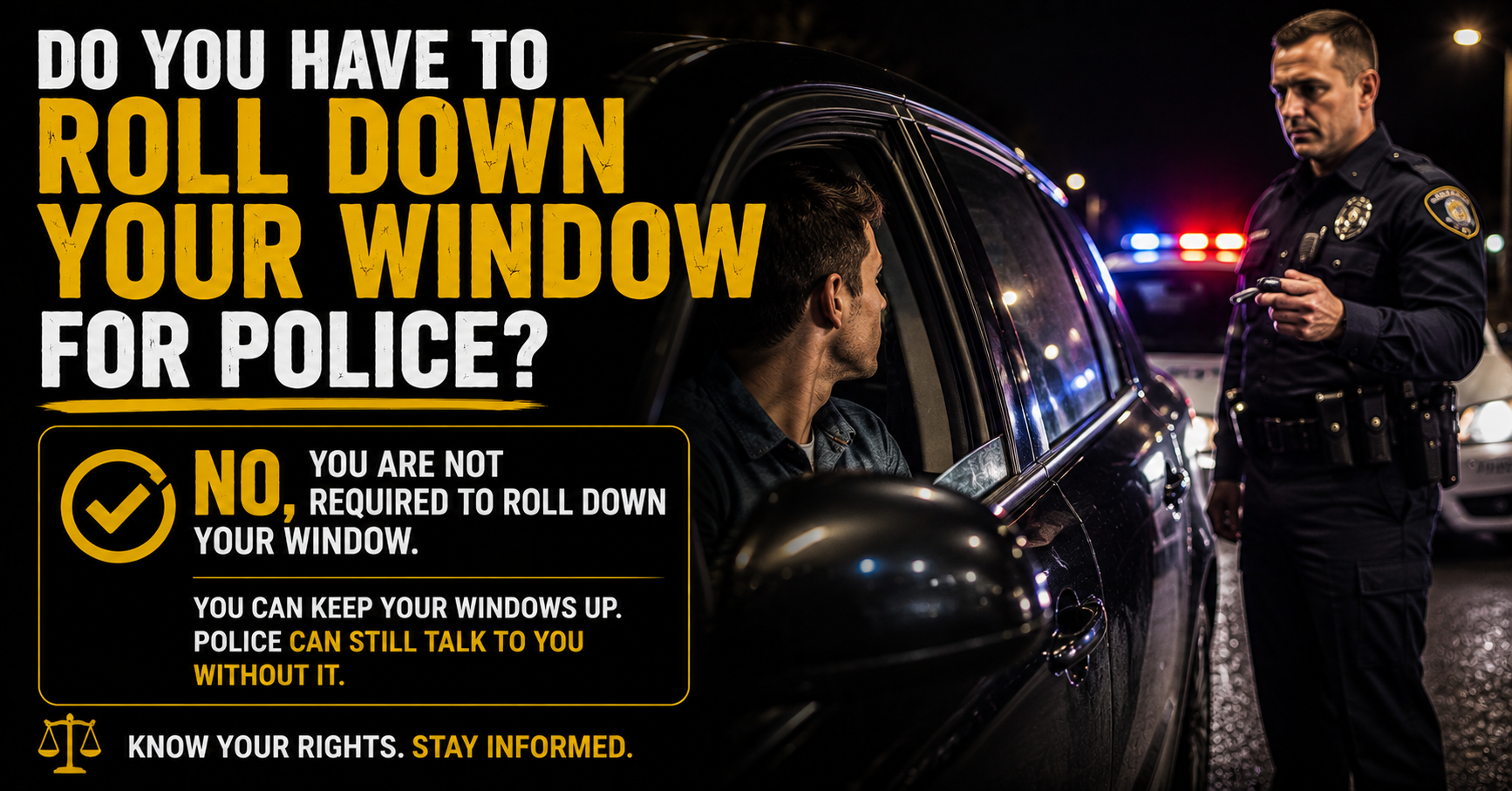
Being pulled over can make even experienced drivers nervous.
You slow down.
Pull to the side of the road.
Turn off the engine.
Then the officer approaches your vehicle.
For many people, one question immediately comes to mind before the conversation even begins:
“Do I actually have to roll down my window?”
It’s a simple question, but one that has generated plenty of debate online.
Some people believe they only have to crack the window slightly.
Others think they can refuse altogether.
I’ve found that much of the confusion comes from misunderstanding what happens during a lawful traffic stop.
The Fourth Amendment protects people against unreasonable searches and seizures, but a lawful traffic stop is itself considered a seizure under the Constitution. Once a vehicle has been lawfully stopped, officers may generally take reasonable steps necessary to safely conduct the stop. For broader context on when police may conduct searches or make arrests, see Fourth Amendment probable cause rules.
Quick Answer
There is no Supreme Court decision that specifically says a driver must roll a window down a certain number of inches. However, during a lawful traffic stop, officers generally have authority to take reasonable steps necessary to safely communicate with the vehicle’s occupants and carry out the purpose of the stop. Exactly what is considered reasonable can depend on the circumstances and applicable law.
Why This Question Comes Up So Often
Unlike driver’s licenses or vehicle registration, rolling down a window may seem like a small detail.
Yet it often becomes one of the first interactions between an officer and a driver.
People wonder whether they can:
- Keep the window closed
- Crack it only slightly
- Refuse to lower it
- Record the encounter through the glass
Those questions have become increasingly common as videos of traffic stops circulate online.
Traffic Stops Are Different Than Ordinary Encounters
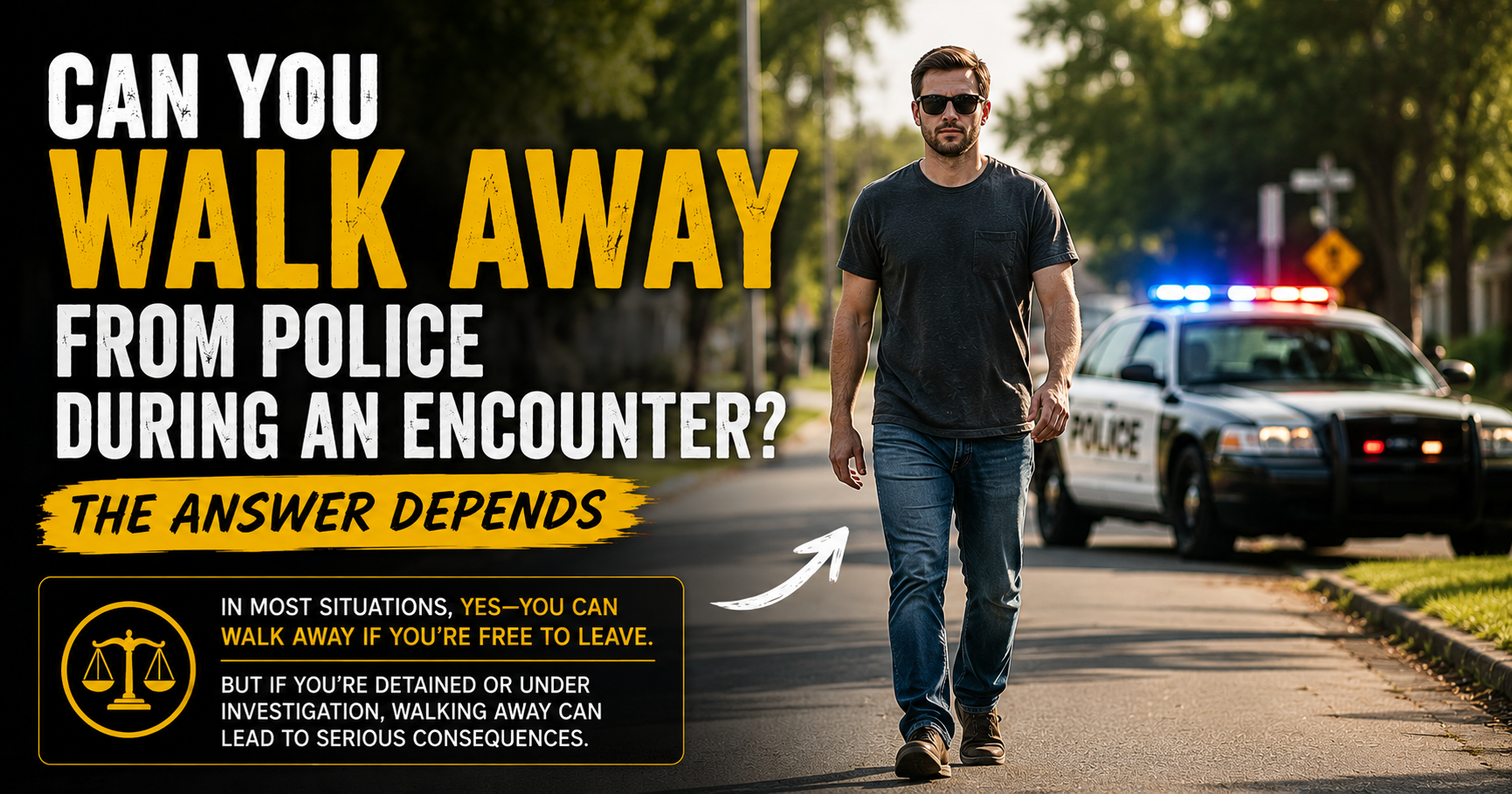
One reason this issue causes confusion is that a traffic stop is not the same as an ordinary conversation between two people. That distinction is also central to understanding the difference between a voluntary conversation and a detention.
When an officer lawfully stops a vehicle, the Fourth Amendment allows certain temporary restrictions while the stop is being carried out. Courts recognize that officer safety is a significant consideration during roadside encounters.
Understanding that principle makes many traffic-stop questions much easier to understand.
Communication Is A Necessary Part Of A Traffic Stop
One practical reality is that officers and drivers need to communicate.
During a typical stop, an officer may request:
- A driver’s license
- Vehicle registration
- Proof of insurance
The officer may also explain why the stop occurred or provide instructions.
Because communication is an ordinary part of a lawful stop, questions about vehicle windows frequently arise.
Rolling Down A Window Is Different From A Vehicle Search
I’ve noticed that many people confuse these two issues.
Allowing an officer to communicate through an open window is a different constitutional question than allowing an officer to search a vehicle.
The legal standards governing searches are separate from the practical steps involved in conducting a traffic stop.
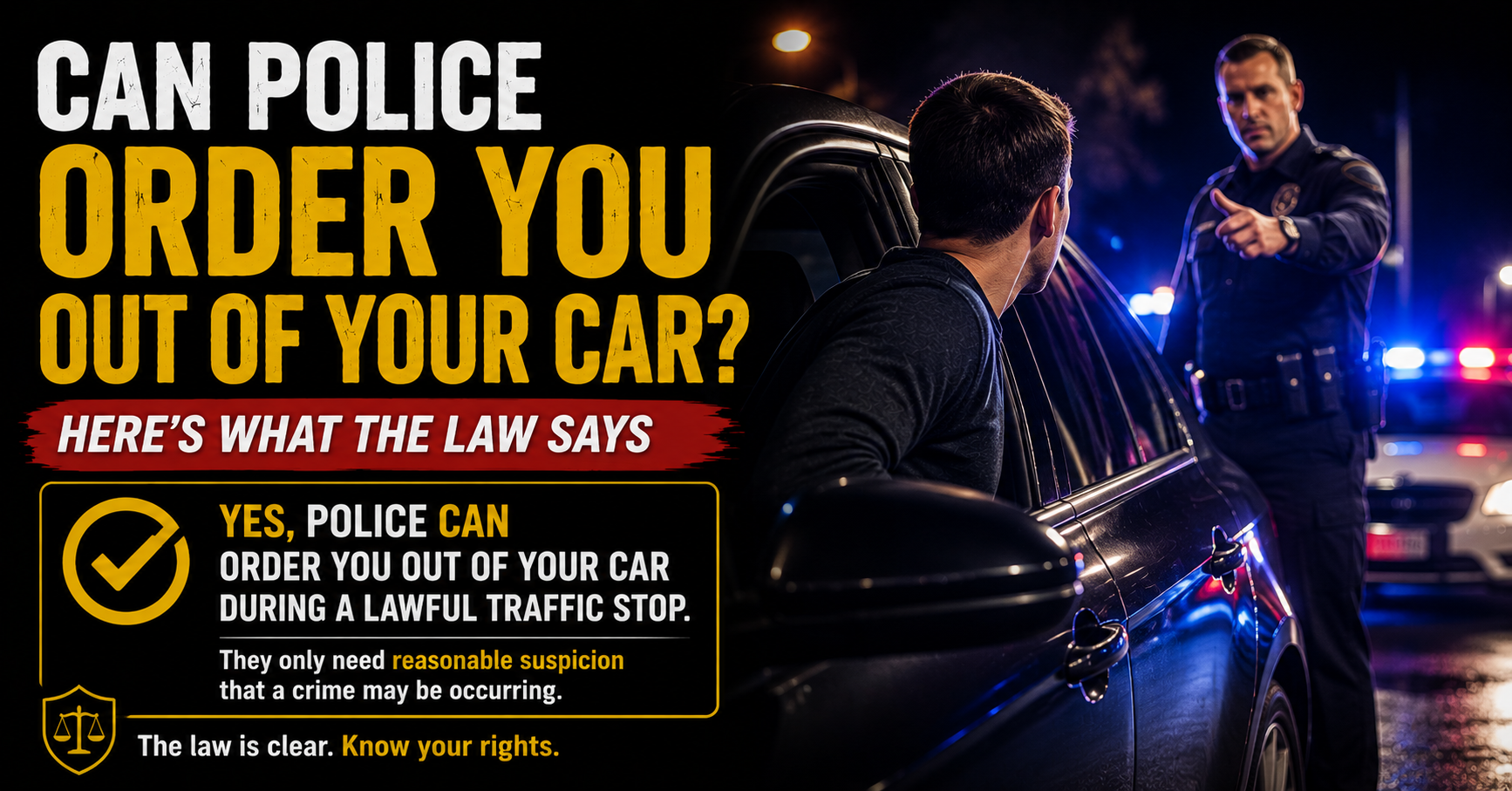
If you’re wondering what officers may require during a stop, you may also find Can Police Order You Out of Your Car? Here’s What the Law Says helpful because it explains another important authority recognized by the Supreme Court.
Officer Safety Plays An Important Role
Traffic stops remain one of the most unpredictable situations officers encounter.
For that reason, courts have repeatedly recognized that officers may take reasonable precautions to safely complete a lawful stop. What is reasonable depends on the circumstances, but officer safety remains a recurring theme in Fourth Amendment traffic-stop cases.
Drivers Often Wonder Whether They Can Crack The Window Instead
One question that comes up frequently is whether a driver must roll the window all the way down or whether opening it only part way is enough.
There is no nationwide law that specifies an exact number of inches a driver must lower a window during a traffic stop. However, because officers generally have authority to take reasonable steps to safely conduct a lawful stop, refusing to allow effective communication can complicate the encounter.
Exactly what is considered reasonable can depend on the circumstances and the laws of the state where the stop occurs.
Refusing To Roll Down The Window Can Escalate The Situation
I’ve found that many drivers focus only on whether there is a specific law requiring the window to be lowered.
A more practical question is what happens if an officer cannot safely communicate with the driver.
If communication becomes difficult or an officer believes the situation presents safety concerns, the encounter may become more complicated than it otherwise would have been.
That doesn’t automatically mean the driver has committed a crime, but it can change how the traffic stop unfolds.
Rolling Down Your Window Is Different From Giving Consent To Search
Another misconception is that opening a window somehow gives police permission to search a vehicle.
Those are entirely different constitutional issues.
Opening a window so an officer can communicate during a lawful stop is not the same thing as consenting to a search of your vehicle.
Searches are governed by separate Fourth Amendment rules and legal standards.
Traffic Stops Often Lead To Other Fourth Amendment Questions
Once drivers understand why officers ask them to lower a window, they usually begin asking related questions.
For example:
- Can police order me out of my car?
- Can police search my vehicle?
- Can police keep me at the stop longer than necessary?
- Can police search my trunk?
These topics all build on one another and help explain why traffic-stop law can seem complicated at first.
If you’re interested in another common traffic-stop question, you may also find Can Police Order You Out of Your Car? Here’s What the Law Says helpful.
Common Misconceptions About Rolling Down Your Window
One misconception is that drivers are always required to lower the window completely.
Another is that drivers never have to lower it at all.
Neither reflects the full picture.
While there is no nationwide rule requiring a specific window opening, officers generally have authority during a lawful stop to take reasonable measures that allow them to safely communicate and complete the purpose of the stop.
Frequently Asked Questions
Do you have to roll down your window for police?
There is no nationwide rule requiring a window to be lowered a specific amount. During a lawful traffic stop, however, officers generally have authority to take reasonable steps necessary to safely conduct the stop and communicate with the vehicle’s occupants.
Can I just crack my window?
Federal law does not establish a required opening distance. Whether partially opening a window is sufficient can depend on the circumstances and whether effective communication with the officer is possible.
Does opening my window give police permission to search my car?
No. Communicating through an open window is a separate issue from consenting to a search. Different Fourth Amendment standards apply to vehicle searches.
Can police order me out of my vehicle instead?
Yes. During a lawful traffic stop, the U.S. Supreme Court has recognized that officers generally may order drivers to exit their vehicles as a reasonable safety precaution.
Why do officers want the window lowered?
Communication and officer safety are two of the primary reasons this request is commonly made during traffic stops.
Where can I learn more about traffic-stop rights?
Browse our Constitutional Rights category for more articles covering traffic stops, police encounters, search-and-seizure law, and Fourth Amendment protections.
Important Information
This article is provided for educational and informational purposes only and should not be considered legal advice. Fourth Amendment protections, traffic-stop procedures, criminal procedure rules, and state laws vary depending on the facts involved and the jurisdiction. If you need legal advice regarding your specific situation, consult a qualified attorney licensed in your state.
About the Author
Sarah Mitchell is a legal research contributor for Legal Know It All who focuses on constitutional rights, police encounters, civil rights, and criminal law. She researches common legal questions involving Fourth Amendment protections, traffic-stop procedures, and search-and-seizure law while helping readers understand complex legal topics in clear, practical language.