
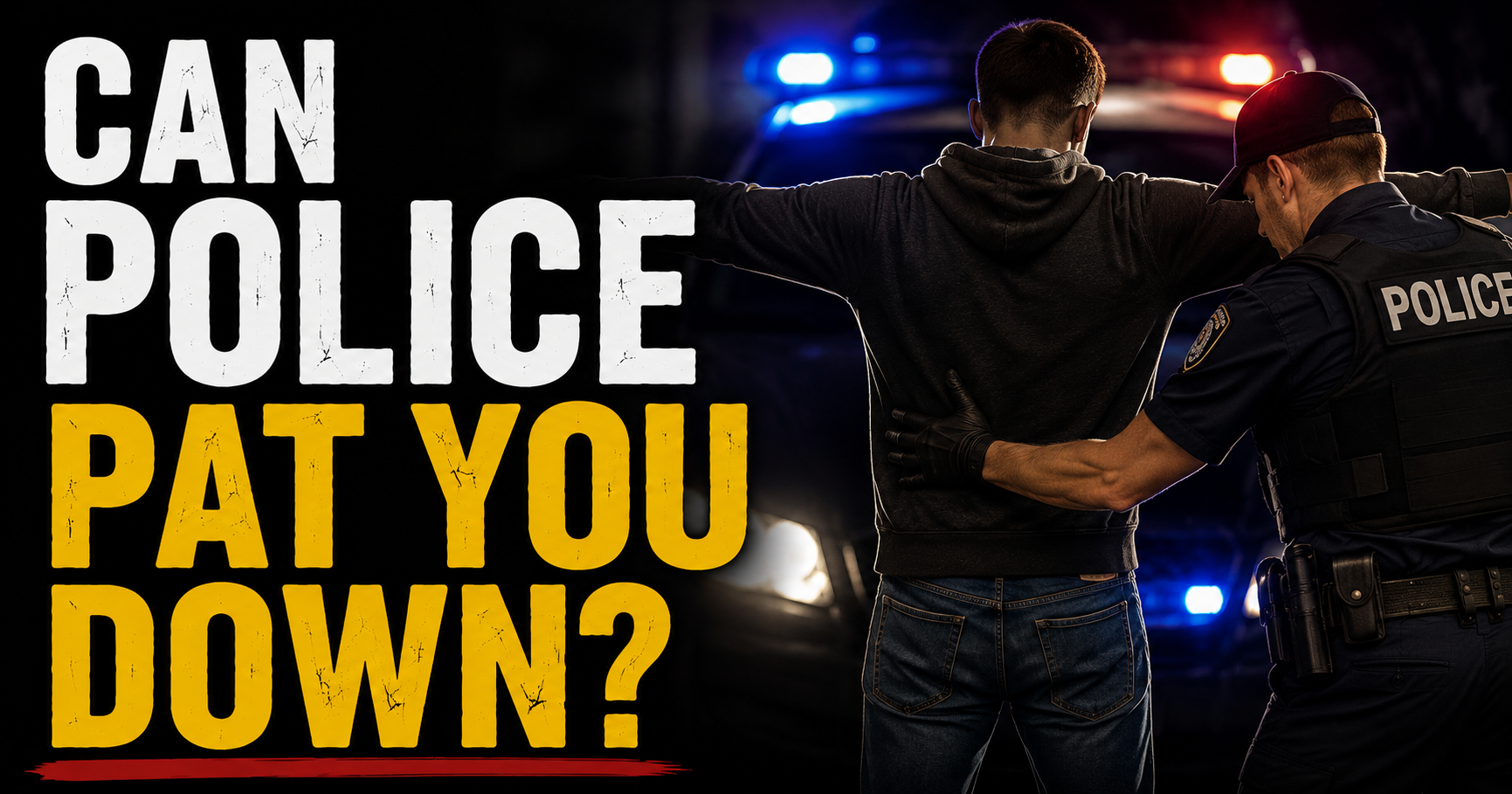
Most people have seen it happen in movies or on the news.
A police officer stops someone, turns them around, and quickly pats the outside of their clothing.
Many Americans simply call it a “pat-down.”
But when can police actually do it?
Can an officer pat someone down during every stop?
Or does the Constitution place limits on when it can happen?
These are some of the most common questions people have after interacting with law enforcement.
I’ve found that many people assume a pat-down and a full search are the same thing.
They’re not.
Understanding the difference is one of the most important parts of understanding your Fourth Amendment rights.
Quick Answer
Whether police may conduct a pat-down often depends on the circumstances surrounding the encounter. In general, during a lawful investigative stop, an officer may perform a limited frisk of a person’s outer clothing when the officer reasonably believes the person is armed and dangerous. The purpose is to check for weapons, not to conduct a full search for evidence.
A Pat-Down Is Not The Same As A Full Search
One of the biggest misconceptions I see is that any time an officer pats someone down, they are conducting a complete search.
That’s usually not the case.
A pat-down is generally much more limited.
Instead of searching through pockets, wallets, bags, or personal belongings, the officer typically pats the outside of a person’s clothing to check for potential weapons.
That distinction is important because the purpose of a frisk is officer safety rather than gathering evidence.


Why Pat-Downs Are Allowed
The Fourth Amendment protects Americans against unreasonable searches and seizures.
At the same time, police officers sometimes encounter situations where they have legitimate safety concerns.
The U.S. Supreme Court recognized that officers may briefly pat down the outer clothing of a lawfully detained person when they reasonably believe that person may be armed and dangerous. This principle comes from the landmark case Terry v. Ohio and is often referred to as a “Terry frisk.”
Not Every Police Stop Includes A Pat-Down
Many people believe every traffic stop or police encounter automatically allows an officer to frisk them.
That isn’t how the legal standard generally works.
A lawful stop by itself does not automatically justify a frisk.
The officer must generally have a reasonable basis to believe the person may be armed and dangerous before conducting a protective pat-down.
Because of that, not every detention results in a frisk.


Reasonable Suspicion Plays A Major Role
I’ve found that many constitutional-rights questions eventually lead back to reasonable suspicion.
Understanding that legal standard makes it much easier to understand why some police encounters include a pat-down while others do not.
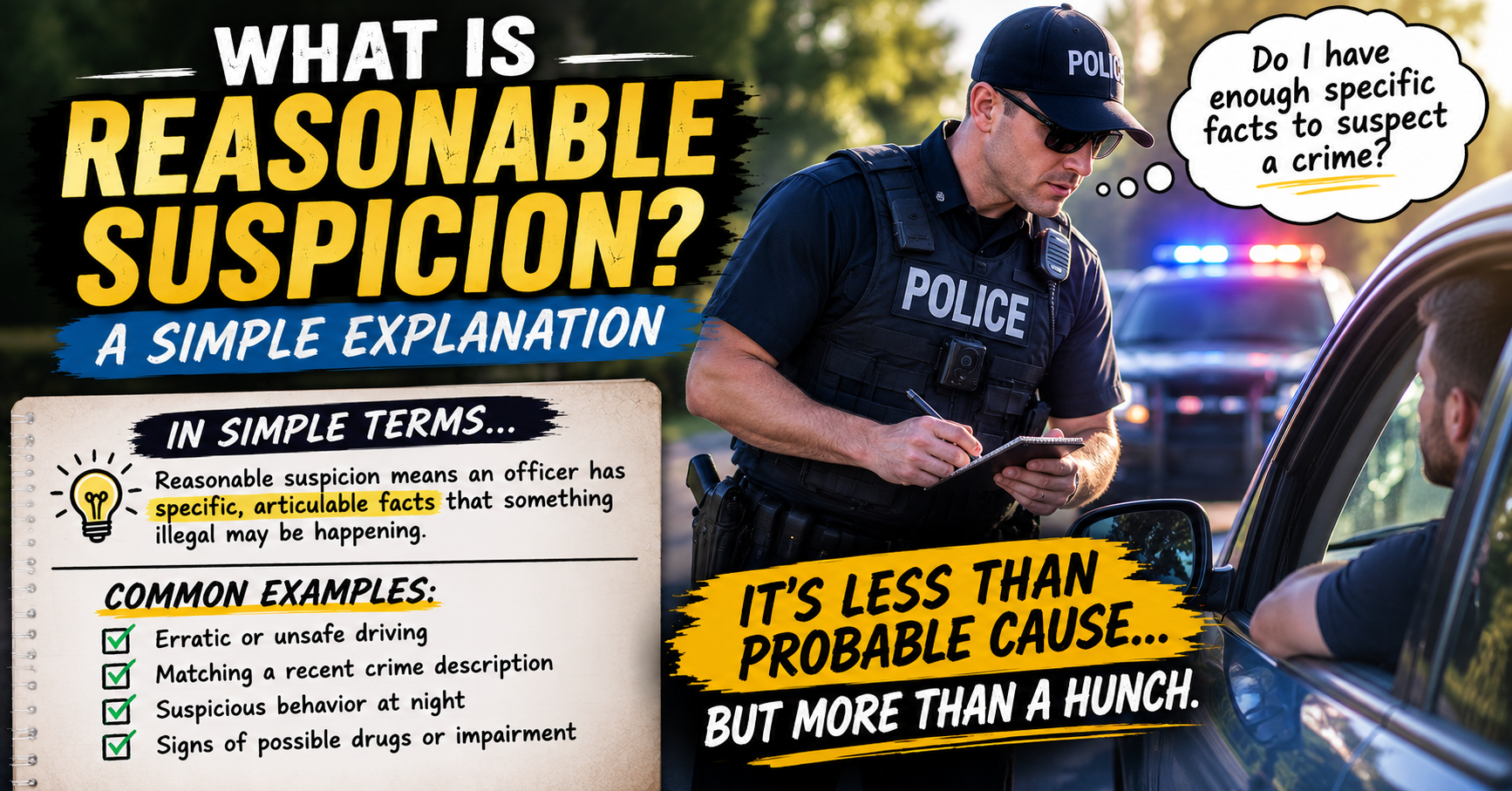
If you’re still learning how reasonable suspicion works, you’ll probably want to read What Is Reasonable Suspicion? A Simple Explanation before moving on to more advanced Fourth Amendment topics.
Officer Safety Is The Primary Purpose
One thing that often gets overlooked is why a frisk exists in the first place.
A Terry frisk is designed to protect officers and others nearby by allowing a limited check for weapons during certain investigative stops.
It is not intended to become a general search for evidence of a crime.
Police Encounters Often Develop In Stages
Many encounters begin with nothing more than a conversation.
As additional information becomes available, the interaction may develop into a temporary detention.
In some situations, that detention may be followed by a protective frisk if the legal standard is met.
Understanding those stages helps explain why two police encounters that appear similar may unfold very differently.
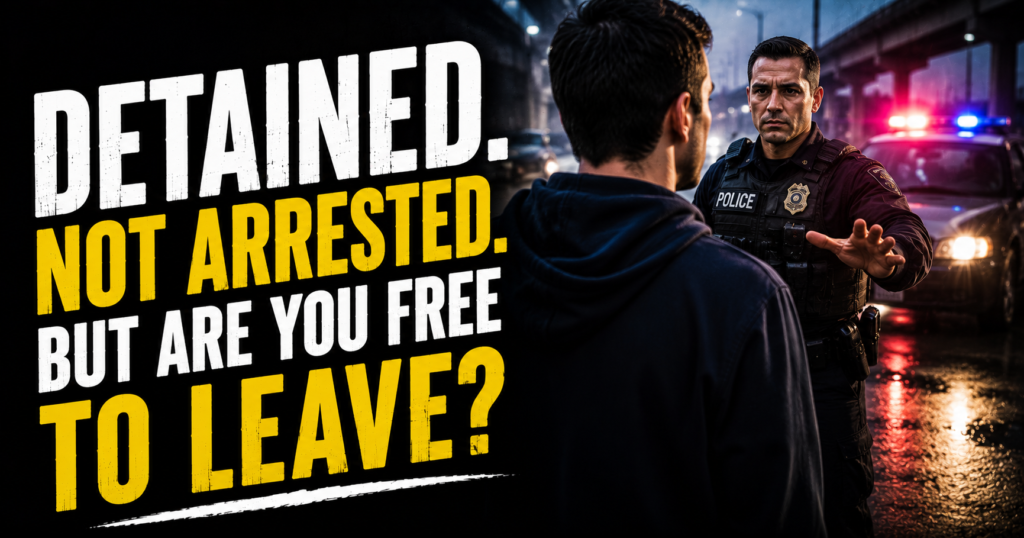
If you’re wondering how temporary detentions work, you may also find Can Police Detain You Without Arresting You? What to Know helpful.
A Pat-Down And A Search Have Different Purposes
One of the easiest ways to understand this topic is to remember that a pat-down and a full search generally serve different purposes.
A protective frisk is typically limited to checking for weapons that could pose an immediate safety risk.
A full search is a much broader intrusion that may involve clothing, pockets, bags, containers, or other personal property depending on the circumstances and applicable legal standards.
That distinction is one reason courts carefully analyze the facts surrounding police encounters.


A Pat-Down Does Not Automatically Lead To An Arrest
I’ve found that many people assume if an officer pats someone down, an arrest is about to happen.
That isn’t necessarily true.
Many police encounters end without an arrest being made.
A protective frisk is simply one part of an encounter and does not automatically determine what will happen next.
Every situation depends on its own facts.
Traffic Stops Often Raise Questions About Pat-Downs
For many Americans, the first time they hear about a pat-down is during a traffic stop.
Because traffic stops are among the most common interactions with law enforcement, people naturally wonder what officers can and cannot do during these encounters.
If you’re interested in understanding another common question involving traffic stops, you may also find Can Police Order You Out of Your Car? helpful.
Terry Stops And Terry Frisks Are Closely Connected
You’ll often hear the term “Terry stop” when reading about Fourth Amendment rights.
The phrase comes from the U.S. Supreme Court’s landmark decision in Terry v. Ohio, which established the legal framework for investigative stops and limited protective frisks.
Although the two concepts are closely related, they are not identical.
A Terry stop refers to the temporary detention, while a Terry frisk refers to the limited pat-down for weapons when the legal requirements are met.
I’ll cover Terry stops in much greater detail in a separate guide because they are one of the most important concepts in constitutional law.
Common Misconceptions About Police Pat-Downs
One misconception is that every police stop automatically allows an officer to frisk someone.
Another is that a frisk gives officers unlimited authority to search wherever they choose.
Neither assumption is generally accurate.
The Fourth Amendment places important limits on police authority, and courts continue evaluating these encounters based on the specific facts of each case.
Frequently Asked Questions
Can police pat you down during every traffic stop?
Not necessarily. A traffic stop alone does not automatically justify a protective frisk. Whether a pat-down is lawful generally depends on the circumstances surrounding the encounter.
Is a pat-down the same as a full search?
No. A pat-down is generally a limited frisk of the outside of a person’s clothing for weapons, while a full search is much broader.
Why do police perform pat-downs?
The primary purpose of a protective frisk is officer safety when the legal requirements for a frisk are present.
What is a Terry frisk?
A Terry frisk refers to the limited protective pat-down recognized by the U.S. Supreme Court in Terry v. Ohio.
Does reasonable suspicion matter during a pat-down?
Yes. Reasonable suspicion plays an important role in many discussions involving investigative stops and protective frisks.
Can a pat-down automatically become a full search?
The legal standards governing frisks and searches are different, and courts often examine the specific facts surrounding an encounter when evaluating police actions.
Where can I learn more about constitutional rights?
You can browse additional articles in our Constitutional Rights category.
Important Information
This article is provided for educational and informational purposes only and should not be considered legal advice. Fourth Amendment protections, search-and-seizure law, criminal procedure rules, and police practices vary depending on the facts involved and applicable laws. If you need legal advice about your specific situation, consult a qualified attorney licensed in your jurisdiction.
For more information about our editorial standards, visit our Editorial Policy and Fact-Checking Policy pages.
You can also learn more about Legal Know It All by visiting our About Us, Contact Us, FAQ, Disclaimer, and Terms and Conditions pages.
About the Author
Sarah Mitchell is a legal research contributor for Legal Know It All who focuses on constitutional rights, police encounters, civil rights, and criminal law. She researches common legal questions involving police procedures, Fourth Amendment protections, and search-and-seizure issues while helping readers understand complex legal concepts in clear, practical language.