
If you’ve ever watched the news, followed a criminal case, or spoken with a police officer, you’ve probably heard the phrase “reasonable suspicion.”
It’s one of the most important concepts in constitutional law, yet it’s also one of the most misunderstood.
Many people assume reasonable suspicion means an officer has a “gut feeling” that something is wrong.
Others believe it’s the same thing as probable cause.
Neither assumption is correct.
Understanding what reasonable suspicion means can help explain why some police encounters begin, why certain temporary detentions occur, and why courts often spend so much time examining the facts surrounding an encounter.
Quick Answer
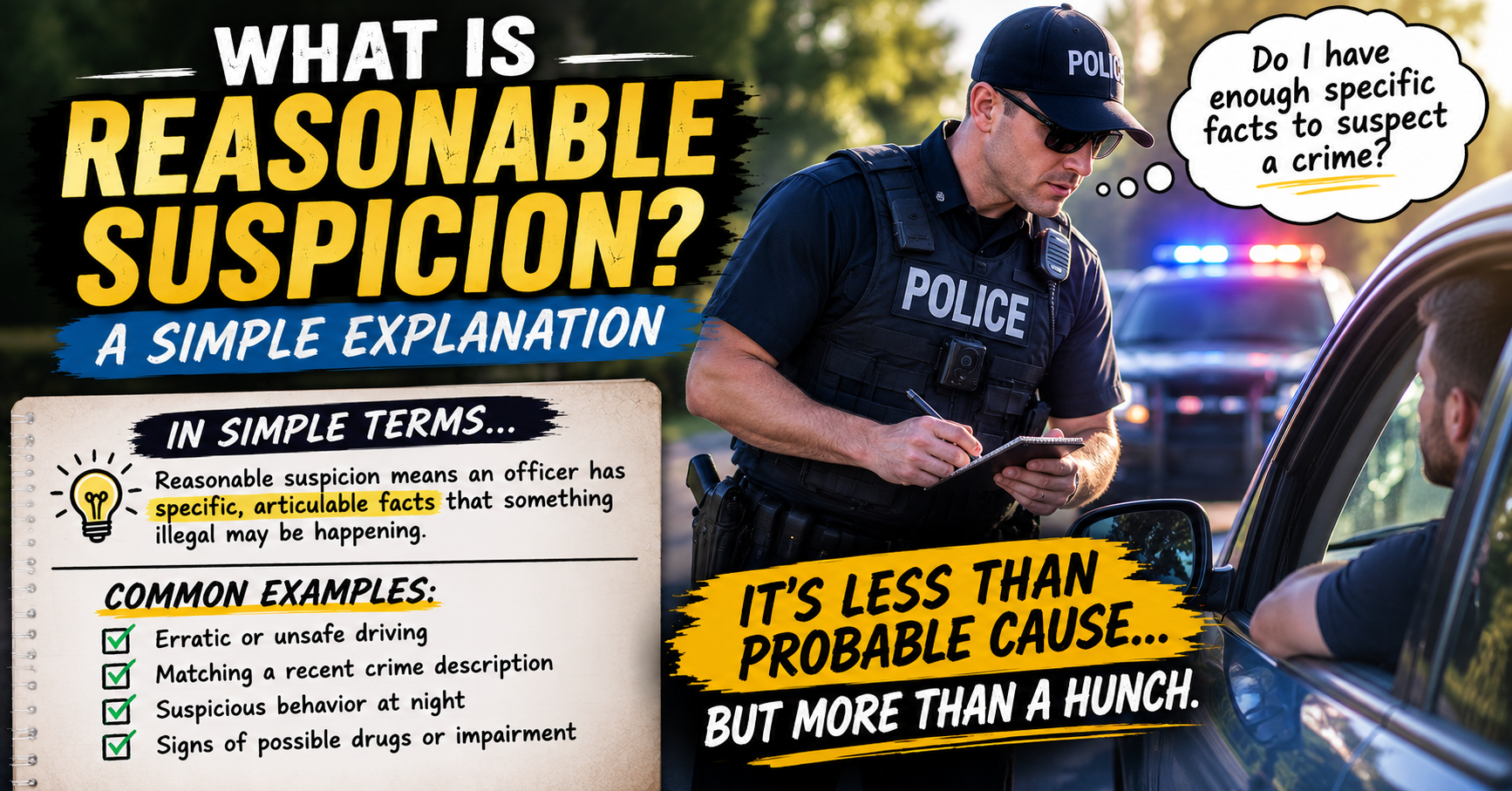
Reasonable suspicion is a legal standard that generally allows a police officer to briefly detain a person when the officer can point to specific, objective facts suggesting criminal activity may be occurring. It requires more than a mere hunch but less evidence than probable cause.
Why Does Reasonable Suspicion Exist?
The Fourth Amendment protects Americans against unreasonable searches and seizures.
At the same time, police officers have a responsibility to investigate possible criminal activity.
Reasonable suspicion helps balance those two interests by allowing officers to briefly investigate situations when objective facts suggest criminal activity may be taking place.
Because this legal standard appears in so many everyday encounters, it has become one of the foundations of modern Fourth Amendment law.



It’s More Than Just A Hunch
One of the biggest misconceptions I see is the belief that an officer only needs a feeling or instinct.
That’s not how courts generally describe reasonable suspicion.
Instead, the officer must be able to explain specific observations that led to the decision to investigate further.
Exactly what those observations are depends entirely on the facts of the particular situation.
Why It Matters During Police Encounters
Reasonable suspicion frequently becomes important during situations involving:
- Temporary investigative stops
- Traffic stops
- Brief detentions
- Certain protective pat-downs
Because so many Americans interact with law enforcement through these types of encounters, understanding reasonable suspicion helps make many constitutional-rights questions easier to understand.

If you’re wondering how a temporary detention differs from an arrest, you may also find Can Police Detain You Without Arresting You? What to Know helpful.
Reasonable Suspicion And Probable Cause Are Different
I’ve found that these two legal standards are often confused.
Although they’re related, they are not interchangeable.
Generally speaking, reasonable suspicion is a lower legal standard than probable cause and is commonly associated with temporary investigative stops rather than arrests or many searches.
We’ll cover probable cause in much greater detail in its own guide because understanding the difference between the two is one of the most important parts of constitutional law.
Courts Look At The Entire Situation
Another common misunderstanding is that courts focus on one single fact.
In reality, courts generally examine the totality of the circumstances.
Instead of looking at one observation in isolation, they consider all of the relevant facts together before deciding whether reasonable suspicion existed.
This is one reason seemingly similar police encounters may lead to very different legal outcomes.
The Supreme Court Played A Major Role In Defining Reasonable Suspicion
Although the Fourth Amendment has protected Americans for more than two centuries, the modern concept of reasonable suspicion developed through court decisions.
The U.S. Supreme Court explained that police officers may briefly stop a person to investigate possible criminal activity when there are specific, objective facts supporting the stop. The Court also recognized that, in certain situations, officers may conduct a limited pat-down for weapons if they reasonably believe the person is armed and dangerous.
Those rulings continue to influence how courts evaluate police encounters today.
Reasonable Suspicion Does Not Automatically Mean Someone Has Committed A Crime
One thing I’ve noticed is that many people believe being stopped means police already know someone broke the law.
That is not necessarily true.
Reasonable suspicion is an investigative standard.
It allows officers to investigate possible criminal activity when objective facts justify doing so, but it is not the same thing as proving someone committed a crime.
That distinction is one reason temporary stops and arrests are treated differently under the law.



Reasonable Suspicion Often Leads To Other Constitutional Questions
People researching reasonable suspicion usually continue asking other important questions.
For example:
- When does a police encounter become a detention?
- When can police conduct a pat-down?
- What is probable cause?
- When can an arrest occur?
Understanding reasonable suspicion provides a foundation for answering many of those questions.
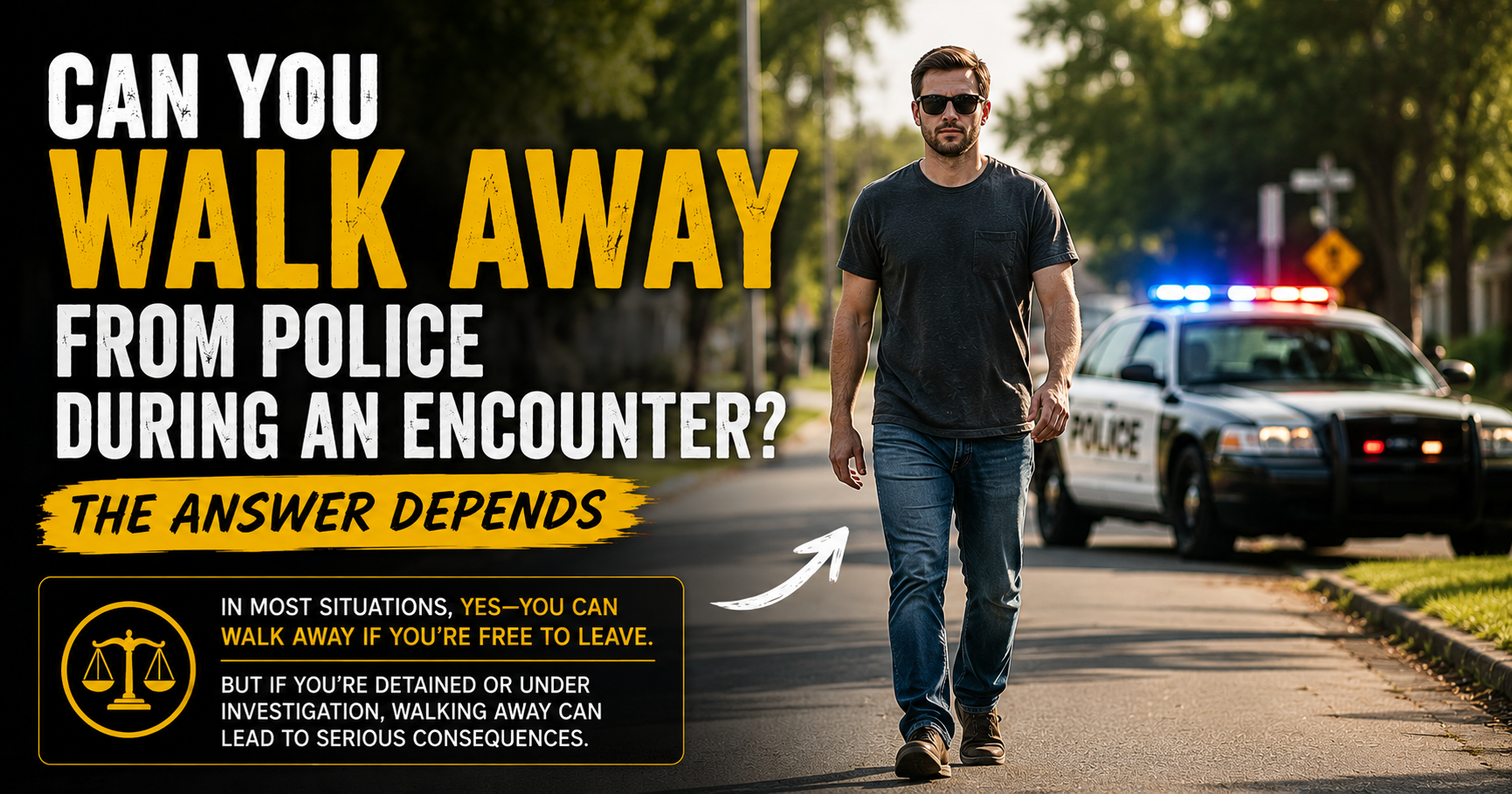
If you’re trying to understand when a police encounter becomes a temporary detention, you may also find Can You Walk Away From Police During an Encounter? The Answer Depends helpful.
Every Police Encounter Is Unique
I’ve found that people often look for one simple rule that applies to every situation.
Constitutional law rarely works that way.
Officers, courts, and attorneys typically evaluate:
- The officer’s observations
- The surrounding circumstances
- The person’s actions
- The location
- The totality of the facts
Because every encounter is different, the same legal standard may apply differently depending on the situation.
Common Misconceptions About Reasonable Suspicion
One misconception is that reasonable suspicion means an officer can stop someone based only on a guess.
Another misconception is that reasonable suspicion and probable cause are identical legal standards.
Neither is accurate.
Reasonable suspicion requires objective facts supporting an investigative stop, but it remains a lower legal standard than probable cause.
That distinction is one of the cornerstones of Fourth Amendment law.
Frequently Asked Questions
What is reasonable suspicion?
Reasonable suspicion is a legal standard that generally allows police to briefly investigate possible criminal activity when there are specific, objective facts supporting the stop.
Is reasonable suspicion the same as probable cause?
No. Although they are related, probable cause is generally considered a higher legal standard than reasonable suspicion.
Why is reasonable suspicion important?
It plays a major role in many everyday police encounters, including temporary investigative stops and certain protective pat-downs.
Does reasonable suspicion mean someone is guilty?
No. It is an investigative standard, not proof that someone committed a crime.
Why do courts look at the “totality of the circumstances”?
Instead of focusing on one fact by itself, courts generally evaluate all of the relevant circumstances together when reviewing a police encounter.
How does reasonable suspicion relate to police encounters?
Many questions involving temporary stops, detentions, and investigative encounters begin with discussions about reasonable suspicion.
Where can I learn more about constitutional rights?
Browse our Constitutional Rights category for additional guides covering police encounters, searches, privacy rights, and other constitutional issues.
Important Information
This article is provided for educational and informational purposes only and should not be considered legal advice. Constitutional protections, Fourth Amendment law, criminal procedure rules, and police-encounter laws vary depending on the facts involved and applicable laws. If you need legal advice regarding your specific situation, consult a qualified attorney licensed in your jurisdiction.
For more information about our editorial standards, visit our Editorial Policy and Fact-Checking Policy pages.
You can also learn more about Legal Know It All by visiting our About Us, Contact Us, FAQ, Disclaimer, and Terms and Conditions pages.
About the Author
Sarah Mitchell is a legal research contributor for Legal Know It All who focuses on constitutional rights, police encounters, civil rights, and criminal law. She researches common legal questions involving law enforcement interactions and constitutional protections while helping readers understand complex legal concepts in straightforward, easy-to-understand language.