
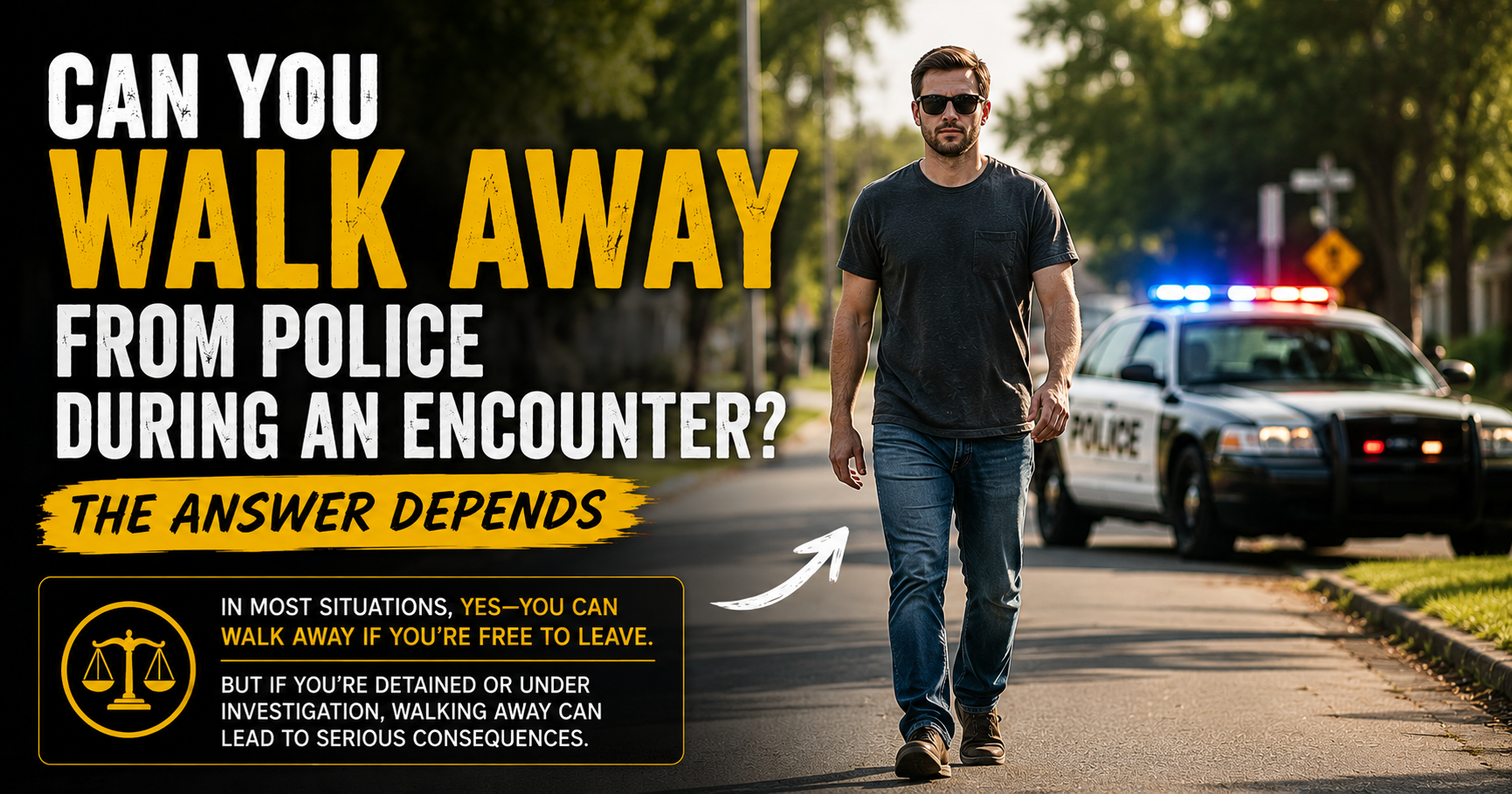
Imagine you’re walking through a park, leaving a store, or standing outside talking with friends when a police officer approaches and starts asking questions.
One thought immediately comes to mind for many people:
“Can I just walk away?”
It’s one of the most common constitutional-rights questions Americans ask because most people have never been taught the difference between a voluntary conversation and a police detention.
I’ve found that many people believe one of two things.
Either they think they must stay anytime an officer speaks to them.
Or they believe they can always leave whenever they choose.
Neither assumption is always correct.
As with many constitutional-rights topics, the answer often depends on what type of police encounter is taking place. The Supreme Court has recognized that not every interaction between police and a citizen is considered a seizure under the Fourth Amendment, making the circumstances extremely important.
Quick Answer
Whether you can walk away from a police encounter often depends on the nature of the encounter, whether you are being detained, applicable laws, constitutional protections, and the specific facts involved.
Why This Question Creates So Much Confusion
Most Americans never receive formal education about police encounters.
Instead, they learn from:
- Television
- Movies
- Social media
- Friends
- Personal experiences
Unfortunately, those sources often oversimplify situations that are actually governed by constitutional law.



Not Every Police Encounter Is The Same
One thing I’ve noticed is that people often use the phrase “being stopped by police” to describe many different situations.
In reality, encounters may involve:
- Casual conversations
- Investigative stops
- Traffic stops
- Temporary detentions
- Arrests
Each type of encounter can raise different constitutional questions.
Understanding Whether You Are Being Detained Matters
One of the first questions people often ask themselves is whether they are actually being detained.
That question is important because it frequently affects the nature of the interaction.
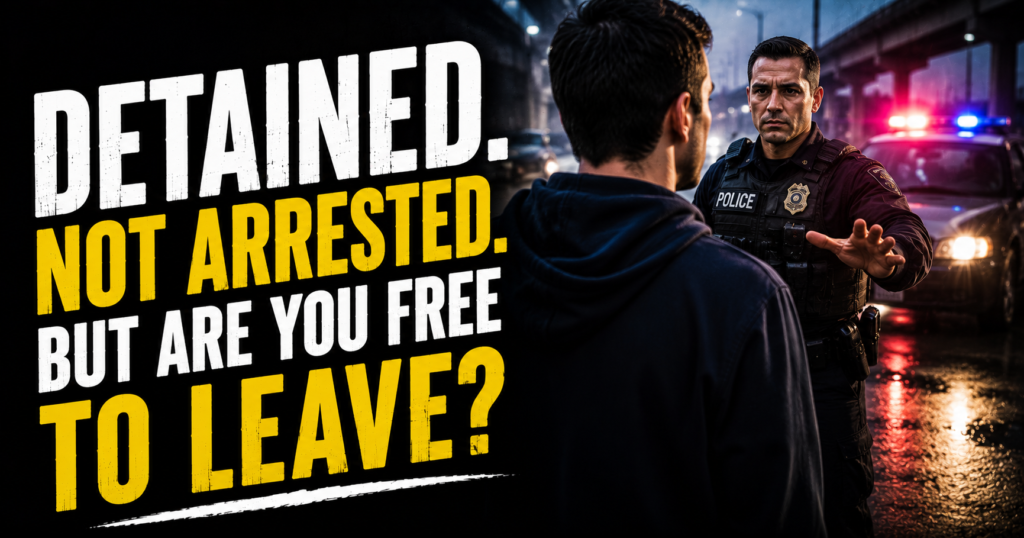
If you’d like a deeper explanation of how temporary detentions differ from arrests, I’ve covered that in Can Police Detain You Without Arresting You? What to Know.
Police May Ask Questions During An Encounter
Many encounters begin with simple questions.
An officer may ask about:
- Your identity
- What you’re doing
- Where you’re going
- Whether you witnessed something
That alone does not necessarily answer whether you are free to leave, which is why these situations often depend on the surrounding circumstances rather than a single question.
Identification Questions Frequently Come Up
One of the most common concerns involves identification.
People often wonder whether they must identify themselves before leaving an encounter.

Because that topic frequently overlaps with police stops, you may also find Can Police Ask for ID If You Haven’t Done Anything Wrong? helpful.
Constitutional Rights Often Depend On The Facts
I’ve found that people frequently search for a simple yes-or-no answer.
The reality is that courts often evaluate police encounters by examining the totality of the circumstances.
That is one reason these situations can become highly fact-specific and why broad assumptions are often misleading.
Voluntary Encounters Are Different From Detentions
One of the most important concepts in this area of law is that not every conversation with a police officer is considered a detention.
In some situations, an encounter may simply be a voluntary conversation.
In others, the circumstances may become more restrictive.
Courts have long recognized that there is a difference between a consensual encounter and a situation where a reasonable person would not feel free to leave.
That distinction is one reason the answer to this question is rarely a simple yes or no.



The Circumstances Can Change During The Encounter
I’ve found that many people think a police encounter stays the same from beginning to end.
In reality, an interaction can develop over time.
An officer may begin by asking a few questions.
As additional information is gathered, the nature of the encounter may change depending on the circumstances.
That is one reason courts often look at the entire interaction instead of focusing on only one moment.
Simply Talking To An Officer Does Not Always Mean You Must Stay
Many Americans assume that if an officer starts asking questions, they automatically have to remain there until the officer says otherwise.
The law is often more nuanced than that.
Whether someone is free to leave frequently depends on the totality of the circumstances, including whether a reasonable person would believe they were free to end the encounter.
Understanding that difference helps explain why two police encounters that appear similar may be treated differently.
Knowing Whether You Are Being Detained Can Be Important
One reason people often research this topic is because they are unsure whether they are simply speaking with an officer or whether they are being detained.
That question frequently becomes central to understanding the encounter.
If you’re trying to understand how temporary detentions differ from formal arrests, you may also find Can Police Detain You Without Arresting You? What to Know helpful.
Police Encounters Often Lead To Other Constitutional Questions
After learning about whether someone may leave an encounter, many readers begin asking related questions.
For example, they often wonder:
- When can police ask for identification?
- What is reasonable suspicion?
- What is probable cause?
- When does an encounter become a detention?
These topics build on one another and help explain why police encounters are among the most frequently discussed constitutional-rights issues.
Common Misconceptions About Walking Away
One misconception is that every police interaction automatically requires a person to remain until the officer gives permission to leave.
Another misconception is that a person may always walk away regardless of what is happening.
Neither assumption accurately reflects how constitutional issues are analyzed.
Instead, courts generally examine the specific facts surrounding the encounter before determining whether a seizure occurred under the Fourth Amendment.
Frequently Asked Questions
Can you walk away from police during an encounter?
The answer often depends on the nature of the encounter, whether you are being detained, constitutional protections, applicable laws, and the specific facts involved.
Is every conversation with a police officer considered a detention?
No. Courts have recognized that some interactions are voluntary while others may become detentions depending on the circumstances.
Why does it matter whether an encounter is voluntary?
The nature of the encounter often affects how constitutional protections apply and whether a reasonable person would feel free to end the interaction.
Can a voluntary encounter become a detention?
Yes. As an interaction develops, the circumstances may change and affect how the encounter is viewed.
Why are police encounter cases so fact-specific?
Courts frequently evaluate the totality of the circumstances rather than relying on a single fact or event.
Where can I learn more about constitutional rights?
You can browse additional topics in our Constitutional Rights category.
Important Information
This article is provided for educational and informational purposes only and should not be considered legal advice. Constitutional protections, criminal procedure rules, police-encounter laws, and civil-rights issues vary depending on the facts involved and applicable laws. Consult a qualified attorney regarding your specific situation.
For more information about our editorial standards, please visit our Editorial Policy and Fact-Checking Policy pages.
You can also learn more about Legal Know It All by visiting our About Us, Contact Us, FAQ, Disclaimer, and Terms and Conditions pages.
About the Author
Sarah Mitchell is a legal research contributor for Legal Know It All who focuses on constitutional rights, police encounters, civil rights, and criminal law. She researches common legal questions involving law enforcement interactions and constitutional protections while helping readers understand legal concepts in clear, practical language.