
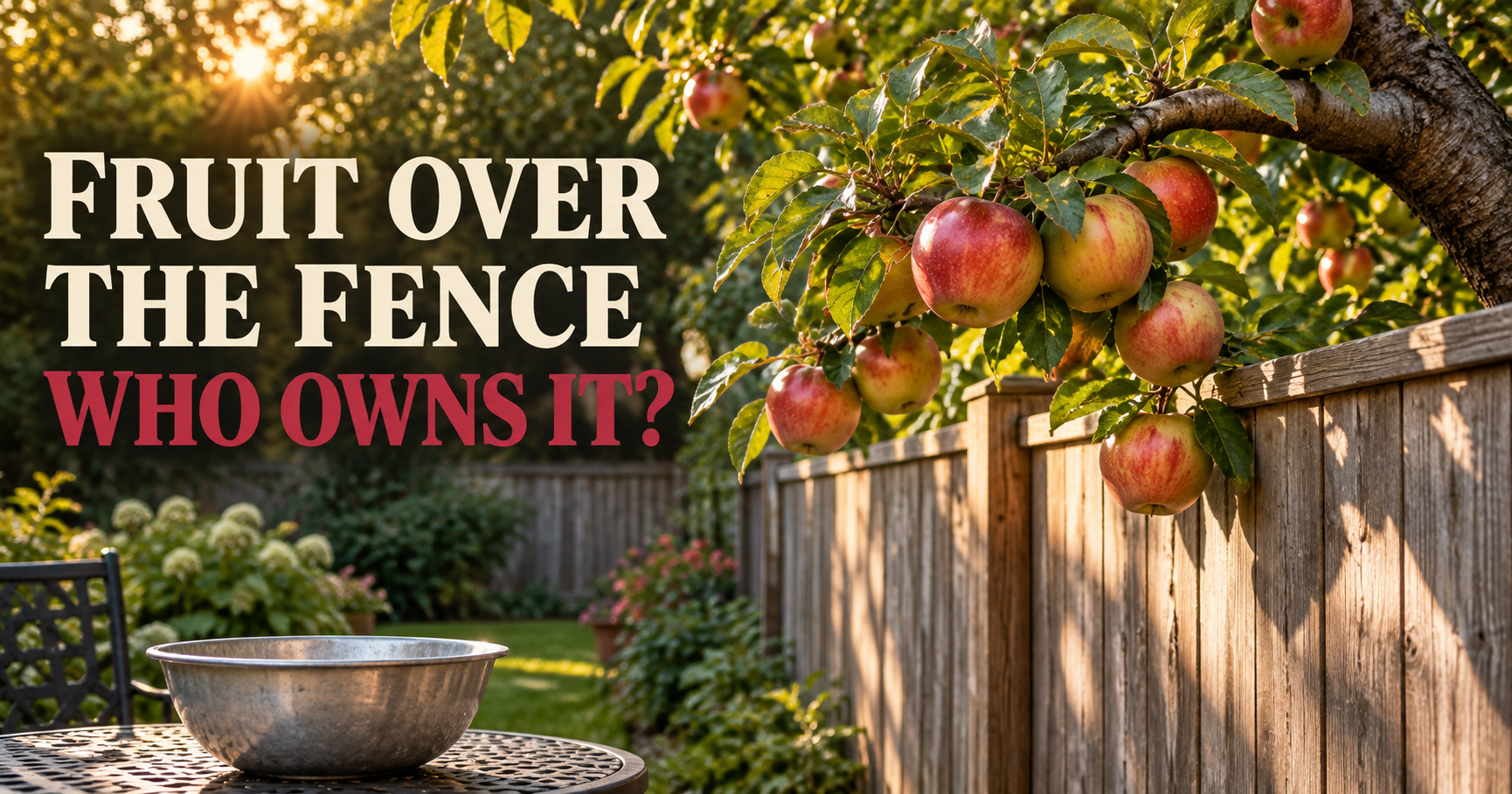
Imagine you’ve spent years caring for an apple tree in your backyard.
You watered it through dry summers, pruned it every winter, and finally this year it’s loaded with fruit.
Then one afternoon you look outside and notice your neighbor reaching over the fence, filling a bucket with apples from branches hanging into their yard.
That leaves many homeowners wondering:
Who actually owns fruit that’s hanging over the property line?
I’ve found this is one of those neighbor disputes that seems simple until it happens to you. People naturally assume the fruit belongs to whoever can reach it.
The law isn’t always that straightforward.
Quick Answer
In many situations, the owner of the tree also owns the fruit growing on it, even if branches extend over a neighboring property. However, laws vary by state, and disagreements often arise when fruit hangs over the property line or falls into a neighbor’s yard. Readers dealing with an active dispute can compare this general rule with neighbor picking fruit from your tree.
Tree Ownership Usually Determines Fruit Ownership
The first question isn’t where the apple is hanging.
It’s who owns the tree.
If the trunk is entirely on your property, the tree generally belongs to you.
That often means the fruit belongs to you as well.
Simply because branches extend into a neighboring yard doesn’t automatically transfer ownership of the fruit growing on those branches.



Overhanging Branches Create Confusion
This is where many disagreements begin.
Your neighbor may legally see fruit hanging over their patio or garden and assume it’s theirs to pick.
You may believe every apple, peach, pear, or plum belongs to you because it’s your tree.
The answer depends on state law and the specific circumstances, but I’ve found that assuming either side automatically owns the fruit usually leads to unnecessary conflict.
What If the Fruit Falls Into Your Neighbor’s Yard?
Another common question is what happens after the fruit naturally falls.
Some homeowners believe anything that lands in their yard becomes theirs.
Others believe ownership stays with the tree owner until someone intentionally gives the fruit away.
State laws can differ, making this another area where local rules matter.



Can Your Neighbor Trim the Branches Instead?
Sometimes neighbors aren’t interested in the fruit at all.
They simply want branches cut back because they’re hanging over a driveway, fence, or roof.
In many states, homeowners may have certain rights to trim branches extending onto their property, but there are important limits.
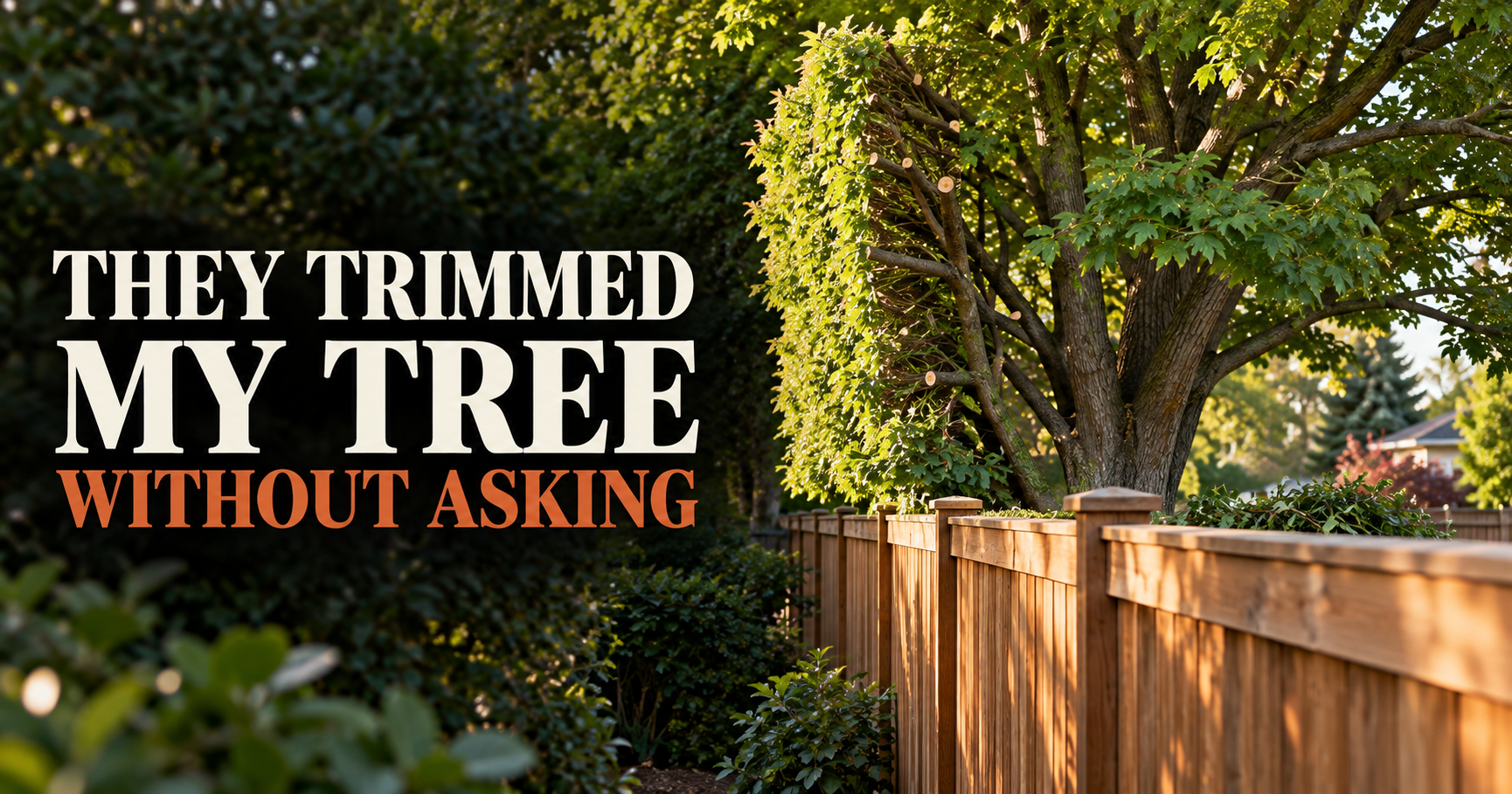
Our guide on Can My Neighbor Trim My Tree Without Permission? explains when trimming may be allowed and when it can create legal problems.
Don’t Let a Basket of Fruit Turn Into a Lawsuit
I’ve seen small disagreements grow into much larger neighbor disputes simply because nobody talked to each other.
A quick conversation before harvest season can often avoid misunderstandings.
Some neighbors happily share fruit every year.
Others agree on who will harvest which side of the tree.
Having that discussion early is much easier than arguing after someone believes their property rights have been violated.
What If the Tree Sits on the Property Line?
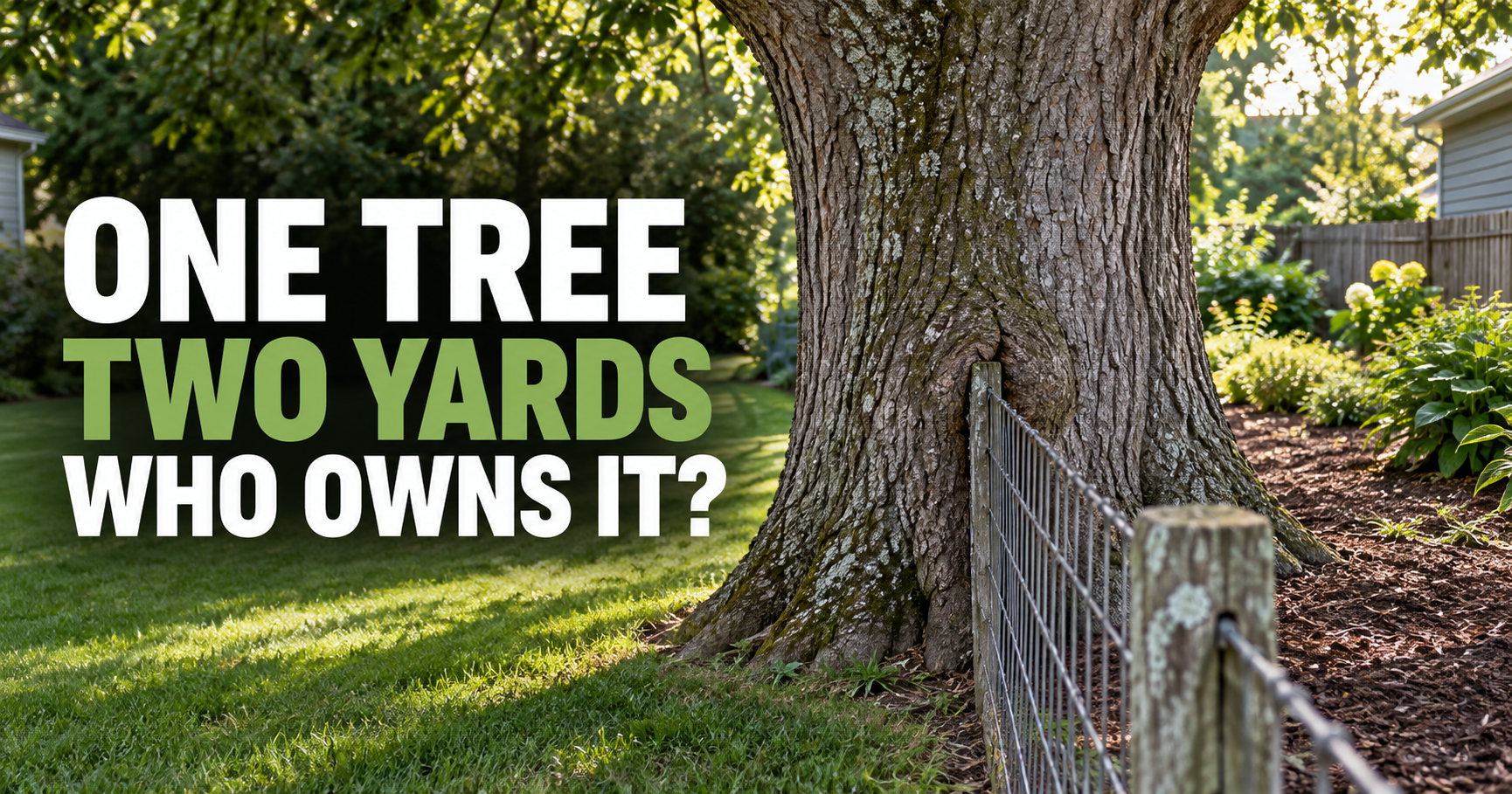
Ownership becomes much more complicated if the tree itself is growing directly on the property boundary.
In that situation, questions about ownership of both the tree and its fruit may depend on your state’s laws.
Before assuming either homeowner has exclusive rights, it’s worth determining exactly where the trunk is located.

If you’re unsure where the legal boundary actually runs, our guide on How Do You Find Your Property Lines? explains several ways homeowners can verify their property lines before disputes arise.
Can My Neighbor Keep the Fruit That Falls Into Their Yard?
Fruit eventually falls.
That’s just part of having a fruit tree.
But when apples, peaches, pears, or plums begin landing on the other side of the property line, many homeowners wonder whether ownership changes the moment the fruit hits the ground.
Unfortunately, there isn’t one nationwide rule that answers every situation.
Some states have addressed these disputes through court decisions, while others haven’t. That’s why it’s important not to assume fruit automatically changes ownership simply because it lands in someone else’s yard.


Don’t Let a Few Pieces of Fruit Turn Into a Bigger Property Dispute
I’ve found that disagreements over fruit are rarely just about the fruit.
Instead, they’re often a symptom of a larger disagreement between neighbors.
Maybe you’ve already argued about fences.
Maybe you’ve disagreed over property lines.
Maybe there have been problems involving overhanging branches or tree roots.
When that’s the case, picking fruit can quickly become another source of tension.
A respectful conversation before harvest season is usually far easier than trying to repair a damaged relationship afterward.
What If Your Neighbor Damages the Tree While Picking Fruit?
Sometimes the biggest problem isn’t missing fruit.
It’s what happens to the tree.
I’ve seen situations where someone climbed into a tree, broke large limbs, snapped young branches, or even used ladders in ways that permanently damaged the tree while trying to harvest fruit.
If someone damages your tree while picking fruit, the issue may extend well beyond who owned the apples or peaches.
Photograph any damage as soon as possible and keep records of what happened if the disagreement continues.
Can You Prevent Future Problems?
If fruit disputes happen every year, it may be worth discussing expectations before the next growing season.
Some neighbors decide to share the harvest.
Others agree that the tree owner will pick the fruit first before offering any extras.
I’ve found that clear expectations often prevent misunderstandings that could otherwise become expensive property disputes.
Frequently Asked Questions
Does fruit hanging over my neighbor’s yard belong to them?
Not necessarily. In many situations, ownership of the fruit generally follows ownership of the tree rather than the location of the branch. However, laws vary by state.
Can my neighbor pick fruit without asking me?
Simply because fruit hangs over a property line doesn’t automatically give someone permission to harvest it. If you’re specifically dealing with a neighbor picking fruit from your tree, our article on Can My Neighbor Pick Fruit From My Tree? takes a closer look at that question.
What if the fruit falls into my neighbor’s yard?
State laws differ on how fallen fruit is treated, so there isn’t one rule that applies everywhere. If the issue becomes a recurring dispute, it may be worth discussing it with your neighbor before harvest season.
What if the tree is growing directly on the property line?
That can make ownership much more complicated. Determining who owns the tree itself is often the first step before deciding who has rights to the fruit.
Should I just talk to my neighbor?
In many cases, yes. I’ve found that a simple conversation often prevents small misunderstandings from turning into long-running disputes.
Important Information
This article is intended for general educational purposes only and should not be considered legal advice. Property laws, tree ownership rules, and rights involving fruit trees vary by state. If you’re involved in a significant dispute over property or tree ownership, consider consulting a licensed attorney in your jurisdiction.
About the Author
Ryan Caldwell is a property rights researcher and homeowner legal writer for Legal Know It All. He specializes in explaining neighbor disputes, property boundaries, easements, trespassing, and homeowner rights in plain English so homeowners can understand their legal options before everyday disagreements become costly legal problems.