

For many drivers, a traffic stop is stressful enough on its own.
Then the officer says something unexpected:
“Please step out of the vehicle.”
At that moment, many people immediately begin wondering whether they actually have to comply.
Can a police officer legally order someone out of a vehicle during a traffic stop?
Or does the Fourth Amendment protect drivers from that type of command?
It’s one of the most common constitutional-rights questions involving traffic stops because most people never receive any education about what officers may lawfully require during an encounter.
I’ve found that many Americans assume an officer needs a special reason before asking someone to exit a vehicle.
Others believe they can simply refuse because they haven’t done anything wrong.
The law is generally more nuanced than either of those assumptions.
The U.S. Supreme Court has held that, during a lawful traffic stop, an officer may generally order the driver to step out of the vehicle as a precautionary safety measure, even without additional suspicion that the driver is armed or dangerous. The Court concluded that the relatively small intrusion on the driver’s liberty is outweighed by the government’s interest in officer safety.
Quick Answer
Generally speaking, during a lawful traffic stop, a police officer may order the driver to exit the vehicle. The Supreme Court has recognized this authority as a reasonable safety measure under the Fourth Amendment.
Why This Question Creates So Much Confusion
Most people associate stepping out of a vehicle with being arrested.
That assumption is understandable.
Television, movies, and viral videos often portray officers ordering people out of cars immediately before making an arrest.
In reality, being asked to exit a vehicle does not automatically mean an arrest is taking place.
That distinction is one reason this topic generates so much public interest.



Officer Safety Is A Major Consideration
Traffic stops can be unpredictable.
An officer usually has very little information about the driver before approaching the vehicle.
The Supreme Court has repeatedly recognized that traffic stops present legitimate safety risks for law enforcement officers.
Because of those concerns, the Court concluded that requiring a driver to briefly step out of a vehicle during a lawful stop is generally a reasonable precaution under the Fourth Amendment.
Being Asked To Exit Does Not Automatically Mean You’re Under Arrest
One of the biggest misconceptions I see is that stepping out of a vehicle means you’ve been arrested.
That simply isn’t how the law generally treats these encounters.
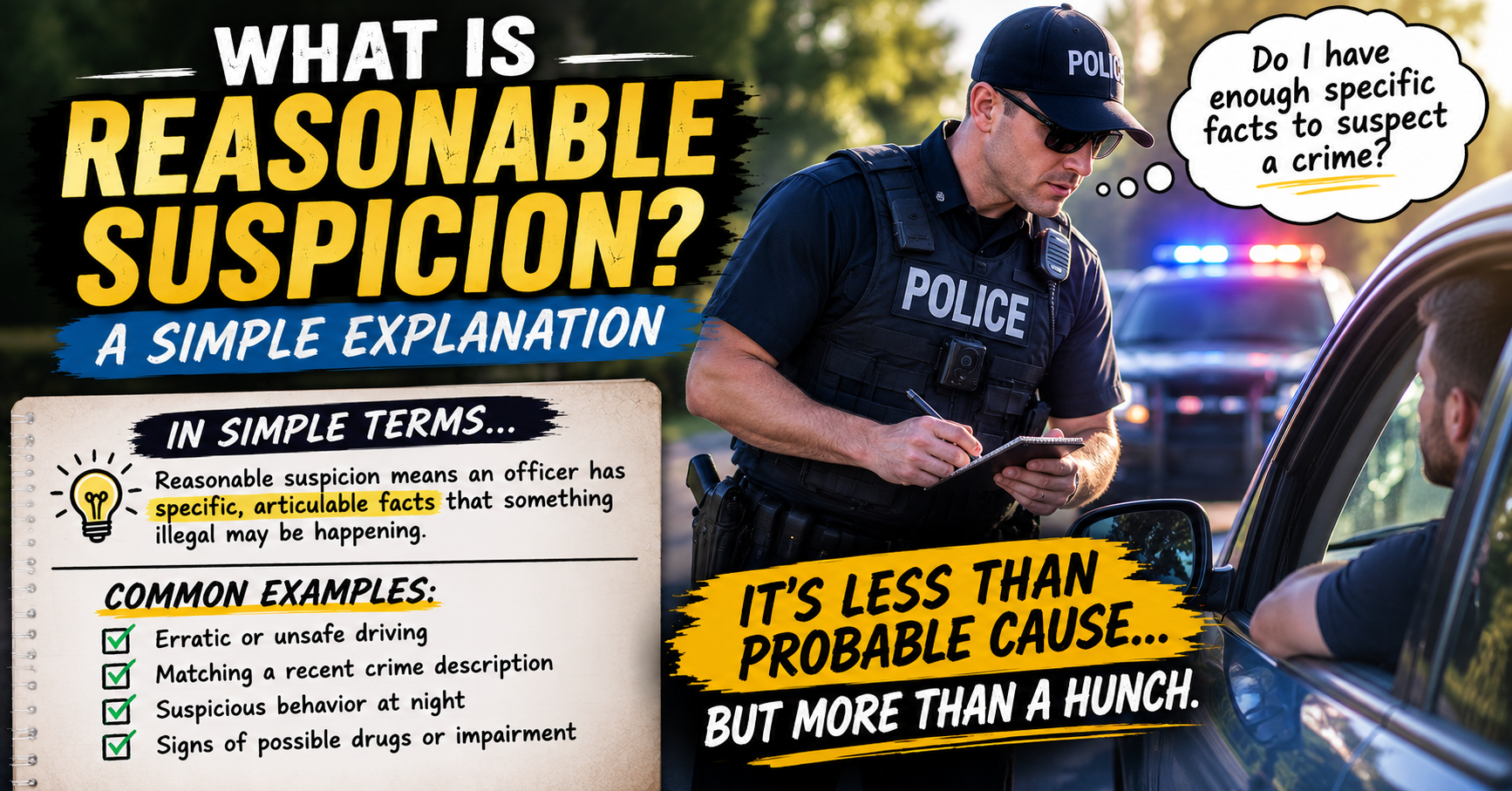
A traffic stop, an investigative detention, and an arrest are different constitutional events, even though they may sometimes occur during the same encounter. The distinction between these encounters is also explained through the legal standard of investigative detention.

If you’re still learning how temporary detentions differ from arrests, you may also find How Long Can Police Detain You Without Arresting You? helpful because it explains how courts evaluate investigative detentions.


Traffic Stops Are Fourth Amendment Seizures
Many drivers don’t realize that a traffic stop itself is considered a seizure under the Fourth Amendment.
That doesn’t automatically make the stop unconstitutional.
Instead, courts evaluate whether the stop and the officer’s actions remained reasonable under the circumstances.
Understanding that principle makes many traffic-stop questions much easier to understand because nearly every issue during a stop begins with the Fourth Amendment.
Drivers And Passengers Are Not Always Treated The Same
Another point that surprises many people is that the rules for drivers and passengers are not always identical.
The U.S. Supreme Court first held in Pennsylvania v. Mimms that an officer conducting a lawful traffic stop may generally order the driver out of the vehicle. Years later, in Maryland v. Wilson, the Court extended that rule to passengers during lawful traffic stops because of the safety risks officers face.
Those decisions are an important reason officers are often permitted to control where vehicle occupants are positioned during a traffic stop.
Being Asked To Exit Doesn’t Automatically Lead To A Search
I’ve found that many drivers believe stepping out of the vehicle automatically means the officer can immediately begin searching them or their car.
That’s not how the Fourth Amendment generally works.
Being ordered out of a vehicle is one constitutional question.
Searching a person or vehicle involves separate legal standards.
Understanding that distinction helps explain why courts often analyze each police action independently rather than treating an entire traffic stop as one event.
Traffic Stops Often Raise Additional Constitutional Questions
Once people understand why an officer may order someone out of a vehicle, they usually begin asking related questions.
For example:
- Can police search my car?
- Can police pat me down?
- Can police prolong the stop?
- Can police search my trunk?
These issues often build on one another, which is why traffic-stop law can seem complicated at first.

If you’re interested in when officers may perform a protective frisk, you may also find Can Police Pat You Down? Here’s When They Can helpful.
Common Misconceptions About Getting Out Of Your Car
One misconception is that an officer must always suspect a driver is dangerous before asking them to exit the vehicle.
Another is that stepping out of the vehicle automatically means an arrest is about to occur.
Neither assumption is generally accurate.
Instead, the Supreme Court has recognized that, during a lawful traffic stop, ordering occupants out of the vehicle is ordinarily a reasonable safety precaution under the Fourth Amendment.
Frequently Asked Questions
Can police order you out of your car during a traffic stop?
Generally, yes. The U.S. Supreme Court has held that an officer conducting a lawful traffic stop may order the driver to exit the vehicle as a reasonable safety measure.
Do police need to think I’m dangerous before telling me to get out?
Not generally. The Supreme Court has recognized this authority as part of officer safety during a lawful traffic stop rather than requiring individualized suspicion that every driver is dangerous.
Does getting out of my car mean I’m under arrest?
No. Being instructed to exit a vehicle does not, by itself, mean you’ve been arrested.
Can police also order passengers out?
Yes. The Supreme Court later held that officers may generally order passengers to exit a lawfully stopped vehicle as well.
Does stepping out of the vehicle automatically allow a search?
No. Whether a search is permitted is a separate constitutional question governed by different legal standards.
Where can I learn more about constitutional rights?
Browse our Constitutional Rights category for more guides covering traffic stops, police encounters, Fourth Amendment protections, and search-and-seizure law.
Important Information
This article is provided for educational and informational purposes only and should not be considered legal advice. Fourth Amendment protections, traffic-stop law, criminal procedure rules, and police practices vary depending on the facts involved and applicable laws. If you need legal advice regarding your specific situation, consult a qualified attorney licensed in your jurisdiction.
About the Author
Sarah Mitchell is a legal research contributor for Legal Know It All who focuses on constitutional rights, police encounters, civil rights, and criminal law. She researches common legal questions involving Fourth Amendment protections, police procedures, and search-and-seizure law while helping readers understand complex legal concepts in clear, practical language.