
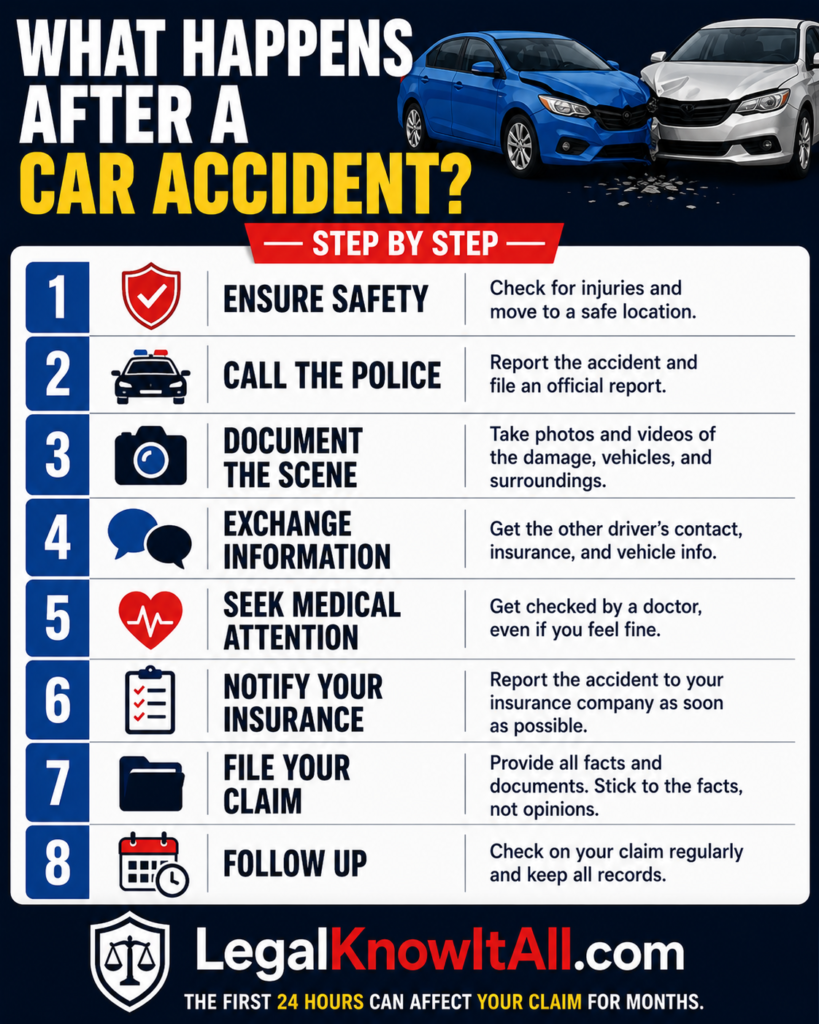
What Happens After a Car Accident? A Step-by-Step Guide to Protecting Yourself and Your Insurance Claim
A car accident can happen in seconds, but the decisions you make afterward can affect your health, finances, insurance claim, and legal rights for months or even years.
Whether you’ve been involved in a minor fender bender or a more serious collision, knowing what to do after a car accident can help protect you and strengthen your insurance claim.
The good news is that if you follow a few important steps, you’ll be in a much better position when dealing with insurance companies, repair shops, medical providers, and potentially even legal disputes.
Step 1: Make Sure Everyone Is Safe
Your first priority should always be safety.
Check yourself and your passengers for injuries. If possible, move vehicles to a safe location away from traffic.
Turn on hazard lights and call 911 if:
- Anyone is injured
- Vehicles are blocking traffic
- Significant property damage occurred
- The accident appears serious
Even if injuries seem minor, it is often wise to seek medical attention. Some injuries may not show symptoms until hours or days later.
Step 2: Call the Police
Many drivers wonder whether they need to contact law enforcement after an accident.
While requirements vary by state, having an official police report can be extremely valuable.
A police report may include:
- Driver information
- Witness information
- Officer observations
- Road conditions
- Preliminary findings
This documentation often becomes important evidence during the insurance claims process.
Step 3: Take Photos and Videos
One of the biggest mistakes people make is failing to document the accident scene.
Evidence can disappear quickly.
Take photographs of:
- Vehicle damage
- License plates
- Road conditions
- Traffic signs
- Skid marks
- Debris
- Visible injuries
- Weather conditions
Video footage can be equally valuable.
If you’re unsure what evidence matters most, our guide on 10 Types of Proof That Can Strengthen Your Insurance Claim Case explains the most important forms of claim documentation.
Step 4: Exchange Information
Exchange information with all involved drivers.
Be sure to collect:
- Full names
- Phone numbers
- Addresses
- Driver’s license numbers
- Insurance information
- Vehicle information
Avoid discussing fault or arguing about who caused the accident.
Simply gather information and focus on documenting facts.
Step 5: Speak Carefully
Many people unintentionally damage their insurance claim by making statements they later regret.
Avoid saying things such as:
- It was my fault
- I’m not injured
- It wasn’t a big deal
- I’ll sign anything
Statements made at the accident scene or during later conversations may become part of the claim investigation.
Before speaking with an insurance adjuster, review our article on 10 Things You Should Never Say to an Insurance Adjuster.
Step 6: Seek Medical Attention
Even if you feel fine immediately after the accident, it is often a good idea to get checked by a medical professional.
Common accident injuries include:
- Whiplash
- Concussions
- Back injuries
- Soft tissue injuries
- Internal injuries
Prompt medical treatment not only protects your health but also creates documentation that may be important later.
Step 7: Notify Your Insurance Company
Most insurance policies require prompt reporting of accidents.
When speaking with your insurance company:
- Stick to the facts
- Be honest
- Avoid speculation
- Provide requested documentation
The insurance company will usually assign an adjuster to investigate the claim.
Depending on the situation, the adjuster may review evidence, inspect vehicle damage, interview witnesses, and determine coverage.
Step 8: File Your Insurance Claim
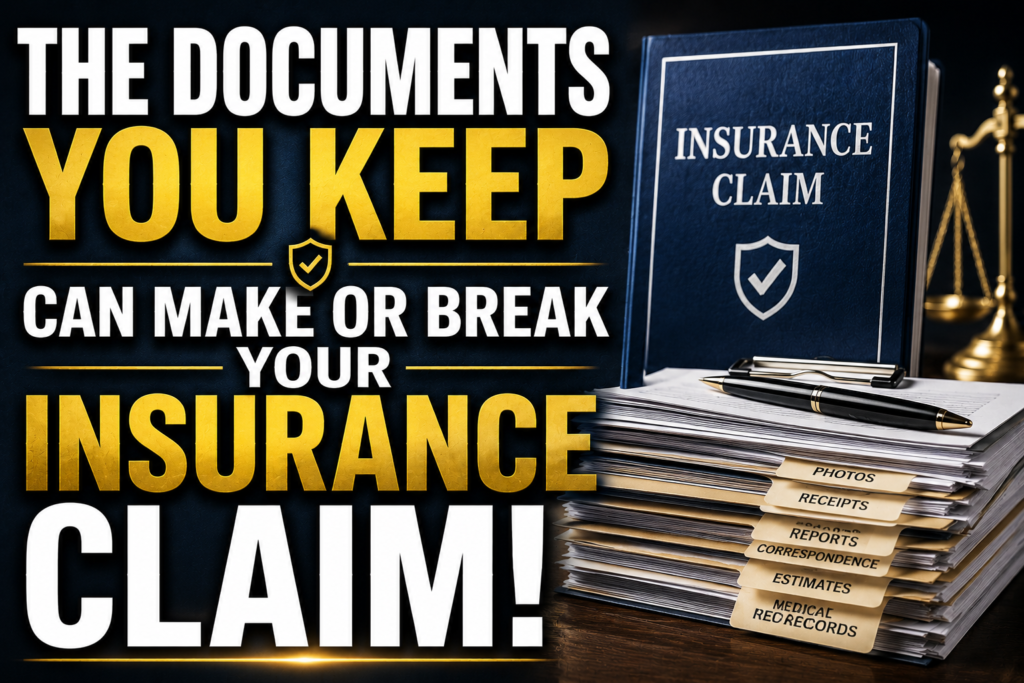
Once the claim process begins, you’ll likely need to submit supporting documentation.
This may include:
- Photos
- Videos
- Police reports
- Medical records
- Repair estimates
- Witness statements
The stronger your documentation, the easier it may be to support your claim.
Many claim disputes arise simply because important evidence was never collected.
Step 9: Track Every Communication
Keep records of every interaction related to the accident.
This includes:
- Emails
- Letters
- Text messages
- Voicemails
- Claim numbers
- Adjuster conversations
Creating a dedicated claim file can make the entire process much easier.
Good record keeping becomes especially important if delays or disputes arise.
Step 10: Follow Up Regularly
Many people assume their claim will automatically move forward without their involvement.
While some claims are resolved quickly, others require ongoing communication.
Follow up regularly to:
- Check claim status
- Confirm receipt of documents
- Review settlement offers
- Monitor repair progress
Staying organized can help prevent unnecessary delays.
What Happens After You File a Claim?
After your claim is submitted, the insurance company typically begins an investigation.
This may involve:
- Reviewing evidence
- Inspecting damage
- Contacting witnesses
- Evaluating repair estimates
- Determining coverage
Every claim is different, but understanding the process can help reduce stress and confusion.
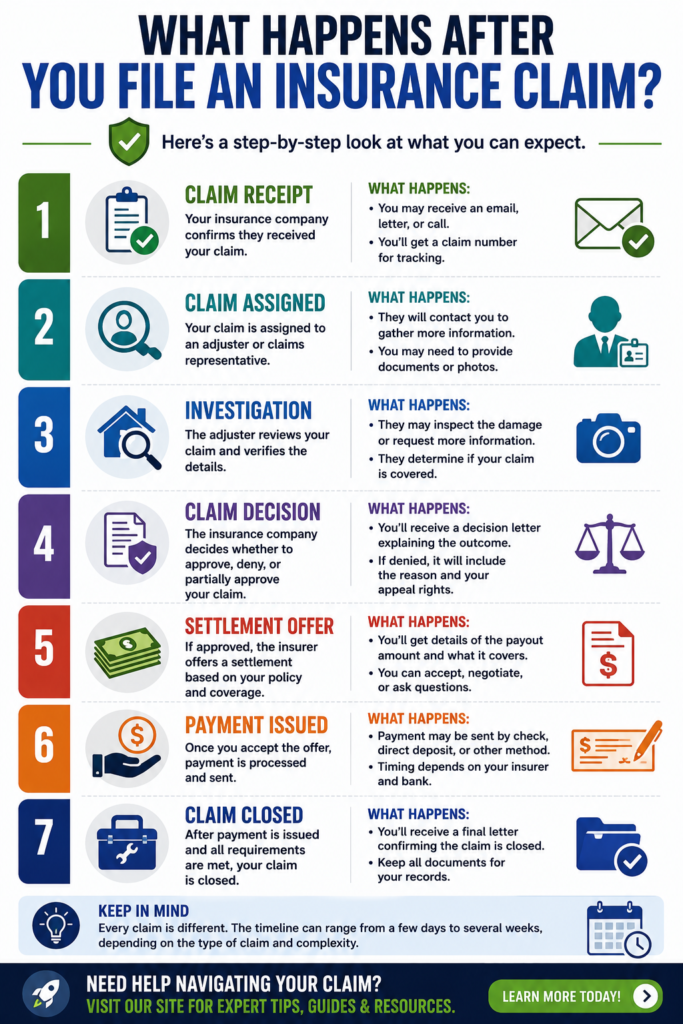
For a more detailed look at the next stage, read What Happens After You File an Insurance Claim?.
What If the Insurance Company Denies Your Claim?
A denial does not necessarily mean the matter is over.
Claims may be denied for reasons such as:
- Insufficient evidence
- Coverage exclusions
- Missed deadlines
- Disputed liability
If your claim is denied, carefully review the explanation and gather any additional supporting documentation that may strengthen your position.
You may also find helpful information in our Insurance Claims section and Consumer Rights category.
Can a Dash Cam Help After a Car Accident?
Absolutely.
Dash camera footage often provides some of the strongest evidence available after an accident.
Video recordings can help establish:
- Traffic conditions
- Vehicle positions
- Driver actions
- Road hazards
- Weather conditions
Many drivers choose to install a dash camera because it can eliminate disputes about what actually happened during a collision.
Protecting Yourself After an Accident
The hours immediately following a car accident can have a major impact on your insurance claim.
By focusing on safety, collecting evidence, documenting everything, and communicating carefully, you can put yourself in a much stronger position throughout the claims process.
The more organized you are from the beginning, the easier it becomes to protect both your legal rights and your financial interests after a crash.
As an Amazon Associate we earn from qualifying purchases through some links in our articles. Learn more.