
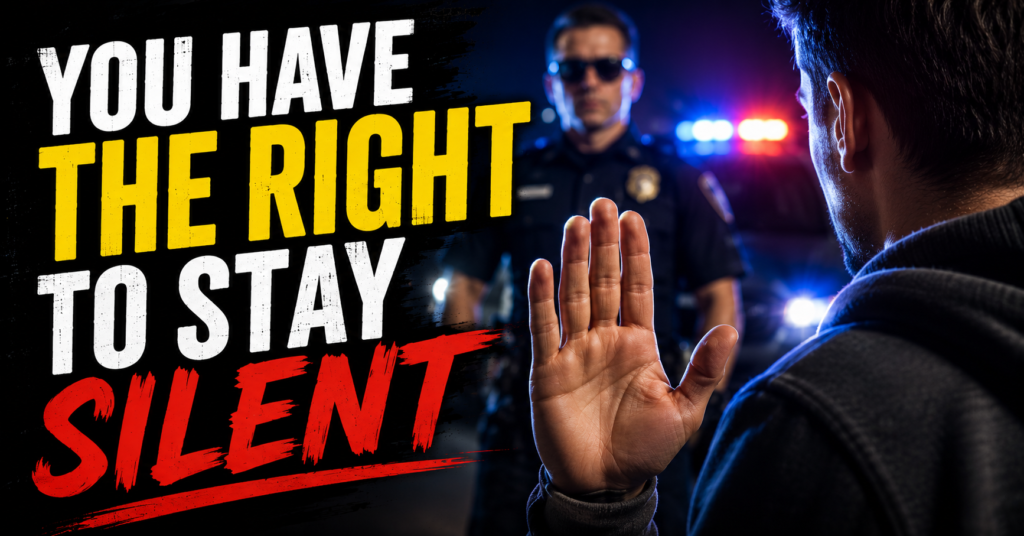
Most people become nervous when a police officer starts asking questions.
That’s understandable.
Even innocent people often worry about saying the wrong thing, creating confusion, or accidentally making a situation worse.
I’ve found that many Americans assume they are legally required to answer every question an officer asks.
Others believe they never have to answer anything at all.
As with many legal topics, the reality is usually somewhere in the middle.
The answer often depends on the circumstances, the type of encounter, and the specific questions being asked.
Quick Answer
Whether a person may refuse to answer police questions depends on the circumstances involved. Constitutional protections, the nature of the encounter, and other legal factors may all affect how a situation is evaluated.
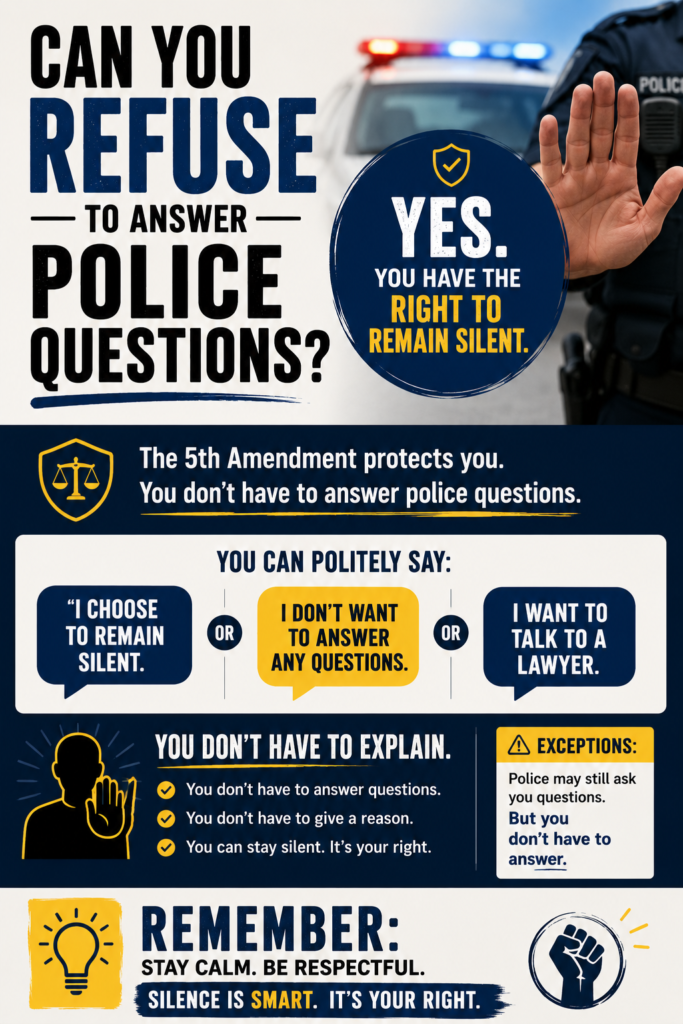
Why This Question Creates So Much Confusion
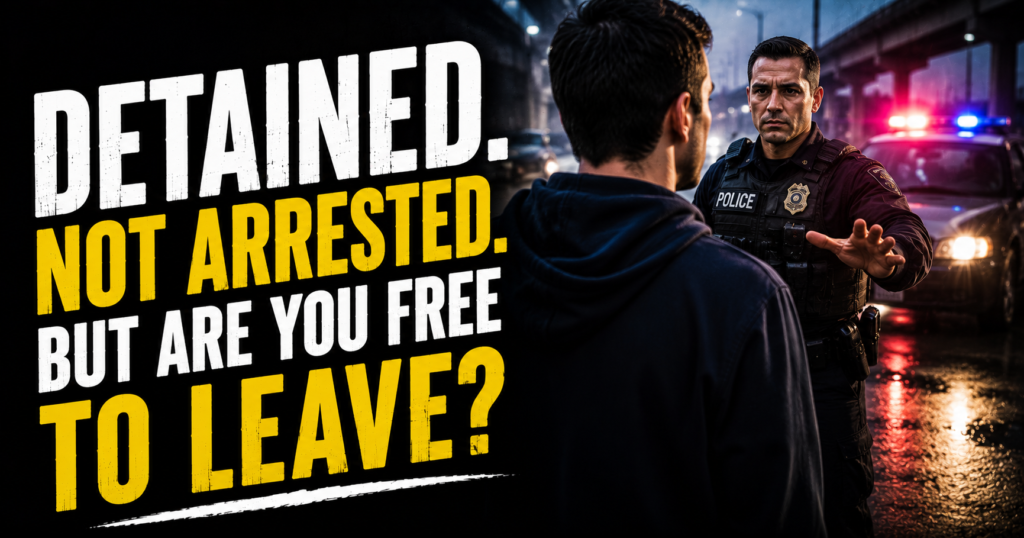
One reason people struggle with this topic is that police interactions happen in many different ways. The type of encounter is also central to understanding Can Police Detain You Without Arresting You? What to Know.
For example:
- Traffic stops
- Witness interviews
- Criminal investigations
- Casual encounters
- Emergency situations
A conversation occurring in one setting may raise very different legal issues than a conversation occurring in another.
That is one reason broad assumptions often create confusion.

Many People Feel Pressure To Talk
I’ve noticed that most people want to appear cooperative.
When an officer asks a question, the natural reaction is often to answer it.
People may worry that remaining silent will make them appear guilty.
Others worry that refusing to answer questions will somehow create additional problems.
Those concerns are one reason constitutional-rights questions involving police questioning remain so important.
The Right To Remain Silent Is One Of The Most Recognized Rights In America
Few legal concepts are as widely recognized as the right to remain silent.
Most Americans have heard the phrase countless times through:
- Television
- Movies
- News reports
- Police dramas
Even though the phrase is familiar, many people are unsure exactly how it applies in real-world situations.
For a deeper discussion, see:

Police Questioning And Investigations Often Overlap
Questions from police frequently occur during investigations.
Because of that, people interested in police questioning often also have questions involving:
- Searches
- Evidence
- Investigations
- Constitutional protections
You may also find helpful information in:
Can Police Lie to You During an Investigation?
Understanding how investigations work can help provide context for many police encounters.
Talking And Volunteering Information Are Not Always The Same Thing
One thing I’ve learned is that many people underestimate how much information they voluntarily provide during conversations.
People often share:
- Opinions
- Assumptions
- Explanations
- Guesses
- Details they were never specifically asked about
That is one reason many legal professionals emphasize thinking carefully before speaking during important situations.
Constitutional Rights Extend Beyond Questioning
Questions about police questioning often lead to broader constitutional-rights discussions.
People who research this topic frequently also ask:
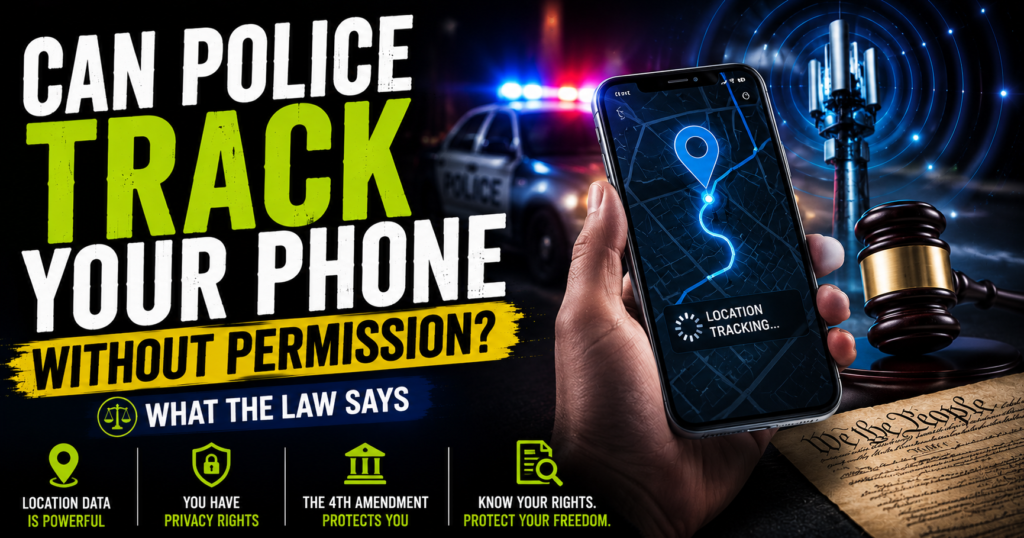
- Can police search a phone?
- Can police search a vehicle?
- Can police enter private property?
- When do Miranda Rights apply?
These issues are often closely connected because they all involve constitutional protections and government authority.
Every Situation Has Its Own Facts
I’ve found that one of the biggest mistakes people make is looking for a simple rule that applies to every police encounter.
The reality is that legal situations are often highly fact-specific.
The details surrounding the interaction frequently matter just as much as the questions being asked.
Understanding that principle is often one of the most important parts of understanding constitutional rights.

Does It Matter Whether You Are a Witness or a Suspect?
One reason this topic can become confusing is that police speak with many different people during investigations.
An officer may talk to:
- Witnesses
- Victims
- Suspects
- Property owners
- Drivers
- Bystanders
I’ve noticed that many people assume every police interaction is treated exactly the same.
In reality, the circumstances surrounding the conversation often matter.
That is one reason broad assumptions about police questioning can sometimes lead to misunderstandings.
Traffic Stops Create Unique Situations
Traffic stops are among the most common interactions people have with law enforcement.
Many Americans will experience a traffic stop long before they ever encounter any other type of police investigation.
Because traffic stops are so common, they generate a lot of questions involving:
- Identification
- Vehicle information
- Police questioning
- Constitutional rights
People often assume the same rules apply to every encounter, but different situations can raise different legal considerations.
Many People Accidentally Talk Too Much
One thing I’ve learned is that people often volunteer information they were never asked to provide.
It usually happens because they are nervous.
Someone may begin explaining:
- Where they have been
- What they were doing
- Why they were there
- What they think happened
Before long, they are discussing details far beyond the original question.
I’ve found that many people underestimate how much information they reveal simply because they feel uncomfortable with silence.
Television Has Shaped Expectations
Much like Miranda Rights, television has heavily influenced how Americans think police questioning works.
Crime shows often present interactions in a way that is:
- Dramatic
- Fast-paced
- Simplified
Real-world investigations are usually far more complicated.
That is one reason people are often surprised when actual legal situations do not look like what they have seen on television.
Police Questioning Often Leads To Other Constitutional Questions
People researching police questioning frequently end up researching several related topics.
You may also find helpful information in:
Can Police Search Your Phone Without Permission?
Can Police Search Your Car Without Permission?
Can Police Enter Private Property Without Permission?
Can Police Lie to You During an Investigation?
Together, these articles help explain many of the constitutional-rights questions people ask most frequently.
Why Understanding Your Rights Matters
I’ve found that many people only begin researching constitutional rights after finding themselves in a stressful situation.
The challenge is that stressful situations are often the worst time to learn new information.
Having a basic understanding of constitutional protections beforehand can help people better understand the legal issues that may arise during police encounters.
Frequently Asked Questions
Can you refuse to answer police questions?
The answer often depends on the circumstances, the nature of the encounter, and applicable constitutional protections.
Do I have to answer every question an officer asks?
Different situations can involve different legal considerations, which is one reason broad assumptions can be misleading.
What if I am only a witness?
Witnesses, suspects, victims, and other individuals may encounter different circumstances during investigations.
Does a traffic stop change things?
Traffic stops frequently involve questions that differ from those arising in other police encounters.
What are Miranda Rights?
Miranda Rights involve legal warnings associated with certain police questioning situations and constitutional protections.
Can police lie during an investigation?
This is one of the most frequently asked constitutional-rights questions and depends on the circumstances involved.
Why do people accidentally reveal information?
Many individuals provide additional details because they are nervous, uncomfortable, or trying to explain themselves.
Where can I learn more about constitutional rights?
You can explore additional topics in our:
Constitutional Rights Category
Important Information
This article is provided for educational and informational purposes only and should not be considered legal advice. Constitutional protections, criminal procedure rules, police questioning standards, and investigation-related issues vary depending on the facts and applicable laws. Consult a qualified attorney regarding your specific situation.
For more information about our content standards, visit our Editorial Policy and Fact-Checking Policy pages.
Additional information about this website can be found on our About Us, Contact Us, FAQ, Disclaimer, and Terms and Conditions pages.
About the Author
Michael Carter is a legal research contributor for Legal Know It All who focuses on constitutional rights, criminal law, police procedures, and individual liberties. He researches common legal questions involving investigations, searches, questioning, and constitutional protections while helping readers understand legal concepts in clear, practical language.
As an Amazon Associate we earn from qualifying purchases through some links in our articles. Learn more.