
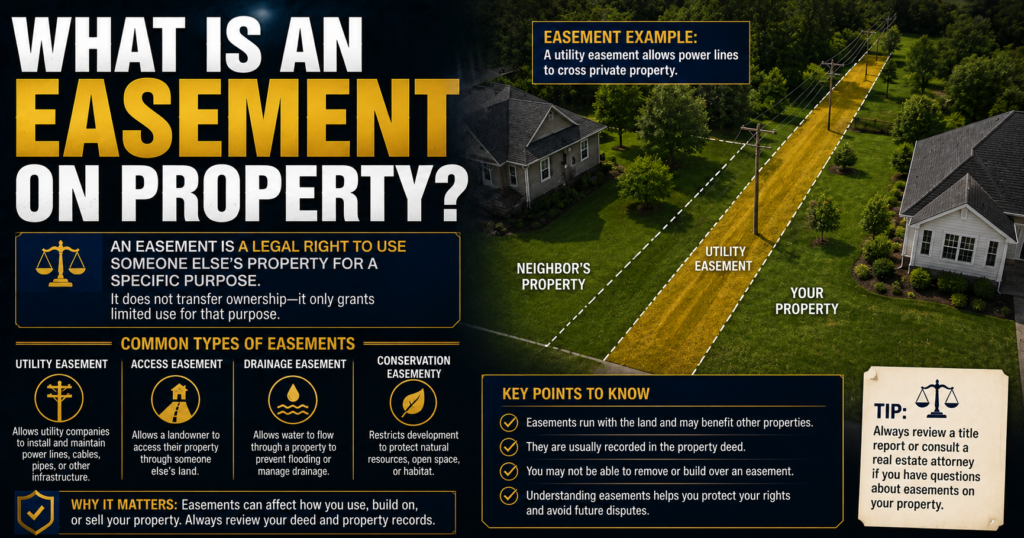
Many property owners are surprised to discover that owning land does not always mean having complete control over every inch of it.
In some situations, another person, company, utility provider, or government entity may have certain legal rights involving part of the property.
These rights are commonly known as easements.
Easements are extremely common and affect millions of properties throughout the United States.
Yet many homeowners do not learn about them until they plan a project, install a fence, build a structure, or encounter a property dispute.
Quick Answer
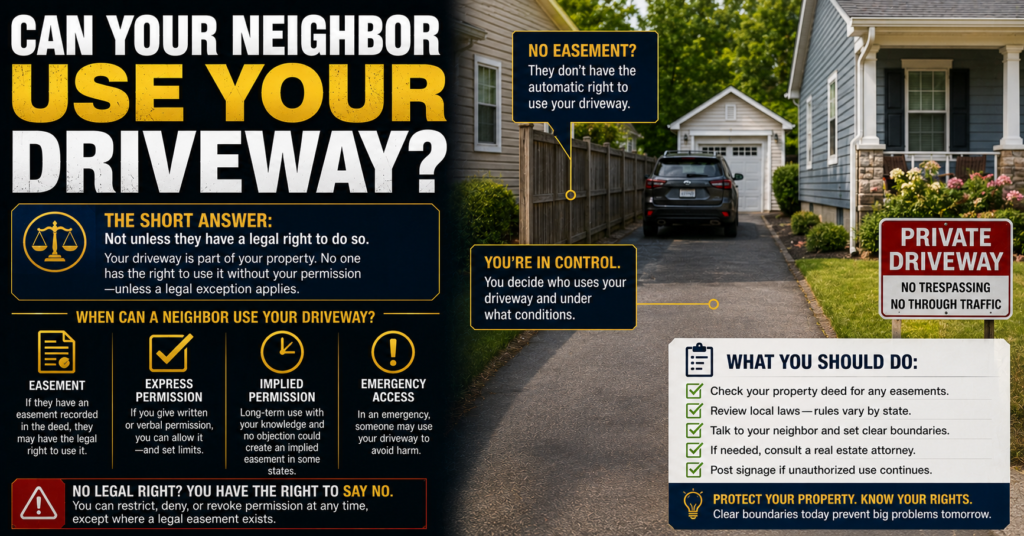
An easement is a legal right that allows someone to use a portion of another person’s property for a specific purpose. Easements do not usually transfer ownership of the property, but they may limit how certain areas of the property can be used. Driveway access is one practical situation explored in Can Your Neighbor Use Your Driveway?.
Why Easements Matter
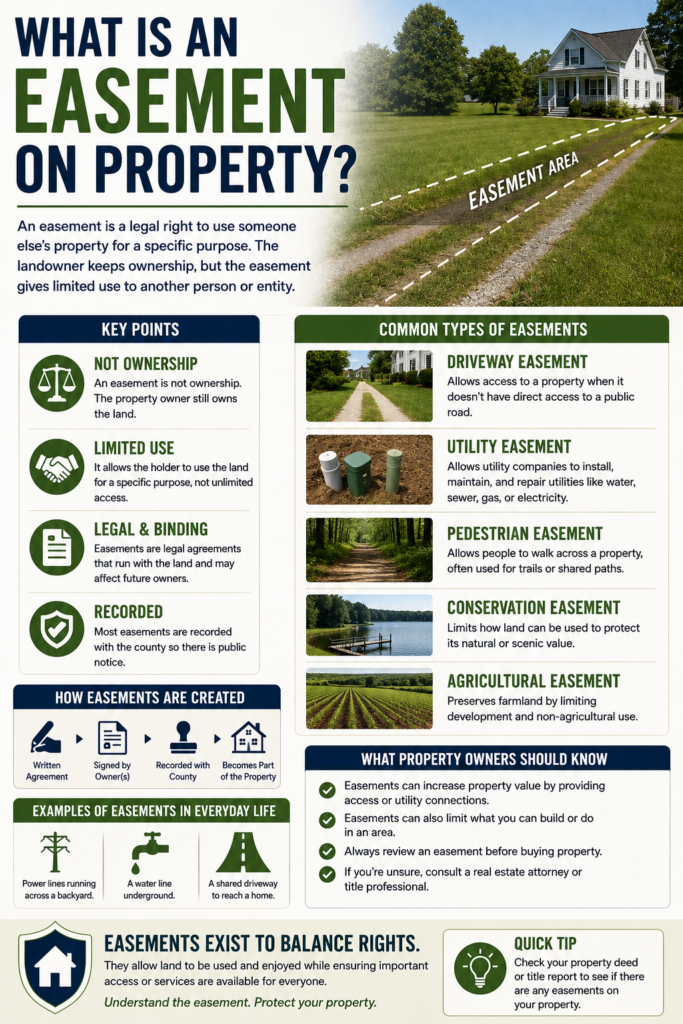
Easements can affect important property decisions such as:
- Fence construction
- Driveway projects
- Utility installations
- Building additions
- Landscaping
- Property access
Understanding whether an easement exists can help prevent expensive mistakes.



Do You Still Own the Property?
In most situations, yes.
An easement typically does not transfer ownership.
The property owner usually continues to own the land while another party holds certain rights regarding its use.
This is one reason easements sometimes create confusion.
A property owner may legally own the land while still being restricted from certain activities within the easement area.
Common Types of Easements
Several different types of easements exist.
The most common include:
Utility Easements
Utility companies often receive rights to access portions of property for:
- Power lines
- Water lines
- Sewer lines
- Gas lines
- Communication lines
Access Easements
These easements allow access across one property to reach another location.
Driveway Easements
Shared driveways often involve easement rights.
Drainage Easements
These easements help manage water flow and stormwater systems.
Right-of-Way Easements
Right-of-way easements commonly involve travel routes across property.
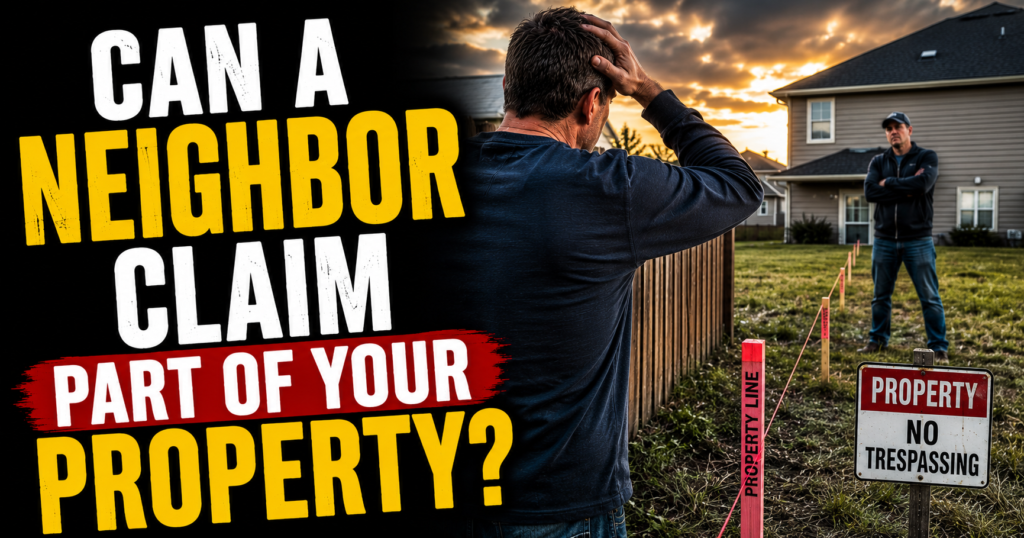

How Can You Find Out If an Easement Exists?
Property owners often start by reviewing:
- Property surveys
- Deeds
- Title documents
- Closing paperwork
- County records
You may also find helpful information in:
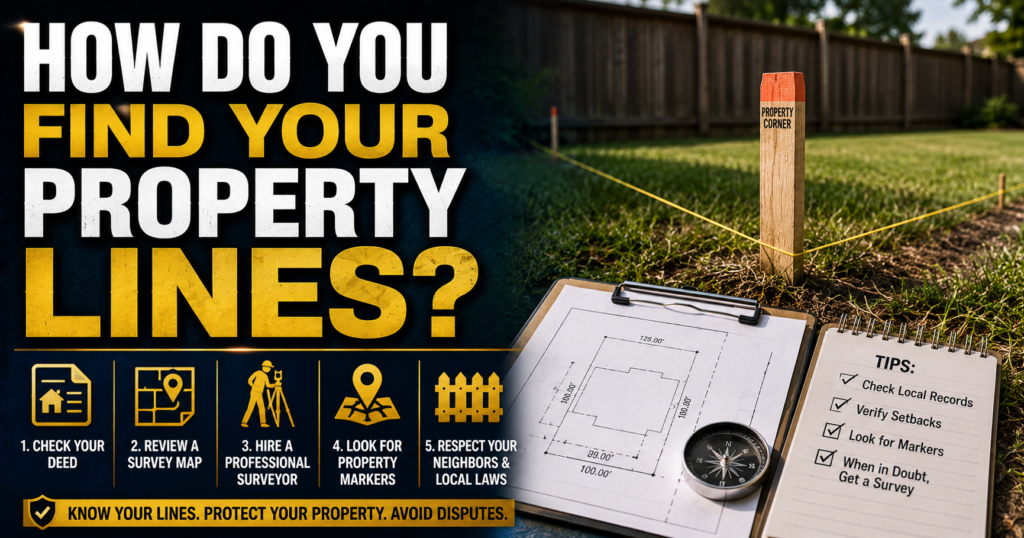
How Do You Find Your Property Lines?
Property surveys frequently identify easement locations and dimensions.
Easements Can Affect Fence Projects
One of the most common times property owners discover easements is when they decide to build a fence.
A fence placed within an easement area may create problems depending on:
- The type of easement
- Local requirements
- The specific use involved
This is one reason homeowners should verify both property lines and easements before construction begins.
You may also find useful information in:
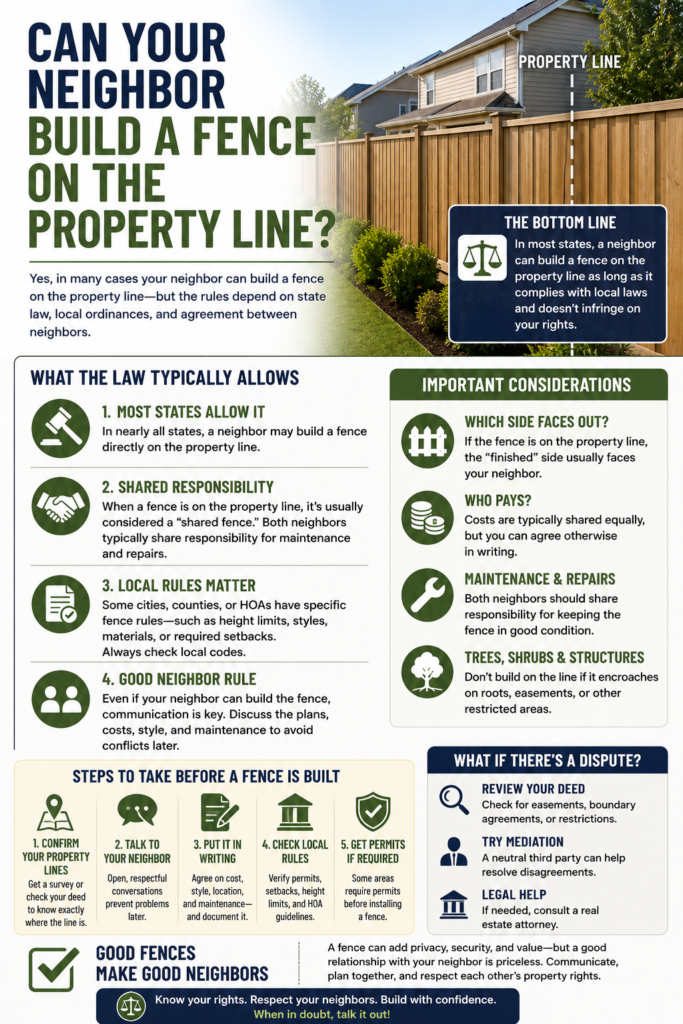
Can Your Neighbor Build a Fence on the Property Line?
Why Property Markers Can Be Helpful

Once property boundaries have been confirmed, many property owners install Permanent Property Line Markers so corners and boundaries remain easier to identify during future projects.
Markers do not create legal boundaries, but they can make confirmed boundaries easier to locate.
Easements Often Surprise Property Owners
Many easements exist for years without creating any issues.
Then a homeowner plans a project and suddenly discovers restrictions they did not know existed.
That is why reviewing surveys, deeds, and property records before major projects is often one of the smartest things a property owner can do.

Can Easements Be Removed?
Sometimes, but not always.
Whether an easement can be removed depends on several factors, including:
- The type of easement
- Property documents
- Agreements between parties
- State laws
- Court decisions
Some easements remain attached to the property for many years and may continue even after ownership changes.
Because easement issues can become complex, property owners often review deeds, surveys, and title records before assuming an easement no longer applies.
What Is a Shared Driveway Easement?
Shared driveways are one of the most common easement situations homeowners encounter.
A shared driveway easement may allow multiple property owners to use the same driveway for access.
Questions often arise regarding:
- Maintenance
- Repairs
- Snow removal
- Parking
- Access rights
Disputes sometimes occur when neighbors disagree about how the driveway should be used or maintained.
What Is a Landlocked Property?
A landlocked property is a parcel of land that lacks direct access to a public road.
In many situations, easements play an important role in providing access.
Without legal access rights, a property owner may face significant challenges reaching the property.
Because these situations can involve complicated legal issues, easements frequently become central to resolving access disputes.
Does an Easement Mean Someone Can Do Anything They Want?
No.
An easement generally grants specific rights for a specific purpose.
For example:
- A utility company may access utility lines.
- A neighbor may have driveway access.
- A drainage easement may allow water flow.
The existence of an easement does not automatically give unlimited rights to use the property.
The scope of the easement often depends on the documents creating it and applicable laws.
What Is the Difference Between Trespassing and an Easement?
Many property owners confuse easement rights with trespassing.
The difference is important.
A person with a valid easement may have certain legal rights to enter or use part of the property for the purpose covered by the easement.
Someone acting outside those rights may potentially create a different legal issue.
Understanding exactly what rights an easement grants is often critical when disputes arise.
Can Easements Cause Neighbor Disputes?
Absolutely.
Many neighbor disputes involve disagreements about:
- Access rights
- Driveways
- Fences
- Property maintenance
- Easement boundaries
The challenge is that both property owners may believe they understand the easement differently.
Clear documentation often becomes extremely important in these situations.
Why Security Cameras Can Be Helpful Around Easement Areas
Disputes involving access areas, shared driveways, and boundary questions sometimes lead property owners to install security cameras.
Video footage may help document:
- Vehicle traffic
- Property damage
- Unauthorized activity
- Access issues
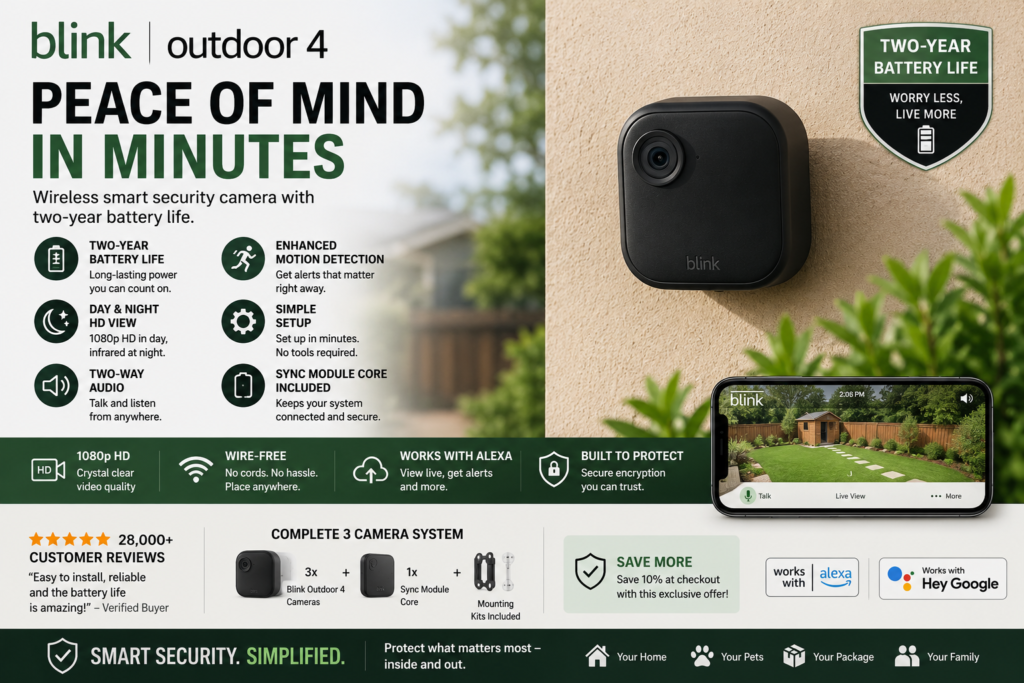
Many homeowners use the Blink Outdoor Security Camera System to monitor driveways, entrances, gates, and easement areas.
The goal is not confrontation but documentation if questions arise later.
Trail Cameras Can Help Monitor Remote Areas
Some easements cross wooded areas, large properties, or locations where traditional cameras are not practical.

Many property owners use a 4K Trail Camera to monitor activity in remote areas that may otherwise be difficult to observe.
Frequently Asked Questions
What is an easement on property?
An easement is a legal right that allows someone to use part of another person’s property for a specific purpose without owning that property.
Do I still own land that has an easement?
In most situations, yes. The property owner generally retains ownership while another party receives certain usage rights.
How do I know if my property has an easement?
Property owners often review:
- Surveys
- Deeds
- Title documents
- Closing paperwork
- County records
to determine whether easements exist.
Can I build a fence over an easement?
The answer depends on the type of easement, applicable regulations, and the circumstances involved. Property owners should verify easement restrictions before construction begins.
Can an easement affect property value?
Depending on the situation, easements may affect how a property can be used, which can sometimes influence value.
Can a neighbor use my property because of an easement?
If a valid easement exists, the neighbor may have specific rights related to the purpose of that easement.
Can easements lead to legal disputes?
Yes. Easements are a common source of disputes involving access rights, maintenance responsibilities, and property use.
Are easements permanent?
Some easements are long-term or permanent, while others may terminate under specific circumstances.
Important Information
This article is provided for educational and informational purposes only and should not be considered legal advice. Easement laws vary by state and individual circumstances. Property owners should consult a qualified attorney, surveyor, title professional, or other qualified expert regarding specific easement questions.
For more information about our content standards, visit our Editorial Policy and Fact-Checking Policy pages.
About the Author
Sarah Reynolds is a legal research contributor for Legal Know It All who focuses on property rights, real estate issues, neighbor disputes, and practical legal topics affecting homeowners. She researches property ownership questions and helps explain legal concepts in straightforward language that everyday readers can understand.
As an Amazon Associate we earn from qualifying purchases through some links in our articles. Learn more.