
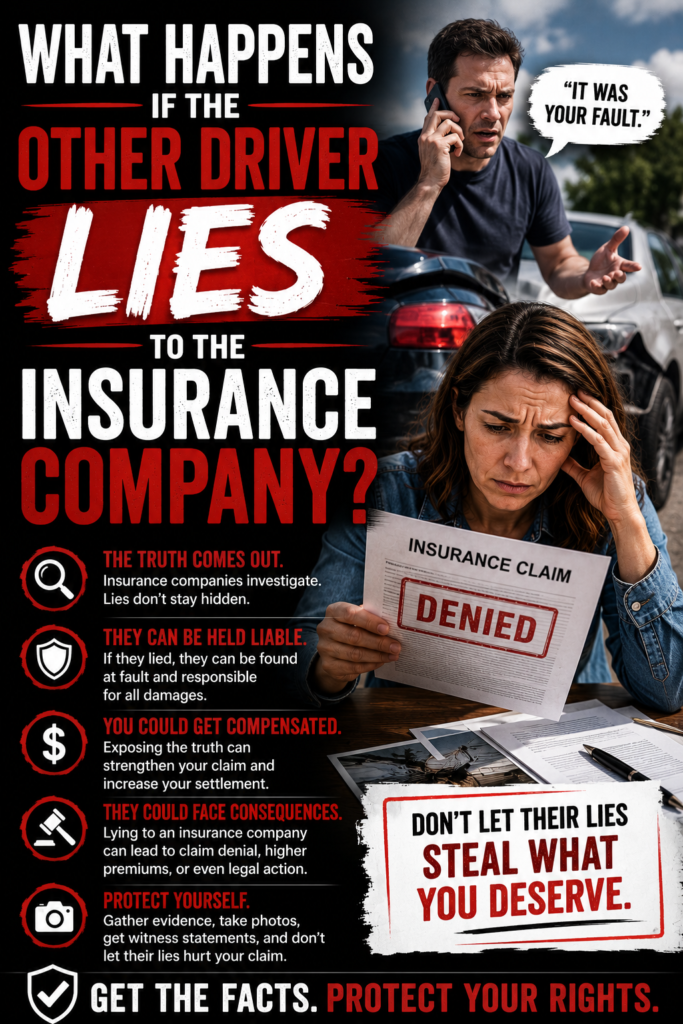
Few things are more frustrating after a car accident than finding out the other driver may be telling a different version of events.
Maybe they changed their story.
Maybe they denied responsibility.
Maybe they claimed the accident happened differently than it actually did.
When this happens, many drivers immediately worry that the insurance company will simply believe the other person and deny their claim.
Fortunately, insurance companies do not automatically accept one driver’s version of events without reviewing available evidence.
Insurance investigations often involve multiple sources of information before liability decisions are made.
Quick Answer
If the other driver lies to the insurance company, the insurer will typically evaluate available evidence such as photographs, witness statements, police reports, vehicle damage, video footage, and other documentation. A false statement does not automatically determine the outcome of a claim. Evidence often plays the biggest role in resolving disputes.
How Insurance Companies Investigate Accident Claims
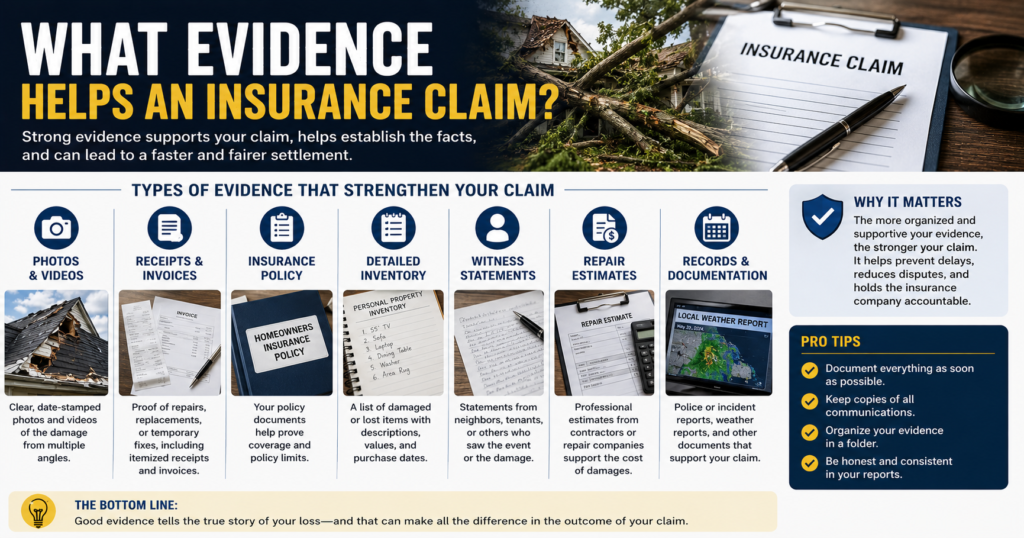
When accident stories conflict, insurance companies generally investigate the facts before making decisions. In these disputes, What Evidence Helps an Insurance Claim? can help identify the photographs, reports, statements, and other records that may clarify what happened.
Depending on the claim, an investigation may include reviewing:
- Driver statements
- Witness statements
- Police reports
- Vehicle damage
- Photographs
- Video footage
- Accident scene evidence
- Repair estimates
The goal is to determine what most likely happened based on available information.
Conflicting Stories Are Common
Many people are surprised to learn how often accident accounts differ.
This does not always mean someone is intentionally lying.
Accidents happen quickly.
People may:
- Remember events differently
- Misunderstand what occurred
- Miss important details
- Be confused immediately after the crash
However, there are situations where a driver knowingly provides inaccurate information.
That is where evidence becomes extremely important.
Why Evidence Matters So Much
Insurance companies generally make decisions based on facts they can verify.
Strong evidence often carries more weight than conflicting verbal statements.
Helpful evidence may include:
- Accident scene photographs
- Video footage
- Witness statements
- Police reports
- Vehicle damage photos
- Medical records
- Repair estimates
You may also find useful information in:
10 Types of Proof That Can Strengthen Your Insurance Claim Case
Dash Cam Footage Can Be Extremely Valuable
Video evidence is often one of the strongest forms of documentation available.
Unlike memory, video footage can provide an objective record of what occurred.

Many drivers use the VNV Front and Rear Dash Cam for Accident Evidence because it records both the front and rear of the vehicle and may capture critical details that become important during claim investigations.
Footage may help clarify:
- Traffic signal disputes
- Lane-change accidents
- Rear-end collisions
- Intersection crashes
- Vehicle positions
In some situations, dash cam footage can quickly resolve disputes that might otherwise take weeks to investigate.
The Police Report May Help
Police reports can provide useful information, although they are not always the final word on liability.
Depending on the situation, a report may include:
- Driver information
- Witness information
- Officer observations
- Accident diagrams
- Statements made at the scene
Insurance companies often review police reports alongside other evidence rather than relying exclusively on the report itself.
Witnesses Can Be Important
Independent witnesses sometimes become key pieces of evidence.
A witness who has no connection to either driver may provide information that helps clarify what occurred.
Witness information should be gathered whenever possible after an accident.
Vehicle Damage Often Tells a Story
Adjusters and investigators frequently review damage patterns.
The location and severity of damage may support or contradict a driver’s version of events.
For example:
- Rear-end damage
- Side-impact damage
- Corner impacts
- Multiple-point impacts
These physical details sometimes help investigators determine what likely happened.
What Should You Do After an Accident?
Good documentation starts immediately after the crash whenever it is safe to do so.
Helpful steps may include:
- Taking photographs
- Gathering witness information
- Obtaining driver information
- Requesting a police report
- Preserving video footage
- Seeking medical attention when necessary
For a complete guide, see:
What Happens After a Car Accident? 8 Important Steps
Insurance Companies Usually Look Beyond Statements Alone
Many drivers fear that a false statement from the other driver automatically decides the case.
That is usually not how the process works.
Insurance companies often evaluate all available evidence before reaching conclusions.
The strongest evidence often carries more weight than the loudest argument.
Could a False Statement Be Considered Insurance Fraud?
Sometimes.
Insurance fraud generally involves intentionally providing false information to obtain benefits, payments, or advantages that would not otherwise be available.
However, not every inaccurate statement automatically becomes insurance fraud.
People can:
- Misremember details
- Be confused after an accident
- Make mistakes when describing events
Insurance fraud typically involves knowingly providing false information rather than simply making an honest mistake.
Because insurance fraud laws vary by state, the specific rules and penalties can differ significantly.
What Happens If the Insurance Company Believes the Other Driver?
This is one of the biggest concerns drivers have after an accident.
Even when you believe you’re telling the truth, the insurance company may reach conclusions you disagree with.
If that happens, it does not automatically mean the situation is over.
The next steps often depend on:
- Available evidence
- Witness statements
- Police reports
- Video footage
- Damage documentation
The stronger your documentation, the easier it may be to challenge conclusions you believe are incorrect.
Can a Claim Be Denied Because of Conflicting Stories?
Sometimes.
When evidence is limited and accident accounts differ significantly, insurance companies may have difficulty determining exactly what occurred.
Questions about liability can affect:
- Claim approvals
- Settlement amounts
- Repair payments
- Injury claims
For additional information, see:
What Happens If an Insurance Claim Is Denied?
and
Can an Insurance Company Deny a Claim Without Investigation?
What If New Evidence Becomes Available?
New information can sometimes change how a claim is viewed.
Examples include:
- Dash cam footage
- Surveillance video
- Additional witness statements
- Updated police reports
- Accident reconstruction findings
This is one reason preserving evidence is so important after an accident.
The sooner evidence is gathered, the less likely it is to disappear.
Can You Appeal the Insurance Company’s Decision?
In some situations, yes.
If you believe the insurance company reached the wrong conclusion, additional review may be available.
Appeals often rely heavily on documentation and evidence.
You may find these articles helpful:
Can You Appeal an Insurance Claim Denial?
10 Types of Proof That Can Strengthen Your Insurance Claim Case
Why Keeping Records Matters
Accident disputes sometimes continue for months.
Important records may include:
- Claim correspondence
- Photographs
- Witness information
- Repair estimates
- Medical records
- Police reports
If questions arise later, organized records can become extremely valuable.
For more information, see:
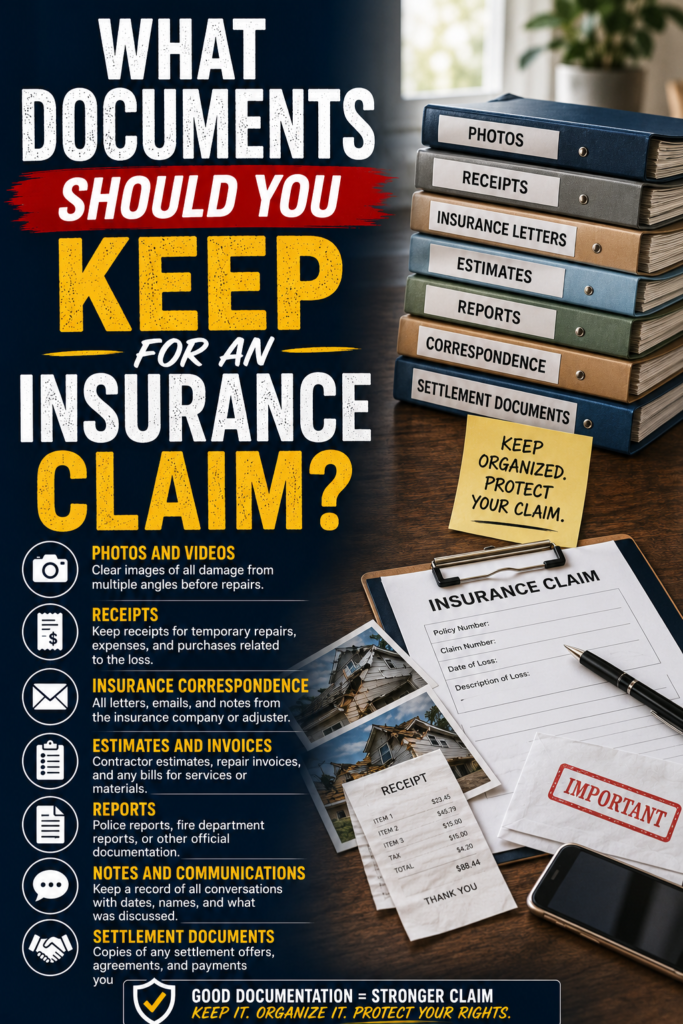
What Documents Should You Keep for an Insurance Claim?
and
How Long Should You Keep Insurance Claim Records?
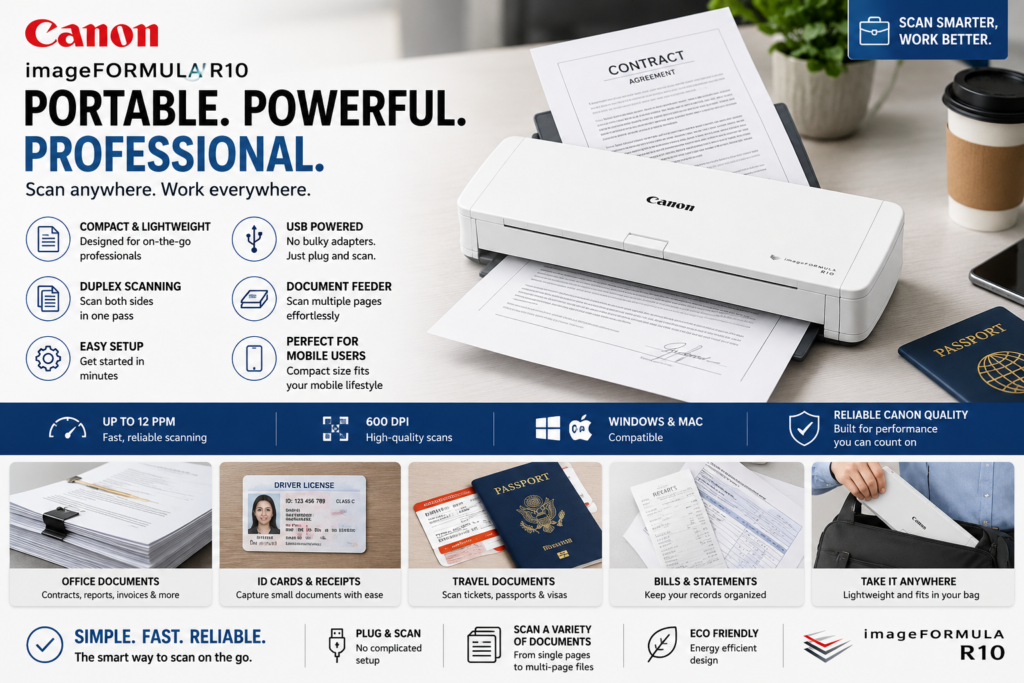
Many drivers create digital copies using the Canon imageFORMULA Portable Document Scanner and store important records in a SentrySafe Fireproof Waterproof Document Safe for additional protection.
What If the Other Driver Continues to Change Their Story?
Changing stories can create credibility issues during an investigation.
Insurance companies often compare:
- Initial statements
- Later statements
- Physical evidence
- Witness accounts
- Police reports
Inconsistencies do not automatically determine the outcome, but they may become part of the overall investigation.
Evidence Usually Wins Over Opinions
When accident stories conflict, evidence often becomes the deciding factor.
Photographs, videos, witness statements, police reports, and damage documentation generally provide a stronger foundation than competing verbal accounts alone.
This is one reason many drivers now use dash cameras and carefully document accident scenes whenever possible.
You may also find these related articles helpful:
- What Happens After a Car Accident? 8 Important Steps
- 10 Types of Proof That Can Strengthen Your Insurance Claim Case
- What Happens If an Insurance Claim Is Denied?
- Can You Negotiate an Insurance Settlement?
- Can You Appeal an Insurance Claim Denial?
Frequently Asked Questions
What happens if the other driver lies to the insurance company?
The insurance company will typically investigate the accident using available evidence. This may include photographs, videos, witness statements, police reports, vehicle damage, and other documentation. A false statement alone does not automatically determine the outcome of a claim.
Can insurance companies tell when someone is lying?
Insurance companies often compare multiple sources of information during an investigation. Inconsistencies between statements, physical evidence, witness accounts, photographs, and reports may raise questions that require further review.
What if there were no witnesses?
A lack of witnesses does not automatically mean a claim cannot be resolved. Insurance companies may still evaluate photographs, vehicle damage, police reports, video footage, and other available evidence.
Will a police report prove the other driver lied?
Not necessarily. Police reports can provide valuable information, but insurance companies often consider many forms of evidence rather than relying solely on the report.
Can dash cam footage help prove what happened?
In many situations, yes. Video footage can provide valuable evidence regarding vehicle positions, traffic signals, lane changes, and other important details.
Many drivers use the VNV Front and Rear Dash Cam for Accident Evidence because it may help preserve critical information immediately before and during an accident.
What if my claim is denied because of conflicting stories?
Depending on the circumstances, additional evidence, documentation, or further review may be available.
You may find helpful information in:
What Happens If an Insurance Claim Is Denied?
and
Can You Appeal an Insurance Claim Denial?
Can I submit additional evidence later?
Sometimes. New evidence such as video footage, witness statements, repair reports, or other documentation may become available after the initial investigation begins.
Should I keep records related to the accident?
Absolutely. Important records often include:
- Photographs
- Videos
- Witness information
- Police reports
- Claim correspondence
- Repair estimates
- Medical records
For more information, see:
What Documents Should You Keep for an Insurance Claim?
and
How Long Should You Keep Insurance Claim Records?
Can a driver get in trouble for intentionally lying to an insurance company?
Potentially. The consequences depend on the facts, applicable laws, and whether intentional fraud is involved. Insurance fraud laws vary by state.
What is the best thing to do after an accident?
Whenever it is safe to do so, many experts recommend:
- Taking photographs
- Gathering witness information
- Preserving video footage
- Obtaining driver information
- Requesting a police report
- Seeking medical attention if needed
You may also find useful information in:
What Happens After a Car Accident? 8 Important Steps
Important Information
This article is provided for educational and informational purposes only and should not be considered legal advice. Laws vary by state and individual circumstances. Information provided on Legal Know It All is intended to help readers better understand insurance claims, accident investigations, and legal concepts, not to provide legal representation or legal advice.
To learn more about our content standards, visit our Editorial Policy and Fact-Checking Policy pages.
Additional information about this website can be found on our About Us, Contact Us, FAQ, Disclaimer, and Terms and Conditions pages.
About the Author
Sarah Reynolds is a legal research contributor for Legal Know It All who focuses on insurance claims, consumer rights, traffic-related legal issues, and everyday legal questions affecting American families. She researches claim procedures, accident investigations, insurance disputes, and consumer protections to help readers better understand complicated legal topics using clear and practical language.
As an Amazon Associate we earn from qualifying purchases through some links in our articles. Learn more.