Most people share more information online than they realize.
A photo from vacation.
A comment on a local news story.
A video from a concert.
A status update about work.
Over time, social media can become a detailed record of a person’s life.
That reality has caused many Americans to ask an important question:
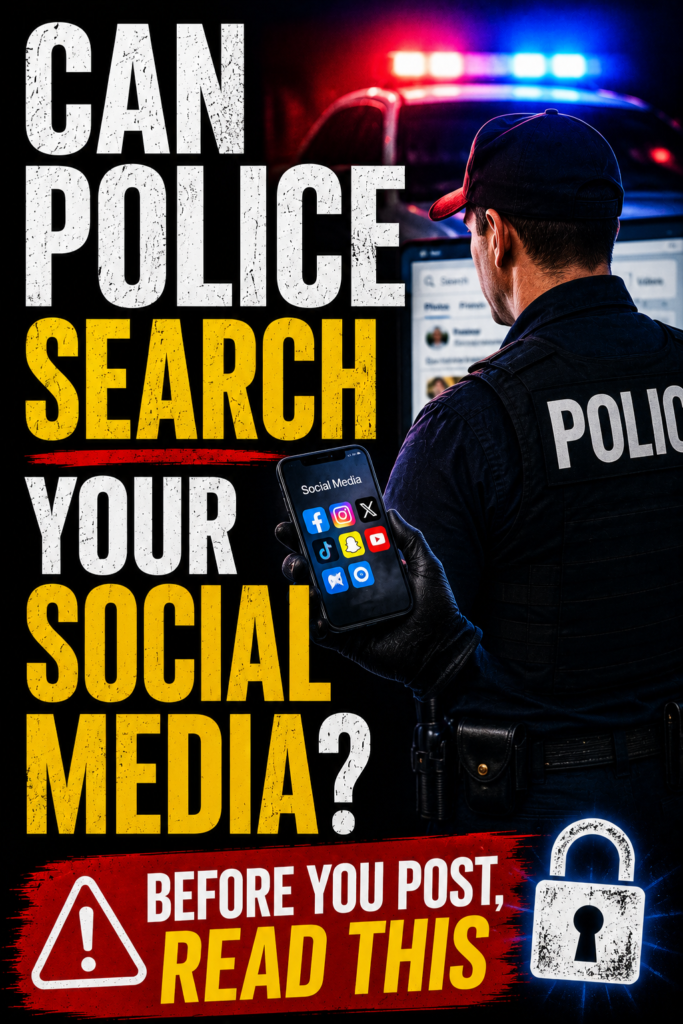
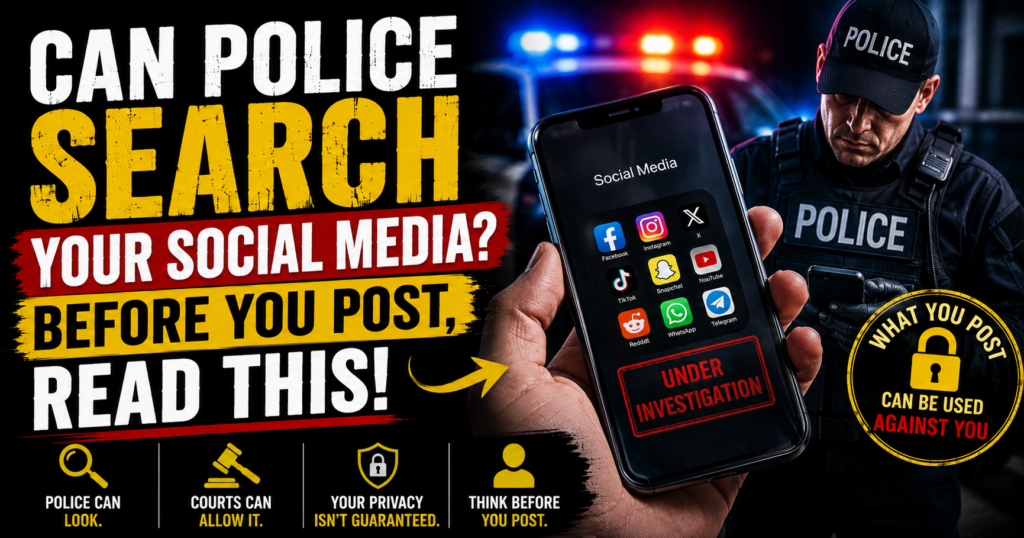
Can police search your social media?
I’ve found that many people assume their social media accounts are completely private.
Others believe that once something is posted online, anyone can access it at any time.
As with many constitutional-rights questions, the truth is usually more complicated.
Quick Answer
Whether police may view or access social media often depends on factors such as privacy settings, public information, account access, specific circumstances, constitutional protections, and applicable laws. Questions involving social media are often highly fact-dependent.
Why Social Media Has Become A Major Privacy Issue
A generation ago, people shared photos with close friends and family.
Today, many people share aspects of their lives online every day.
Social media accounts often contain:
- Photos
- Videos
- Messages
- Friend lists
- Location information
- Personal opinions
Because so much personal information is stored online, social media has become a major privacy concern.
Most People Underestimate Their Digital Footprint
One thing I’ve noticed is that many people focus only on what they posted today.
In reality, social media accounts often contain years of activity.
That activity may include:
- Old photos
- Old comments
- Check-ins
- Tagged posts
- Shared content
- Profile information
Over time, those pieces can create a surprisingly detailed picture of a person’s life.
Social Media And Privacy Rights Often Collide
Social media creates an unusual situation.
People use these platforms to communicate with friends and family.
At the same time, information posted online may be visible to a much larger audience.
That tension is one reason social-media privacy questions continue generating legal debate.

Social Media Is Closely Connected To Other Digital Privacy Topics
I’ve found that people researching social media privacy often end up researching other digital-rights issues as well.
For example, readers may also find helpful information in:
Can Police Search Your Email? What Every American Should Know
Email and social media frequently overlap because both involve online communications and stored personal information.
Photos And Videos Often Receive The Most Attention
Many people immediately think about written posts.
However, photos and videos often become just as important.
Social media accounts frequently contain:
- Family photographs
- Travel photos
- Event videos
- Location information
- Timestamps
- Activity records
That is one reason social-media investigations often receive significant public attention.
Modern Investigations Frequently Involve Digital Information
As technology has evolved, many investigations now involve digital evidence.
That evidence may include information from:
- Phones
- Email accounts
- Social media platforms
- Online accounts
- Digital communications
Because of that, social media has become an increasingly important part of modern privacy discussions.


Social Media Often Connects To Phone And Email Privacy
Many people access social media through the same devices they use for email and messaging.
That is one reason these topics frequently overlap.
For additional reading, see:
Can Police Track Your Phone Without Permission? What the Law Says
and
Can Police Search Your Phone Without Permission?
Understanding how these technologies connect can help explain why digital privacy has become such an important constitutional-rights topic.
The Facts Usually Matter
One of the biggest misconceptions involving social media is the belief that one simple rule applies to every account and every situation.
In reality, questions involving online privacy often depend on:
- Privacy settings
- Account access
- Circumstances
- Applicable laws
- Specific facts
That is one reason social-media privacy issues continue evolving alongside technology itself.



Public Posts And Private Posts Often Raise Different Questions
One thing that creates confusion is that not all social media content is shared the same way.
Some people post publicly.
Others limit posts to friends and family.
Some use private groups.
Others maintain highly restricted accounts.
Because social media platforms offer different privacy settings, questions involving social-media access often become more complicated than people expect.
I’ve found that many people assume all social media content is treated exactly the same.
That assumption often leads to misunderstandings.
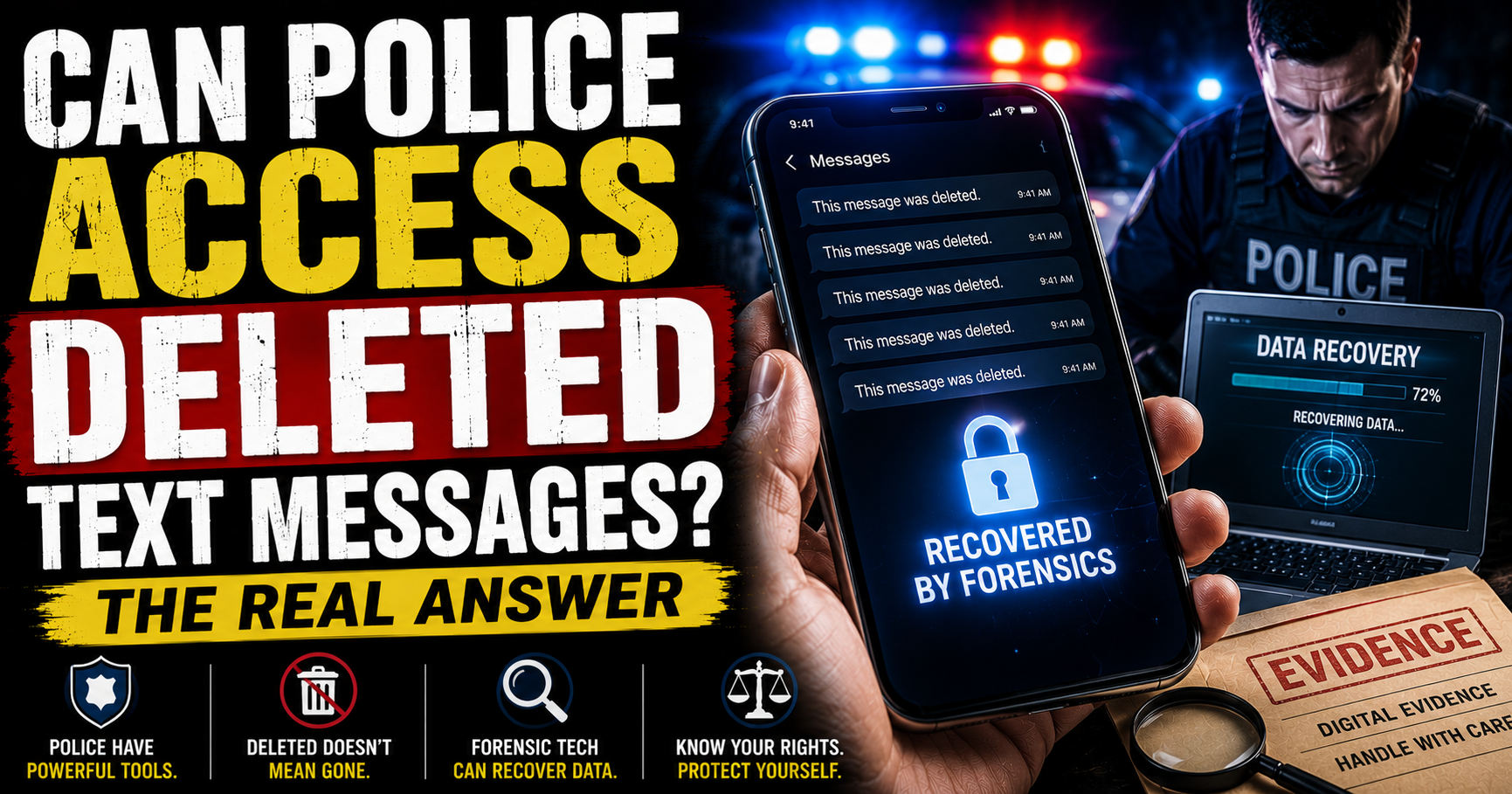
Deleted Posts Frequently Create Questions
Many people believe deleting a post automatically makes it disappear forever.
That belief has become increasingly common as social media platforms have grown.
As a result, people often ask questions such as:
- What happens after a post is deleted?
- Can deleted content still matter?
- Can old posts resurface?
- Does removing a post eliminate concerns?
These questions continue generating significant interest among social-media users.


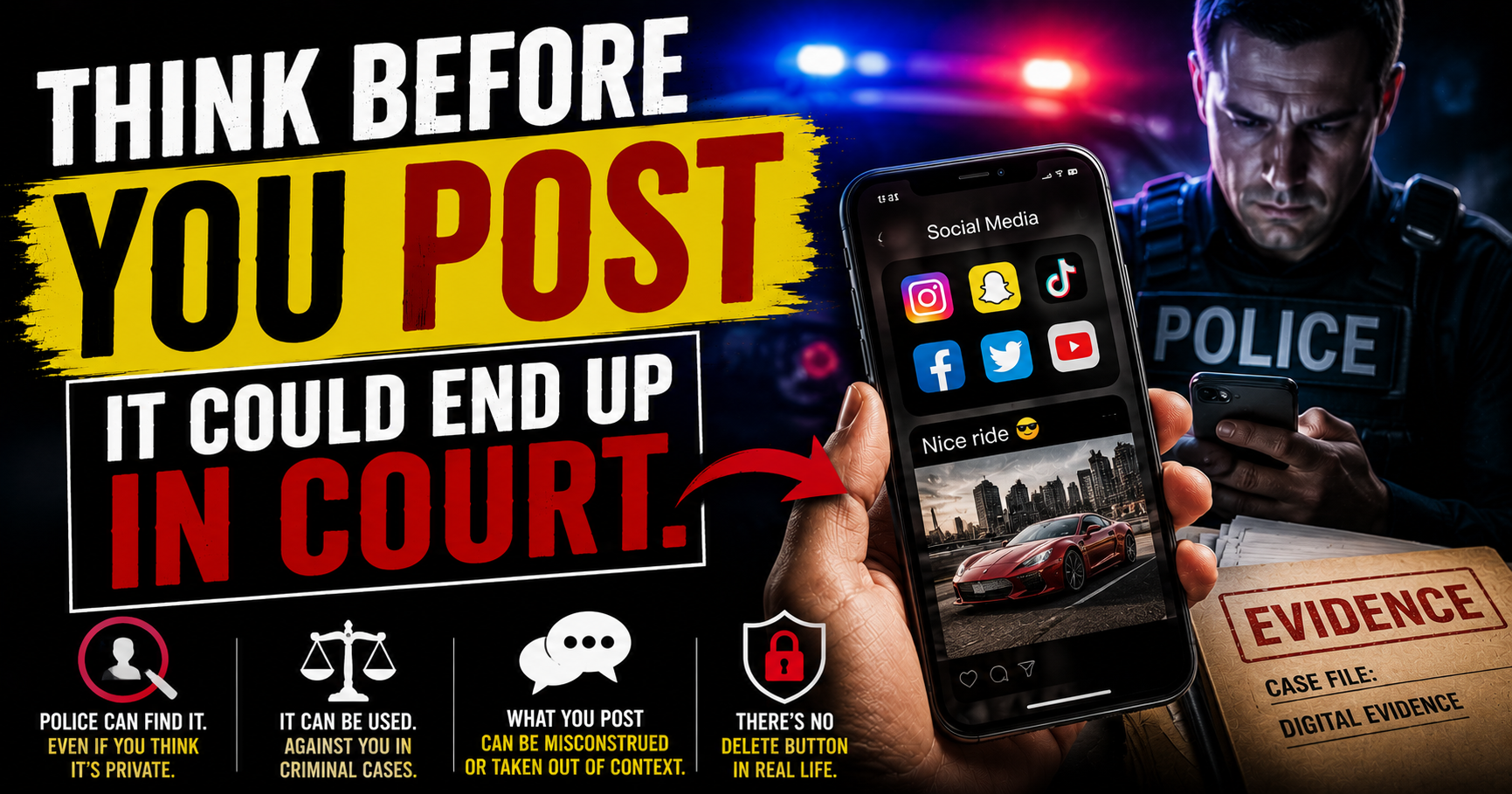
Social Media Investigations Are More Common Than Many People Realize
Social media has become part of everyday life.
Because so many people voluntarily share information online, social media frequently becomes relevant in situations involving:
- Criminal investigations
- Civil lawsuits
- Insurance claims
- Employment disputes
- Family-law matters
That does not mean every post becomes important.
However, it does explain why social media continues attracting legal attention.
For example, readers interested in insurance-related issues may also find helpful information in:
Can Social Media Hurt Your Insurance Claim?
Photos Often Tell A Bigger Story Than Words
I’ve noticed that many people worry about written comments while overlooking photos and videos.
In reality, visual content can sometimes reveal:
- Locations
- Activities
- Travel
- Events
- Relationships
- Timelines
Because of that, photos and videos frequently become a major part of social-media discussions.


Social Media Is Often Connected To Other Digital Accounts
Modern social media rarely exists in isolation.
Many accounts are connected to:
- Email accounts
- Smartphones
- Messaging apps
- Cloud storage
- Online services
That is one reason social-media privacy discussions frequently overlap with broader digital-privacy issues.
Readers may also find helpful information in:
Can Police Search Your Email? What Every American Should Know
and
Can Police Track Your Phone Without Permission? What the Law Says
Common Misconceptions About Social Media Privacy
One misconception is that social media is either completely private or completely public.
The reality is usually much more nuanced.
Another misconception is that deleting content automatically removes all concerns associated with that content.
Technology, privacy settings, platform policies, and specific circumstances can all play a role.
That is one reason social-media issues continue evolving alongside technology itself.
Social Media Continues To Change Constitutional Privacy Discussions
A generation ago, many constitutional-rights discussions focused primarily on physical searches.
Today, privacy conversations increasingly involve:
- Smartphones
- Social media
- Cloud storage
- Digital communications
As technology becomes more integrated into everyday life, these topics are likely to remain important for years to come.
Social Media Questions Often Lead To Other Constitutional Rights Topics
People researching social media privacy frequently continue exploring related legal issues.
For example:
What Happens If Police Search You Illegally?
Can Police Search Your Phone Without Permission?
Can Police Search Your Email? What Every American Should Know
Can Police Search Your Storage Unit? The Answer May Surprise You
Together, these articles help explain how privacy rights continue adapting to modern technology.
Frequently Asked Questions
Can police search your social media?
The answer often depends on factors such as privacy settings, account access, constitutional protections, applicable laws, and the specific facts involved.
Are public social media posts different from private posts?
Questions involving public and private content often raise different privacy considerations.
What about deleted social media posts?
Deleted posts continue generating questions because many people are unsure what happens to content after it is removed.
Why does social media create privacy concerns?
Social media accounts often contain years of personal information, photos, videos, communications, and activity records.
Can photos and videos matter?
Yes. Visual content frequently becomes a significant part of social-media discussions.
Why are social media laws so complicated?
Technology changes rapidly, creating new privacy questions that courts and lawmakers continue addressing.
Does social media connect to constitutional rights?
Many social-media discussions involve broader issues involving privacy, government authority, and constitutional protections.
Where can I learn more about constitutional rights?
You can browse additional topics in our:
Constitutional Rights Category
Important Information
This article is provided for educational and informational purposes only and should not be considered legal advice. Constitutional protections, privacy laws, criminal procedure rules, digital-privacy issues, and social-media-related laws vary depending on the facts involved and applicable laws. Consult a qualified attorney regarding your specific situation.
For more information about our content standards, visit our Editorial Policy and Fact-Checking Policy pages.
Additional information about this website can be found on our About Us, Contact Us, FAQ, Disclaimer, and Terms and Conditions pages.
About the Author
Michael Carter is a legal research contributor for Legal Know It All who focuses on constitutional rights, criminal law, police procedures, privacy issues, and individual liberties. He researches common legal questions involving searches, investigations, digital privacy, and constitutional protections while helping readers understand complex legal topics in clear, practical language.
As an Amazon Associate we earn from qualifying purchases through some links in our articles. Learn more.