
Many people assume privacy rights work differently once they check into a hotel.
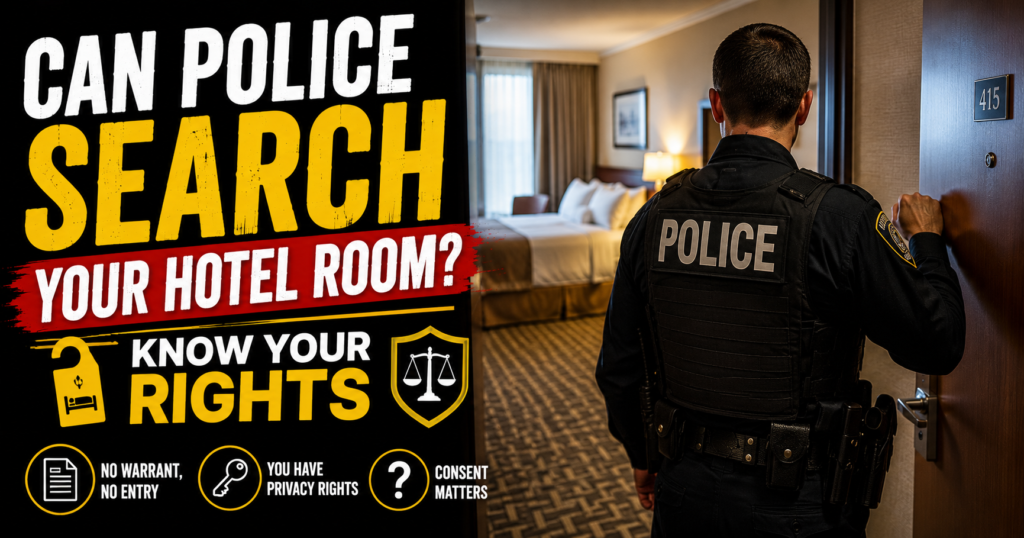
After all, they do not own the room.
The property belongs to someone else.
The room is temporary.
Because of that, travelers often wonder whether police can simply walk into a hotel room and conduct a search whenever they want.
I’ve found that this is one of the most common questions people ask when discussing privacy rights away from home.
The answer is not always as simple as many people expect.
Quick Answer
Whether police may search a hotel room can depend on factors such as consent, warrants, hotel policies, specific circumstances, constitutional protections, and applicable laws. Hotel-room search questions are often highly fact-dependent.
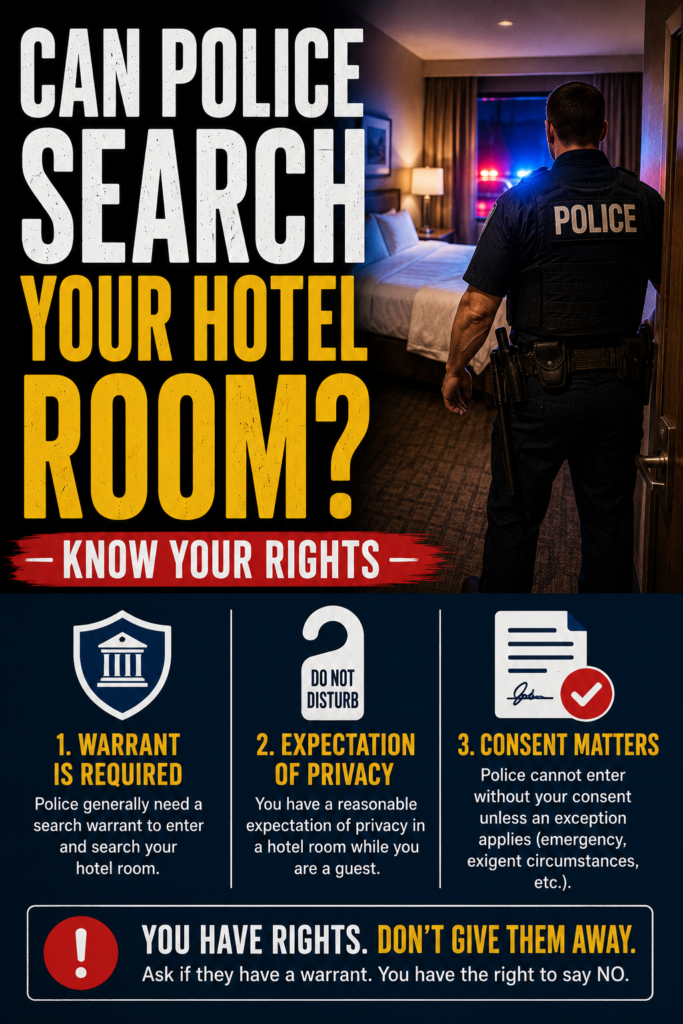
Why Hotel Rooms Create Confusion

One thing that makes hotel-room searches unique is that guests occupy a space they do not actually own. A similar ownership question arises with Can Police Search Your Storage Unit? The Answer May Surprise You, where a renter uses property operated by someone else.
That creates questions many people never face in their own homes.
For example:
- Does a hotel room receive privacy protections?
- Can hotel staff allow access?
- Do hotel rules matter?
- Does a guest have the same rights as a homeowner?
These questions are exactly why hotel-room searches often generate so much confusion.


Privacy Expectations Matter
Although a hotel room is temporary, many travelers still expect a reasonable level of privacy during their stay.
People may keep inside the room:
- Luggage
- Clothing
- Electronics
- Financial documents
- Personal belongings
- Prescription medications
Because hotel rooms frequently contain private information, questions involving hotel-room searches often receive significant constitutional attention.
Hotel Rooms And Homes Are Not Identical
One mistake people often make is assuming a hotel room is treated exactly like a private residence.
Another mistake is assuming a hotel room has no privacy protections at all.
The reality usually falls somewhere in between.
That is one reason hotel-room search issues can become surprisingly complex.


Hotel Staff And Police Are Different
One thing I’ve noticed is that people often blur the distinction between hotel employees and law enforcement.
Guests frequently ask questions such as:
- Can hotel staff enter my room?
- Can management access the room?
- Can employees allow police inside?
Those are often separate questions that may involve different legal considerations.
Searches Often Involve More Than The Room Itself
Modern travelers rarely bring only clothing and toiletries.
Hotel rooms frequently contain:
- Smartphones
- Tablets
- Laptops
- Cameras
- External drives
- Personal documents
That is one reason hotel-room search discussions often overlap with digital privacy concerns.
You may also find helpful information in:
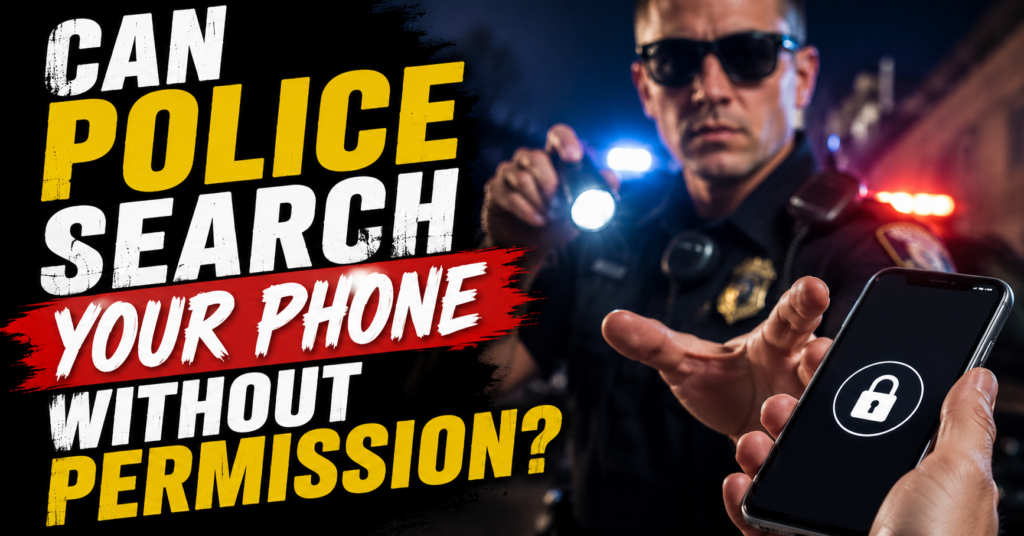
Can Police Search Your Phone Without Permission?
Hotel Searches Often Lead To Other Constitutional Questions
People interested in hotel-room searches frequently research other Fourth Amendment topics as well.
For example:

Can Police Search Your House Without a Warrant?

Can Police Search Your Car Without Permission?

Can Police Search Your Backpack or Purse? Know Your Rights
These topics all involve questions about privacy, searches, and constitutional protections.
The Details Often Matter Most
I’ve found that many people want a simple answer that applies to every hotel stay.
In reality, hotel-room search questions frequently depend on:
- The circumstances
- The people involved
- Whether consent existed
- Hotel policies
- The specific facts of the situation
That is one reason legal professionals often focus heavily on the details surrounding a particular event.



What Happens After Checkout?
One factor that often gets overlooked in hotel-room discussions is checkout.
Most travelers focus entirely on what happens while they are staying in the room.
However, questions frequently arise regarding:
- Checkout times
- Extended stays
- Abandoned property
- Late departures
- Expired reservations
I’ve found that many people assume privacy expectations remain exactly the same forever, regardless of whether the rental period has ended.
That assumption often creates confusion.
The circumstances surrounding a guest’s occupancy can become an important part of the discussion.
Hotel Employees May Have Access For Different Reasons
One thing that surprises some travelers is that hotel employees often enter rooms for reasons unrelated to law enforcement.
Examples may include:
- Housekeeping
- Maintenance
- Repairs
- Emergencies
- Safety concerns
That is one reason people sometimes confuse hotel access issues with police-search issues.
The two situations may involve very different legal considerations.
Hotel Searches Often Involve Personal Electronics
Modern travelers bring far more than clothing and luggage.
Many hotel rooms contain:
- Smartphones
- Laptops
- Tablets
- Cameras
- External drives
- Smart watches
Because so much personal information is stored on these devices, hotel-room searches often overlap with digital privacy concerns.
For additional information, see:
Can Police Search Your Phone Without Permission?
Questions involving electronic devices frequently become just as important as questions involving the room itself.
Business Travelers Often Have Additional Concerns
Business travelers may keep highly sensitive information in hotel rooms.
Examples include:
- Work laptops
- Client information
- Financial records
- Business documents
- Proprietary data
That is one reason privacy concerns involving hotel rooms are not limited to vacation travelers.
Professional and business-related information often becomes part of the discussion as well.
Common Misconceptions About Hotel Room Searches
One misconception is that hotel rooms have no privacy protections because guests do not own the property.
Another misconception is that hotel rooms receive exactly the same treatment as private residences.
In reality, hotel-room search questions are often much more nuanced.
The specific facts frequently matter far more than broad assumptions.
Why Travelers Research This Topic
I’ve noticed that people rarely search this topic out of curiosity alone.
Most are preparing for one of three situations:
- Upcoming travel
- A recent encounter
- General concern about privacy rights
Understanding the basics beforehand can help travelers better understand the legal issues that may arise during a hotel stay.
Hotel Searches Often Lead To Other Fourth Amendment Questions
People interested in hotel-room searches frequently continue researching other search-and-seizure topics.
You may also find helpful information in:
Can Police Search Your House Without a Warrant?
Can Police Search Your Car Without Permission?
Can Police Search Your Backpack or Purse? Know Your Rights
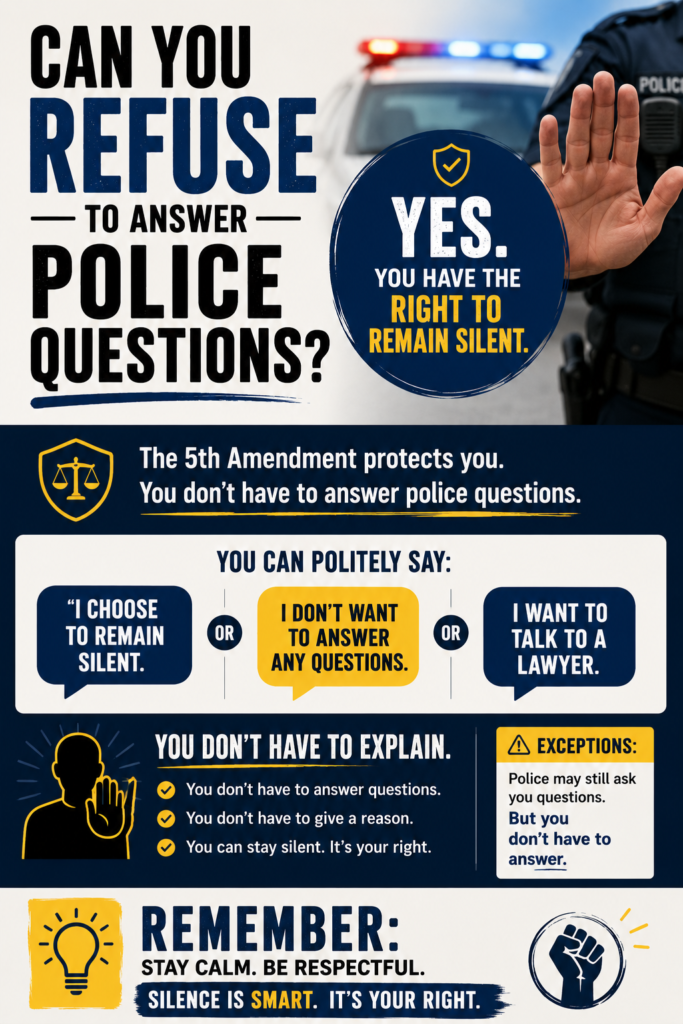
Can You Refuse to Answer Police Questions? Here’s the Truth
Together, these articles help explain many of the constitutional-rights questions Americans ask most often.
Frequently Asked Questions
Can police search your hotel room?
The answer often depends on factors such as consent, warrants, specific circumstances, constitutional protections, and applicable laws.
Do hotel guests have privacy rights?
Hotel guests often have privacy interests during their stay, which is one reason hotel-room searches receive significant constitutional attention.
Does checkout affect privacy expectations?
Questions involving checkout, expired reservations, and continued occupancy can become important depending on the circumstances.
Can hotel employees enter a room?
Hotel staff may enter rooms for reasons such as housekeeping, maintenance, repairs, emergencies, and other operational needs.
What if my hotel room contains a laptop or phone?
Modern hotel rooms frequently contain electronic devices that may raise additional privacy concerns.
Are hotel rooms treated the same as private homes?
Hotel rooms and private residences often raise different legal questions, even though both involve privacy interests.
Why do people misunderstand hotel-room searches?
Television and movies often oversimplify situations that are much more fact-specific in real life.
Where can I learn more about constitutional rights?
You can browse additional topics in our:
Constitutional Rights Category
Important Information
This article is provided for educational and informational purposes only and should not be considered legal advice. Constitutional protections, search-and-seizure laws, criminal procedure rules, and police-search issues vary depending on the facts involved and applicable laws. Consult a qualified attorney regarding your specific situation.
For more information about our content standards, visit our Editorial Policy and Fact-Checking Policy pages.
Additional information about this website can be found on our About Us, Contact Us, FAQ, Disclaimer, and Terms and Conditions pages.
About the Author
Michael Carter is a legal research contributor for Legal Know It All who focuses on constitutional rights, criminal law, police procedures, and individual liberties. He researches common legal questions involving searches, investigations, questioning, and constitutional protections while helping readers understand legal concepts in clear, practical language.