
After filing an insurance claim, one of the first questions many people ask is:
“How long are they allowed to take before they have to respond?”
It’s a reasonable question.
When you’re dealing with vehicle damage, a leaking roof, medical bills, or another loss, waiting days or weeks without hearing anything can be frustrating.
The good news is that insurance companies generally cannot ignore claims indefinitely. If the insurer ultimately denies the claim, Can You Appeal an Insurance Claim Denial? explains what policyholders may be able to do next.
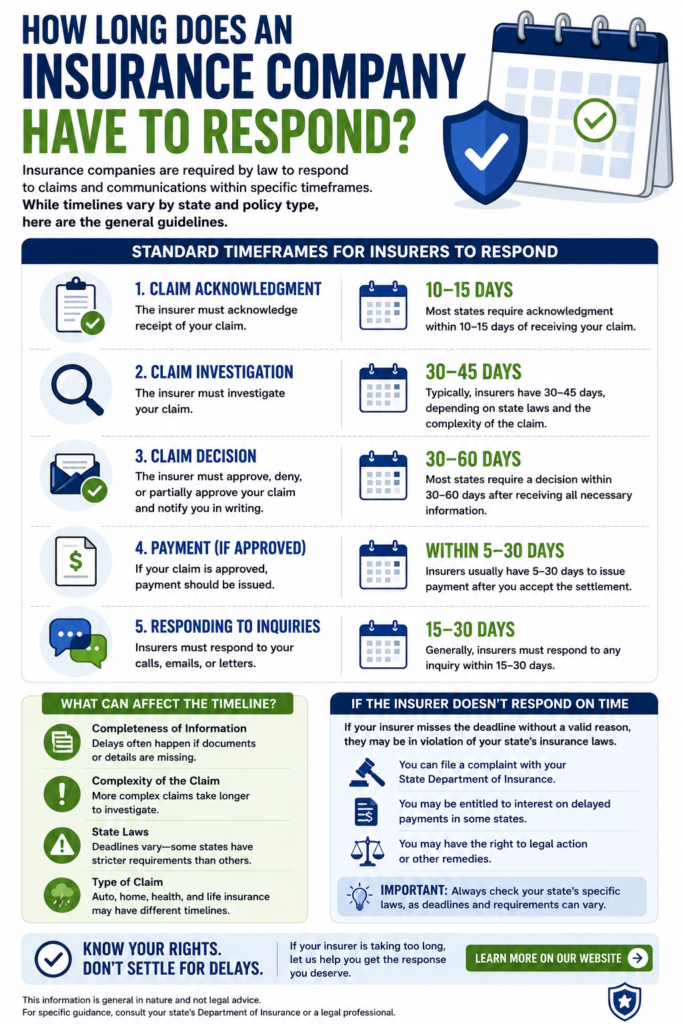
Most states have laws or regulations that require insurers to acknowledge, investigate, and respond to claims within certain timeframes.
The exact deadlines vary depending on where you live and the type of claim involved.
Quick Answer
Insurance companies are generally required to acknowledge and respond to claims within a reasonable period of time, and many states establish specific deadlines. However, the exact timeframe varies by state and claim type. Some insurers respond within a few days, while more complex claims may require additional investigation before a full response can be provided. If an insurer does not respond appropriately, Can You File a Complaint Against an Insurance Company? may be an option to consider.
There Is No Single Nationwide Deadline
One of the biggest misconceptions about insurance claims is that every insurance company follows the same deadline.
They don’t.
Insurance is primarily regulated at the state level.
As a result, response requirements can vary significantly from one state to another.
Some states require insurers to acknowledge claims within a specific number of days.
Others focus on whether the company is acting reasonably under the circumstances.
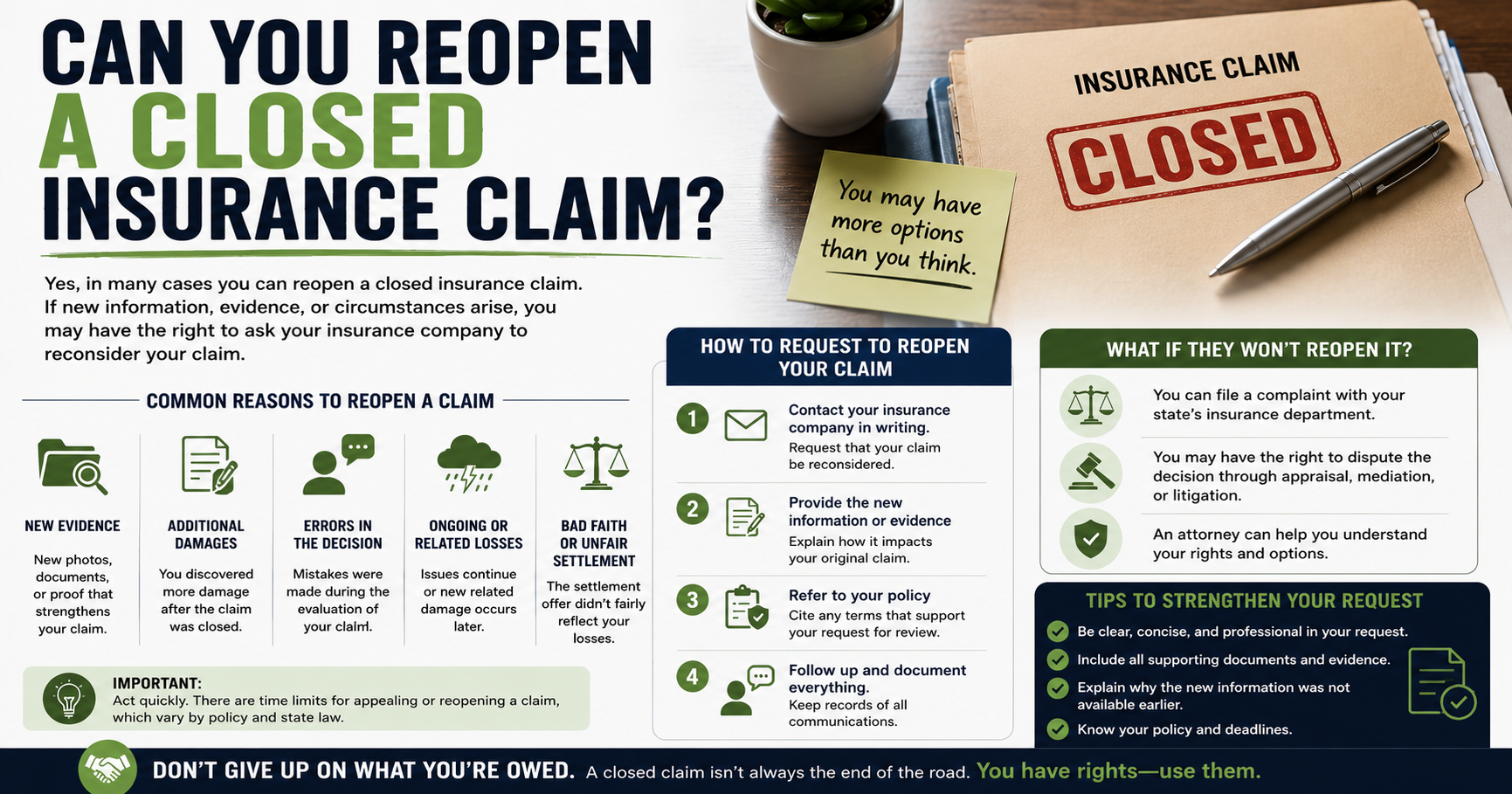
This is why two people with similar claims may experience different timelines depending on where they live. If a claim was closed before all issues were addressed, policyholders may also wonder whether they can Can You Reopen a Closed Insurance Claim?.
Readers interested in legal topics that vary throughout the country may also find helpful information in our State Laws category.

What Does “Respond” Actually Mean?
When people ask how long an insurance company has to respond, they often mean different things.
There are several stages of communication that can occur during a claim.
Acknowledging the Claim
The insurance company confirms that it received your claim.
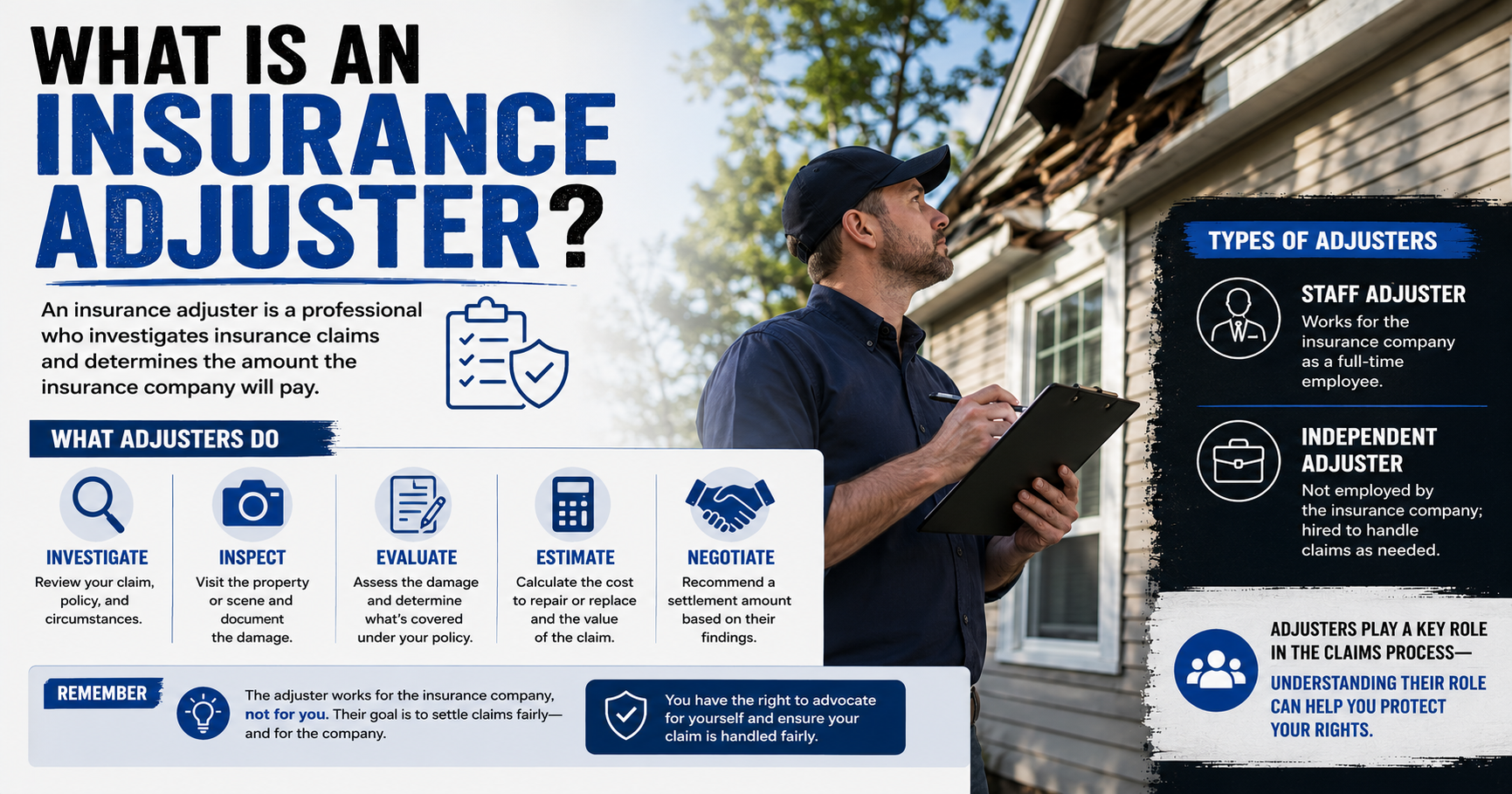
Assigning an Adjuster
An adjuster may be assigned to investigate the loss.
Requesting Information
The insurer may ask for photos, estimates, medical records, or other documentation.
Providing Updates
The company may communicate the status of the investigation.
Making a Decision
The insurer eventually approves, partially approves, or denies the claim.
Each of these steps may occur at different times during the process.
Most Insurance Companies Respond Quickly to New Claims
In many situations, policyholders hear from the insurance company within a few days after filing a claim.
This initial contact often includes:
- A claim number
- Contact information
- Information about next steps
- Requests for documentation
The initial response does not necessarily mean the claim has been approved.
It simply means the claim process has begun.

Why Some Responses Take Longer
Not every claim can be handled quickly.
Several factors may increase response times.
The Claim Is Complex
Claims involving major losses often require more investigation.
Multiple Parties Are Involved
Accidents involving several vehicles or parties typically require additional review.
Injuries Are Involved
Medical records and treatment information may be needed before decisions can be made.
Additional Documentation Is Needed
Missing estimates, photos, or receipts can slow down the process.
Large Weather Events
Major storms frequently create backlogs because thousands of claims may be filed at once.
If your claim appears stalled, our article Why Do Insurance Companies Delay Claims? Common Reasons explains many of the most common causes of delays.
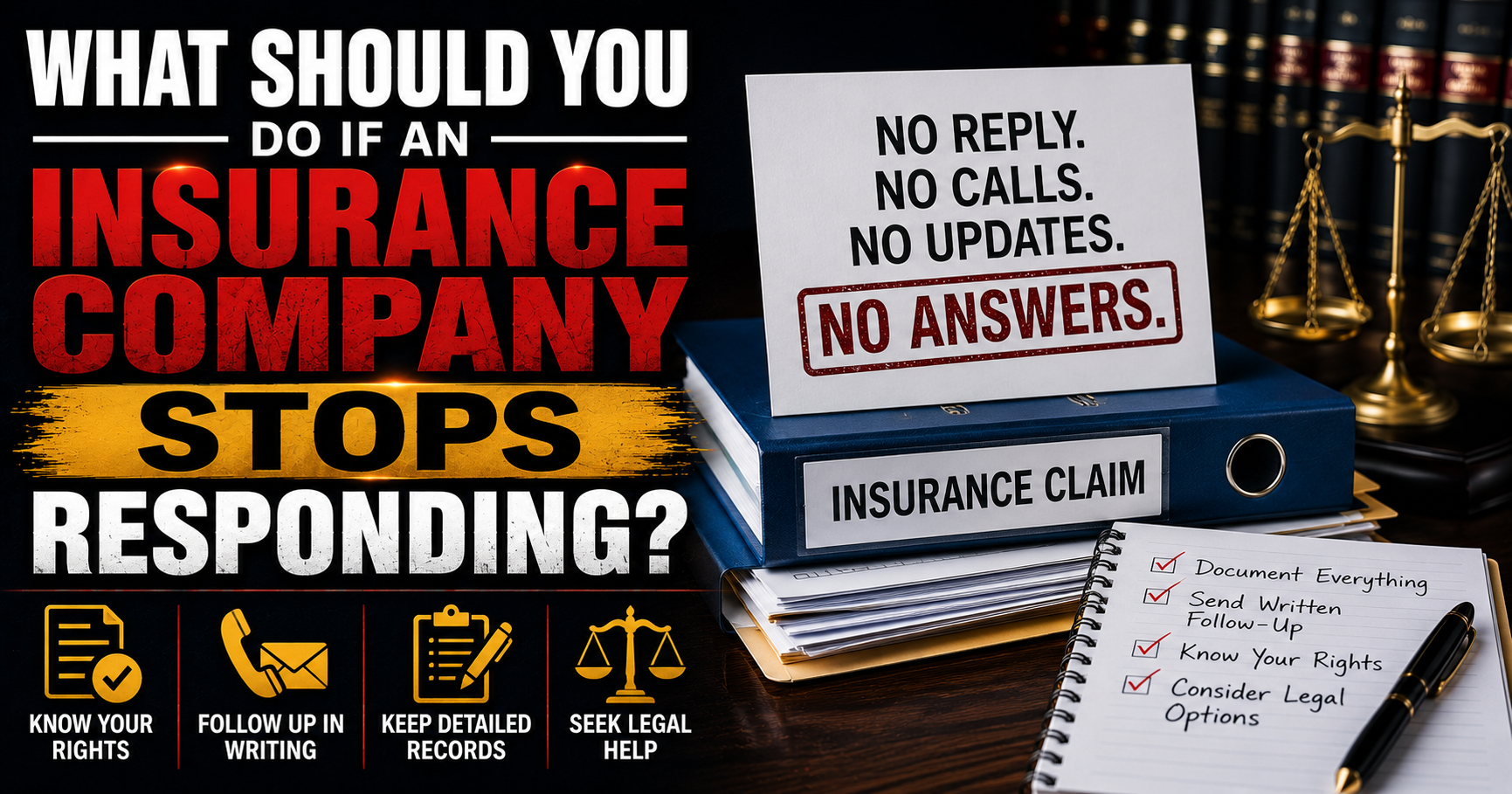
What Happens If the Insurance Company Doesn’t Respond?
This is where many policyholders become concerned.
A few days without communication may be normal.
Several weeks with no updates may raise additional questions.
Before assuming the worst, consider:
- Has the company requested information?
- Have all requested documents been submitted?
- Is an investigation still ongoing?
- Has an inspection already occurred?
Many claims continue moving behind the scenes even when there is little direct communication.
Still, policyholders should not hesitate to request updates when necessary.
What Should You Do If Nobody Calls You Back?
If communication stops completely, there are several steps you can take.
Follow Up Politely
A simple phone call or email may resolve the issue.
Request a Status Update
Ask what stage the claim is currently in.
Keep Records
Document every communication attempt.
Escalate When Necessary
If communication problems continue, you may wish to request a supervisor or claims manager.
Consumers dealing with communication issues may also find helpful information in our Consumer Rights category.
What Happens After the Insurance Company Responds?
The first response is usually just the beginning.
After communication begins, the insurer often moves into the investigation stage.
This may involve:
- Reviewing documents
- Inspecting damage
- Interviewing witnesses
- Evaluating coverage
- Reviewing estimates
If you’re new to the process, our article What Happens After You File an Insurance Claim? explains the next stages in greater detail.
Responding to a Claim Is Not the Same as Settling a Claim
One mistake many people make is assuming that a response deadline and a settlement deadline are the same thing.
They’re not.
An insurance company may respond to a claim relatively quickly but still need weeks or months to complete its investigation.
For example, the company may:
- Acknowledge the claim
- Assign an adjuster
- Request documents
- Schedule inspections
All of that may happen long before a final settlement decision is made.
This is why some policyholders hear from the insurance company almost immediately but still wait much longer for a final resolution.
If you’re wondering how long the entire process may take, our article How Long Does an Insurance Claim Take? What to Expect explains the most common timelines.

What If an Insurance Adjuster Has Already Inspected the Damage?
Many people become confused after an adjuster visits.
The inspection happens.
Photos are taken.
Questions are asked.
Then everything seems quiet again.
This does not necessarily mean the claim is stalled.
After an inspection, the adjuster may still need to:
- Prepare a report
- Review estimates
- Submit recommendations
- Evaluate coverage issues
- Request additional information
Our article What Happens After an Insurance Adjuster Visits? explains these post-inspection steps in much greater detail.
Why Insurance Companies Sometimes Need More Time
Some claims are simply more complicated than others.
Consider the difference between:
- A cracked windshield
- A house fire
The windshield claim may require minimal investigation.
The house fire may involve:
- Structural inspections
- Personal property inventories
- Contractor estimates
- Temporary housing expenses
- Coverage reviews
Large losses naturally require more time and resources to evaluate.


What If the Insurance Company Keeps Asking for More Information?
Receiving repeated requests for documents can be frustrating.
However, additional requests are often a normal part of the process.
Insurance companies may need:
- Repair estimates
- Medical records
- Receipts
- Photographs
- Contractor reports
- Proof of ownership
Providing requested information as quickly as possible may help prevent unnecessary delays.
How Often Should the Insurance Company Communicate?
There is no universal rule that requires updates every few days.
However, policyholders generally have a right to reasonable communication regarding the status of their claims.
Many people become frustrated not because the claim is taking time, but because nobody is explaining why.
Clear communication often helps reduce confusion and anxiety during the process.



What Is Considered an Unreasonable Delay?
This is one of the most common questions policyholders ask.
Unfortunately, there is no single answer.
Whether a delay is unreasonable often depends on:
- State law
- Claim complexity
- Available evidence
- Ongoing investigations
- Communication from the insurer
A delay that may be reasonable during a major natural disaster might not be considered reasonable under normal circumstances.
This is one reason state-specific laws matter so much.
What Is Insurance Bad Faith?
At some point, many people researching claim delays come across the phrase “insurance bad faith.”
In simple terms, bad faith generally refers to situations where an insurance company allegedly fails to handle a claim appropriately under applicable laws or policy obligations.
Examples that sometimes lead to bad faith allegations include:
- Unreasonable delays
- Failure to investigate
- Ignoring evidence
- Misrepresenting policy language
- Improper denials
- Refusing to communicate
Not every delay qualifies as bad faith.
Insurance companies are generally allowed to investigate claims and request information when necessary.
The key issue is often whether the insurer is acting reasonably under the circumstances.
Because bad faith laws vary significantly by state, outcomes can differ depending on where a claim occurs.
Can You File a Complaint Against an Insurance Company?
In many states, yes.
Most states have agencies responsible for regulating insurance companies.
These agencies often accept complaints involving:
- Delayed claims
- Communication problems
- Settlement disputes
- Claim handling concerns
Filing a complaint does not guarantee a particular outcome.
However, it may help bring additional attention to a claim that appears stalled.
Can You Sue an Insurance Company for Not Responding?
Sometimes.
Whether legal action is appropriate depends on many factors, including:
- State law
- Policy language
- The reason for the delay
- The amount of money involved
- Available evidence
Some disputes are resolved through negotiation.
Others may involve mediation, arbitration, or litigation.
Smaller disputes may sometimes qualify for procedures discussed in our Small Claims Court category.
What Should You Do While Waiting?
Waiting for updates can be stressful.
Fortunately, there are several things you can do to help keep the process moving.
Keep Good Records
Save:
- Emails
- Letters
- Estimates
- Receipts
- Claim numbers
Follow Up Periodically
Reasonable follow-up can help ensure communication remains active.
Respond Quickly
If information is requested, provide it as soon as reasonably possible.
Stay Organized
Keeping documents together can make future communication much easier.
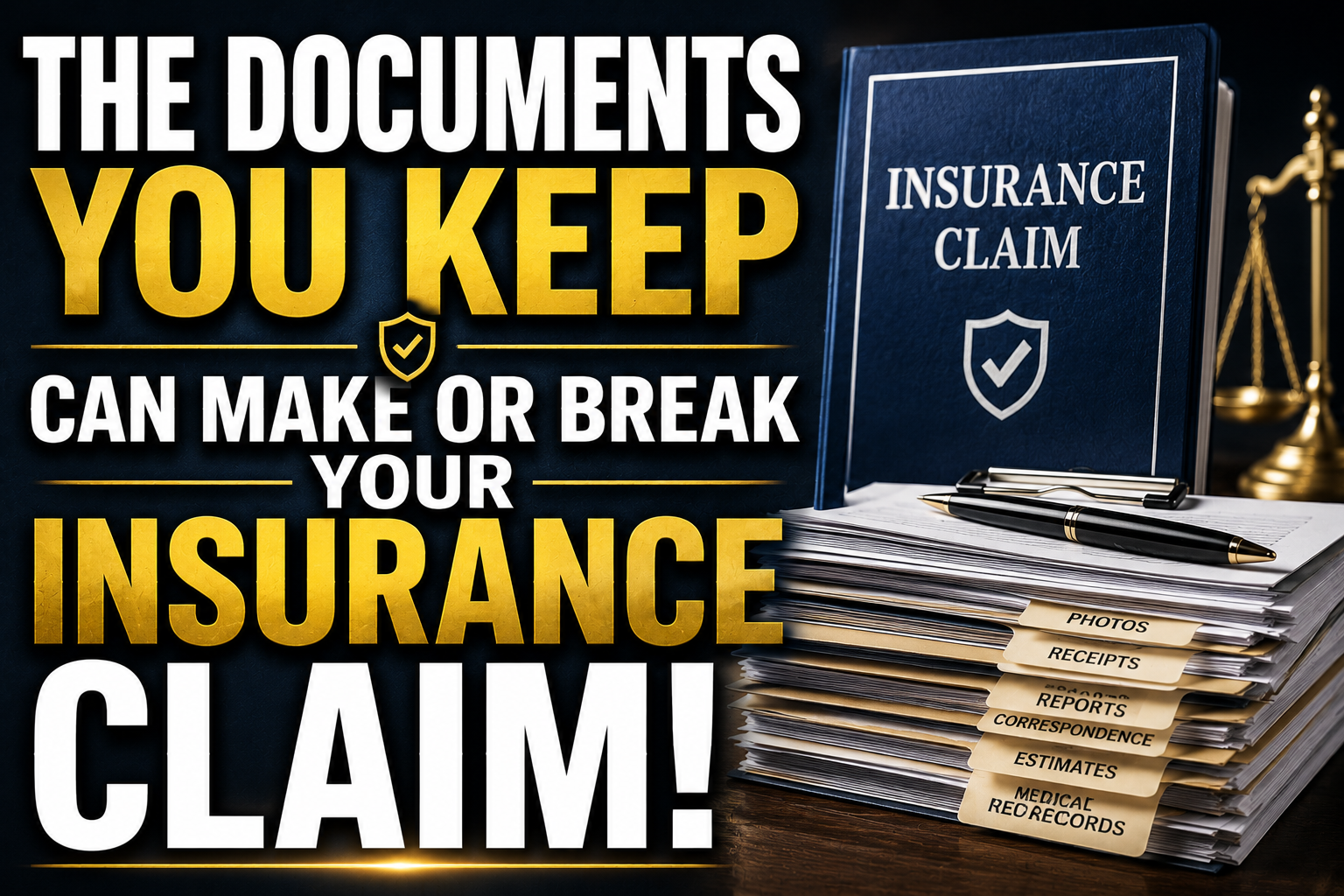
Strong Documentation Can Reduce Delays
Many claim disputes happen because evidence is limited or conflicting.
The stronger your documentation, the easier it often becomes for insurers to evaluate a claim.
Helpful evidence may include:
- Photos
- Videos
- Police reports
- Witness statements
- Receipts
- Repair estimates
Vehicle accidents are a good example.
When drivers disagree about what happened, video footage can sometimes provide valuable clarification.
Many drivers choose the VNV Front and Rear Dash Cam for Accident Evidence because it records both the front and rear of the vehicle and may help preserve important evidence following an accident.
Understanding Response Deadlines Helps You Ask Better Questions
One of the biggest benefits of understanding insurance response requirements is knowing what questions to ask.
Instead of wondering whether something is wrong, you can focus on learning:
- What stage the claim is in
- What information is still needed
- Whether inspections are complete
- Whether additional review is underway
The more informed you are, the easier it becomes to navigate the claims process and understand what may be causing delays.
Frequently Asked Questions
How quickly should an insurance company acknowledge a claim?
The exact timeline varies by state and insurance company. In many cases, policyholders receive confirmation that a claim was received within a few days. More complex claims may require additional communication as the investigation progresses.
Is responding to a claim the same as approving it?
No. A response simply means the insurance company has acknowledged the claim or communicated about it. Approval, denial, or settlement decisions often occur later after the investigation is completed.
What should I do if an insurance company never calls me back?
Start by following up through email or phone and documenting all communication attempts. If the problem continues, consider requesting a supervisor or claims manager. Keeping detailed records is important if communication issues persist.
Can an insurance company take months to make a decision?
Sometimes. Complex claims involving injuries, major property damage, disputed liability, or extensive investigations may require significantly more time than straightforward claims.
How do I know if my claim is delayed?
A claim may be delayed if communication stops, deadlines continue to move, requested documents have already been provided, and the insurer cannot clearly explain what remains unresolved.
Does state law affect insurance claim response times?
Yes. Insurance laws are primarily regulated at the state level, and different states may have different requirements regarding claim acknowledgments, investigations, communications, and claim handling practices.
What happens if the insurance company requests more documents?
This is often a normal part of the investigation process. Insurance companies may request estimates, receipts, medical records, photographs, or other evidence before making a final decision.
Can I file a complaint if an insurance company is not responding?
In many states, yes. State insurance regulators often accept complaints involving communication problems, claim delays, settlement concerns, and claim handling issues.
Does having better evidence help speed up a claim?
In many situations it can. Strong evidence often reduces disputes and helps insurers evaluate claims more efficiently. Photos, receipts, repair estimates, police reports, witness statements, and video footage may all be useful depending on the circumstances.
Where can I learn more about the insurance claim process?
You may find these related articles helpful:
- How Long Does an Insurance Claim Take? What to Expect
- What Happens After You File an Insurance Claim?
- Why Do Insurance Companies Delay Claims? Common Reasons
- What Happens After an Insurance Adjuster Visits?
Important Information
This article is provided for educational and informational purposes only and should not be considered legal advice. Insurance laws vary by state, insurance policies differ, and individual circumstances can significantly affect claim outcomes. Information provided on Legal Know It All is intended to help readers better understand legal concepts and insurance claim procedures, not to provide legal representation or legal advice.
To learn more about how content is researched and reviewed, visit our Editorial Policy and Fact-Checking Policy pages.
Additional information about this website can be found on our About Us, Contact Us, FAQ, Disclaimer, and Terms and Conditions pages.
About the Author
Sarah Reynolds is a legal research contributor for Legal Know It All who focuses on insurance claims, consumer rights, and everyday legal issues affecting American families. She researches insurance regulations, policyholder rights, claim procedures, and consumer-focused legal topics to help readers better understand complicated subjects using plain English. Her goal is to provide trustworthy educational information that helps readers confidently navigate insurance claims and legal processes.
As an Amazon Associate we earn from qualifying purchases through some links in our articles. Learn more.